


This article was automatically translated from the original Turkish version.
Farewell, Rumelia
Type(s) | Historical Cultural Drama | ||||||||
|---|---|---|---|---|---|---|---|---|---|
Publication Date | Start: 20 September 2007 End: 19 October 2009 | ||||||||
Total | 3 seasons, 83 episodes | ||||||||
Filming Locations | Main filming location: Manastır (Bitola), North Macedonia Other authentic Balkan cities and villages Prominent village: Prüsçan (Makova) | ||||||||
Themes and Features | Migration, Family bonds, Love, War, Separation | ||||||||
Actors | Ertan Saban Berrak Tüzünataç Tolgahan Sayışman Gülçin Santırcıoğlu Şebnem Sönmez Erdal Özyağcılar | ||||||||
Elveda Rumeli is not merely a dramatization of historical; it is also a cultural memory project that visually and audibly conveyed the culture of Turkish people to a broad audience. The series, which first aired on atv in 2007, was filmed in various authentic locations, including the village of Prüsçan (Makova) in Macedonia. Comprising three seasons and 83 episodes, the production centers on a dramatic migration and life story set in the Macedonian region under Ottoman administration during the reign of Sultan Abdulhamid II.

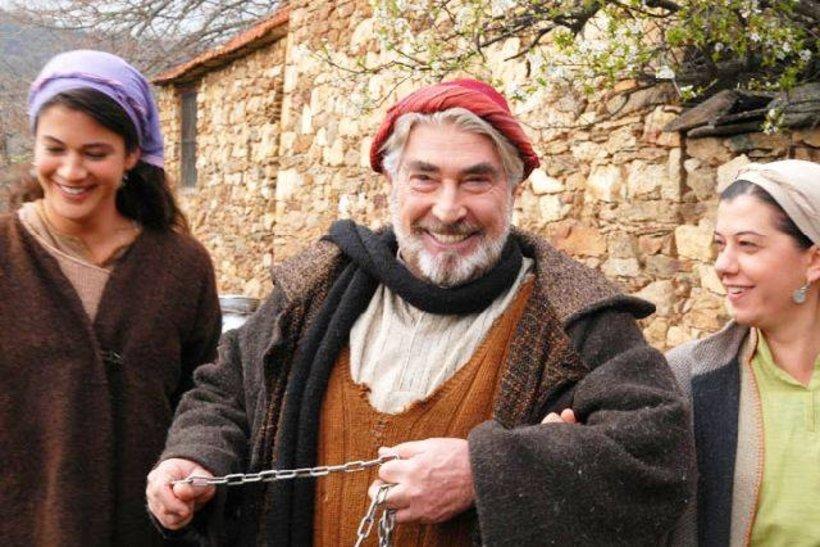
The series stars Sütçü Ramiz and his daughters (atv)
During its broadcast period, Elveda Rumeli reached a wide audience and achieved high viewership ratings on television channels, becoming one of the standout productions among period series. The series, noted for its subject matter, cast and shooting locations, continues to attract interest in its earlier episodes even today.
To accurately convey the historical atmosphere, the filming of Elveda Rumeli took place within the boundaries of Northern Macedonia. The city of Monastery (Bitola) was chosen as the primary filming location, with additional shoots conducted in other cities. The use of natural and historical sites visually reinforced the series’ historical authenticity.
The series premiered its first episode on 20 September 2007 on atv. Over its three-season run, it consisted of a total of 83 episodes. The final episode of Elveda Rumeli, aired on 19 October 2009, exhibited a notable viewership and public impact graph throughout its broadcast period.
Elveda Rumeli addresses events occurring between 1896 and 1898 in the Balkan territories of the Ottoman Empire. The series portrays the social, political and cultural transformations of this historical period through the life of a local family. Historical events are interwoven with fictional elements to present a dramatic building.
The series features an extensive cast combining experienced actors of the era with emerging talents. Erdal Özyağcılar plays the lead role of Sütçü Ramiz. Other cast members include Şebnem Sönmez, Gülçin Santırcıoğlu, Tolgahan Sayışman, Berrak Tüzünataç and Ertan Saban such as. The casting choices played a significant role in creating characters consistent with the spirit of the period.

Main cast of the series (Beyazperde)
The series Elveda Rumeli revolves around Sütçü Ramiz, portrayed by Erdal Özyağcılar, and his family, revealing the social, political and cultural structure of Macedonia between 1896 and 1907. In the series, the coexistence culture between Muslim and non-Muslim communities is disrupted by the activities of opposing gangs; migration, war and separations are conveyed with dramatic intensity.
The series does not treat elements of folk culture merely as background; it integrates them into the script. Particularly proverbs, idioms, clapping and curses (prayer and blessings), folk songs, mâniler and traditional life rituals are frequently employed to create dramatic and cultural depth.
Proverbs and idioms frequently appear in characters’ everyday dialogue, becoming expressions that reflect the collective common consciousness. For example, phrases such as “You killed two birds with one stone” and “Sharp vinegar spoils the jar” damage are seamlessly woven into the scenes.
Folk songs are central elements in scenes of high emotional intensity. The use of folk songs such as “Çalın Davulları,” “Mavrova,” and “Ayde Vino Piyam” supports the narrative power of the series.
Blessings and curses as verbal culture elements make visible the emotional bonds between characters, their belief systems and the cultural codes within the community.
Mâniler serve as carriers of oral culture, particularly in traditional entertainment scenes or moments of intense emotional expression.
Elveda Rumeli presents a structure suitable for analysis not only at the narrative level but also within the framework of intersemiotic relations. The symbols, music, costumes, sets and linguistic elements used in the script reflect the cultural codes of the period and offer viewers a multi-layered meaning world. In this regard, the series has become a reference example in folklore studies.
Elveda Rumeli stands out as an exemplary case in the visual media transmission of folk culture elements. Themes such as migration, war, family, love and struggle, as portrayed in the series, are blended with the aesthetic values of traditional culture to create a structure that is both nostalgic and instructive. In Turkish television history, Elveda Rumeli holds a unique position and constitutes a cultural heritage that contributes to the continuity of folk culture.
"Elveda Rumeli Dizisi Ne Zaman Çekildi?" atv Website. Accessed March 31, 2025. https://www.atv.com.tr/haberler/2023/10/16/elveda-rumeli-dizisi-nerede-cekildi-ne-zaman-basladi
"Elveda Rumeli" Beyazperde Web Sitesi. Accessed March 31, 2025. https://www.beyazperde.com/diziler/dizi-10322/sezon-20058/oyuncular/
Ayhan, Melike. *Türk Dizilerinin Halk Kültürü Bağlamında İncelenmesi: Elveda Rumeli Örneği*. TÜRKBİTİG Kültür Araştırmaları Dergisi 4, no. 1 (2024): 25–44.

Farewell, Rumelia
Type(s) | Historical Cultural Drama | ||||||||
|---|---|---|---|---|---|---|---|---|---|
Publication Date | Start: 20 September 2007 End: 19 October 2009 | ||||||||
Total | 3 seasons, 83 episodes | ||||||||
Filming Locations | Main filming location: Manastır (Bitola), North Macedonia Other authentic Balkan cities and villages Prominent village: Prüsçan (Makova) | ||||||||
Themes and Features | Migration, Family bonds, Love, War, Separation | ||||||||
Actors | Ertan Saban Berrak Tüzünataç Tolgahan Sayışman Gülçin Santırcıoğlu Şebnem Sönmez Erdal Özyağcılar | ||||||||
No Discussion Added Yet
Start discussion for "Farewell Rumelia (Series)" article
Filming Location
Air Date
Historical Period Depicted
Cast
Plot and Historical Background
Reflection of Folk Culture Elements in the Series
Intertextuality and Intersemiotic Approaches