


This article was automatically translated from the original Turkish version.
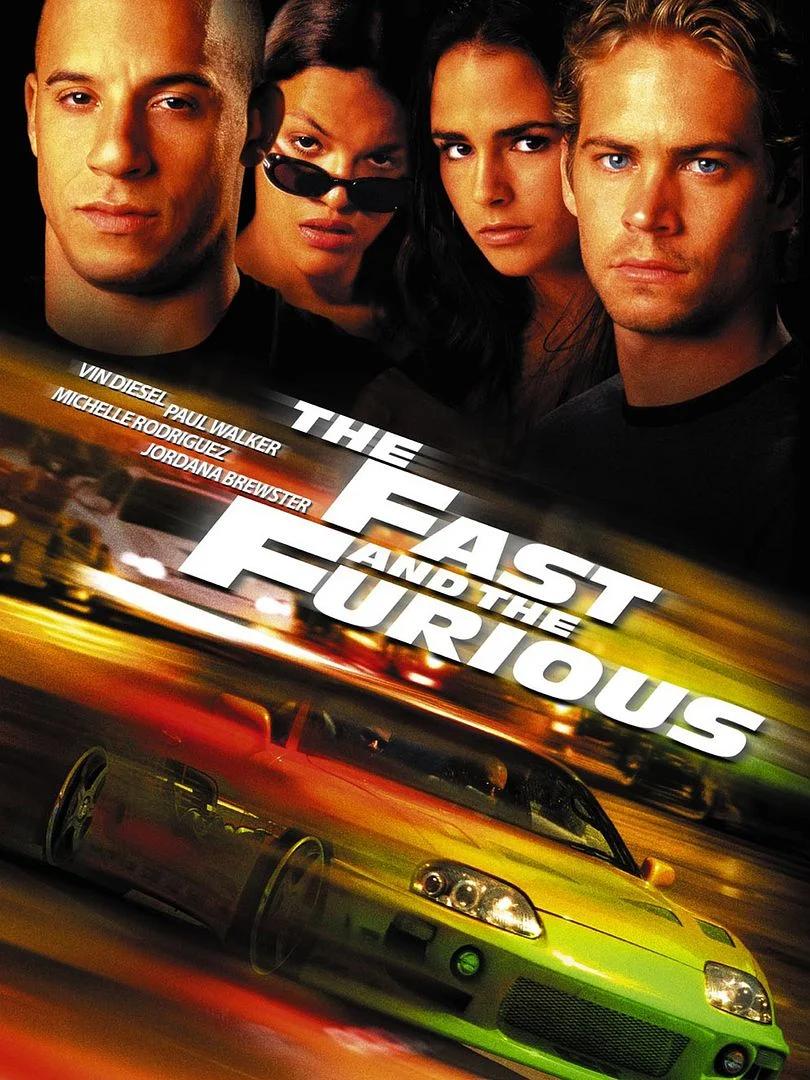
Fast and Furious
Publication Date | 2001 | ||||||||
|---|---|---|---|---|---|---|---|---|---|
Director(s) | Rob Cohen | ||||||||
Actors | Rick Yune Jordana Brewster Michelle Rodriguez Paul Walker Vin Diesel | ||||||||
Screenwriter(s) | Erik Bergquist Gary Scott Thompson | ||||||||
Fast and The Fast and the Furious is a 2001 American action and crime film. Produced by Neal H. Moritz, film centers on underground criminal organizations revolving around street racing and introduces a new perspective to action cinema. The film also serves as the starting point of a broad franchise that later included numerous sequels and spin-offs.
The film follows Brian O’Conner, a secret police officer assigned by the Los Angeles Police Department, who infiltrates illegal street racing circles to investigate organized truck hijackings in the city. As Brian develops relationships with the racing crew led by Dominic Toretto, the narrative reveals his ethical dilemmas between duty and personal loyalties. The film explores themes of loyalty, identity conflict, the moral boundaries of crime, and the concept of family such as; it interrogates the individual-society relationship through the lens of underground culture.

Paul Walker (Brian O’Conner) and Vin Diesel (Dominic Toretto) headline the film. Supporting roles are played by Michelle Rodriguez (Letty Ortiz), Jordana Brewster (Mia Toretto), Rick Yune (Johnny Tran), and Ted Levine (Tanner). Particularly, the performances of Walker and Diesel contribute significantly to establishing an effective building between the film’s dramatic and action elements. The film helped establish both actors as internationally recognized figures in cinema.
Rob Cohen directed the film. Cohen is known for his mastery of action cinema and his ability to effectively manage fast-paced sequences. The screenplay was written by Gary Scott Thompson, Plum Bergquist, and David Ayer. It was inspired by a journalistic article titled “Racer X” published in Vibe magazine by Ken Li. In this context, the film’s fictional structure reflects traces of the real-world street racing culture real.
Directed by Ericson Core, the film employs various innovative recording techniques to convey a heightened sense of speed and racing atmosphere. Handheld camera movements, specially mounted cameras inside vehicles, and CGI-enhanced transitions give the racing sequences a highly dynamic quality. Particularly, the tunnel effects used during nitro injection moments dramatize the vehicles’ acceleration on a visual level. These techniques represented striking innovations relative to the cinematic technology of the time.

The film’s shooting took place largely within the boundaries of Los Angeles. Urban space is not merely used as a backdrop but functions as an integral part of the narrative. Over 200 modified vehicles were used during production, enhancing the film’s authenticity. The choice of locations and vehicle design ensures the most close possible representation of street racing culture.
The Fast and the Furious achieved notable success not only at the box office but also culturally upon its release. Despite a budget of $38 million, it generated approximately $207 million worldwide. The film helped elevate car modification culture and street racing to become part of global popular culture. This success established a strong foundation for the sequels produced in subsequent years.
Beyazperde. “Hızlı ve Öfkeli.” Accessed April 15, 2025. https://www.beyazperde.com/filmler/film-29173/.
IMDb. “The Fast and the Furious (2001) – IMDb.” Accessed April 15, 2025. https://www.imdb.com/title/tt0232500/.

Fast and Furious
Publication Date | 2001 | ||||||||
|---|---|---|---|---|---|---|---|---|---|
Director(s) | Rob Cohen | ||||||||
Actors | Rick Yune Jordana Brewster Michelle Rodriguez Paul Walker Vin Diesel | ||||||||
Screenwriter(s) | Erik Bergquist Gary Scott Thompson | ||||||||
Plot and Thematic Structure
Cast
Director and Screenplay
Cinematography and Visual Narrative
Setting and Production Design
Cultural Impact and Box Office Success