


This article was automatically translated from the original Turkish version.
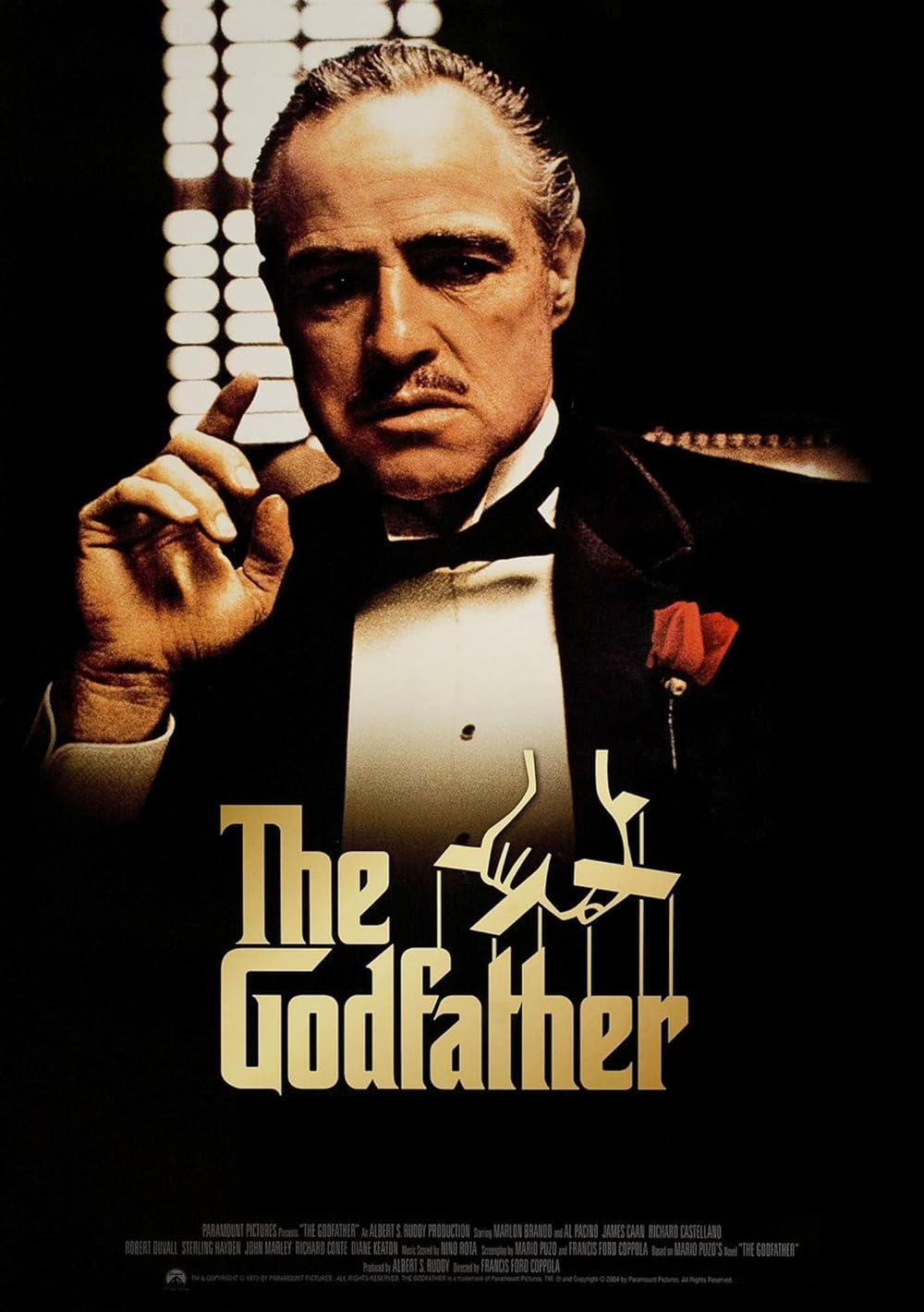
Father 1
Original Name | The Godfather | ||||||||
|---|---|---|---|---|---|---|---|---|---|
Type | Drama Crime | ||||||||
Production Year | 1972 | ||||||||
Director | Francis Ford Coppola | ||||||||
Screenplay | Francis Ford Coppola Mario Puzo | ||||||||
Duration | 175 minutes | ||||||||
Lead Actor | Marlon Brando Al Pacino James Caan | ||||||||
IMDb Rating | 9.2 | ||||||||
Box Office Revenue | 250 million dollars (Worldwide) | ||||||||
The Godfather tells the story of the Corleone family, a powerful Italian-American mafia clan in New York at the end of the 1940s. The family’s patriarch, Vito Corleone (Marlon Brando), is a figure revered and feared in the criminal world. His son Michael Corleone (Al Pacino), a war veteran who has no interest in his father’s business, is drawn into the family’s affairs against his will following an assassination attempt on Vito. Over time, Michael undergoes a transformation and becomes the new “Godfather.” The film presents a narrative centered on power, loyalty, betrayal, and family bonds.
The film treats the concept of family not merely as biological ties but as a structure shaped by power and loyalty. Although the Corleone family exhibits strong internal solidarity, these bonds are gradually tested.
While Vito Corleone exercises power through diplomacy and intelligence rather than violence, Michael gradually transforms into a leader who consolidates authority through harsher methods. The film illustrates how notions of ethics and justice evolve within the criminal underworld.
The film, which chronicles the struggle of an immigrant family to gain power, also aims to reveal the dark side of the American Dream. As the Corleone family rises in America, crime becomes an inevitable part of their world.
Scholarly analyses of the film have also been conducted within the framework of Ibn Khaldun’s theory of asabiyyah. According to this perspective, the hierarchy and sense of belonging within the family play a crucial role in Michael’s ascent. Violence is used as a tool of control and becomes an unavoidable element in maintaining power.

A scene from The Godfather
Mario Puzo’s 1969 novel The Godfather attracted the attention of Hollywood, and Paramount Pictures acquired the film rights. When director Francis Ford Coppola joined the project, he worked under immense pressure; in particular, casting Marlon Brando in the lead role was initially seen as a risky choice.
Filming took place largely in New York and Sicily. Released in 1972, the film achieved major box office success and received widespread critical acclaim. It won Academy Awards for Best Picture, Best Actor (Marlon Brando), and Best Adapted Screenplay.
Marlon Brando’s physical gestures and vocal tone in portraying Vito Corleone turned him into a cultural icon over time. Al Pacino sought to reflect Michael Corleone’s transformation, aiming to depict his evolution from an innocent young man into a ruthless mafia boss. James Caan brought energy and aggression to the role of Sonny Corleone and delivered many of the film’s most acclaimed scenes.
Since its release, the film has generated significant interest in the world of cinema. Critics such as Roger Ebert have described it as “a flawless narrative.” The Godfather has become a cult classic both cinematically and in terms of storytelling.
Today, it is still regarded as one of the foundational works of modern cinema. It appeared on the American Film Institute’s (AFI) lists of the greatest films in the early 1990s and remained at the top of IMDb’s Top 250 Films list for many years.
The line “I’m going to make him an offer he can’t refuse” has become one of the most iconic quotes in film history. The Godfather has influenced numerous films and television series, particularly productions like The Sopranos, which drew inspiration from the Corleone family’s dynamics. Recognized as a cornerstone of mafia cinema, this film has also had a significant impact on the production of other classics such as Goodfellas and Scarface.
Ermiş, Ece Naz. “BabaFilmininGeriatrik Psikoloji Perspektifinden Analizi.” *Tykhe* 7, no. 13 (2022): 247–258. Accessed March 20, 2025.https://dergipark.org.tr/tr/download/article-file/2494852
Kalyoncu, Rıza Tevfik. “Asabiyet Kavramı Bağlamında The Godfather (1972) Filmine Dair Bir Yorum Denemesi.” *Günce Sinema.* Accessed March 20, 2025.https://guncesinema.com/asabiyet-kavrami-baglaminda-the-godfather-1972-filmine-dair-bir-yorum-denemesi/
Roger Ebert. "Great Movie: The Godfather." Accessed March 20, 2025.https://www.rogerebert.com/reviews/great-movie-the-godfather-1972
“Baba (The Godfather).” *Beyazperde.* Accessed March 20, 2025.https://www.beyazperde.com/filmler/film-1628/
“Baba Filmi ve Psikolojik Çözümleme.” *Bursa Psikiyatri.* Accessed March 20, 2025.https://www.bursapsikiyatri.com/makale.php?id=740
“The Godfather (1972).” IMDb. Accessed March 20, 2025.https://www.imdb.com/title/tt0068646/
“The Godfather Analysis.” Filmsite. Accessed March 20, 2025.https://www.filmsite.org/godf.html

Father 1
Original Name | The Godfather | ||||||||
|---|---|---|---|---|---|---|---|---|---|
Type | Drama Crime | ||||||||
Production Year | 1972 | ||||||||
Director | Francis Ford Coppola | ||||||||
Screenplay | Francis Ford Coppola Mario Puzo | ||||||||
Duration | 175 minutes | ||||||||
Lead Actor | Marlon Brando Al Pacino James Caan | ||||||||
IMDb Rating | 9.2 | ||||||||
Box Office Revenue | 250 million dollars (Worldwide) | ||||||||
Themes Explored in the Film
Family and Loyalty
Power and Ethics
The American Dream and Crime
Asabiyyah and Violence
Production and Release Process
Performances
Criticism and Influence
Cultural Impact and Popularity