


+1 More

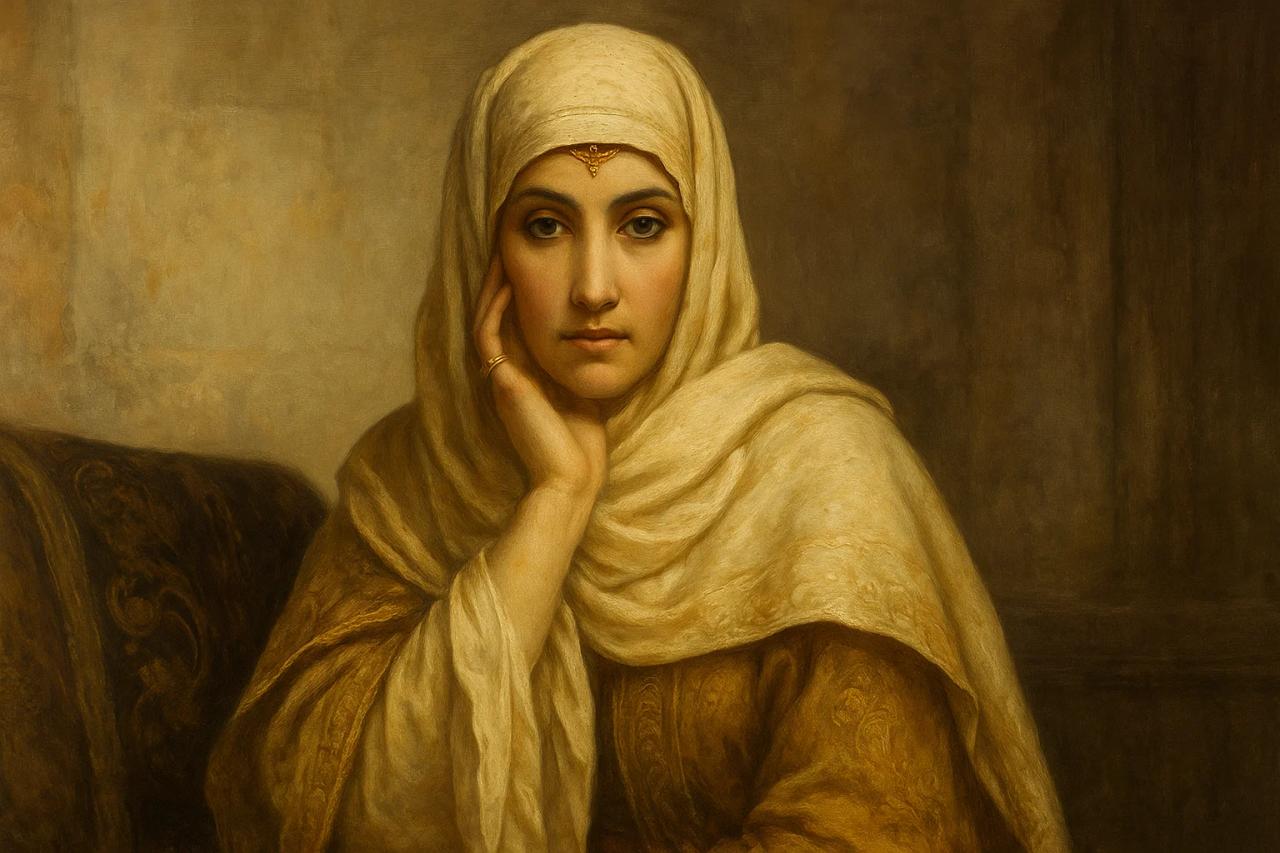
Fatima al-Fihri (Generated by Artificial Intelligence)
Birth | Approximately 800, Kairouan (Tunisia) | ||||||||
|---|---|---|---|---|---|---|---|---|---|
Death | Approximately 880, Fez (Morocco) | ||||||||
Period(s) | 9th century | ||||||||
Origin(s) | Quraysh Tribe | ||||||||
Nickname(s) | Umm al-Banin (Mother of the Sons) | ||||||||
Family | His father was Muhammad al-Fihri his sister was Maryam al-Fihri | ||||||||
Notable Work | The Qarawiyyin Camii and University, which he founded in Fez in 859, is recognized by UNESCO as the world's oldest operating university. | ||||||||
Fatima al-Fihri, a Muslim scholar, philanthropist, and education pioneer, founded the University of al-Qarawiyyin in the city of Fes, Morocco, in the 9th century—the world’s oldest continuously operating university. Also known by the title Umm al-Banin, meaning “mother of sons,” al-Fihri is one of the most significant figures symbolizing women’s presence in education and science in the Islamic world.
Fatima al-Fihri was born around 800 CE in Kairouan, a city located within present-day Tunisia. She belonged to a family of the Quraysh tribe; her father, Muhammad al-Fihri al-Kairouani, was a prominent merchant and jurist of his time. After spending her childhood in Kairouan, Fatima and her family relocated to the city of Fes in Morocco following her father’s decision to migrate due to Shi’a persecution.
Fes had become a center of culture, trade, and religious life during the Idrisid dynasty. Fatima and her sister Maryam gained the opportunity to interact with the leading scholars of the era. Both sisters received a strong Islamic education, developing expertise in fields such as jurisprudence, hadith, mathematics, and grammar. Fatima was known for her piety, wisdom, and generosity. Sources indicate that she had two sons, which is why she was given the title Umm al-Banin.
The most pivotal moment in Fatima al-Fihri’s life came in 859 CE when she founded the al-Qarawiyyin Mosque and its associated madrasa. After her father’s death, a substantial inheritance passed to her and her sister Maryam. Maryam used a portion of this inheritance to build the Andalusian Mosque in Fes, while Fatima dedicated her entire fortune to the construction of the al-Qarawiyyin Mosque.
The construction process lasted two years. It is reported that Fatima personally supervised the work and even observed fasting throughout the building period. She named the mosque “al-Qarawiyyin,” meaning “of the people of Kairouan,” in honor of her birthplace.
Over time, the al-Qarawiyyin Mosque evolved from a place of worship into a major center of learning. Described by contemporary scholars as a “hubb of knowledge,” it quickly became a madrasa and later gained recognition as the world’s first university.

Courtyard of the al-Qarawiyyin Mosque (TDV Islamic Encyclopedia)
From its founding, al-Qarawiyyin became one of the most important centers of learning in the western Islamic world. Courses were offered in Quranic exegesis, jurisprudence, medicine, mathematics, astronomy, geography, philosophy, and grammar. The educational sessions known as “halaqas” involved students sitting in a semicircle around their teachers to listen to lectures.
Women were also permitted to attend these halaqas and could follow lessons from designated galleries. It is reported that Fatima al-Fihri herself studied mathematics and law at her own institution. Among the prominent scholars educated at al-Qarawiyyin were Ibn Khaldun, Ibn Rushd, Ibn Arabi, al-Idrisi, al-Bitruji, and Maimonides. Pope Sylvester II (Gerbert d’Auvergne), who studied in Europe, later introduced the concept of zero and Arabic numerals to the West after receiving his education here.
The al-Qarawiyyin Mosque is one of the most striking examples of western Islamic architecture, featuring an original plan with ten horizontal naves running parallel to the qibla wall, intersected by a single vertical nave. Its minaret, completed in 955 CE, is considered one of the oldest Islamic structures in Africa.
One of the most important components of the complex is the al-Qarawiyyin Library, established in the 14th century by the Marinid Sultan Abu Inan al-Marini. The library holds over 4,000 manuscripts, including rare works such as Imam Malik’s al-Muwatta, Ibn Khaldun’s Muqaddimah, and Ibn Ishaq’s Sirat al-Nabawiyya. Restored in 2012 by Moroccan architect Aziza Chaouni, the library continues to operate today as one of the oldest libraries in the world.
Fatima’s sister, Maryam al-Fihri, also built the Andalusian Mosque in the Andalusian quarter of Fes during the same period. Like al-Qarawiyyin, this mosque became one of the leading centers of learning and worship of its time. The two mosques built by Maryam and Fatima are remembered in Fes’s cultural history as the “legacy of the sisters” and are regarded as symbols of scholarship and philanthropy.
The University of al-Qarawiyyin is recognized by UNESCO and Guinness World Records as the world’s oldest continuously operating university. In 1963, it was incorporated into the Moroccan Ministry of National Education and became a state university. In 2015, a royal decree granted it financial and academic autonomy.
Fatima al-Fihri’s name continues to be honored today. The “Erasmus Mundus Al-Fihri” program, designed to foster collaboration between universities in Europe and North Africa, was established in her memory.
Abdülhâdî et-Tâzî. “Karaviyyîn Camii.” *TDV İslâm Ansiklopedisi.* Accessed November 5, 2025. https://islamansiklopedisi.org.tr/karaviyyin-camii#1
Ahmed, Sikeena Karmali. “Fâtıma el-Fihrî ve Karaviyyin Üniversitesi.” Translated by Şüheda Bulut. *World History Encyclopedia.* Last updated March 7, 2025. https://www.worldhistory.org/trans/tr/2-2662/fatima-el-fihri-ve-karaviyyin-universitesi/
Anadolu Ajansı. "Ezber Bozan Kadın: İlk Üniversitenin Kurucusu Fatma el-Fihri." Accessed November 5, 2025. https://www.aa.com.tr/tr/dunya-kadinlar-gunu/ezber-bozan-kadin-ilk-universitenin-kurucusu-fatma-el-fihri/1083321
Beksaç, Engin. “Karaviyyîn Camii.” *TDV İslâm Ansiklopedisi.* Accessed November 5, 2025. https://islamansiklopedisi.org.tr/karaviyyin-camii#2-mimari
Frias, Sónia. “Fatima al-Fihri: Um Retrato Possível da Fundadora da Universidade Qarawiyyin em Fez.” *Faces de Eva. Estudos sobre a Mulher* 32 (2014): 177–182. ISSN 0874-6885. https://scielo.pt/scielo.php?script=sci_arttext&pid=S0874-68852014000200016
GZT. "‘Kız Kardeşlerin Hatırası: Endülüs Camii.’" *GZT Mecra.* Accessed November 5, 2025. https://www.gzt.com/mecra/kiz-kardeslerin-hatirasi-endulus-camii-3769985
Özer, Leyla. “Mirastan Milada Bir İnsanlık Örneği: Fâtıma El Fihrî = An Example of Humanity from Heritage to the Birth of Christ: Fâtıma el Fihrî.” *Ahmet Yesevi Dergisi* 1, no. 2 (2023): 105–112. https://isamveri.org/pdfdrg/G01872/2023_2/2023_2_OZER.pdf

Fatima al-Fihri (Generated by Artificial Intelligence)
Birth | Approximately 800, Kairouan (Tunisia) | ||||||||
|---|---|---|---|---|---|---|---|---|---|
Death | Approximately 880, Fez (Morocco) | ||||||||
Period(s) | 9th century | ||||||||
Origin(s) | Quraysh Tribe | ||||||||
Nickname(s) | Umm al-Banin (Mother of the Sons) | ||||||||
Family | His father was Muhammad al-Fihri his sister was Maryam al-Fihri | ||||||||
Notable Work | The Qarawiyyin Camii and University, which he founded in Fez in 859, is recognized by UNESCO as the world's oldest operating university. | ||||||||
Life and Origins
Foundation of the al-Qarawiyyin Mosque and University
al-Qarawiyyin as a Center of Education and Science
Architectural Features and Library
The Andalusian Mosque and Maryam al-Fihri
Legacy and Impact