


This article was automatically translated from the original Turkish version.
+1 More
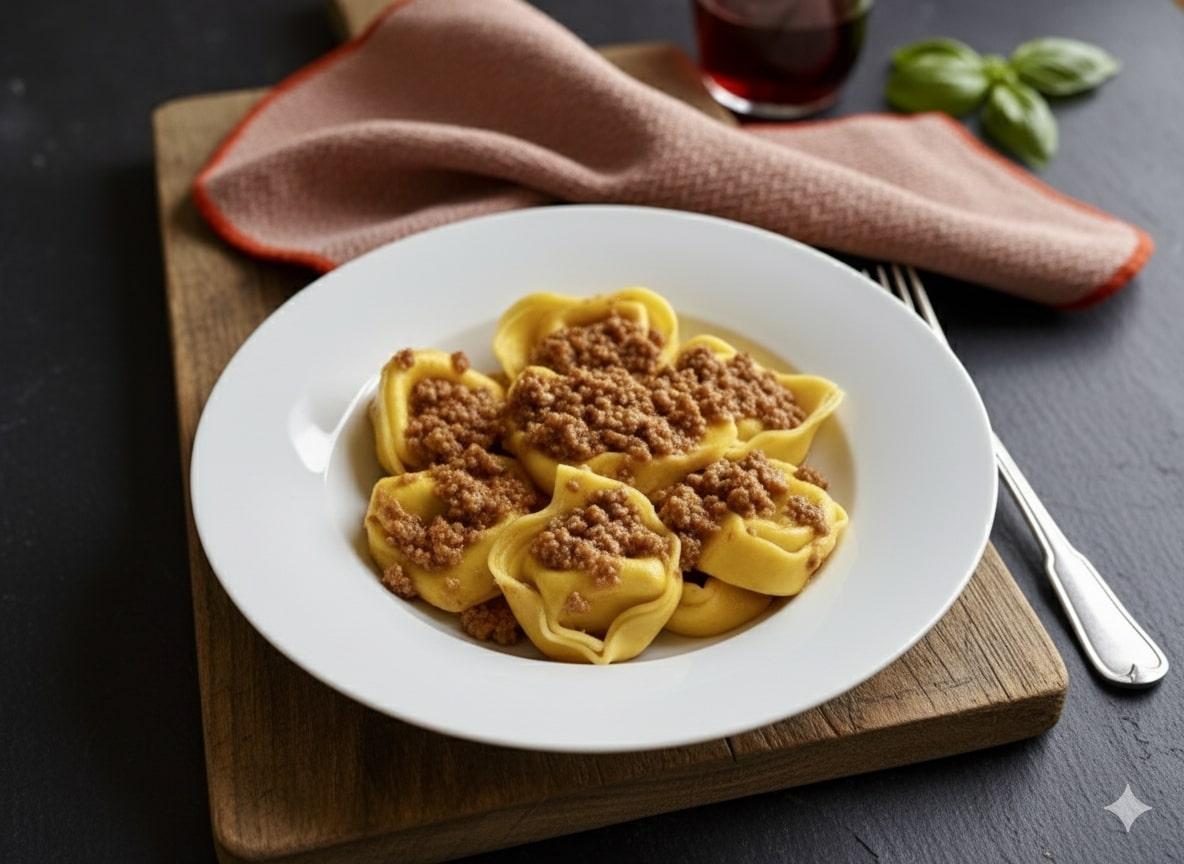
Ferrara Pumpkin Cappellaccisi (Generated by Artificial Intelligence.)
Name(s) | Cappellacci di Zucca Ferraresi | ||||||||
|---|---|---|---|---|---|---|---|---|---|
Product Type | Fresh Stuffed Pasta | ||||||||
Production Area | Ferrara | ||||||||
Origin(s) | Renaissance Period | ||||||||
Ferrara pumpkin cappellacci (original name: Cappellacci di zucca ferraresi) is a fresh stuffed pasta variety unique to the Ferrara province of Italy. Traditionally known for its round, folded shape resembling the woven straw hats worn by local farmers, it holds Protected Geographical Indication (PGI) status.
Ferrara pumpkin cappellacci is a fresh stuffed pasta made from a dough of soft and hard wheat flour blended with eggs. The filling is prepared by cooking and puréeing "violina" squash (Cucurbita Moschata), a yellow variety native to the region, then mixing it with grated cheese and nutmeg. When served, the pasta has the typical yellow hue of egg-based pasta, with the filling displaying a deeper yellow tone from the pumpkin purée. The interior color matches the rich yellow of ripe pumpkin. Its texture is medium to slightly soft. The shape mimics the round, folded form of the traditional straw hats worn by Ferrara farmers.
Cómo Hacer Pasta Rellena de Calabaza: "Cappellacci di Zucca" (YouTube - El Pastificio de Nicola)
The connection between the product and the Ferrara region is rooted in the local agricultural tradition, particularly the use of pumpkin and wheat flour. The area is known as a cereal region due to its extensive wheat cultivation and flour-based food production. The "violina" pumpkin variety has been traditionally grown in the region and is celebrated in local festivals.
According to historians, the origins of Ferrara pumpkin cappellacci date back to the Renaissance period. It appears in the 1584 cookbook of Giovan Battista Rossetti, chef to Duke Alfonso II d’Este of Ferrara. The recipe from that era resembles the modern version but included spices popular at the time, such as ginger and pepper. The distinctive shape recalls the woven straw hats ("caplaz") commonly worn by Ferrara peasants until the mid-19th century. The product’s reputation is also linked to Ferrara’s long-standing tradition of pumpkin consumption.
The traditional recipe requires a dough made from a blend of wheat flour and eggs or pasteurized egg mixture. The filling consists primarily of "violina" squash (Cucurbita Moschata), grated cheese, fine breadcrumbs, and nutmeg. Sugar may be added optionally. The use of colorants or preservatives is not permitted.
To prepare the filling, the pumpkins are washed, halved, cleaned of seeds and fibers, then roasted in an oven. Once cooled, the purée is mixed with grated cheese, nutmeg, breadcrumbs, and optional sugar. For the dough, flour and eggs are kneaded into a homogeneous paste. The dough is then rolled out into a thin sheet, either by hand or machine, and cut into squares. Each square is filled with the mixture, folded into a triangle, and then the two ends are brought together to form the characteristic "cappellaccio" shape and prevent leakage. Pasteurization and drying are permitted for preservation.
The production area for Ferrara pumpkin cappellacci encompasses the entire administrative territory of the Province of Ferrara. Production is based on the region’s agricultural resources and centuries-old artisanal skills.
El Pastificio de Nicola. "Cómo Hacer Pasta Rellena de Calabaza: 'Cappellacci di Zucca.'" YouTube. Accessed October 21, 2025. https://www.youtube.com/watch?v=LGpGHbV6HdM
MASAF – Ministry of Agriculture, Food and Forestry Policies. "Cappellacci di Zucca Ferraresi (IGP)." *MASAF*. Accessed October 21, 2025. https://www.masaf.gov.it/flex/cm/pages/ServeAttachment.php/L/IT/D/b%252Fe%252Fc%252FD.b3bba3f3d7d635975c47/P/BLOB%3AID%3D3348/E/pdf?mode=download

Ferrara Pumpkin Cappellaccisi (Generated by Artificial Intelligence.)
Name(s) | Cappellacci di Zucca Ferraresi | ||||||||
|---|---|---|---|---|---|---|---|---|---|
Product Type | Fresh Stuffed Pasta | ||||||||
Production Area | Ferrara | ||||||||
Origin(s) | Renaissance Period | ||||||||
No Discussion Added Yet
Start discussion for "Ferrara Pumpkin Cappellaccisi" article
Definition and Characteristics
Geographical Link and History
Production Method
Production Area