


This article was automatically translated from the original Turkish version.
+2 More
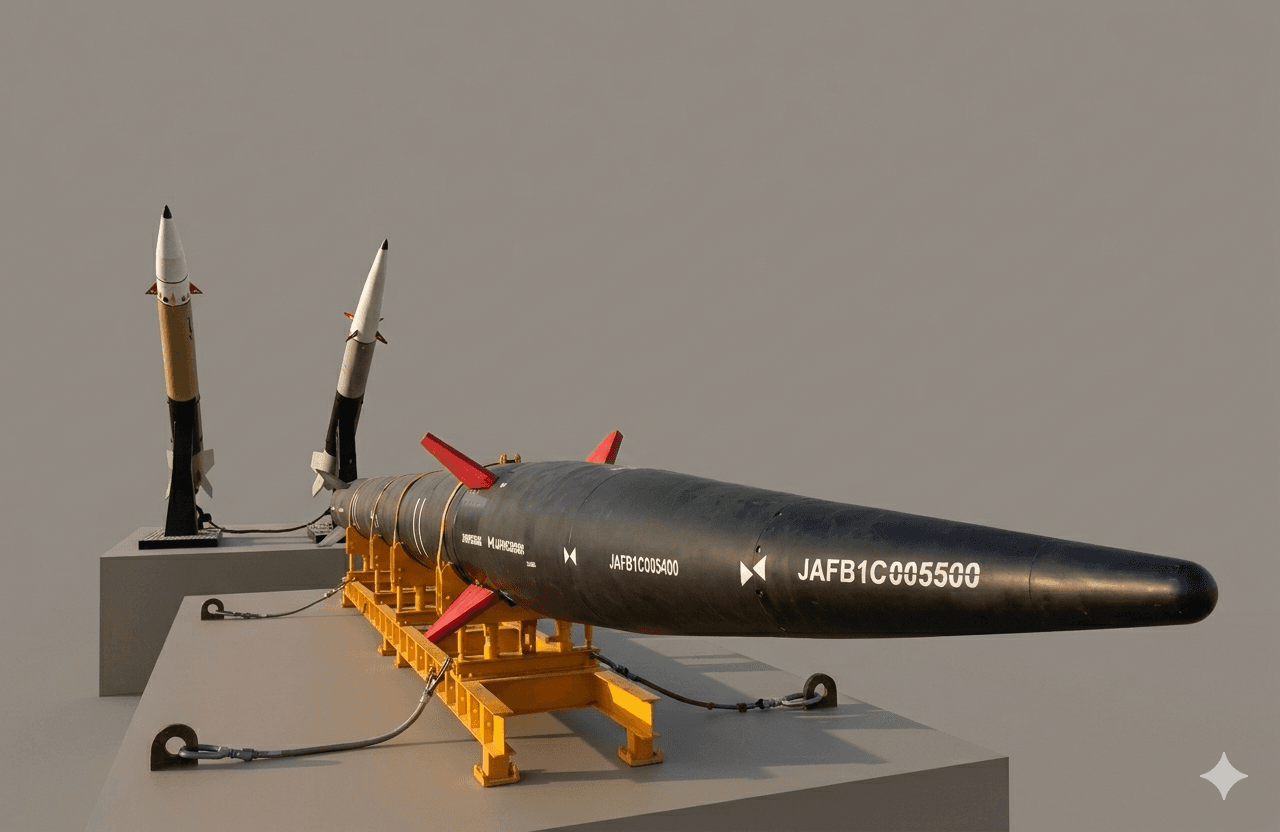
Fettah-1 (Yapay Zeka ile Oluşturulmuştur.)
Fettah-1 is Iran's first hypersonic medium-range ballistic missile, developed by the Islamic Revolutionary Guard Corps Aerospace Force (IRGC AF) and officially unveiled at a ceremony in Tehran on June 6, 2023.【1】 Evaluated as capable of influencing regional military balances, Fettah-1 features a mechanism that allows it to change direction during different phases of flight, unlike traditional ballistic missiles that follow a fixed parabolic trajectory.
Images of the Fettah-1 Rocket System (Hook Global)
Fettah-1 is a two-stage missile system capable of reaching extremely high velocities between Mach 13 and Mach 15 (13 to 15 times the speed of sound).【2】 Its stated range is 1,400 kilometers (noted as potentially extendable).【3】 After launch, the missile exits the atmosphere and maneuvers at hypersonic speeds during its terminal phase toward the target. It has a circular error probable (CEP) of approximately 10 to 25 meters, making it a highly accurate weapon.【4】
The technical architecture of Fettah-1 consists of high-performance propulsion and guidance systems:
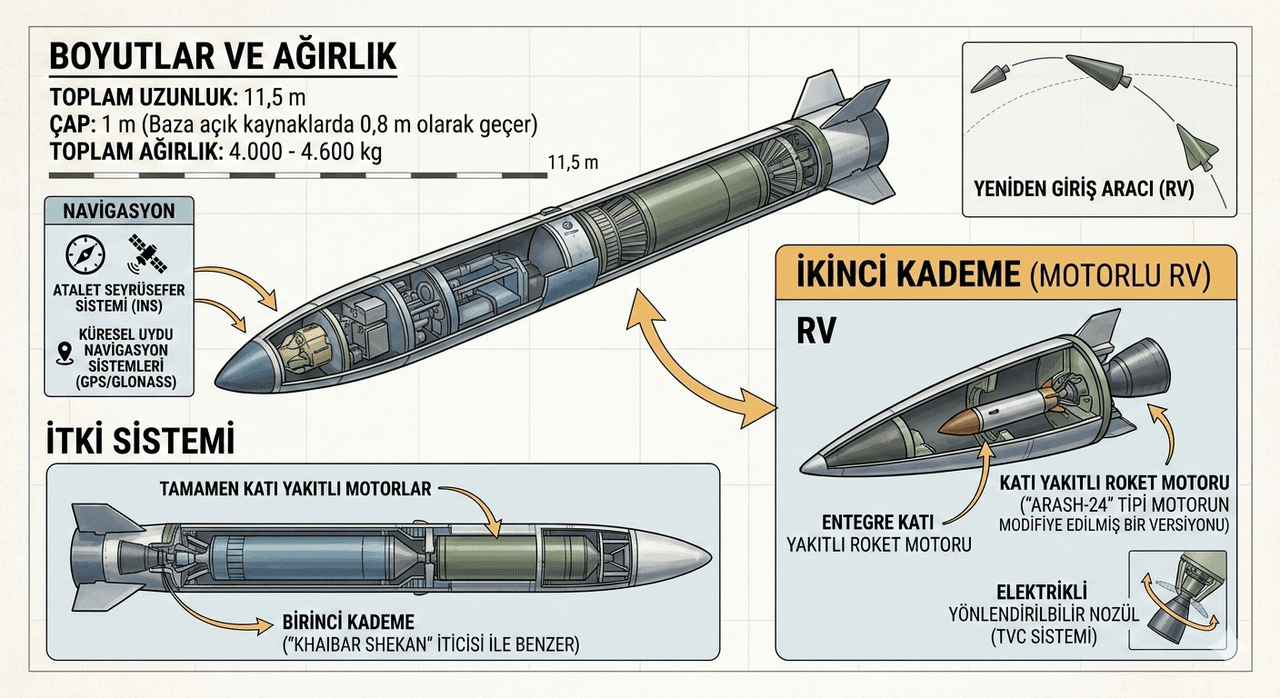
Technical Specifications of the Fettah-1 Ballistic Missile (Generated by Artificial Intelligence.)
Fettah-1 is launched from a Transporter-Erector-Launcher (TEL) system mounted on a heavy-duty truck chassis, enabling road mobility.【9】 This mobile system provides both strategic mobility and tactical flexibility. Thanks to the TEL, the missile can be rapidly deployed and launched from concealed or dispersed positions.
The Fettah-1’s propulsion system employs high-performance solid fuel in both the boost and post-boost phases. The first stage propels the missile to an altitude of approximately 300 kilometers; the separated MaRV then ignites its main motor based on the Arash-24 design.【10】 This motor burns for up to 50 seconds, maintaining the warhead’s hypersonic velocity throughout its glide and impact phases.【11】 The missile reaches speeds of Mach 13+ during its mid-course phase and continues to maintain velocities above Mach 5 during terminal impact.【12】
Fettah-1 features a MaRV (Maneuverable Re-entry Vehicle) structure that enables high maneuverability during the terminal phase. This terminal section, housing the warhead, can perform three-dimensional maneuvers using four aerodynamic control fins and a vector-controlled nozzle inside the body.【13】 This technology allows the missile to perform “skip” maneuvers in the upper atmosphere and approach its target along a non-ballistic, angled, and variable trajectory, evading defensive systems.【14】
Hypersonic weapons such as Fettah-1 present formidable challenges to existing multi-layered missile defense systems. The greatest difficulty lies in the inability to predict the final impact point due to the missile’s high terminal maneuverability. While the trajectory of conventional ballistic missiles is calculable, the sudden course changes made by Fettah-1 during flight can render defensive interception algorithms ineffective.【15】 Additionally, the missile’s hypersonic speed significantly reduces the reaction time available to defense systems.
Fettah-1’s flight profile constrains the tracking capacity of fixed radar and electro-optical (EO) sensors. The missile flies at a lower, depressed trajectory that limits the line-of-sight (LOS) geometry of ground-based radars and delays detection by remaining below the horizon. Furthermore, its ability to descend to altitudes as low as 15 kilometers during maneuvers can cause many sensors to lose track of the target.【16】 The motor’s exhaust plume and the high heat signature generated by hypersonic flight complicate the accurate analysis of this object by tracking and scanning (TWS) algorithms designed for conventional ballistic behavior.【17】
Anadolu Ajansı. "İran'dan İsrail'e füze saldırısı." Accessed March 3, 2026. https://www.aa.com.tr/tr/dunya/irandan-israile-fuze-saldirisi-/3348108
Army Recognition. "Fattah-1 Hypersonic Missile." ArmyRecognition.com. Accessed March 3, 2026. https://www.armyrecognition.com/military-products/army/missiles/hypersonic-missiles/fattah-1-hypersonic-missile
CNN Türk. "İran'ın Kullandığı Fettah Füzesi (FATTAH) Nedir? Hipersonik Fettah Füzesi'nin Özellikleri Neler? Menzili Kaç Kilometre?" CNN. Accessed March 3, 2026. https://www.cnnturk.com/turkiye/galeri/iranin-kullandigi-fettah-fuzesi-fattah-nedir-hipersonik-fettah-fuzesinin-ozellikleri-neler-menzili-kac-kilometre-2298857
Hook Global. "Exclusive Footage of Fatah-1 Rocket System by #Pakistan's #GIDS" YouTube Video. Date Published: June 20, 2025. Accessed March 3, 2026. https://www.youtube.com/watch?v=fnpxd0NwaRc
Missile Defense Advocacy. “Fattah: Iran’s New Hypersonic Missile – Technical Assessment.” *MissileDefenseAdvocacy.org*, pp. 1-32. Accessed March 3, 2026. https://www.missiledefenseadvocacy.org/wp-content/uploads/2023/06/Iran-Hypersonicc-missile-limited-distribution-7.6.2023-1-1.pdf
The Defense Watch. “Iran’s Fattah-1 Hypersonic Missile.” TheDefenseWatch.com. Accessed March 3, 2026. https://thedefensewatch.com/military-ordnance/irans-fattah-1-hypersonic-missile/
İRAM Center. “İran’ın Yeni Hipersonik Füzesi: Fettah.” İRAMCenter.org. Accessed March 3, 2026. https://www.iramcenter.org/iranin-yeni-hipersonik-fuzesi-fettah-2385
[1]
The Defense Watch, “Iran’s Fattah-1 Hypersonic Missile.” TheDefenseWatch.com, Access date March 3, 2026. https://thedefensewatch.com/military-ordnance/irans-fattah-1-hypersonic-missile/.
[2]
İRAM Center, “Iran’s New Hypersonic Missile: Fettah.” İRAMCenter.org, Access date March 3, 2026. https://www.iramcenter.org/iranin-yeni-hipersonik-fuzesi-fettah-2385.
[3]
Army Recognition, “Fattah-1 Hypersonic Missile.” ArmyRecognition.com, Access date March 3, 2026. https://www.armyrecognition.com/military-products/army/missiles/hypersonic-missiles/fattah-1-hypersonic-missile.
[4]
Army Recognition, “Fattah-1 Hypersonic Missile.” ArmyRecognition.com, Access date March 3, 2026. https://www.armyrecognition.com/military-products/army/missiles/hypersonic-missiles/fattah-1-hypersonic-missile.
[5]
Army Recognition, “Fattah-1 Hypersonic Missile.” ArmyRecognition.com, Access date March 3, 2026. https://www.armyrecognition.com/military-products/army/missiles/hypersonic-missiles/fattah-1-hypersonic-missile.
[6]
Missile Defense Advocacy. “Fattah: Iran’s New Hypersonic Missile – Technical Assessment.” MissileDefenseAdvocacy.org, page 2, Access date March 3, 2026. https://www.missiledefenseadvocacy.org/wp-content/uploads/2023/06/Iran-Hypersonicc-missile-limited-distribution-7.6.2023-1-1.pdf.
[7]
Army Recognition, “Fattah-1 Hypersonic Missile.” ArmyRecognition.com, Access date March 3, 2026. https://www.armyrecognition.com/military-products/army/missiles/hypersonic-missiles/fattah-1-hypersonic-missile.
[8]
Army Recognition, “Fattah-1 Hypersonic Missile.” ArmyRecognition.com, Access date March 3, 2026. https://www.armyrecognition.com/military-products/army/missiles/hypersonic-missiles/fattah-1-hypersonic-missile.
[9]
Army Recognition, “Fattah-1 Hypersonic Missile.” ArmyRecognition.com, Access date March 3, 2026. https://www.armyrecognition.com/military-products/army/missiles/hypersonic-missiles/fattah-1-hypersonic-missile.
[10]
Army Recognition, “Fattah-1 Hypersonic Missile.” ArmyRecognition.com, Access date March 3, 2026. https://www.armyrecognition.com/military-products/army/missiles/hypersonic-missiles/fattah-1-hypersonic-missile.
[11]
Army Recognition, “Fattah-1 Hypersonic Missile.” ArmyRecognition.com, Access date March 3, 2026. https://www.armyrecognition.com/military-products/army/missiles/hypersonic-missiles/fattah-1-hypersonic-missile.
[12]
Army Recognition, “Fattah-1 Hypersonic Missile.” ArmyRecognition.com, Access date March 3, 2026. https://www.armyrecognition.com/military-products/army/missiles/hypersonic-missiles/fattah-1-hypersonic-missile.
[13]
Missile Defense Advocacy. “Fattah: Iran’s New Hypersonic Missile – Technical Assessment.” MissileDefenseAdvocacy.org, pages 4–14, Access date March 3, 2026. https://www.missiledefenseadvocacy.org/wp-content/uploads/2023/06/Iran-Hypersonicc-missile-limited-distribution-7.6.2023-1-1.pdf.
[14]
Missile Defense Advocacy. “Fattah: Iran’s New Hypersonic Missile – Technical Assessment.” MissileDefenseAdvocacy.org, page 14, Access date March 3, 2026. https://www.missiledefenseadvocacy.org/wp-content/uploads/2023/06/Iran-Hypersonicc-missile-limited-distribution-7.6.2023-1-1.pdf.
[15]
The Defense Watch, “Iran’s Fattah-1 Hypersonic Missile.” TheDefenseWatch.com, Access date March 3, 2026. https://thedefensewatch.com/military-ordnance/irans-fattah-1-hypersonic-missile/.
[16]
Missile Defense Advocacy. “Fattah: Iran’s New Hypersonic Missile – Technical Assessment.” MissileDefenseAdvocacy.org, page 28, Access date March 3, 2026. https://www.missiledefenseadvocacy.org/wp-content/uploads/2023/06/Iran-Hypersonicc-missile-limited-distribution-7.6.2023-1-1.pdf.
[17]
Missile Defense Advocacy. “Fattah: Iran’s New Hypersonic Missile – Technical Assessment.” MissileDefenseAdvocacy.org, page 28, Access date March 3, 2026. https://www.missiledefenseadvocacy.org/wp-content/uploads/2023/06/Iran-Hypersonicc-missile-limited-distribution-7.6.2023-1-1.pdf.

Fettah-1 (Yapay Zeka ile Oluşturulmuştur.)
No Discussion Added Yet
Start discussion for "Fettah-1 (Hypersonic Ballistic Missile)" article
Fettah-1 Hypersonic Missile Technical Specifications
Internal Structure of the Fettah-1 System
Operational Structure of the Fettah-1 Hypersonic Missile
Propulsion Technology and Hypersonic Flight
Maneuverable Re-entry Vehicle (MaRV) Technology
Challenges Hypersonic Flight Poses to Missile Defense Systems
Radar Detection and Tracking Limitations