


This article was automatically translated from the original Turkish version.
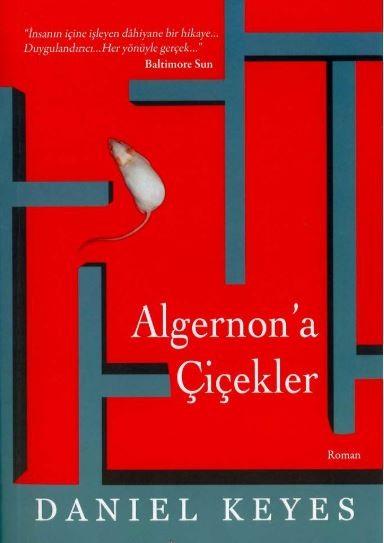
Flowers for Algernon is a science fiction novel by Daniel Keyes that explores the nature of humanity. The story recounts the experience of Charlie Gordon, a man with intellectual disabilities who gains extraordinary intelligence through an experimental brain surgery, only to later suffer a profound internal and social decline. The narrative is structured through Charlie’s own journal entries, a stylistic choice that allows readers to directly observe his linguistic and cognitive development.
Charlie’s increase in intelligence is not merely a cognitive process; it also entails a complex emotional and psychological evolution. Following the surgery, as his intellect grows, Charlie begins to recognize the exclusion and marginalization he endured in the past. He realizes that the friendships offered to him were rooted in mockery and that those around him had long looked down on him. This awareness leads Charlie to experience deep inner loneliness and alienation. His rising intelligence does not bring him happiness but instead isolates him and leaves him confronting a psychological void. This dynamic transforms the tension between happiness and knowledge into one of the novel’s central psychological conflicts.
Flowers for Algernon questions the ethical dimensions of scientific experimentation. Although the experiment conducted on Charlie initially appears as a promising breakthrough, it ultimately yields destructive consequences for both the individual and society. The attempt to enhance mental capacity implies tampering with human intellectual integrity, carrying serious ethical risks. Moreover, the mental deterioration and death of Algernon, the mouse used as the experimental subject, underscore the tragic outcomes inherent in such ethical dilemmas. The pain and devastation Charlie endures as he experiences the consequences of the experiment raise urgent questions about whether scientific progress can conflict with human rights and ethical values.
The novel critically examines society’s attitude toward individuals with intellectual disabilities. Before the surgery, Charlie is perceived by society as a “well-meaning fool”; after his intelligence increases, he is rejected precisely because of his superior intellect. Society struggles to accept those who deviate from the norm. This dynamic reveals that Flowers for Algernon offers a critique of the very concept of “normality.” Charlie’s isolation is not solely a result of his intelligence; his quest for personal identity is directly shaped by the attitudes of society and those around him. This highlights the impact of social structures on the individual and the hardships associated with being perceived as outside the norm.
Keyes, Daniel. Algernon’a Çiçekler. Koridor Yayıncılık, 1966.

No Discussion Added Yet
Start discussion for "Flowers for Algernon (Book)" article