

This article was automatically translated from the original Turkish version.
The Forbidden City, located in Beijing, the capital of China, is the largest palace complex in the world and served as the imperial palace for the Ming and Qing dynasties over approximately five centuries. Spanning an area of about 720,000 to 1,120,000 square meters and containing more than 980 structures, it has been at the political and cultural heart of Chinese history. Today it functions as the Palace Museum and is listed on UNESCO’s World Heritage List.
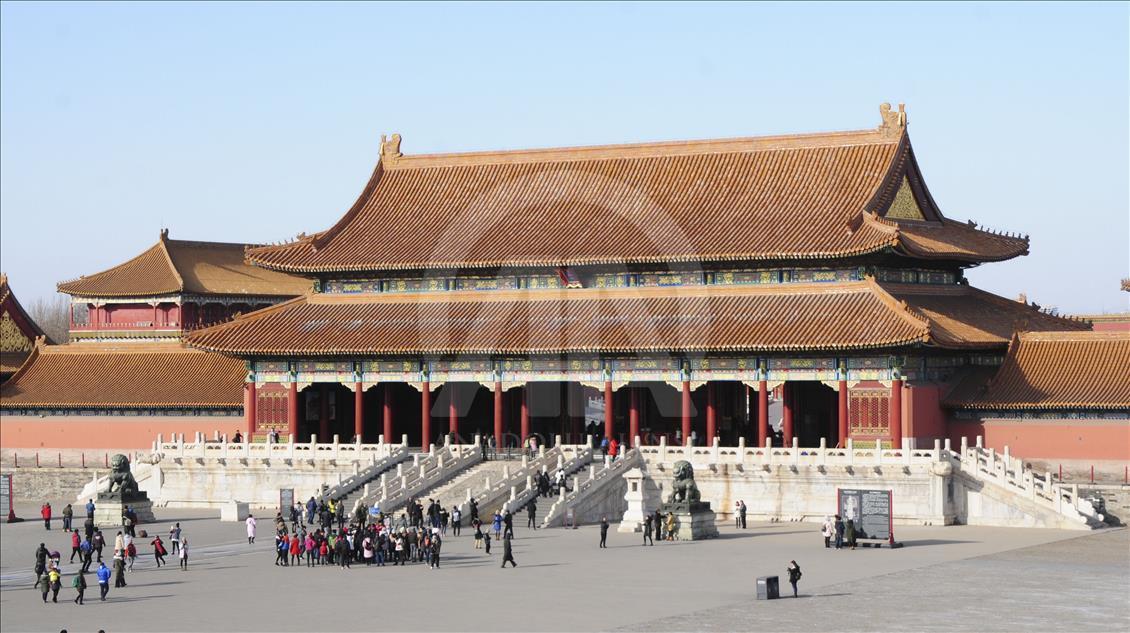
The Forbidden City (AA)
Construction of the Forbidden City began in 1406 under the orders of Emperor Yongle of the Ming Dynasty and was completed in 1420. The palace served as the official residence of 24 emperors and the center of Chinese governance. With the end of the Qing Dynasty in 1912, its role as the imperial seat ceased, and in 1925 it was opened to the public and transformed into the Palace Museum. Listed by UNESCO as a World Heritage Site in 1987, the Forbidden City is recognized not only as a treasure of China but also as part of humanity’s shared cultural heritage.
The complex is surrounded by walls 10 meters high and moats 52 meters wide. It extends 961 meters from north to south and 753 meters from east to west. Built on a rectangular plan, the structure is notable for its symmetrical arrangement.
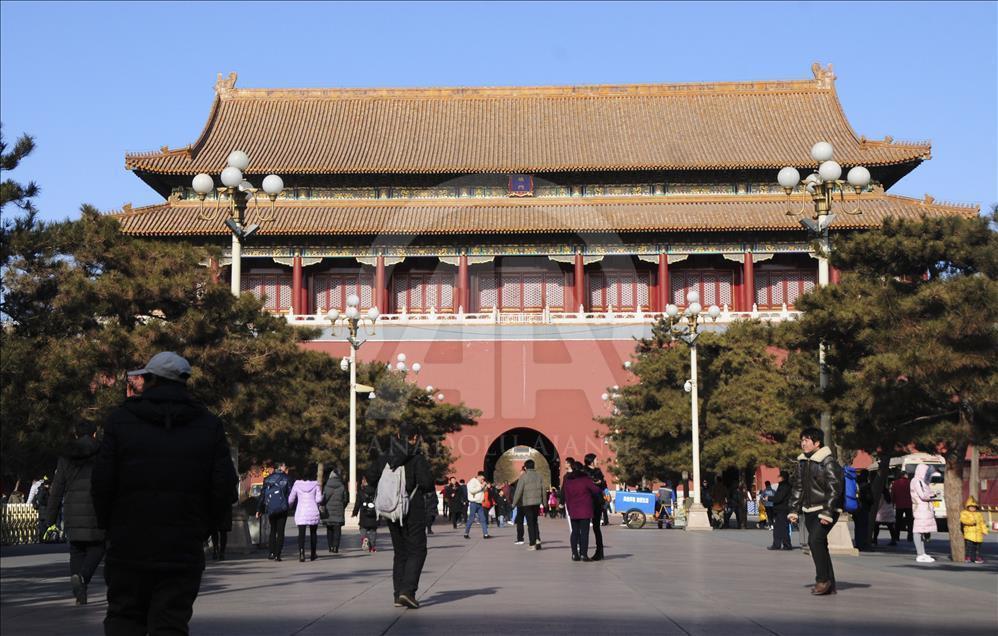
Containing more than 980 buildings and over 8,700 rooms, the Forbidden City is the largest and best-preserved wooden architectural ensemble in the world. The central axis of the palace is a spatial expression of imperial authority. At its southern end lies the Meridian Gate, at its northern end the Gate of Divine Might, and on the eastern and western sides the Gates of Tranquility and Harmony.
Animal figures on the roofs, especially dragon motifs, symbolize imperial power and divine authority. The golden-yellow roof tiles used throughout the palace reflect the exclusive color preference reserved for the emperor.
The Forbidden City was not only the center of ceremony and governance but also a highly sophisticated defensive structure. Walls, moats, and strategically placed gates formed a strong defensive perimeter against external threats. Tree planting within inner courtyards was strictly limited to prevent concealment.
The emperor’s sleeping quarters were kept secret to reduce the risk of assassination. Additionally, stone blocks placed beneath the palace floor provided protection against potential underground attacks. Throughout history, no emperor has been killed by an attack within the Forbidden City.

The Forbidden City (AA)
The Forbidden City is one of the most important symbols of Chinese culture. The artifacts housed within reflect the rich artistic sensibilities of the imperial era. The Palace Museum’s collection contains over 1.5 million items, more than 8,000 of which hold the status of first-class national treasures. In this regard, the Forbidden City is not merely an architectural structure but also one of the world’s largest museums.
Inscribed on UNESCO’s World Heritage List in 1987, the Forbidden City is described as “the largest and best-preserved wooden architectural ensemble created by humanity.” This status reinforces its universal cultural significance.
Today, the Forbidden City is one of China’s most visited cultural heritage sites, with annual visitor numbers ranging between 10 and 16 million. It plays a vital role in national celebrations, cultural events, and international tourism. For the Chinese people, it remains a symbol of their imperial past; for the world, it endures as a masterpiece of architecture and culture.

Foundation and Historical Development
Architectural Layout and Features
Security Features
Cultural and Artistic Value
UNESCO World Heritage Status
Contemporary Significance and Visitor Profile