This article was automatically translated from the original Turkish version.
+1 More
Currency(s) | Silver Tael and Copper Cash | ||||||||
|---|---|---|---|---|---|---|---|---|---|
Year(s) | 1644-1912 | ||||||||
Capital(s) | Beijing (Jingshi) | ||||||||
Founder(s) | Hong Taiji (gave it the name) Nurhaci (laid the foundations) | ||||||||
Official Languages | Manchu, Chinese (Mandarin), Mongolian | ||||||||
Important Ruler | Emperor Qianlong | ||||||||
Official Religion | Confucianism (State), Tibetan Buddhism (Court), Shamanism (Manchu tradition) | ||||||||
Administrative Center | Forbidden City (Inner Palace) | ||||||||
Qing Dynasty (Chinese: 清朝; Pinyin: Qīngcháo; Manchu: Daicing Gurun) was a dynasty established by the Manchus, a Tungusic people native to East Asia. Originating from the northeastern steppes of Manchuria, the Manchus crossed the Great Wall of China and entered Beijing in the mid-17th century, replacing the Ming Dynasty. This shift in power marked a long-term transformation that significantly altered China’s ethnic and demographic structure.
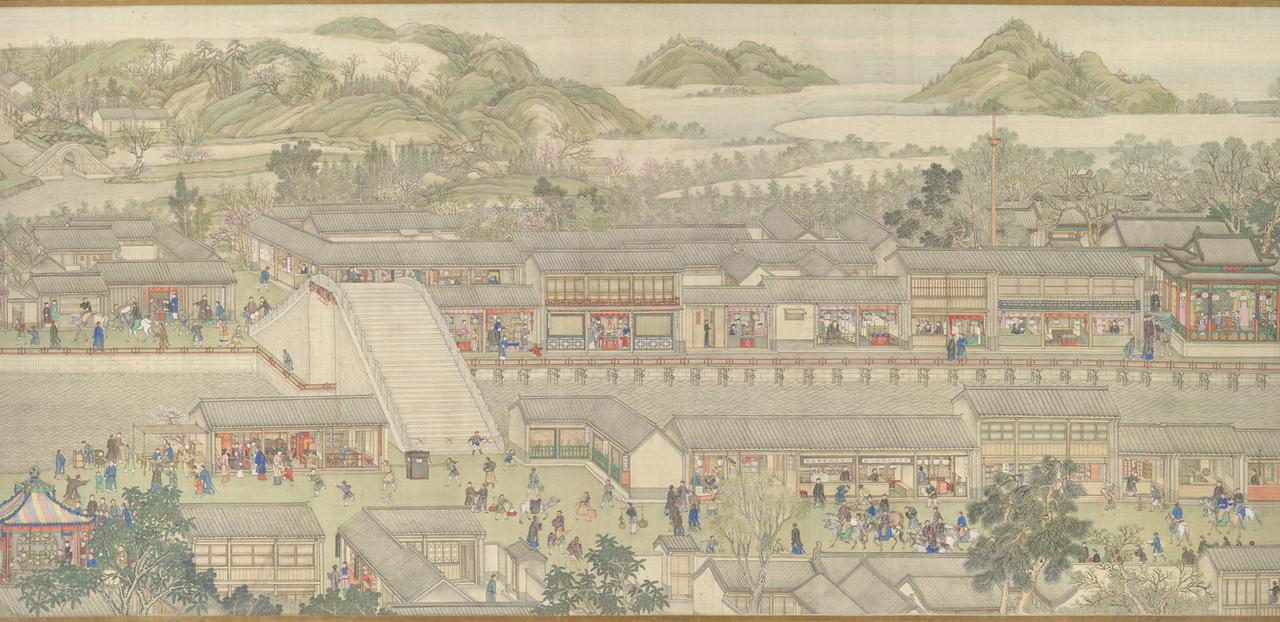
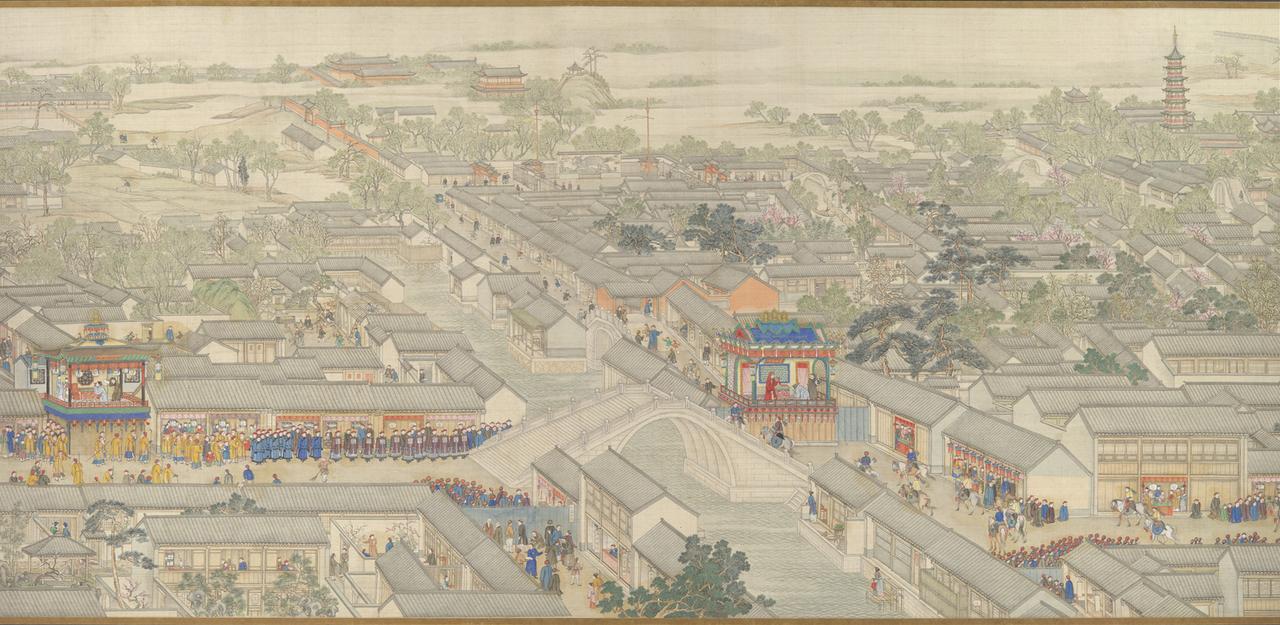
An Engraving from the Qing Dynasty (Metropolitan Museum)
Upon entering China, the Manchus encountered established populations such as the Han Chinese, Mongols, and Tibetans. Han culture was the most influential indigenous element, particularly in state bureaucracy and Confucian governance. Although the official language of the dynasty within the Forbidden City was Manchu, archival records show that imperial edicts, diplomatic documents, and monuments were also written in Chinese, Mongolian, Tibetan, and Uyghur. This demonstrates that the Qing Dynasty distinguished itself not only through military success but also through cultural synthesis policies based on the Han-Manchu duality.
The Qing emperors established their administrative centers in northern China, around Beijing. This region became the core territory of the expanding empire. Beijing continued to serve as the capital. Moreover, during this period, it is possible to speak of an empire that encompassed not only traditional Chinese lands but also Mongolia, Xinjiang, and Tibet.
The Qing Dynasty’s emergence on the historical stage began with Nurhaci in the early 17th century, who united the Jurchen tribes. Nurhaci is historically recognized as both the founder of the military “Eight Banners” system and the progenitor of the dynasty. However, in Manchu records, his son Hong Taiji emerges as a more prominent figure in institutionalizing the state and formally adopting the dynastic name Qing to assert imperial ambitions. Thus, the period culminating in the entry of the army into Beijing in 1644 under the regent Dorgon and the ascension of Emperor Shunzhi is regarded as the dynasty’s true founding. 【1】
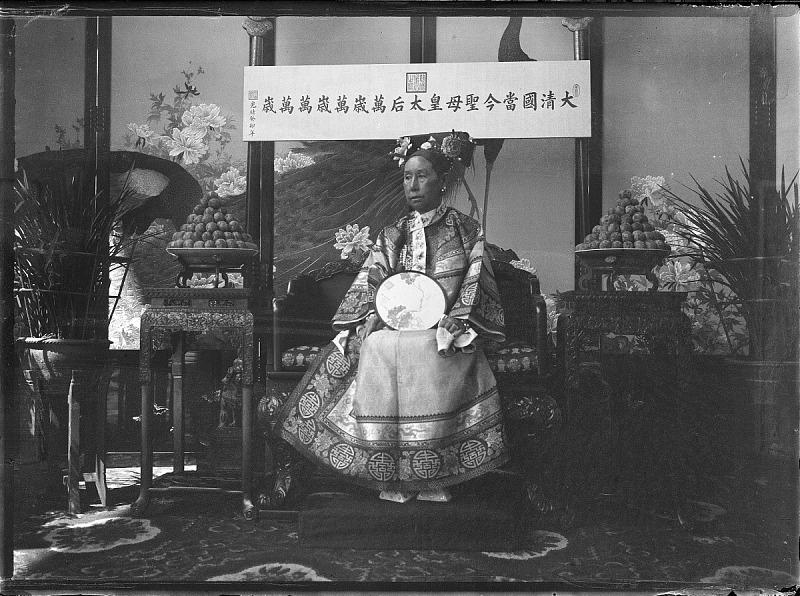
Empress Dowager Cixi (Asian Art Museum)
The Manchus chose Beijing as their capital, shaping the future centralized structure of the Qing state. During their reign, the Qing ceased to be merely a power confined to Manchuria; by crossing the Great Wall, they became a dominant political actor over the entire Chinese territory. Campaigns against Ming remnants and the suppression of the “Three Feudatories Rebellion” in the south affected the state’s relations with the outside world and local populations. These actions aimed to control agricultural basins and consolidate Manchu authority over the Confucian bureaucracy.
Emperors Kangxi and subsequently Qianlong extended this expansionist policy further, incorporating Taiwan, Mongolia, Tibet, and Xinjiang to extend the empire’s borders to their historical maximum of 13 million square kilometers. The campaigns of the 18th century demonstrated the Qing’s ability to project influence deep into Central Asia. This era, known as the “Rise and Prosperity” period (1644–1800), was one of stability marked by population explosion, economic growth fueled by silver inflows, and the flourishing of art during its “High Age.” 【2】
The Rise Period was characterized by the institutionalization of centralized authority through the Han-Manchu duality and the consolidation of the dynasty’s structure. It was also the era in which the foundations of imperial ideology and the multiethnic state structure were laid. Qing emperors defined themselves as the “Son of Heaven” within the Chinese tradition and as the “Great Khan” within the steppe tradition, reinforcing their legitimacy among diverse peoples. During this period, emperors fulfilled not only the role of military leaders but also that of Confucian sages and Buddhist patrons. This multifaceted model of kingship reinforced the emperor’s absolute and universal role in society. Thus, the Rise Period established the core structure of the empire that defined modern China’s borders and laid the groundwork for the subsequent “Decline” phase.
The Qing Dynasty’s administrative center evolved in parallel with the empire’s expansion strategy. While Mukden (Shenyang) served as the capital during the early Manchu period in Manchuria, the imperial throne was permanently relocated to Beijing (Beijing) following the victory of 1644.
Beijing was sharply divided into the “Inner City” (Tatar City) and the “Outer City.” Manchu elites and the Eight Banners units were housed within the walled Inner City, while Han Chinese resided in the Outer City. The Forbidden City served as the center of bureaucracy and ritual, while secondary capitals such as the Summer Palace and Jehol (Chengde) functioned as strategic bases where emperors maintained their steppe heritage and conducted diplomatic engagements.
The dynasty’s roots lie in the Tungusic Jurchen (Cürchen) tribes settled in the northeastern region beyond the Great Wall (Manchuria), who led a semi-nomadic lifestyle. These communities, organized as scattered clans engaged in hunting and agriculture, were unified under the leadership of Nurhaci of the Aisin Gioro clan (Manchu: "Golden Clan"). Nurhaci named the state he founded in 1616 “Later Jin” (Later Golden), in reference to his ancestors who ruled northern China in the 12th century. However, this name carried a political disadvantage, as it was associated in Han Chinese historical memory with “barbarian invasions.” 【3】
To shed this historical burden and universalize the empire, Nurhaci’s son Hong Taiji enacted a radical transformation in 1636. He changed the ethnic group’s name from Jurchen to “Manchu” and bestowed upon the dynasty the name “Qing” (Pure/Bright). This renaming carried symbolic and legitimacy claims rooted in the Chinese cosmological theory of the “Wu Xing” (Five Elements):
The Qing Dynasty’s administrative structure was based on a dual system (diarchy) synthesizing traditional Chinese bureaucracy with Manchu military aristocracy. The emperor was recognized as the absolute authority, the "Son of Heaven", while state administration was carried out through the Six Ministries inherited from the Ming period (Personnel, Finance, Rites, War, Justice, and Public Works). However, the Qing administration appointed both a Manchu and a Han Chinese official to each ministry to ensure administrative balance, thereby leveraging local elite expertise while securing political loyalty.
A critical component of central authority was the Grand Council (Junjichu), established during the reign of Emperor Yongzheng in 1729. Originally created to manage military campaigns, it evolved into the highest decision-making mechanism, bypassing cumbersome bureaucracy and issuing direct imperial orders. Additionally, the empire established a new institution, the Lifanyuan (Court of Colonial Affairs), to administer territories outside China (Mongolia, Tibet, Xinjiang), which did not exist under the Ming. In local administration, the Confucian civil service examination system was preserved to ensure the merit-based continuity of the bureaucracy.
The political history of the Qing Dynasty was shaped by twelve emperors across three main phases (Founding, Zenith, and Decline), reflecting the integration of a steppe-based military structure into the Chinese bureaucracy.
The dynasty’s foundations were laid by Nurhaci, who united the Jurchen tribes, and his son Hong Taiji, who established imperial institutions and changed the dynasty’s name to Qing. However, the first Qing ruler to sit on the Dragon Throne in Beijing was Emperor Shunzhi (1644–1661). During his minority, under the regency of Dorgon, resistance south of the Great Wall was crushed and Manchu authority was established.
This was the empire’s most brilliant era, presided over by three great rulers:
The 19th century was marked by struggles against Western imperialism and internal rebellions:
The dynasty’s end came during the reign of Puyi (Xuantong), who ascended the throne as a child. His abdication on 12 February 1912, following the Xinhai Revolution, ended China’s 2,000-year imperial tradition. 【5】
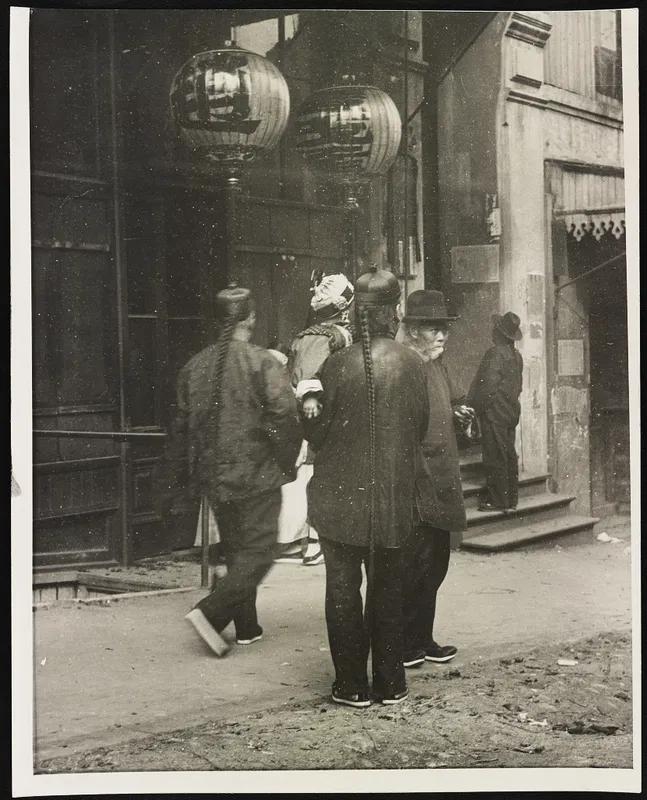
Manchu Hair Braid (Public Domain Image Archive)
The Qing Dynasty’s occupation of Beijing after crossing the Great Wall was not merely a military victory but the result of the Ming Dynasty’s internal collapse and a strategic alliance. In the spring of 1644, Li Zicheng, leader of the “Dashun” rebel force, captured Beijing, leading to the suicide of the last Ming emperor. Amid this chaos, Wu Sangui, the Ming general guarding the strategic Shanhai Pass on the eastern end of the Great Wall, found himself caught between two fires.
Rather than surrender to the rebels, General Wu chose to ally with the Manchu regent Prince Dorgon and opened the gates of the Great Wall to the Manchu armies. In this event, the Manchus used the pretext of punishing the rebels to enter Beijing; instead of transferring power, they proclaimed the young Emperor Shunzhi as ruler and declared they had inherited the “Mandate of Heaven” (Tianming).
The most tangible manifestation of Manchu authority over the Han Chinese was the “Queue Order,” enacted in 1645. Prince Dorgon mandated that all Han Chinese men shave the front of their heads and braid the remaining hair into a long queue (Manchu: sonco) to visibly enforce Qing dominance.
In Confucian tradition, the body and hair were considered sacred legacies from ancestors. Consequently, this decree provoked a profound cultural shock and bloody resistance, particularly in southern China (notably the Yangzhou and Jiading massacres). However, the Qing regime brutally suppressed this resistance with the policy: “Keep your hair and lose your head; shave your hair and save your head.” Thus, the “Queue” became the undisputed symbol of Manchu dominance and Han political submission, enduring until 1912.
The period of rule by Emperors Kangxi, Yongzheng, and Qianlong (approximately 1683–1796) is known to historians as the “High Qing.” This era marked China not merely as a regional power but as a “superpower” at the center of the global economy and demography. 【6】
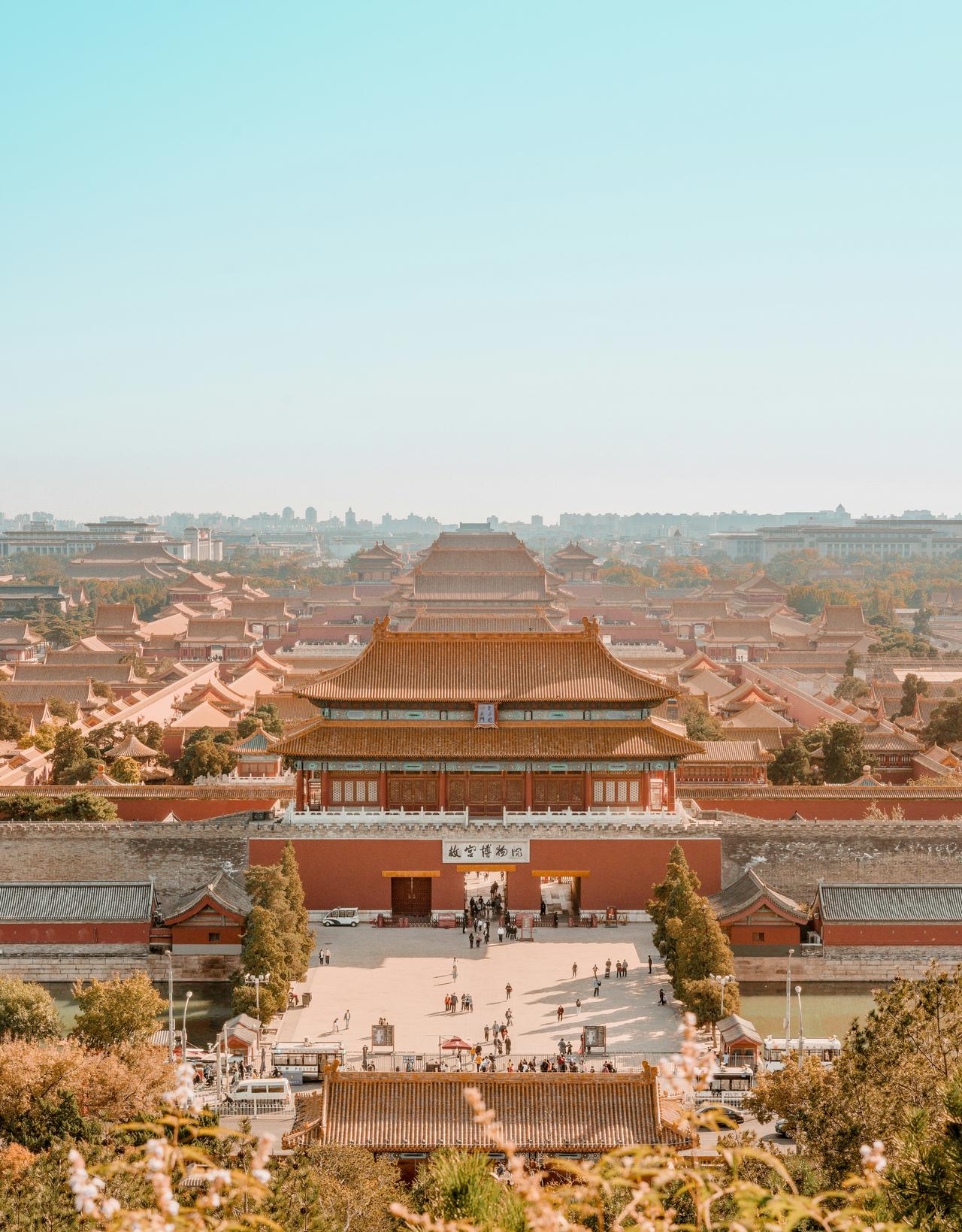
The Imperial Administrative Center: The Forbidden City (Unsplash)
Approximately 32% of the world’s pre-industrial production and GDP belonged to the Chinese Empire. 【7】 This economic ascendancy was driven by Western demand—particularly from Britain and Spain—for Chinese tea, silk, and porcelain. The Qing administration maximized state control by restricting foreign trade exclusively to the port of Canton (Guangzhou) in 1757 (Canton System). This trade imbalance channeled vast quantities of silver reserves from Europe and America into the Chinese market, making China the world’s “silver sink.” This abundance of silver monetized the empire’s tax system (silver standard) and domestic markets, giving rise to a primitive form of commercial capitalism.
This era of prosperity was cemented by an ecological revolution. Thanks to the Columbian Exchange, New World crops such as potatoes, maize, peanuts, and tobacco, introduced from the Americas, began to be cultivated in China’s previously unsuitable mountainous and arid lands. This agricultural diversification minimized famine risks and triggered an unprecedented population explosion in Chinese history. The population, which stood at around 150 million at the end of the 17th century, surged to 400–450 million by the early 19th century, laying the foundation for modern Chinese demography. 【8】
Emperor Qianlong initiated China’s largest literary project to transform this material wealth into a cultural monument. Between 1773 and 1782, thousands of scholars compiled the Siku Quanshu (Complete Library of the Four Treasuries), an encyclopedia comprising 36,000 volumes and approximately 800 million characters. 【9】 While this project preserved classical texts, it also served as a tool of “Literary Inquisition,” systematically destroying thousands of books containing expressions critical of Manchu rule. 【10】
The Qing Dynasty’s foreign policy vision was based on the “Tianxia” (All Under Heaven) philosophy, fundamentally different from modern “nation-state” diplomacy, which viewed China as the center of civilization. According to this Sinocentric worldview, the Qing Emperor was not merely the ruler of China but the guardian of the universal order, and equal relations with other states were impossible.
Relations were ritualized through a hierarchical “Tribute System.” Under this system, neighboring states such as Korea, Vietnam, Siam, Burma, and the Ryukyu Kingdom acknowledged China’s cultural and political supremacy in exchange for the privilege of trade (“favors”) and military protection. This system was administered by the Ministry of Rites, a Confucian institution.
The Qing Dynasty’s first formal diplomatic agreement with a Western power emerged from border conflicts in Northeast Asia with the Tsardom of Russia. The Treaty of Nerchinsk (1689) and the subsequent Treaty of Kyakhta (1727), which settled disputes over the Amur River basin, defined the border between the two empires and regulated frontier trade. These treaties demonstrated the pragmatic side of Qing diplomacy: Russia was treated not as a tributary state but as a rival empire, and negotiations employed Jesuit missionaries fluent in Latin as intermediaries.
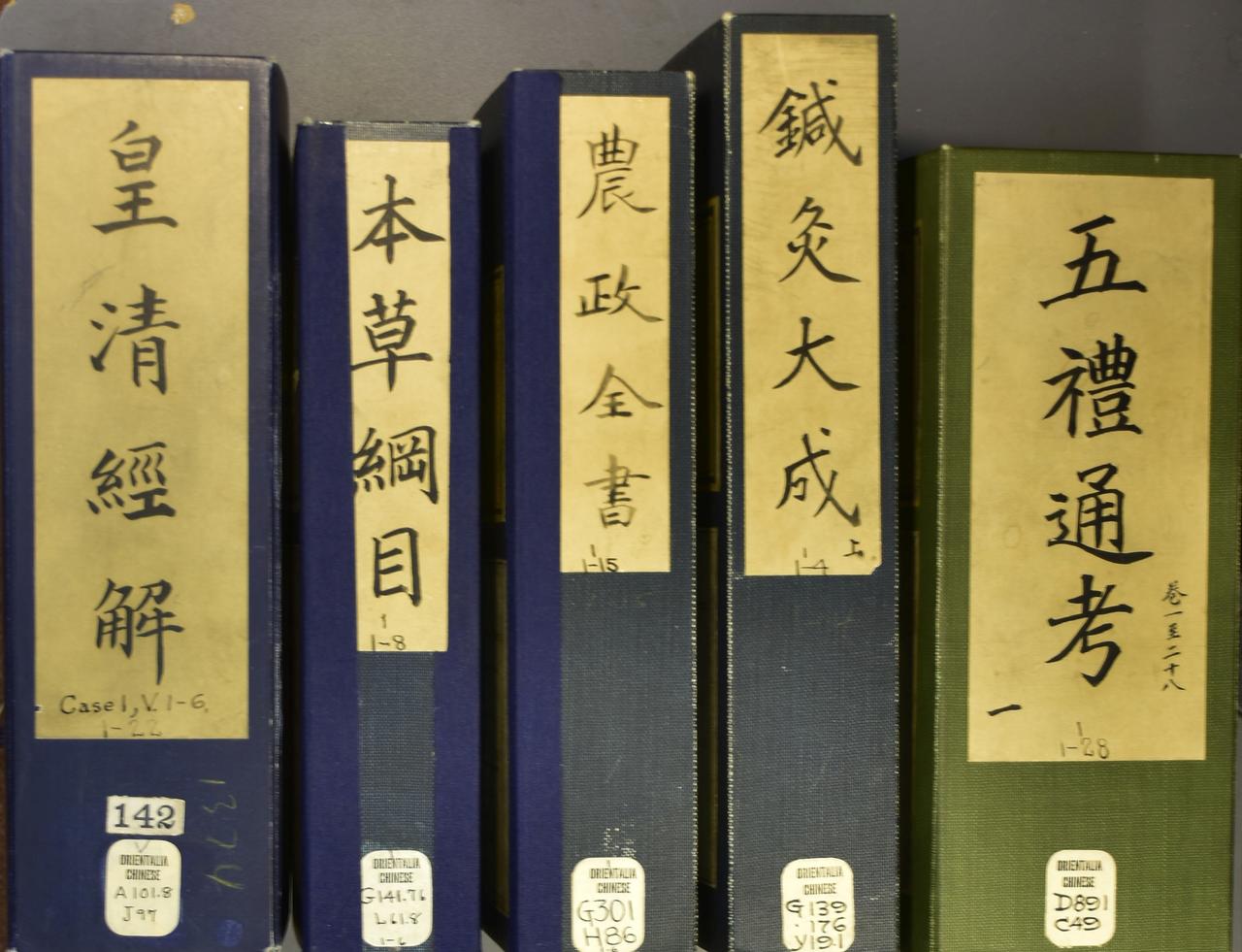
Official State Records and Classical Texts Collection from the Qing Dynasty (Anchi Hoh)
In the mid-18th century, maritime trade with the West was restricted exclusively to the port of Guangzhou (Canton) and conducted through state-monopolized guilds known as the Cohong (Canton System). Industrializing Britain, seeking to lift these restrictions and establish a permanent embassy in Beijing, sent a large delegation led by Lord Macartney in 1793. However, Macartney’s refusal to perform the “kowtow” (full prostration) before Emperor Qianlong triggered a clash of worldviews (Westphalian sovereignty vs. Sinocentrism). Qianlong’s reply to King George III of Britain, "We possess all things; we have no need for your goods", became a historical symbol of Qing isolationism toward the outside world. 【11】
The 19th century marked the collapse of this traditional order under military coercion and the transition to the “Treaty System.” After China banned opium trade and confiscated opium stocks in its ports, Britain launched the First Opium War (1839–1842) to forcibly open Chinese ports and exempt British subjects from Chinese law. The resulting Treaty of Nanjing effectively ended China’s diplomatic sovereignty. Under this treaty, China lost its tariff autonomy and, most significantly, granted Westerners “Capitulation Rights” (Extraterritoriality). This meant that foreigners in China were subject not to Chinese courts but to their own consular jurisdictions. 【12】
The capture of Beijing after the Second Opium War forced the empire to establish diplomatic relations with Western powers. In 1861, the Zongli Yamen was established as the Qing Dynasty’s first modern “Ministry of Foreign Affairs,” attempting to negotiate with Western diplomats on equal terms and translating international law into Chinese.
Opium Wars (Khan Academy)
By the end of the century, Qing foreign policy had collapsed entirely. The Sino-French War (1884–1885) resulted in the loss of French suzerainty over Vietnam; the First Sino-Japanese War (1894–1895) and the Treaty of Shimonoseki led to the cession of Taiwan to Japan and the loss of influence over Korea, China’s most loyal tributary. The Boxer Protocol of 1901 allowed foreign legations to maintain military garrisons in Beijing, rendering the Qing Dynasty powerless even in its own capital and reducing the state to semi-colonial status.
The Qing Dynasty’s legal and social structure was built not on Western concepts of “rights” but on Confucian principles of “duties” and “rituals” (Li). The Da Qing Lüli (Great Qing Legal Code), codified in 1646 and in force until 1911, formed the foundation of this system. The legal system was viewed as a synthesis of moral education (Li) and punitive sanctions (Fa). Civil law (debts, commerce) was largely left to local guilds and clan rules, while state law developed almost entirely around criminal law. 【13】
The most distinctive feature of the Qing judicial system was the principle of "Collective Responsibility" (Lianzuo). When one committed one of the "Ten Abominations" (treason, regicide, etc.), punishment extended beyond the offender to include his father, sons, and even neighbors. Judicial proceedings were conducted by the local magistrate, who simultaneously served as detective, prosecutor, and judge. There was no presumption of innocence; the accused was presumed guilty, and legal torture (finger compression, bamboo beating) was routinely used to extract confessions.
Social structure was theoretically classified according to the Confucian "Four Occupations" (Si Min) hierarchy: Scholars (Shi) at the top, followed by farmers (Nong), artisans (Gong), and merchants (Shang), who were morally regarded as the lowest for profiting from others’ labor.
However, Qing social reality differed from this theory. The true rulers of society were the "Gentry" (Shenshi) class—local elites who had passed the civil service examinations but awaited official appointments or were retired. This class enjoyed tax exemptions and privileged legal treatment (e.g., immunity from corporal punishment). The Gentry served as a bridge between the state bureaucracy and the rural populace, performing critical public services such as tax collection, irrigation maintenance, and local security. Merchants, especially salt merchants, grew wealthy in the 18th century, sent their sons to take the examinations, and integrated into the Gentry class by purchasing status.
Qing society was built on a rigid patriarchal structure based on the "Three Bonds" doctrine (ruler-subject, father-son, husband-wife). Paternal authority was absolute; failure to fulfill filial duties (Xiao) was punishable by death. Women had virtually no property or divorce rights. The practice of "foot binding," a symbol of status and eroticism among Han Chinese women, was widespread; it physically confined women to the home. The Manchu administration strictly forbade foot binding among its own women, who instead wore platform shoes with "hoof-shaped" soles.
Moreover, society was divided into two separate legal systems: Manchus (Bannermen) and Han Chinese (Civilians). In Beijing, Manchus lived in the Inner City while Han Chinese were confined to the Outer City. Manchus received regular state rice stipends and were prohibited from performing heavy labor. This privileged status was maintained until the dynasty’s end.
The Qing Dynasty exhibited a cosmopolitan structure in which multiple belief systems coexisted hierarchically under the imperial umbrella. Emperors pursued a multifaceted religious policy to appeal to the faiths of different ethnic groups, reinforcing their claim as universal rulers (Chakravartin).
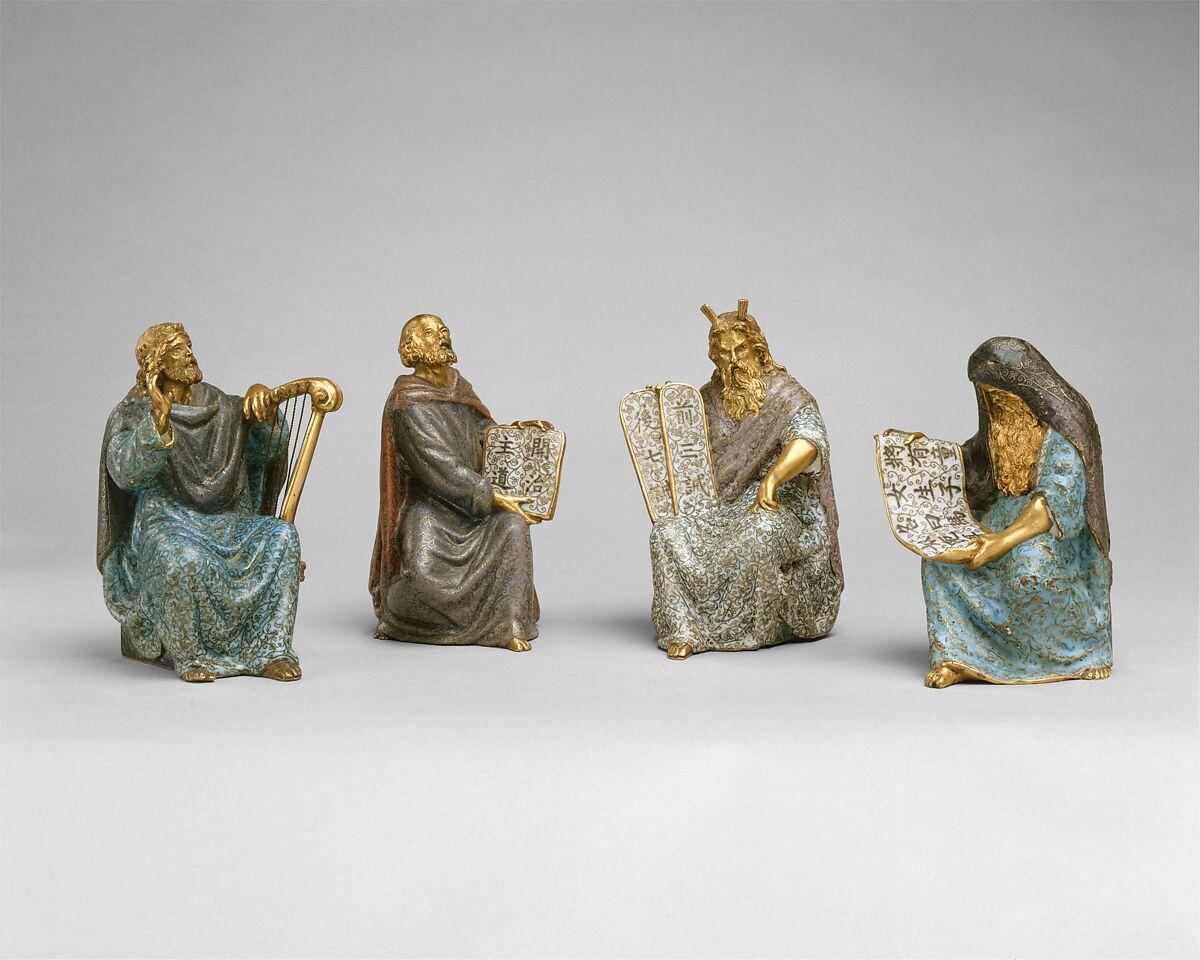
Old Testament Figures, Qing Dynasty (Metropolitan Museum)
The foundation of imperial governance and social backbone was Neo-Confucianism (Zhu Xi School), inherited from the Song Dynasty. This doctrine, more a state legitimacy source and moral compass than a religion, positioned the emperor as the "Son of Heaven" (Tianzi), responsible for maintaining cosmic order. The "Four Books and Five Classics," forming the curriculum of the civil service examinations (Keju), sanctified hierarchy, obedience, and filial piety (Xiao). Confucian temples in every county served as spiritual pillars of state authority.
To preserve their ethnic identity, the Manchus maintained ancestral Manchu shamanistic rituals in the most private quarters of the palace (Kunning Palace). However, the most effective tool in imperial foreign policy was Tibetan Buddhism (Lamaism). Emperor Qianlong portrayed himself as the reincarnation of the Buddhist deity Manjusri Bodhisattva, establishing authority over warlike Mongol and Tibetan populations. The Yonghe Temple (Lama Temple) in Beijing and the vast temple complexes in Chengde stand as architectural proof of this strategic religiosity. 【14】
The Qing period was the era of the most intense synthesis between Islam and Chinese culture. The administration recognized Muslims (Hui) as one of the "Five Peoples" and sought to integrate them into the Confucian system rather than exclude them. During this period, Muslim scholars such as Wang Daiyu and Liu Zhi created the "Han Kitab" corpus, explaining Islamic theology using Confucian concepts. Mosques were constructed using traditional Chinese architecture (curved roofs, woodwork), becoming "localized." However, this tolerance gave way to violent suppression during 19th-century rebellions in Gansu and Yunnan (Panthay).
Early Jesuit missionaries (Matteo Ricci, Giuseppe Castiglione) gained great prestige at court for their skills in astronomy, mathematics, and painting. Emperor Kangxi was tolerant of Christianity. However, the Vatican’s prohibition of Chinese Christians from participating in ancestral rites triggered the "Rites Controversy," rupturing relations. Emperor Yongzheng, viewing this ban as an insult to imperial authority, banned Christianity in 1724 and expelled missionaries.
The spiritual world of ordinary people (peasants) consisted of a blend of Taoism, Buddhism, and local spirit worship. In cities, worship of protective deities such as the "God of War" (Guandi) in guild halls and "Mazu" among sailors was integral to daily life and commerce.
The Qing Dynasty represents a "Grand Synthesis" period in Chinese art and cultural history, where traditions were reinterpreted and reached technical peaks.
Qing painting developed along two opposing poles. On one side was the "Orthodox School" (Four Wangs), supported by the court and valuing imitation of Song and Ming masters. On the other were the "Individualists," reflecting the melancholy of the Ming collapse. Monk-painters such as Bada Shanren and Shitao are regarded as pioneers of modern art.
However, the era’s innovation lay in Western influence. Jesuit painter Giuseppe Castiglione (Lang Shining) fused Western perspective and shading techniques with Chinese ink painting to create a "Sino-European" style. Portraits of emperors and horse paintings are masterpieces of this hybrid style. In ceramics, the Jingdezhen kilns reached their peak technical capacity.
In particular, export porcelain known as "Famille Rose," using opaque enamels targeting Western markets, became a global brand. Blue-and-white porcelain gave way to polychrome, highly decorative vase designs.
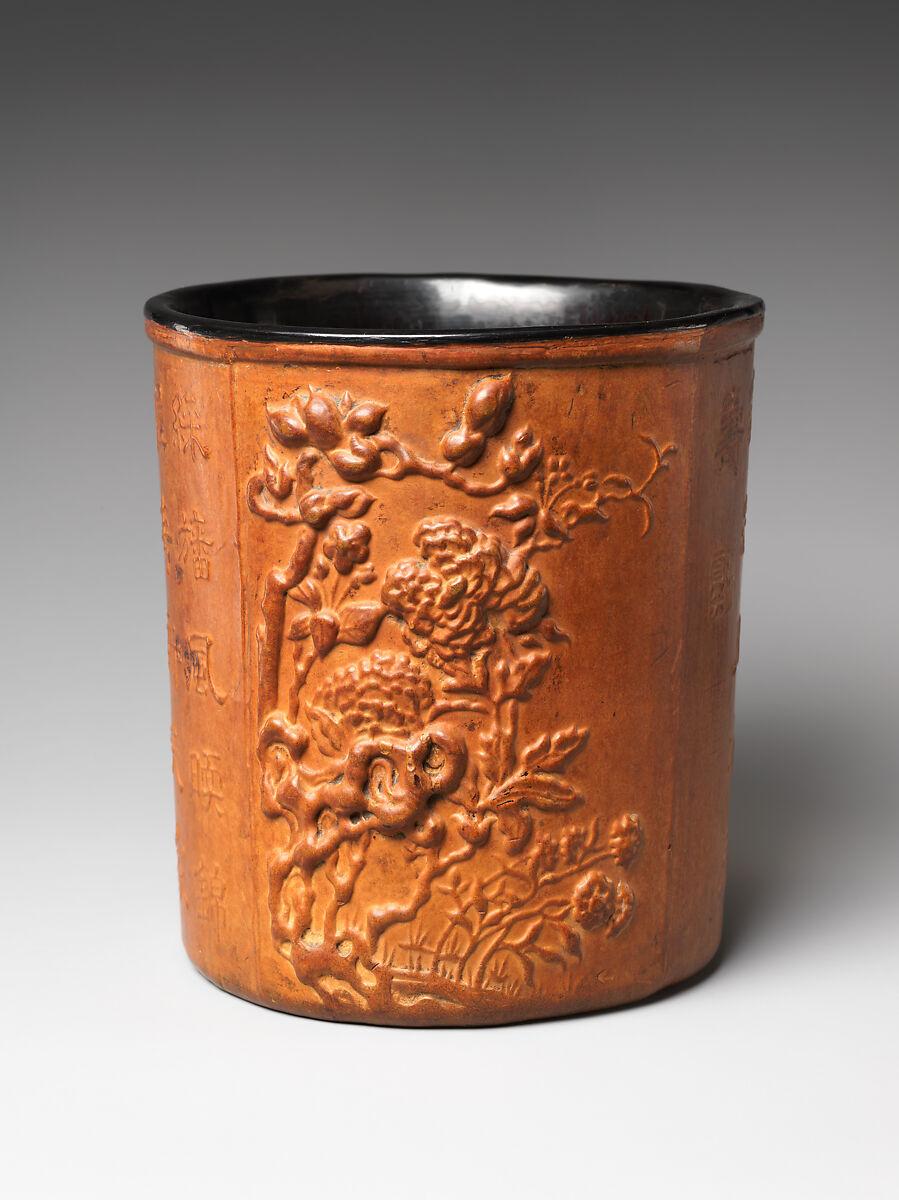
Highly Decorative Qing Brush Holder (Metropolitan Museum)
Qing architecture adopted Ming’s rigid symmetry but rendered it more "baroque" and ornate. The Forbidden City in Beijing was restored and preserved as the stage of imperial power. However, the Qing’s true architectural legacy lies in the Summer Palace (Yiheyuan) and the Old Summer Palace (Yuanmingyuan) complexes, where nature and power converge. These palaces are refined examples of Chinese garden art (artificial lakes, rockeries, pavilions).
Additionally, the Putuo Zongcheng Temple in Chengde, built to signify the Manchus’ political ties with Tibetan Buddhism, is a replica of Lhasa’s Potala Palace. This structure is the most concrete evidence of architecture as a diplomatic tool. In civil architecture, Beijing’s famous "Siheyuan" (courtyard houses) spatially embodied the family’s inward-looking and hierarchical structure.
The literary work that left its mark on this era is "Dream of the Red Chamber" (Honglou Meng) by Cao Xueqin, universally regarded as China’s greatest novel. 【15】 This novel, narrating the decline of an aristocratic family, offers a detailed panorama of Qing society. Academically, the "Evidence-Based Research" (Kaozheng) movement emerged, moving away from abstract philosophy to investigate the historical origins of texts.
The greatest project in literary culture was the Siku Quanshu (Complete Library of the Four Treasuries) encyclopedia, commissioned by Emperor Qianlong. However, this project also functioned as a censorship mechanism: thousands of books critical of Manchu rule were collected and burned. In linguistics, official documents (edicts, monuments) were required to be written in both Manchu and Chinese, but by the 19th century, Manchu had become a dead language outside the palace.
The Qing economy was the world’s largest and most sophisticated pre-industrial economy in the 18th century. According to Angus Maddison’s data, in 1820, approximately 32% of global GDP was produced by China. This structure was based on intensive agriculture encouraged by the state and a highly developed internal market network. 【16】
The engine of the economy was the widespread adoption of New World crops—maize, potatoes, peanuts, and tobacco—introduced via the Columbian Exchange. These crops enabled cultivation of previously unsuitable arid lands and mountain slopes, fueling the population explosion from 150 million to 450 million ("Demographic Dividend"). However, according to Mark Elvin’s "High-Level Equilibrium Trap" theory, this population surplus made labor so cheap that technological mechanization (Industrial Revolution) became unnecessary, and the economy entered a spiral of "growth without development" (involution). 【17】
Qing trade was conducted through the state-controlled Canton System (1757–1842). In exchange for tea, silk, and porcelain exports, massive silver inflows occurred; Spanish-American silver became the primary source of liquidity for the economy.
The monetary system was based on a "bimetallic standard": large commercial transactions and tax payments used silver taels (liang), while daily transactions used copper cash (wen). In the 18th century, Shanxi merchants developed the "Piaohao" (Draft Bank) system, enabling secure inter-imperial transfers of capital through bills of exchange and creating a primitive form of modern banking.
This balance was disrupted in the 19th century. British illegal opium trade caused silver to flow out of the country; as silver appreciated, copper depreciated. Peasants, forced to pay taxes in silver but earning income in copper, were effectively burdened with tax increases of up to 200%, creating the economic foundation for major popular rebellions (Taiping).
The Qing Dynasty’s military success was based on the original socio-military organization known as the "Eight Banners" (Ba Qi), developed by its founder Nurhaci. This system divided Manchu society into both administrative and military units, maximizing mobilization capacity. However, as the empire expanded, the elite Manchu cavalry was supplemented by the "Green Standard Army" (Lüying), composed of conscripts from the Ming army and far more numerous. Green Standard units typically served as infantry in garrison and internal security roles, while Manchu Banner units functioned as shock troops for strategic offensives.
Qing military doctrine synthesized the Manchus’ traditional "Mounted Archery" skills with Ming-era "Firearms" technology. Particularly with the assistance of Jesuit missionaries, heavy siege cannons known as "Red Barbarian Cannons" (Hongyipao) were cast and proved decisive in crossing the Great Wall and in city sieges.
During Emperor Qianlong’s Central Asian (Zungar) campaigns, the Qing army executed one of history’s greatest logistical operations. Granaries and forward outposts established deep in the steppe enabled armies to be supplied for months; this strategy culminated in the complete destruction of the nomadic Zungar Khanate (a war of annihilation bordering on genocide). 【18】 However, in the 19th century, the army lost its training discipline and failed to adapt to Western industrial warfare technology (steamships, rifled muskets), ending this strategic superiority.
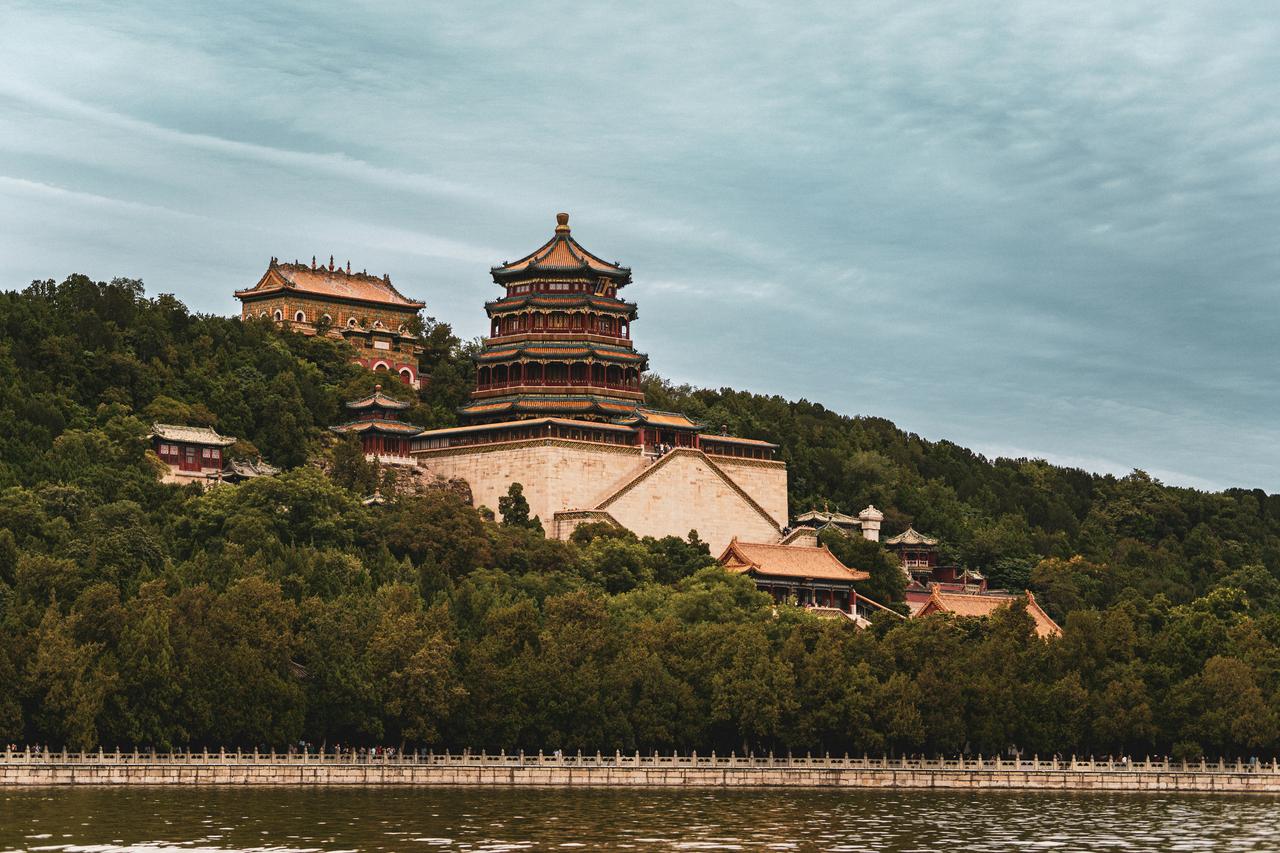
Yiheyuan, China (Unsplash)
The Qing Dynasty represents a period of "reconstruction" and "synthesis" in China’s tangible and intangible cultural heritage. The empire designed Beijing not merely as a political center but as a cultural showcase. Today, the Summer Palace (Yiheyuan), a UNESCO World Heritage Site, was constructed during this period as the pinnacle of imperial garden art, blending northern monumental architecture with southern (Jiangnan) aesthetics.
An example of intangible cultural heritage is Peking Opera (Jingju), born in 1790 when theater troupes from southern provinces (Anhui and Hubei) converged in Beijing for Emperor Qianlong’s 80th birthday celebration. This art form, combining music, vocal performance, mime, dance, and acrobatics, spread from court to populace and became a national symbol of Chinese culture. Empress Dowager Cixi’s patronage of this art helped institutionalize its costumes and stage aesthetics through courtly influence.
Qing culinary culture reflected political integration at the dining table. Its most famous and symbolic example is the legendary "Manchu-Han Imperial Banquet" (Manhan Quanxi). This three-day feast, serving at least 108 dishes, united the two main ethnic groups of the empire—Manchus and Han Chinese—around the same table, conveying a political message. The use of exotic ingredients such as bear paws, camel humps, and monkey brains symbolized the emperor’s dominion over nature.
Muslim (Hui) culinary culture transformed the capital’s cuisine during the Qing period. The concept of "Qingzhen" (Pure and True/Halal) became institutionalized; beef and mutton consumption entered Beijing cuisine through Hui chefs (e.g., "Beijing-style Stew" or "Shuanyangrou"). The dominant Han preference for pork was harmonized with Manchu/Mongol tastes based on lamb, using Islamic slaughtering methods to form the foundation of modern Beijing cuisine.
In contrast to court banquets, the staple foods of the common people were fundamentally transformed by New World crops. Chili peppers, introduced to Sichuan and Hunan in the 18th century, permanently altered the character of Chinese cuisine. Similarly, potatoes, maize, and peanuts, which thrived in arid lands, became essential energy sources that sustained the population explosion during famine periods.
Until the mid-19th century, the Qing Dynasty maintained an autarkic economic model, financing its state budget through internal resources. However, the dynasty’s financial fate entered an irreversible spiral of debt due to massive "War Reparations" imposed by Western powers following unequal treaties and military defeats.
The fiscal turning point was the Sino-Japanese War of 1894–1895. The indemnity of 230 million Kuping taels (silver) owed to Japan under the Treaty of Shimonoseki amounted to approximately three times the Qing treasury’s annual revenue. Unable to raise this cash, the government was forced to take out three large high-interest loans between 1895 and 1898 from British-German (HSBC and Deutsch-Asiatische Bank) and Russo-French banking consortia.
A devastating blow came with the Boxer Protocol of 1901. After suppressing the rebellion, China agreed to pay 450 million taels (totaling nearly 980 million taels with interest) to eight Western powers over 39 years. This amount effectively ended the empire’s financial sovereignty. 【19】
Western banks, to guarantee repayment of their loans, seized control of the Qing state’s most reliable revenue sources. Leading among these was the Imperial Maritime Customs Service, managed by foreign bureaucrats such as Sir Robert Hart. Customs revenues were not sent to Beijing but directly to foreign banks to service debt payments. When customs revenues proved insufficient, the state’s essential monopolies—the Salt Tax and internal customs duties (Likin)—were also pledged as collateral. This created a semi-colonial fiscal system in which the state collected taxes from its own territory but could not use them.
The second pillar of debt was foreign loans for infrastructure projects, ostensibly for railway construction. Foreign loans for railways in the late 19th century granted the lending country concessions over the regions through which the lines passed. For example, Russia gained mining rights and military presence in Manchuria in exchange for financing the Chinese Eastern Railway; Germany transformed the Shandong region into its economic sphere of influence. This lending model contributed to the "Scramble for China," fragmenting the country’s political map.
This financial burden forced the Qing government to increase tax pressure on the local populace. By 1911, the government’s attempt to nationalize railway projects in Sichuan province, previously financed by local capital, and offer them as collateral to foreign banks became the final straw. The "Railway Protection Movement" triggered by this policy ignited the Xinhai Revolution, preparing the ground for the dynasty’s economic collapse. 【20】
The Qing Dynasty’s 19th-century decline was accelerated not only by external pressures but also by the Taiping Rebellion (1850–1864) and power struggles within the court.
Initiated by Hong Xiuquan, a Hakka peasant who failed the civil service examinations in Guangxi province, this rebellion had the character of a religious and social revolution. Hong, proclaiming himself the younger brother of Jesus Christ, developed a syncretic ideology blending Christianity with Chinese folk beliefs. In his "Great Peace Heavenly Kingdom" (Taiping Tianguo), he abolished private property, advocated gender equality (banning foot binding), and declared the Manchus to be "demons."
Controlling the Yangtze River Delta, China’s wealthiest region, for 11 years from Nanjing as its capital, this structure was described as a dagger plunged into the heart of the Qing economy. The war’s outcome, combined with epidemics and famine, resulted in the deaths of 20 to 30 million people.
The rebellion’s most lasting impact was on military structure. 【21】 As the central Green Standard Army proved ineffective against the rebels, the court, desperate, granted authority to local Han Chinese bureaucrats (Zeng Guofan, Li Hongzhang) to raise their own private armies. These new forces, such as the Xiang Army, suppressed the rebellion, but military loyalty shifted from the emperor to these generals. This laid the groundwork for the "Warlord Era" after 1911.
For half a century (1861–1908), the de facto ruler was Empress Dowager Cixi, leader of the conservative Manchu elite in the court, acting as regent for her son Emperor Tongzhi and her nephew Emperor Guangxu.
The critical event of the era was the "Hundred Days’ Reform" of 1898. Young Emperor Guangxu, inspired by Japan’s Meiji Restoration, issued radical decrees aiming to transition to a constitutional monarchy; however, Cixi launched a palace coup using military force, placed the emperor under house arrest, and revoked the reforms.
Cixi’s support of the Boxer Rebellion in 1900, fueled by her anti-foreign sentiment, resulted in a strategic disaster: the occupation of Beijing. One day before her death, she installed the two-year-old Puyi on the throne, sealing the dynasty’s fate.
In 19th-century global politics, the Qing Dynasty and the Ottoman Empire experienced a shared "fate." Both empires, claiming universal sovereignty (Qing: Tianxia; Ottoman: Nizam-ı Alem), simultaneously entered decline due to military losses and internal problems, failing to adapt to the Industrial Revolution. European diplomats labeled the Ottoman Empire the "Sick Man of Europe" and China the "Sick Man of East Asia," viewing both as territories to be partitioned or brought under influence.
Chinese intellectuals closely followed the Ottoman Empire, which shared a similar socio-political structure in the face of Western threats. Reformist thinker Wang Tao studied Ottoman resistance to the West and its Tanzimat reforms, submitting reports to the Qing court. Wang Tao argued that the Ottoman performance in the Crimean War (1853–1856) and its modernization efforts could serve as a model for China’s "Self-Strengthening" movement. He believed that if the "Muslim Empire" could survive with modern weapons and diplomacy, the Qing Dynasty could also survive by transferring military technology.
The most significant diplomatic similarity was the forced abandonment of the traditional "superiority" approach to foreign relations. Just as the Ottomans transitioned from the Reis-ül Küttab to a modern Foreign Ministry, the Qing Dynasty established the Zongli Yamen (Office of Foreign Affairs) after the 1860 occupation of Beijing to negotiate with Western powers on equal footing. However, both institutions functioned less as defenders of state sovereignty and more as crisis management desks for mounting external pressures and debt obligations.
The most concrete parallel in the decline of both empires was the loss of legal sovereignty. The Ottoman "Capitulations" corresponded to the Qing’s "Unequal Treaties" signed after the Opium Wars, such as Nanjing and Tianjin. In both systems, Western powers acquired the right of "Extraterritoriality." Thus, an English citizen committing a crime in Istanbul or Shanghai was tried not in local courts but in his own consulate. This rendered both states unable to exercise full sovereignty on their own soil. Ultimately, the Qing Dynasty, like the Ottomans, attempted to survive by adopting Western military technology and bureaucratic reforms, but failed to prevent political collapse due to economic dependency (Düyun-ı Umumiye and Maritime Customs Service).
The 268-year reign of the Qing Dynasty and China’s 2,000-year imperial tradition ended not through a single event but through a process of structural collapse and a military uprising. Historians agree that by 1911, the dynasty had lost the "Mandate of Heaven" (Tianming) both ideologically and practically. The fundamental dynamics of decline were the weakening of central authority, financial insolvency, and rising Han Nationalism.
The spark of the revolution was paradoxically a modernization initiative by the state. To repay debts to foreign banks (a British-French-German-American consortium) and strengthen central authority, the Qing government decided to "nationalize" the Sichuan-Hankou railway line, previously financed by local merchants (Gentry). The prospect of the railway being mortgaged to foreign capital triggered massive protests in Sichuan province. This civil disobedience movement, known as the "Railway Protection Movement," turned into an armed rebellion when Qing troops opened fire on protesters, diverting imperial military strength westward and creating a power vacuum at the center.
The revolution erupted not from a planned leadership but from an accidental event. In Wuchang, Hubei province, soldiers of the "New Army," members of secret revolutionary organizations, accidentally triggered a bomb explosion while making explosives in a house in the Russian concession. The discovery of membership lists and fear of execution drove the soldiers to revolt on the night of 10 October 1911. 【22】 The rebels captured the provincial governor and declared their rejection of the Qing Dynasty. This event triggered a domino effect, leading 15 provinces to declare independence within weeks.
During the uprising, Sun Yat-sen, fundraising in the United States (Denver), was recognized as the ideological leader of the revolution. His organization, the Tongmenghui (United Alliance), incited Han nationalism with the slogan "Expel the Manchus, Restore China." In December 1911, Sun Yat-sen returned to China and was elected Provisional President by provincial delegates in Nanjing. 1 January 1912 was recognized as the founding date of the Republic of China.
The person who determined the revolution’s outcome was neither the child emperor Puyi nor the revolutionary leader Sun Yat-sen, but General Yuan Shikai, commander of the Beiyang Army, the Qing Dynasty’s modern and powerful military force. Summoned by the imperial court to suppress the rebellion with full authority, Yuan adopted a pragmatic strategy. Sitting at the negotiation table with both revolutionaries and the court, Yuan Shikai promised Sun Yat-sen the presidency in exchange for turning his guns toward the imperial palace.
On 12 February 1912, Empress Dowager Longyu signed the "Edict of Abdication" on behalf of the six-year-old Emperor Puyi, formally ending the Qing Dynasty’s political existence. With this edict, Puyi, guaranteed the right to continue living in the Forbidden City, relinquished sovereignty to "the people." Thus, Chinese imperial history, beginning with Qin Shi Huang in 221 BCE, ended with the Qing Dynasty, and Asia’s first republic was established.
Although the Qing Dynasty was overthrown, its legacy defined the borders of modern China. As Fairbank noted, the Republican government "inherited" the expanded imperial territory (Manchuria, Mongolia, Xinjiang, Tibet) and sought to preserve this territorial integrity through the slogan of the "Republic of Five Peoples" (Han, Manchu, Mongol, Hui, Tibetan). The Qing period, which tripled China’s population and doubled its territory, but failed to undergo structural transformation in the face of the modern world system, is recorded in history as the last dynasty to withdraw from the stage.【23】
BBC Bitesize. "The Fall of The Qing Dynasty." BBC (2026). Accessed February 2, 2026. https://www.bbc.co.uk/bitesize/articles/zds2qfr#z2rnhcw.
Columbia University. "The Kanxi Inspection Tour Scrolls of The Kangxi & Qianlong Emperors." *Asia for Educators* (2026). Accessed February 2, 2026. https://afe.easia.columbia.edu/qing/.
Eberhard, Wolfram. "Çin Tarihi." *Türk Tarih Kurumu Yayınları* (2019). Accessed February 2, 2026. https://www.ttk.gov.tr/karekod/cin-tarihi.pdf
GZT Kültür Sanat. "Mançu imparatorlarından Ming mirasına: Qing döneminde sanatın altın çağı." GZT (2020). Accessed February 2, 2026. https://www.gzt.com/kultur/mancu-imparatorlarindan-ming-mirasina-qing-doneminde-sanatin-altin-cagi-3713511
Hoh, Anchi. "Discovering the Library’s Older Chinese Collection, Online." Library of Congress Blogs, December 2, 2017. Accessed February 13, 2026. https://blogs.loc.gov/international-collections/2017/12/discovering-the-librarys-older-chinese-collection-online/.
KhanAcademyTürkçe. "Afyon Savaşları (Sanat ve Sosyal Bilimler) (Dünya Tarihi)." YouTube. Accessed February 13, 2026. https://www.youtube.com/watch?v=BgGnP50goZQ.
Maerjiang, Wu. "Çin kaynaklarına göre Mançu (Çing) Hanedanı döneminde (1644-1911), Çin'de İslâmiyet." PhD thesis,Marmara Üniversitesi Institute of Social Sciences, 2018. Accessed February 2, 2026. https://tez.yok.gov.tr/UlusalTezMerkezi/TezGoster?key=hcgrYffRbz0Z44UJEuLtwf65aWTNS7Ig3EEnGnOTuC2X1vqSrLeQVjbBIjluwcwO.
National Library of Australia. "Celestial Empire: Emperors." Digital Classroom (2026). Accessed February 2, 2026. https://www.library.gov.au/learn/digital-classroom/celestial-empire/emperors
Oğuz, Abdullah, and Ömer Kul. "Qing Hanedanlığı Döneminde Çin’in Ekonomik Durumu ve İlk Dış Borçlanmaları (1800-1875)." Avrasya İncelemeleri Dergisi 3, no. 1 (2014): 1-21. Accessed February 2, 2026. https://iupress.istanbul.edu.tr/journal/avid/article/qing-hanedanligi-doneminde-cinin-ekonomik-durumu-ve-ilk-dis-borclanmalari-1800-1875
Public Domain Image Archive. "Splitting Hairs: Chinese Immigrants, the Queue, and the Boundaries of Political Citizenship." Accessed February 13, 2026. https://pdimagearchive.org/images/42bc811b-1dc6-401f-a8c5-4c5ec894ebf1/.
Smithsonian Institution. "Cixi, Empress Dowager of China, Photographs." Accessed February 13, 2026. https://www.si.edu/object/archives/sova-fsa-a-13.
Smithsonian’s National Museum of Asian Art. "Teaching China with the Smithsonian: Qing Dynasty (1644–1911)." Smithsonian Institution (2026). Accessed February 2, 2026. https://asia-archive.si.edu/learn/for-educators/teaching-china-with-the-smithsonian/explore-by-dynasty/qing-dynasty/
The Metropolitan Museum of Art. "Brush Holder with Flowers and Poems." Accessed February 13, 2026. https://www.metmuseum.org/art/collection/search/781822.
The Metropolitan Museum of Art. "Heilbrunn Timeline of Art History: Qing Dynasty (1644–1911)." The Met (2026). Accessed February 2, 2026. https://www.metmuseum.org/toah/hd/qing_1/hd_qing_1.htm
The Metropolitan Museum of Art. "Old Testament Figures." Accessed February 13, 2026. https://www.metmuseum.org/art/collection/search/44292.
The Metropolitan Museum of Art. "The Qianlong Emperor's Southern Inspection Tour, Scroll Six: Entering Suzhou along the Grand Canal." Accessed February 13, 2026. https://www.metmuseum.org/art/collection/search/41493.
Türk Çin Dostluk Vakfı. "Qing Hanedanı (1644-1911)." TÇDV (2026). Accessed February 2, 2026. https://www.turkcindostlukvakfi.org.tr/TR,2537/qing-hanedani.html
Umut İnce, "Mançu (Qing) Hanedanı'nın Gerilemesi ve Çöküşü" Master's thesis, Niğde Ömer Halisdemir Üniversitesi, 2025, pp. 85-92. Accessed February 2, 2026. https://tez.yok.gov.tr/UlusalTezMerkezi/TezGoster?key=ftqJzTasnJUH9hg-S5861j9Loc2TDNssHN5QyEVSmcJoDBntfVK1aZQQzf_WGQW4
Unsplash. "A large building sitting on top of a lush green hillside." Accessed February 13, 2026. https://unsplash.com/photos/a-large-building-sitting-on-top-of-a-lush-green-hillside-aY26NaEWVvA.
Unsplash. "Aerial view of city during daytime." Accessed February 13, 2026. https://unsplash.com/photos/aerial-view-of-city-during-daytime-zgsC4lTn7W8.
Şen, Rumeysa. "Çinli Aydın Wang Tao’nun Türkiye Araştırmaları ve Qing Hanedanlığı Son Dönem Dış Politikalarına Bir Bakış." Asya Araştırmaları Uluslararası Sosyal Bilimler Dergisi 8, no. 2 (2024): 137-157. Accessed February 2, 2026. https://dergipark.org.tr/tr/pub/asyar/article/1558111
[1]
Oğuz, Abdullah and Ömer Kul. "Qing Hanedanlığı Döneminde Çin’in Ekonomik Durumu ve İlk Dış Borçlanmaları (1800-1875)." Avrasya İncelemeleri Dergisi 3, no. 1 (2014): 1-21. Accessed 2 February 2026. https://iupress.istanbul.edu.tr/journal/avid/article/qing-hanedanligi-doneminde-cinin-ekonomik-durumu-ve-ilk-dis-borclanmalari-1800-1875
[2]
Columbia University, "The Grandeur of the Qing," Asia for Educators (2026), accessed 2 February 2026, https://afe.easia.columbia.edu/qing/.
[3]
Turkish Chinese Friendship Foundation, "Qing Dynasty (1644-1911)," TÇDV (2026), accessed 2 February 2026, https://www.turkcindostlukvakfi.org.tr/TR,2537/qing-hanedani.html.
[4]
Columbia University, "The Grandeur of the Qing," Asia for Educators (2026), accessed 2 February 2026, https://afe.easia.columbia.edu/qing/
[5]
Umut İnce, "Mançu (Qing) Hanedanı'nın Gerilemesi ve Çöküşü" (Yüksek Lisans Tezi, Niğde Ömer Halisdemir Üniversitesi, 2025), 85-92, accessed 2 February 2026 https://tez.yok.gov.tr/UlusalTezMerkezi/TezGoster?key=ftqJzTasnJUH9hg-S5861j9Loc2TDNssHN5QyEVSmcJoDBntfVK1aZQQzf_WGQW4
[6]
The Metropolitan Museum of Art, "Heilbrunn Timeline of Art History: Qing Dynasty (1644–1911)," The Met (2026), accessed 2 February 2026, https://www.metmuseum.org/toah/hd/qing_1/hd_qing_1.htm.
[7]
Abdullah Oğuz and Ömer Kul, "Qing Hanedanlığı Döneminde Çin’in Ekonomik Durumu ve İlk Dış Borçlanmaları (1800-1875)," Avrasya İncelemeleri Dergisi 3, no. 1 (2014): 6-8.
[8]
Columbia University, "The Grandeur of the Qing," Asia for Educators (2026), accessed 2 February 2026, https://afe.easia.columbia.edu/qing/
[9]
National Library of Australia, "Celestial Empire: Emperors," Digital Classroom (2026), accessed 2 February 2026, https://www.library.gov.au/learn/digital-classroom/celestial-empire/emperors.
[10]
Columbia University, "The Grandeur of the Qing," Asia for Educators (2026), accessed 2 February 2026, https://afe.easia.columbia.edu/qing/.
[11]
Umut İnce, "Mançu (Qing) Hanedanı'nın Gerilemesi ve Çöküşü" (Yüksek Lisans Tezi, Niğde Ömer Halisdemir Üniversitesi, 2025), 85-92, accessed 2 February 2026 https://tez.yok.gov.tr/UlusalTezMerkezi/TezGoster?key=ftqJzTasnJUH9hg-S5861j9Loc2TDNssHN5QyEVSmcJoDBntfVK1aZQQzf_WGQW4
[12]
Oğuz, Abdullah and Ömer Kul. "Qing Hanedanlığı Döneminde Çin’in Ekonomik Durumu ve İlk Dış Borçlanmaları (1800-1875)." Avrasya İncelemeleri Dergisi 3, no. 1 (2014): 1-21. Accessed 2 February 2026. https://iupress.istanbul.edu.tr/journal/avid/article/qing-hanedanligi-doneminde-cinin-ekonomik-durumu-ve-ilk-dis-borclanmalari-1800-1875
[13]
Columbia University, "The Grandeur of the Qing," Asia for Educators (2026), accessed 2 February 2026, https://afe.easia.columbia.edu/qing/.
[14]
The Metropolitan Museum of Art, "Heilbrunn Timeline of Art History: Qing Dynasty (1644–1911)," The Met (2026), accessed 2 February 2026, https://www.metmuseum.org/toah/hd/qing_1/hd_qing_1.htm.
[15]
Columbia University, "The Grandeur of the Qing," Asia for Educators (2026), accessed 2 February 2026, https://afe.easia.columbia.edu/qing/.
[16]
Abdullah Oğuz and Ömer Kul, "Qing Hanedanlığı Döneminde Çin’in Ekonomik Durumu ve İlk Dış Borçlanmaları (1800-1875)," Avrasya İncelemeleri Dergisi 3, no. 1 (2014): 4-7.
[17]
Columbia University, "The Grandeur of the Qing," Asia for Educators (2026), accessed 2 February 2026, https://afe.easia.columbia.edu/qing/.
[18]
Joanna Waley-Cohen, The Culture of War in China: Empire and the Military under the Qing, (London: I.B. Tauris, 2006), 105–110. Also see Columbia University, "The Grandeur of the Qing: Territorial Expansion," Asia for Educators (2026), accessed 2 February 2026, https://afe.easia.columbia.edu/qing/.
[19]
Abdullah Oğuz and Ömer Kul, "Qing Hanedanlığı Döneminde Çin’in Ekonomik Durumu ve İlk Dış Borçlanmaları (1800-1875)," Avrasya İncelemeleri Dergisi 3, no. 1 (2014): 22–25.
[20]
Umut İnce, "Mançu (Qing) Hanedanı'nın Gerilemesi ve Çöküşü" (Yüksek Lisans Tezi, Niğde Ömer Halisdemir Üniversitesi, 2025), 85-92, accessed 2 February 2026 https://tez.yok.gov.tr/UlusalTezMerkezi/TezGoster?key=ftqJzTasnJUH9hg-S5861j9Loc2TDNssHN5QyEVSmcJoDBntfVK1aZQQzf_WGQW4
[21]
Waley-Cohen, Joanna. "The Culture of War in China: Empire and the Military under the Qing Dynasty." International Library of War Studies (2006). Accessed 2 February 2026. https://www.researchgate.net/publication/262139201_The_Culture_of_War_in_China_Empire_and_the_Military_under_the_Qing_Dynasty_by_Joanna_Waley-Cohen
[22]
Umut İnce, "Mançu (Qing) Hanedanı'nın Gerilemesi ve Çöküşü" (Yüksek Lisans Tezi, Niğde Ömer Halisdemir Üniversitesi, 2025), 85-92, accessed 2 February 2026 https://tez.yok.gov.tr/UlusalTezMerkezi/TezGoster?key=ftqJzTasnJUH9hg-S5861j9Loc2TDNssHN5QyEVSmcJoDBntfVK1aZQQzf_WGQW4
[23]
Columbia University, "The Grandeur of the Qing," Asia for Educators (2026), accessed 2 February 2026, https://afe.easia.columbia.edu/qing/.

Currency(s) | Silver Tael and Copper Cash | ||||||||
|---|---|---|---|---|---|---|---|---|---|
Year(s) | 1644-1912 | ||||||||
Capital(s) | Beijing (Jingshi) | ||||||||
Founder(s) | Hong Taiji (gave it the name) Nurhaci (laid the foundations) | ||||||||
Official Languages | Manchu, Chinese (Mandarin), Mongolian | ||||||||
Important Ruler | Emperor Qianlong | ||||||||
Official Religion | Confucianism (State), Tibetan Buddhism (Court), Shamanism (Manchu tradition) | ||||||||
Administrative Center | Forbidden City (Inner Palace) | ||||||||
Founding Journey and Brief History
The Center of the Empire: Capital Beijing and Administrative Structure
Origins and Name Symbolism
Monarchy and Bureaucratic Structure
Notable State Officials
Founding and Consolidation Period (1616–1661)
High Qing Period (1661–1796)
Breakdown and Decline Period (1820–1908)
The Capture of Beijing
The Rise Period (1683–1796)
Economic Hegemony and Silver Flow
Demographic Revolution and Agricultural Transformation
Cultural Zenith and the Siku Quanshu
Foreign Policy and International Relations
First Contact with Russia and Pragmatic Diplomacy (1689)
The Canton System and the Macartney Embassy (1793)
Era of Unequal Treaties
Second Opium War (1856–1860)
Collapse of the Tribute System and Territorial Losses
Law and Social Structure
Judicial Process and "Collective Responsibility"
Social Hierarchy: "Four Occupations" and the Shenshi Class
Family, Gender, and Ethnic Discrimination
Religion and Belief System
State Ideology
Court Religion and Imperial Strategy
Islam and the "Han Kitab" Corpus
Christianity and the Rites Controversy
Popular Beliefs and Taoism
Art, Architecture, and Literary Culture
Painting and Porcelain
Architecture
Literature and Philology: "The Dream of the Red Chamber" and Encyclopedias
Economic Structure
Agricultural Revolution and Population Growth
Trade and Monetary System: Silver-Copper Duality
Economic Cause of Decline
Military Strategy and Organization
Tactics and Technology
Logistics and War of Annihilation
Cultural Legacy and Culinary Culture
Performing Arts
Gastronomic Diplomacy: "Manchu-Han Imperial Banquet"
Islamic Cuisine and the "Qingzhen" Concept
The People’s Table and the "New World" Revolution
Economic Decline and Foreign Borrowing
Collaterals and "Maritime Customs"
Railway Imperialism and "Spheres of Influence"
Internal Threats, the Taiping Rebellion, and the Cixi Era
Taiping "Heavenly Kingdom" and Collapse
Military Transformation
Empress Dowager Cixi’s Era
Diplomacy and the Ottoman-Qing Connection
Intellectual Interaction: Wang Tao and the Ottoman Model
Diplomatic Transformation: Zongli Yamen and the Foreign Office
Legal Collapse: Capitulations and Unequal Treaties
Xinhai Revolution and the End of the Empire
Economic Trigger: Railway Protection Movement
Wuchang Uprising (10 October 1911)
Political Leadership and Sun Yat-sen
Yuan Shikai and Abdication