
This article was automatically translated from the original Turkish version.
+1 More
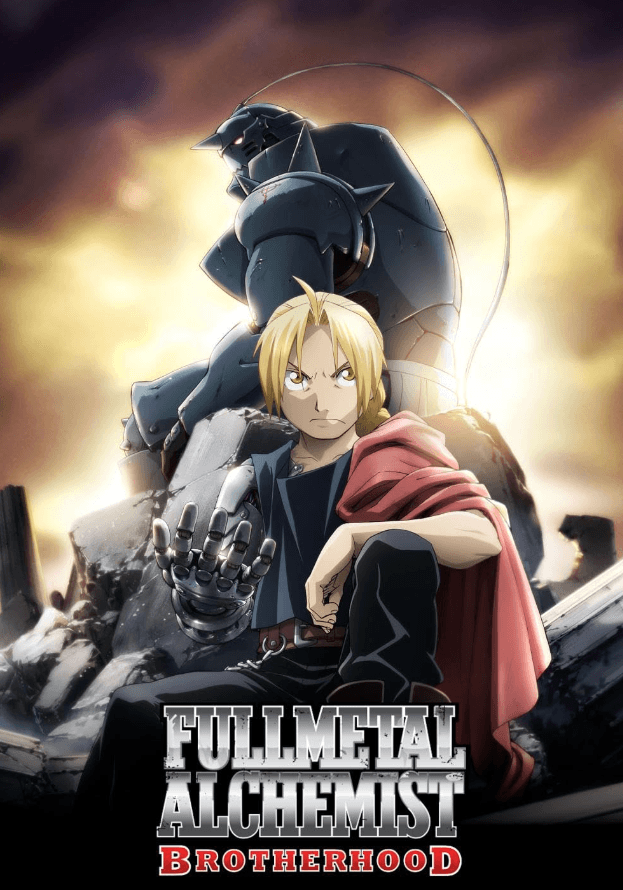
Fullmetal Alchemist: Brotherhood, Hiromu Arakawa's same-named manga series, adapted into an animated television series directed by Yasuhiro Irie【1】. Unlike the previous adaptation, this series faithfully follows the complete narrative structure of the original manga. The story is set in a world where alchemy is central, and it objectively explores philosophical and political themes through the journey of two brothers seeking to restore their lost physical forms.
Fullmetal Alchemist: Brotherhood Trailer (mubi)
The primary setting of the series, Amestris, is an authoritarian and militarized state that expands its borders by annexing neighboring smaller nations, governed by a leader bearing the title of "Führer". The foundational principle of this world is alchemy, the science of understanding, disassembling, and reconstructing matter, governed by the fundamental law of Equivalent Exchange. According to this principle, to create or obtain something, an equivalent amount of matter or value must be sacrificed or destroyed. Military personnel in the Amestris army who use their alchemical abilities for the state, often as human weapons in warfare, are known as State Alchemists.【2】

Fullmetal Alchemist: Brotherhood (IMDB)
Edward and Alphonse Elric are brothers who lose their mother to a fatal illness. In an attempt to resurrect her, the brothers perform Human Transmutation, a practice strictly forbidden in alchemy. Due to the law of Equivalent Exchange, the attempt fails catastrophically: Edward loses his left leg, and Alphonse loses his entire physical body. Edward sacrifices his right arm to bind his brother’s soul to a suit of armor. With mechanical prosthetics (automail) fitted by childhood friends, Edward becomes a State Alchemist to access the military’s resources. Together, the brothers embark on a quest to find the Philosopher’s Stone, an object believed to transcend alchemical laws and restore their bodies. Their search leads them to uncover a vast conspiracy hidden within the upper echelons of the military and the dark history of the state.【3】
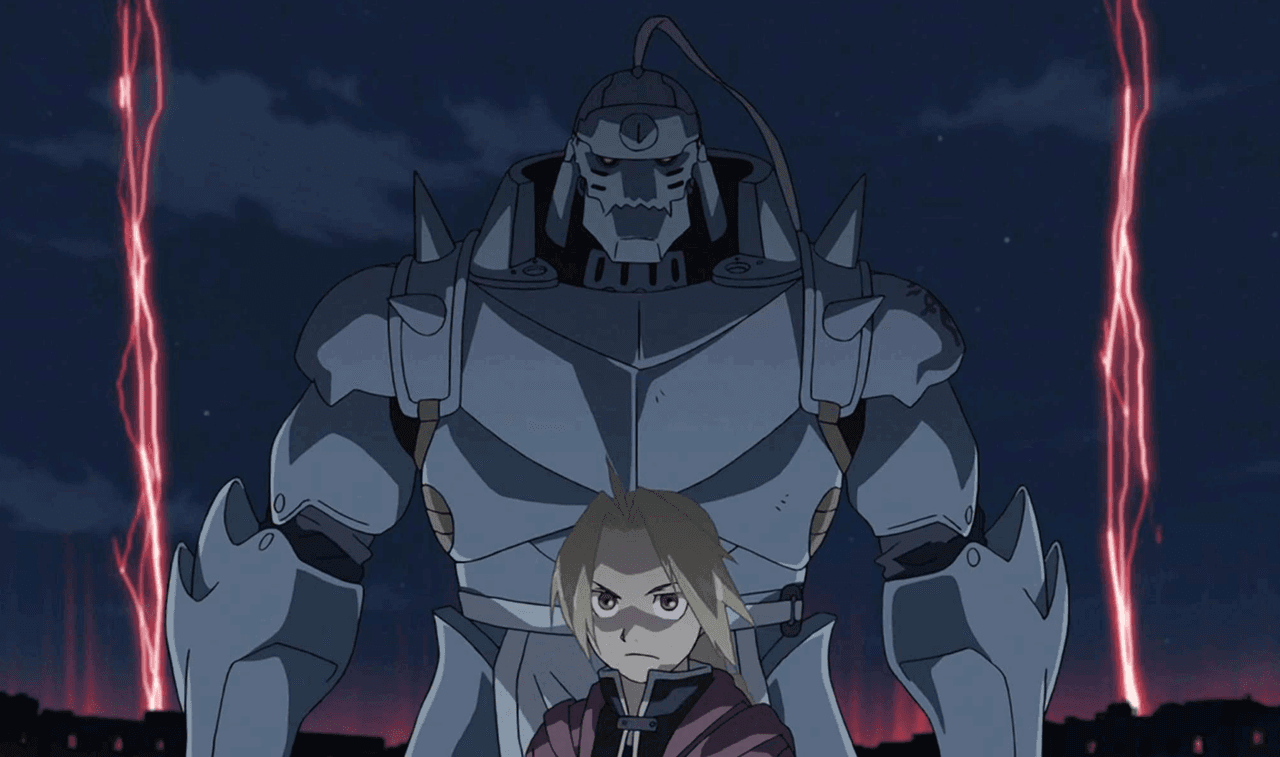
Elric Brothers (IMDB)
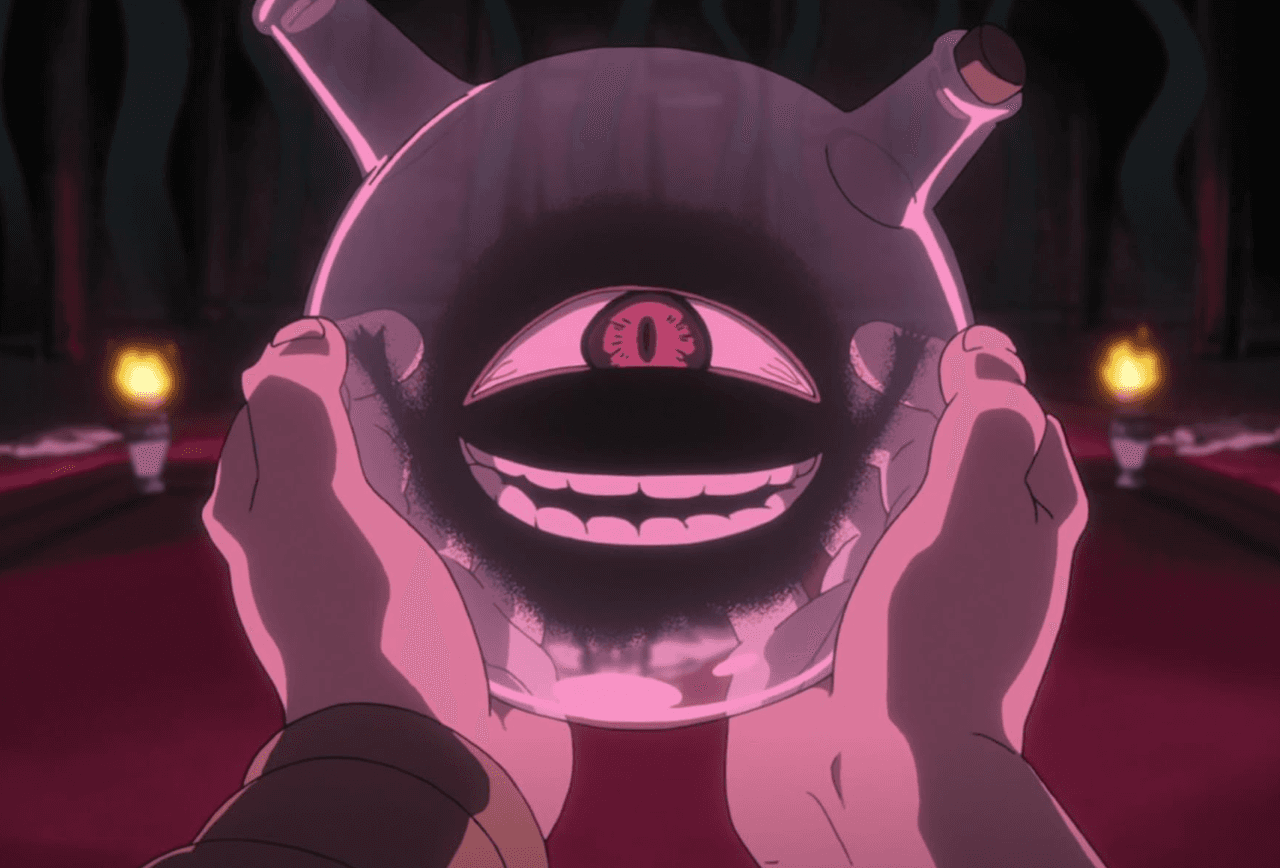
The First Homunculus (Dwarf in the Flask), who calls himself "Father" (IMDB)
The Homunculi are artificial beings deliberately created by Father, each containing a Philosopher’s Stone. Although they cannot perform alchemy independently, each possesses unique extraordinary abilities. Named after the seven deadly sins, these seven entities are:
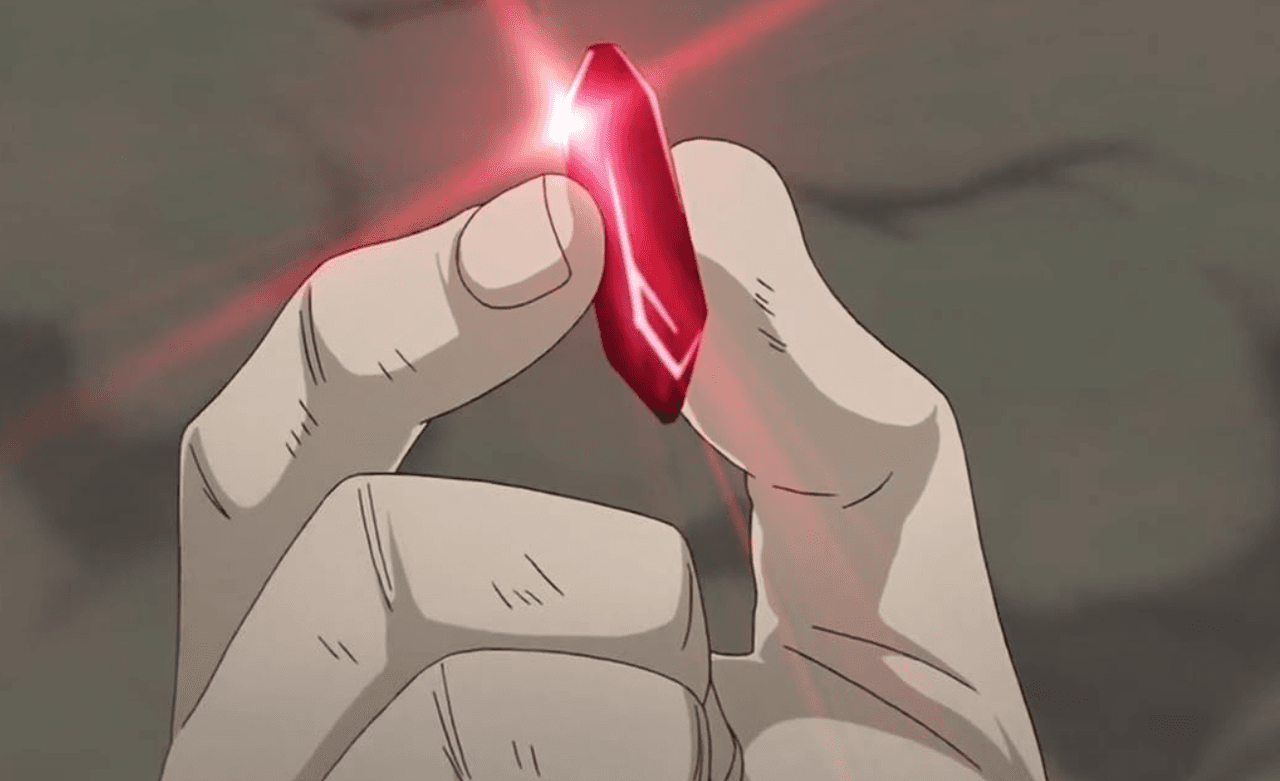
Philosopher’s Stone (IMDB)
In the narrative, the Philosopher’s Stone serves as a central metaphor for absolute power and political corruption. The fact that the Stone is created by sacrificing the souls and blood of living humans illustrates how state and political power are built through violence and genocide. Amestris’s governance as a military dictatorship, its continuous invasion of neighboring nations, and its systematic extermination of the Ishvalan people directly parallel real-world authoritarian and militarist regimes, particularly Nazi Germany. The narrative examines the argument that "absolute power corrupts absolutely" within a fictional framework.【6】
The series incorporates numerous symbols from Western (Greco-Roman) and Japanese mythology. The Ouroboros (serpent or dragon eating its own tail) tattooed on the Homunculi symbolizes infinity and cyclical renewal in alchemy, the monster Echidna in Greek mythology, and the giant dragon causing earthquakes and tsunamis in Japanese myth. Hybrid creatures formed by the biological fusion of humans and animals derive their names from the Greek mythological Chimera. The double-snake staff (Caduceus) worn by the main characters is the symbol of Mercury (Greek Hermes) in Rome, while in Japan it represents paradise and cyclic renewal.【7】
The series subverts entrenched patriarchal systems through specific characters. Olivier Armstrong, the only female commander in the Amestris military, embodies a cold, "survival of the strongest" philosophy, possesses masculine traits, and asserts her place within military hegemony by wielding a sword (a phallic symbol). Characters such as Izumi and Riza also transcend the passive female role by actively participating in combat. Conversely, Alex Armstrong, who exhibits an exaggerated hyper-masculine physique, challenges dominant masculine norms through his frequent emotional displays, excessive sentimentality, and deep appreciation for art.【8】
Fullmetal Alchemist: Brotherhood is one of the most effective tools in Japan’s "Cool Japan" (soft power) strategy within international cultural diplomacy. Although anime employs Western elements in its settings, plot, and names, it embeds Japanese and Asian philosophical values at its core, subtly engaging foreign audiences with Eastern culture. This soft power success is reflected in verifiable statistics: the series holds a 9.25 rating on MyAnimeList【9】 and a 9.1 rating on IMDb based on 244,000 votes【10】. It was selected as the sixth best anime of 2010 by Animage magazine, won three awards at the Behind the Voice Actors Awards for voice acting performances, and received four nominations. Events such as Anime Expo and Japan Expo, which attracted hundreds of thousands of visitors in cities like Paris and Los Angeles—for example, 230,000 attendees in France in 2013【12】—demonstrate the economic and diplomatic scale of the creative industry, of which this series is a prominent part.
DelFabro, Alice. "More than Alchemic Reactions: Playing with Gender Norms in Fullmetal Alchemist Brotherhood." Master's thesis, Bowling Green State University, 2022. Accessed March 12, 2026. https://etd.ohiolink.edu/acprod/odb_etd/ws/send_file/send?accession=bgsu1395617137&
Helsinki Üniversitesi. "Between Mythology and Anime: Greco-Roman and Japanese Mythological Elements in Fullmetal Alchemist: Brotherhood." Academic Paper / Thesis. Accessed March 12, 2026. https://helda.helsinki.fi/server/api/core/bitstreams/ffb049f1-c396-43c5-aeae-3a8a4a540657/content
IMDb. "Fullmetal Alchemist: Brotherhood (TV Series 2009–2010)." Accessed March 12, 2026. https://www.imdb.com/title/tt1355642/?ref_=ttawd_ov_i
IMDb. "Fullmetal Alchemist: Brotherhood - Awards." Accessed March 12, 2026. https://www.imdb.com/title/tt1355642/awards/?ref_=tt_awd
IMDb. "Fullmetal Alchemist: Brotherhood - Plot Summary." Accessed March 12, 2026. https://www.imdb.com/title/tt1355642/plotsummary/.
Tishi, Shuhrat. "Anime as a Soft Power: A Study of Fullmetal Alchemist Brotherhood." East West University Tez Koleksiyonu. Accessed March 12, 2026. http://dspace.ewubd.edu
Widfara. "Full Metal Alchemist – Homunculuslar Üzerine." 22dakika.org. June 8, 2010. Accessed March 12, 2026. https://22dakika.org/full-metal-alchemist-homunculuslar-uzerine/
[1]
IMDb. "Fullmetal Alchemist: Brotherhood (TV Series 2009–2010)." Erişim tarihi 12 Mart 2026. https://www.imdb.com/title/tt1355642/?ref_=ttawd_ov_i.
[2]
IMDb. "Fullmetal Alchemist: Brotherhood - Plot Summary." Erişim tarihi 12 Mart 2026. https://www.imdb.com/title/tt1355642/plotsummary/.
[3]
IMDb. "Fullmetal Alchemist: Brotherhood - Plot Summary." Erişim tarihi 12 Mart 2026. https://www.imdb.com/title/tt1355642/plotsummary/
[5]
Widfara. "Full Metal Alchemist – Homunculuslar Üzerine." 22dakika.org. 8 Haziran 2010. Erişim tarihi 12 Mart 2026. https://22dakika.org/full-metal-alchemist-homunculuslar-uzerine/.
[6]
DelFabro, Alice. "More than Alchemic Reactions: Playing with Gender Norms in Fullmetal Alchemist Brotherhood." Yüksek Lisans Tezi, Bowling Green State University, 2022, s. 18-20. Erişim tarihi 12 Mart 2026. https://etd.ohiolink.edu/acprod/odb_etd/ws/send_file/send?accession=bgsu1395617137&disposition=inline.
[7]
Helsinki Üniversitesi. "Between Mythology and Anime: Greco-Roman and Japanese Mythological Elements in Fullmetal Alchemist: Brotherhood." Akademik Makale / Tez. Erişim tarihi 12 Mart 2026. https://helda.helsinki.fi/server/api/core/bitstreams/ffb049f1-c396-43c5-aeae-3a8a4a540657/content.
[8]
DelFabro, Alice. "More than Alchemic Reactions: Playing with Gender Norms in Fullmetal Alchemist Brotherhood." Yüksek Lisans Tezi, Bowling Green State University, 2022, s. 12-16. Erişim tarihi 12 Mart 2026. https://etd.ohiolink.edu/acprod/odb_etd/ws/send_file/send?accession=bgsu1395617137&disposition=inline.
[9]
Tishi, Shuhrat. "Anime as a Soft Power: A Study of Fullmetal Alchemist Brotherhood." Yüksek Lisans Tezi, East West University, 2022, s. 26.
[10]
IMDb. "Fullmetal Alchemist: Brotherhood (TV Series 2009–2010)." Erişim tarihi 12 Mart 2026. https://www.imdb.com/title/tt1355642/?ref_=ttawd_ov_i.
[12]
Tishi, Shuhrat. "Anime as a Soft Power: A Study of Fullmetal Alchemist Brotherhood." Yüksek Lisans Tezi, East West University, 2022. Erişim tarihi 12 Mart 2026 s. 10-11

No Discussion Added Yet
Start discussion for "Fullmetal Alchemist: Brotherhood (Series)" article
Setting and Fictional World
Plot
Main Characters
Homunculi
Philosophical and Mythological Themes
Philosophy of Power
Mythological References
Gender Norms
Cultural Impact and "Cool Japan"