


This article was automatically translated from the original Turkish version.
+2 More
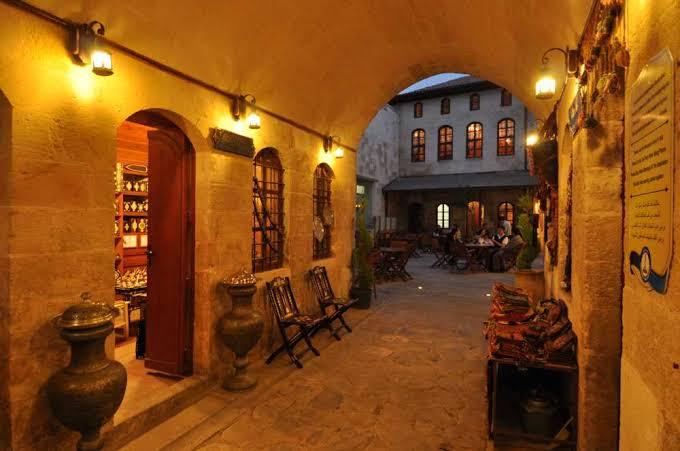
Gümrük Han is an Ottoman caravanserai located in the Karagöz Neighborhood of Şahinbey, one of the central districts of Gaziantep, and was constructed in the second half of the 19th century. Today it is known as the “Living Museum” and serves as a center for the production and sale of traditional handicrafts. The building stands out for its architectural features, functional transformation, and role in the transmission of cultural heritage.
According to records from the General Directorate of Foundations, Gümrük Han was commissioned by Hacı Ömer Efendi between 1873 and 1878. The period of its construction coincided with a time when trade routes remained vital within the Ottoman Empire and caravanserais were widely used. In this context, Gümrük Han was built to provide lodging for travelers, shelter for animals, and storage for goods, leveraging its position along the Silk Road.
Architecturally, Gümrük Han is a single courtyard, two-story structure that embodies the essential elements of traditional Ottoman caravanserai design. The ground floor contains stables and storage spaces, while the upper floor consists of rooms for travelers’ accommodation. This layout closely aligns with the typical caravanserai architecture of the period. It is registered as one of 18 such structures in the vicinity of Gaziantep Kale that served similar functions.
After decades of use as shops and storage facilities, the building was restored by the Şahinbey Municipality in 2011. Restoration work began in April 2011 and was completed within eight months, with the building reopening to the public in December 2011. Following restoration, the caravanserai was transformed into a center where traditional handicrafts are produced, exhibited, and sold. It has since been identified as a “Living Museum” and assigned a new cultural function.
As a Living Museum, Gümrük Han sustains numerous traditional handicrafts unique to Gaziantep. These include silversmithing, coppersmithing, rosary making, mosaic production, glassblowing, mother-of-pearl inlay, wood carving, aba weaving, kutnu and alaca textile weaving, yemeni production, Antep-style embroidery, painterly kilim weaving, and takunya making. Many of these crafts were historically practiced by the local population but have since declined or been reduced to niche tourist markets due to technological advancements and the spread of industrial production.
The space also functions as a production and sales hub supported by social facilities under the Şahinbey Municipality. Vocational training courses for women are organized within these facilities, and the handmade products created by participants are exhibited and sold. In the exhibition halls, household items and souvenirs produced using techniques such as Antep İşi, Sim Sırma, Tel Kırma, Sarma İşi, Machine Embroidery, and Türkişi are available to the public every day of the year except Mondays.
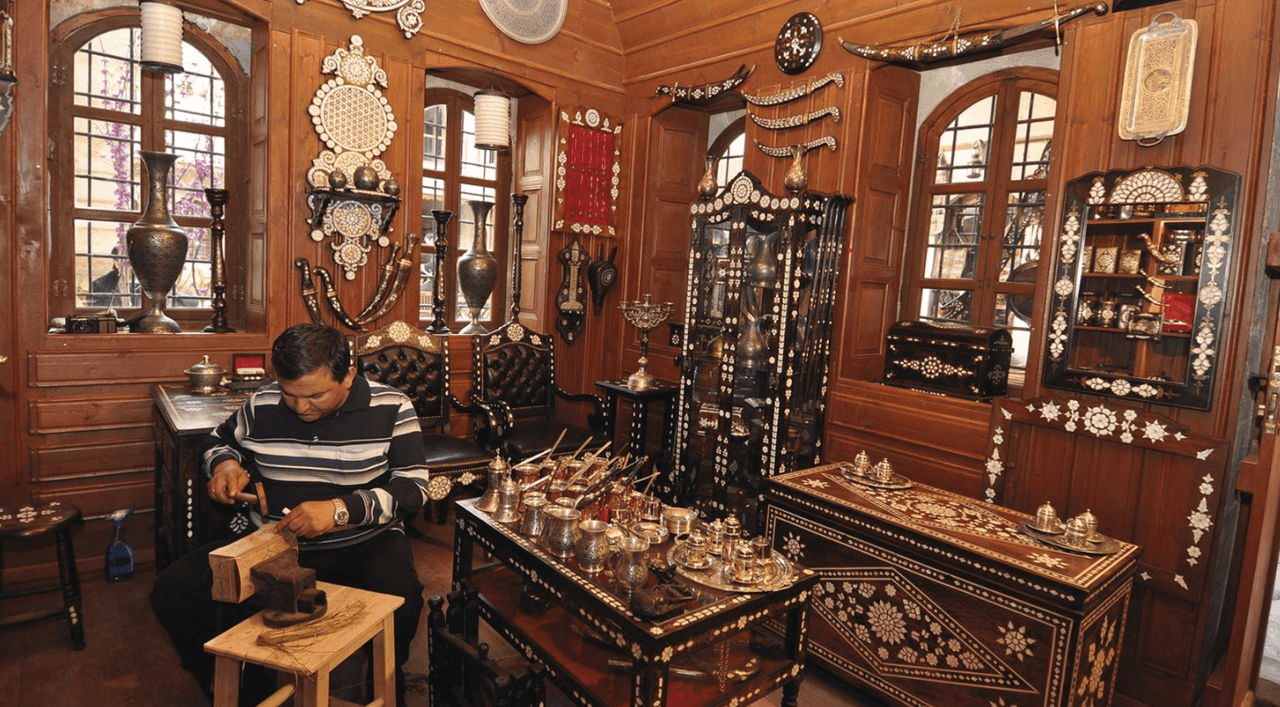
Handicrafts Inside Gümrük Han (Customs Inn Copper Working
Gümrük Han is located within Uzun Çarşı in the Şekeroğlu Neighborhood of Gaziantep. Access to the area is provided by municipal buses and minibuses. The museum is open to visitors six days a week, from 09:00 to 18:00, with free admission.
Gümrük Han is not merely a space for displaying handicrafts; it is a living environment where production continues. This functional structure serves as a platform to reconnect traditional crafts with everyday life, moving them beyond the status of mere tourist objects. It also plays a vital role in transmitting cultural heritage to future generations, documenting and promoting crafts that are at risk of being forgotten. Additionally, the building contributes by systematically registering handicrafts as part of the cultural inventory and sustaining production methods directly through the hands of the artisans themselves.
Gaziantep Büyükşehir Municipality. “Gümrük Hanı.” Gaziantep Metropolitan Municipality. https://www.gaziantep.bel.tr/tr/tarihi-ve-kulturel-eserler/gumruk-hani. Accessed May 11, 2025.
Ministry of Culture and Tourism. "Tarihi Gümrük Hanı." *Kültür Portalı*. https://www.kulturportali.gov.tr/turkiye/gaziantep/gezilecekyer/tarihi-gumruk-hani. Accessed May 11, 2025.
Şahinbey Belediyesi. “Gümrük Hanı.” Şahinbey Municipality. Accessed May 11, 2025.

No Discussion Added Yet
Start discussion for "Gaziantep Customs Inn" article
History and Architectural Structure
Restoration and Transformation
Handicrafts and Functional Use
Visit Information and Access
Sociocultural Role