This article was automatically translated from the original Turkish version.
Type of Geographical İndication | Mahreç Sign | ||||||||
|---|---|---|---|---|---|---|---|---|---|
Registration Number | 591 | ||||||||
Registration Date | 16.11.2020 | ||||||||
Product / Product Group(s) | Meals and soups | ||||||||
Province(s) | Gaziantep | ||||||||
Applicant/Registrant(s) | Gaziantep Development Foundation | ||||||||
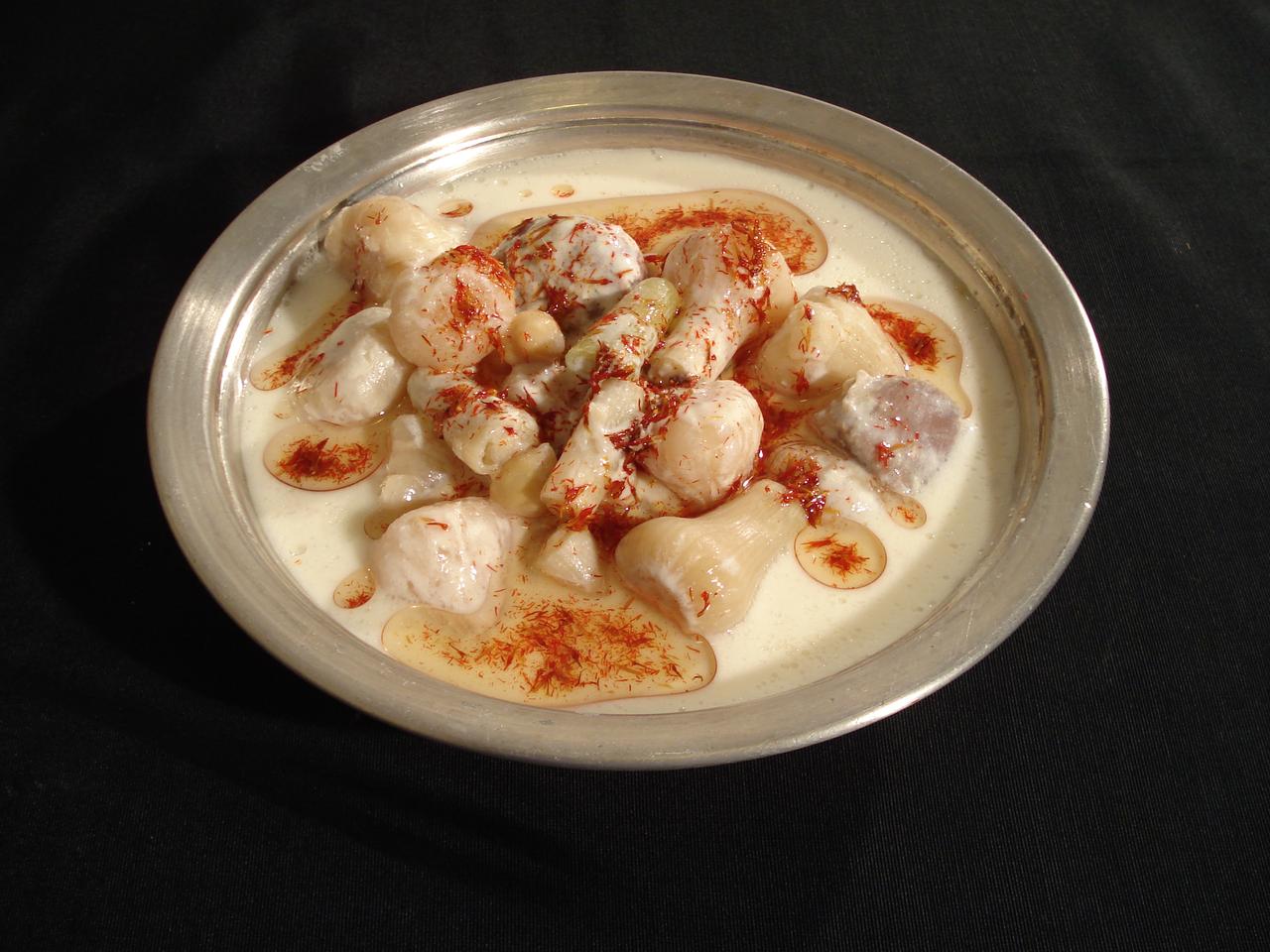
Gaziantep garlic aşı is a meat and yogurt-based dish specific to the city of Gaziantep in Türkiye’s Southeastern Anatolia Region. Registered with a geographical indication on 15 November 2020, this dish is a traditional product reflecting Gaziantep’s cultural heritage. The registration process was carried out by the Gaziantep Development Foundation, and the protection of the product is ensured under Law No. 6769 on Industrial Property.
Gaziantep garlic aşı has been widely prepared in Gaziantep since the early 20th century. Known locally as “samırsak aşı” or “samsak aşı,” this dish is defined as producible only within the boundaries of Gaziantep Province. Due to the skill required in its preparation, all stages of production must be carried out in Gaziantep.
The most distinctive feature of the dish lies in the quality of the garlic used. The cloves of garlic bulbs, grown in Gaziantep and Nizip and measuring 4–5 cm in diameter, must be juicy and not yet fully pungent. The woody central core of the garlic must be absent. Due to these requirements, the dish can only be prepared during a short period of 3 to 5 weeks each year.
The main ingredients of Gaziantep garlic aşı are as follows:
The preparation begins by boiling the meat and skimming off the foam. Pre-soaked chickpeas and salt are added, and the meat is cooked until tender. The garlic cloves are peeled and cleaned of root remnants, with the woody cores removed. To reduce their pungency, the cloves are soaked in cold water before being added to the meat mixture. Alternatively, they may be boiled separately in another pot before being incorporated into the dish.
The strained yogurt is mixed with the egg, olive oil, and a small amount of water, then gently cooked over low heat while continuously stirred. Several ladles of the meat broth are added to the yogurt to thin its consistency. The yogurt mixture is then combined with the meat and garlic mixture and brought to a gentle boil for a few minutes. Finally, a sauce made from clarified butter, dried thyme, and black pepper is poured over the dish. The meal is served hot.
The production of Gaziantep garlic aşı is monitored under a control mechanism coordinated by the Gaziantep Development Foundation. The monitoring board consists of representatives from the Gaziantep Chamber of Commerce, the Faculty of Fine Arts at Gaziantep University, the Gaziantep Provincial Directorate of Agriculture and Forestry, GASTURDER, and relevant professional associations. Inspections are conducted once a year during the spring and early summer months when fresh garlic is available; in cases of complaints, inspections are carried out within 15 days.
During inspections, the conformity of the ingredients and production stages with the registered documentation is verified. Expert support may be obtained from public or private institutions when necessary. The registering institution is responsible for the legal protection of the product.
Turk Patent and Trademark Office. "Gaziantep Sarımsak Aşı." Turk Patent and Trademark Office. Accessed October 20, 2025. https://ci.turkpatent.gov.tr/cografi-isaretler/detay/38279
Turk Patent and Trademark Office. *Gaziantep Sarımsak Aşı. Türk Patent ve Marka Kurumu*. Accessed October 20, 2025. https://ci.turkpatent.gov.tr/Files/GeographicalSigns/d3fde332-db9a-4118-9c05-8ebd3f5afb5e.pdf

Type of Geographical İndication | Mahreç Sign | ||||||||
|---|---|---|---|---|---|---|---|---|---|
Registration Number | 591 | ||||||||
Registration Date | 16.11.2020 | ||||||||
Product / Product Group(s) | Meals and soups | ||||||||
Province(s) | Gaziantep | ||||||||
Applicant/Registrant(s) | Gaziantep Development Foundation | ||||||||
No Discussion Added Yet
Start discussion for "Gaziantep Garlic Graft" article
History and Geographical Context
Distinctive Characteristics
Ingredients and Production Method
Monitoring and Protection