
This article was automatically translated from the original Turkish version.
Type of Geographical İndication | Mahreç Sign | ||||||||
|---|---|---|---|---|---|---|---|---|---|
Registration Number | 620 | ||||||||
Registration Date | 07.12.2020 | ||||||||
Product / Product Group(s) | Bakery and Confectionery Products Desserts Dough Products | ||||||||
Province(s) | Gaziantep | ||||||||
Applicant/Registrant(s) | Gaziantep Development Foundation | ||||||||
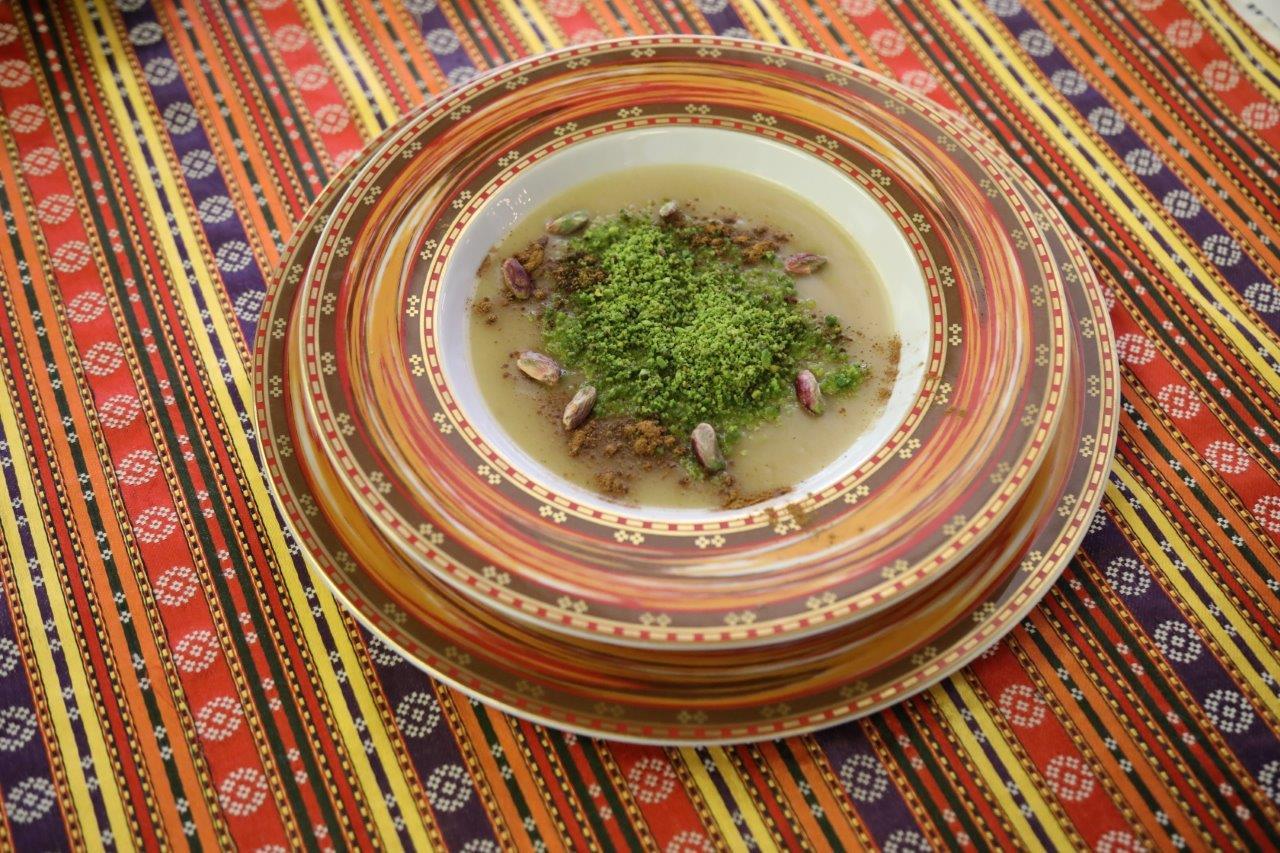
Gaziantep kuymağı, also known as Antep kuymağı, is a traditional sweet specific to the Gaziantep region, prepared with flour, sugar, and either clarified butter or butter as its main ingredients. Registered with a geographical indication on 7 December 2020, this product is a cultural heritage that must be produced within the boundaries of Gaziantep Province.
Gaziantep kuymağı originated historically as a dish prepared especially for postpartum women and gradually transitioned from a home-based custom to a commercial product. It holds a distinctive position among regional sweets due to its ingredients and preparation method. Its consistency resembles that of meyaney, and its serving style is two-stage: first served warm in bowls, then topped with melted clarified butter or butter. This presentation is a defining characteristic of the sweet.
The production of Gaziantep kuymağı requires skill. The basic ingredients for a portion serving 2–4 people are as follows:
The preparation process involves the following steps:
The production of Gaziantep kuymağı must take place within the boundaries of Gaziantep Province. The product’s strong association with the region and its skill-intensive production process necessitate this geographical restriction.
Monitoring of the product occurs at least once annually, and additionally in cases of complaint or suspicion. The monitoring body consists of representatives from the Gaziantep Provincial Directorate of Agriculture and Forestry, the Gaziantep Chamber of Tradesmen and Artisans, and the Gaziantep Metropolitan Municipality, coordinated by the Gaziantep Development Foundation. Monitoring covers ingredients, production methods, serving style, and use of the geographical indication mark. Expert support may be obtained from public or private institutions when necessary.
The term "Gaziantep Kuymağı / Antep Kuymağı" and the geographical indication emblem must appear on the product itself or its packaging. If this is not possible, they must be displayed in a clearly visible location within the establishment.
Turk Patent and Trademark Office. "Gaziantep Kuymağı/Antep Kuymağı Mahreç İşareti Sicil Belgesi." Turk Patent and Trademark Office. Accessed October 20, 2025. https://ci.turkpatent.gov.tr/Files/GeographicalSigns/1570d575-dfd1-4a46-90c2-ffb6eba0b3b3.pdf.
Turkish Patent and Trademark Office. "Gaziantep Kuymağı/Antep Kuymağı." Geographical Indications Portal. Accessed October 20, 2025. https://ci.turkpatent.gov.tr/cografi-isaretler/detay/2284.

Type of Geographical İndication | Mahreç Sign | ||||||||
|---|---|---|---|---|---|---|---|---|---|
Registration Number | 620 | ||||||||
Registration Date | 07.12.2020 | ||||||||
Product / Product Group(s) | Bakery and Confectionery Products Desserts Dough Products | ||||||||
Province(s) | Gaziantep | ||||||||
Applicant/Registrant(s) | Gaziantep Development Foundation | ||||||||
Historical and Cultural Background
Preparation
Geographical Boundaries and Production Conditions
Monitoring Mechanism
Usage Format