This article was automatically translated from the original Turkish version.
+1 More
Type(s) | Precision-guided small-diameter bomb | ||||||||
|---|---|---|---|---|---|---|---|---|---|
Producer(s) | Boeing | ||||||||
Weight(s) | Approximately 250 lb (113 kg) | ||||||||
Warhead | ~93 kg class focused explosive energy penetrator warhead | ||||||||
Guidance | GPS/INS (satellite + inertial) | ||||||||
Range(s) | Approximately 60+ miles / 100+ km when released from suitable altitude | ||||||||
Purpose(s) | High-precision strike with minimal collateral damage | ||||||||
Carrier Platforms | B-52 (Optional) B-2 B-1B F-22 F-35 F-16 F-15E | ||||||||
Usage Concept | Small body – high carriage capacity and multiple targets per sortie | ||||||||
Operational First Use | 2006 | ||||||||
Countries in Service | Australia Saudi Arabia Ukraine Netherlands Italy Israel United States | ||||||||
Wars Used In | Gaza War Russia's invasion of Ukraine Syrian Civil War Intervention against ISIS Iraq War War in Afghanistan | ||||||||
Production History | 2005–present | ||||||||
Number Produced | 17,000+ | ||||||||
Unit Cost | ~$40,000 USD | ||||||||
Variants | GBU-39B/B GBU-39A/B GBU-39/B | ||||||||
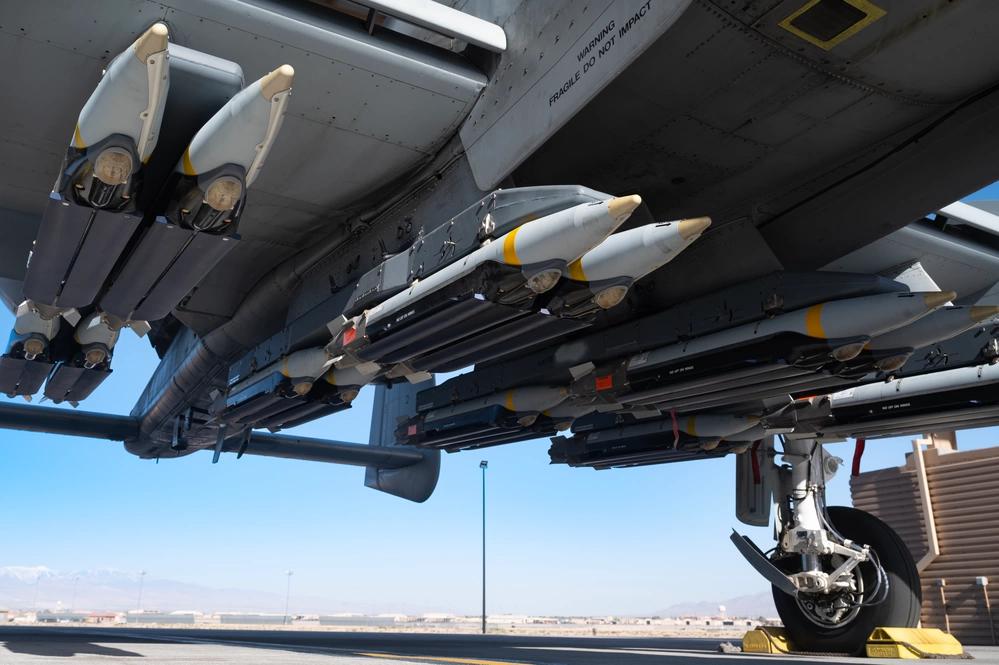
GBU-39B (also known as GBU-39/B or GBU-39) is a precision-guided aerial bomb developed by the United States and classified in the 250-pound class. As the first member of the “Small Diameter Bomb” (SDB) concept, this munition is known for its compact design, which allows a single aircraft weapons station to carry four bombs.
The primary contractor for the development of the GBU-39B was Boeing. The program was initiated in response to a need identified in the late 1990s for bombs capable of carrying more munitions while minimizing collateral damage and maintaining high precision. In practice, the most important feature of the SDB-I is its ability to replace a single large bomb with multiple smaller but equally effective munitions. This enables the same aircraft to engage significantly more targets during a single sortie. Although the program’s cost structure has varied over the years, the unit cost of the GBU-39B has remained lower than that of other precision-guided munitions with larger warheads.
The system entered limited production in 2005 and achieved its first operational capability in 2006. On 2 October 2006, the SDB-I officially attained “Initial Operational Capability” status, meaning it was cleared for use in both training and real-world missions. Shortly thereafter, on 5 October 2006, the system was used in combat for the first time. This mission involved an attack conducted by two F-15E Strike Eagle aircraft under the U.S. Air Force’s regional operations. This deployment demonstrated the SDB-I’s rapid transition from testing to operational use and confirmed its effectiveness in the field. Subsequently, in early 2007, official reports confirmed the use of the GBU-39B in Afghanistan in the context of “close air support.” Following these field experiences, the GBU-39 became widely integrated into inventories and has since evolved into multiple variants still in service today.
GBU-39 Technical Video (YouTube)
The GBU-39 has been operationally employed primarily in precision strikes against fixed structures, underground facilities, command centers, and other high-value targets. Official statements confirm its use in various missions in Iraq and Afghanistan, particularly in operations requiring high precision. The first combat use of the bomb was reported on 5 October 2006, carried out by the 494th Expeditionary Fighter Squadron using a two-aircraft formation of F-15E Strike Eagles in the “Southwest Asia” region.
Subsequently, on 27 January 2007, an F-15E from the 391st Expeditionary Fighter Squadron employed a GBU-39B in Afghanistan. In 2008, its use against Hamas in Gaza by the Israeli Air Force (IAF) was confirmed.
In these operations, the munition’s low explosive mass resulted in limited collateral damage around the target area, aligning with the system’s core concept. The performance of the SDB-I paved the way for the subsequent development of the SDB-II (GBU-53/B) program and solidified the role of the small-diameter precision munition family in modern air operations.
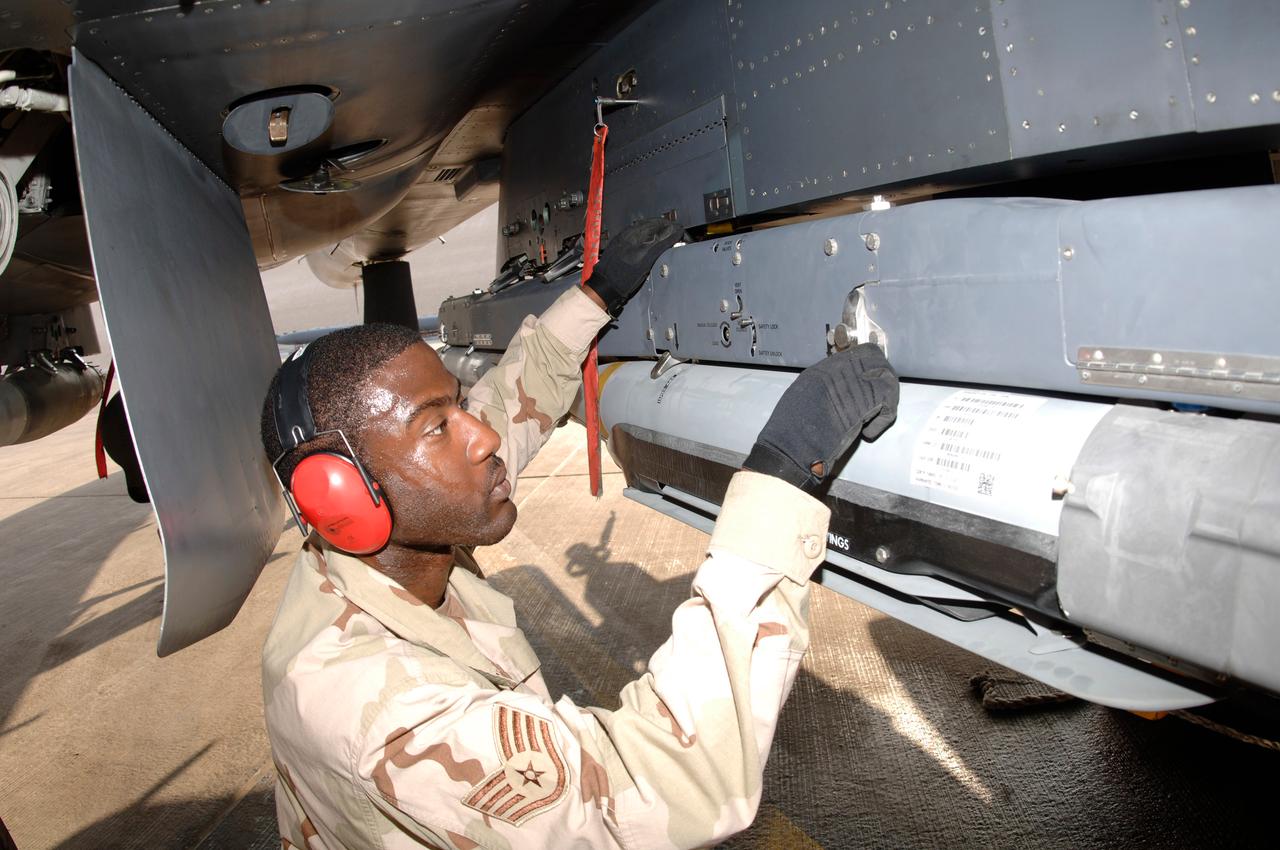
GBU-39B Munitions Loaded onto F-15E Strike Eagle Jets for Operation Iraqi Freedom (Air Force)
The design objective was to increase precision, reduce the explosive mass required per target, and thereby enhance operational efficiency while minimizing unintended damage to surrounding areas.
The guidance system of the GBU-39B is based on GPS-aided inertial navigation (INS). Once the flight path and target coordinates are programmed before launch, the bomb glides autonomously to its target. Its folding wing structure enables a range of over 40 nautical miles despite its relatively small mass. This feature is intended to allow safe engagement of targets from stand-off distances, particularly in areas with strong air defenses.
The warhead is a multi-purpose design capable of penetrating hardened targets including reinforced concrete. With the aid of an electronic safe/arm and fuzing system, operational modes such as delayed detonation or airburst can be selected according to mission requirements. The bomb’s dimensions and compatibility features allow it to be deployed across a wide range of platforms, from the F-15E to fifth-generation aircraft with internal weapons bays. The standard BRU-61/A smart quad rack, central to the munition’s concept, enables four SDBs to be carried on a single weapons station, significantly increasing the number of targets that can be engaged per sortie.
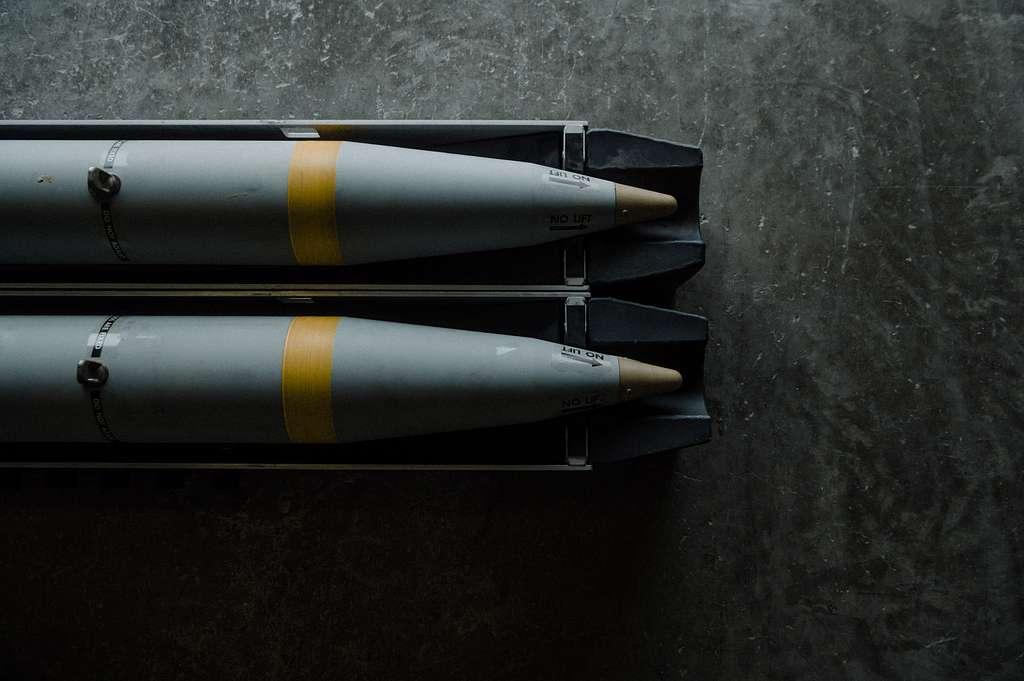
Two Ready-to-Launch GBU-39B Missiles (Picryl)
The SDB-I is a preferred system for precision strikes against fixed and hardened targets. Command centers, radar sites, missile launchers, ammunition depots, and similar infrastructure are among its primary design targets. Thanks to its small explosive payload, it can neutralize targets without damaging critical nearby structures—a feature of particular value in urban operations. Additionally, the system’s all-weather guidance capability enhances the flexibility of air operations.
Over time, the SDB-I laid the foundation for the more advanced SDB-II (GBU-53/B), a next-generation munition capable of engaging moving targets. However, the GBU-39B remains actively used by numerous countries and continues to be a fundamental component of air forces’ precision strike capabilities.
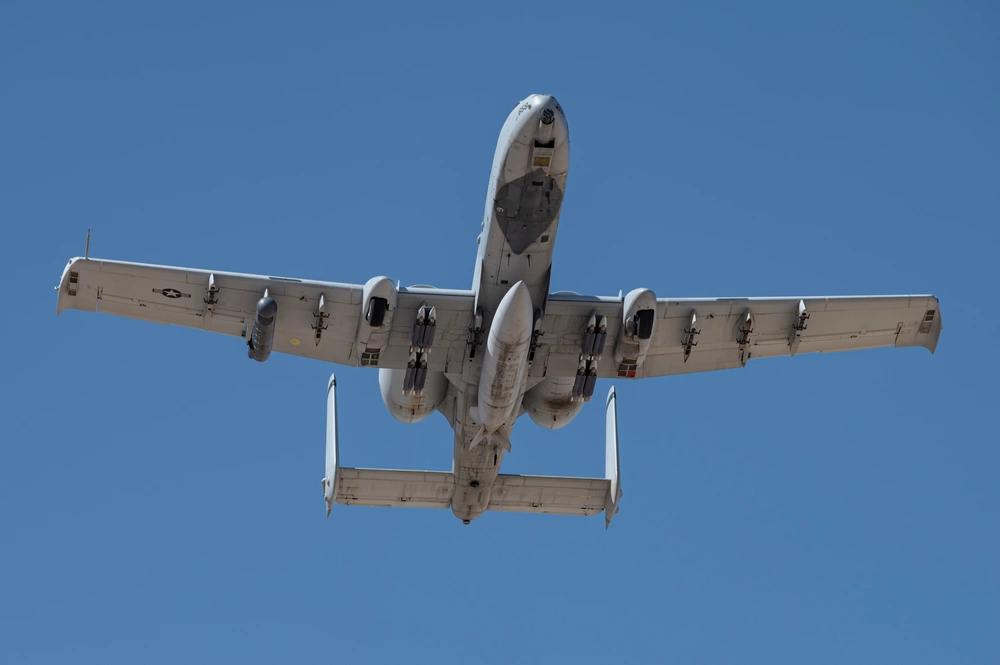
GBU-39B in Flight with Load (DVIDS)
Following its entry into U.S. inventory, the GBU-39B has been exported to numerous allied and partner nations. The majority of these sales have been conducted through the U.S. Foreign Military Sales (FMS) mechanism. FMS packages typically include not only the bombs themselves but also training munitions, logistical support equipment, maintenance components, test systems, and personnel training, enabling recipient nations to fully integrate the munition onto their platforms with complete infrastructure support.
In 2025, a sales package for Romania including 400 GBU-39B bombs, additional training munitions, and comprehensive support elements was submitted for approval. The total value of this package was publicly disclosed as exceeding 80 million U.S. dollars. In the same year, another sales notification was issued for Norway, covering 816 bombs with an estimated cost of approximately 113 million U.S. dollars. Additionally, Poland emerged in 2025 with a larger procurement request for approximately 1,400 GBU-39B bombs, with the total package estimated at around 180 million U.S. dollars. In 2024, a sales notification was issued for the Kingdom of Morocco, including 500 GBU-39B bombs and training munitions, with the package valued at approximately 86 million U.S. dollars.
The system is not limited to new buyers in Europe and the Middle East. Historically, countries such as Australia, Israel, the Netherlands, Saudi Arabia, and South Korea have also integrated the GBU-39B into their inventories or utilize other members of the SDB family.
(Press Release 24-96 CN). December 20, 2024. Accessed November 28, 2025. https://media.defense.gov/2024/Dec/30/2003619571/-1/-1/0/PRESS%20RELEASE%20-%20MOROCCO%2024-96%20CN.PDF.
AiirSource Military. “GBU-39 Small Diameter Bomb (SDB) Explained.” YouTube video, 02:51. September 21, 2017. Accessed November 28, 2025. https://www.youtube.com/watch?v=1GSLhm-eECQ.
Air Combat Command. “ACC Declares IOC for Small Diameter Bomb.” October 6, 2006. Accessed November 28, 2025. https://www.acc.af.mil/News/Article/202959/acc-declares-ioc-for-small-diameter-bomb/.
Air Force. "GBU-39B Small Diameter Bomb Weapon System." Accessed November 28, 2025. https://www.af.mil/About-Us/Fact-Sheets/Display/Article/104573/gbu-39b-small-diameter-bomb-weapon-system/. Accessed November 25, 2025.
Air Force. "Small diameter bomb makes combat debut." Photograph. 2006. U.S. Air Force News. Accessed November 28, 2025. https://www.af.mil/News/Photos/igphoto/2000541328/.
Air Force. “USAFE Unit Debuts Small Diameter Bomb in Combat.” October 5, 2006. Accessed November 28, 2025. https://www.af.mil/News/Article-Display/Article/129522/usafe-unit-debuts-small-diameter-bomb-in-combat/.
Air Forces Central. “Small Diameter Bomb Debuts in Afghanistan.” January 30, 2007. Accessed November 28, 2025. https://www.afcent.af.mil/Units/455th-Air-Expeditionary-Wing/News/Display/Article/275402/small-diameter-bomb-debuts-in-afghanistan/.
Boeing. "Small Diameter Bomb Product Card." Boeing, n.d. Accessed November 28, 2025. https://www.boeing.com/content/dam/boeing/boeingdotcom/defense/weapons-weapons/images/small_diameter_bomb_product_card.pdf.
Defense Security Cooperation Agency. "Kingdom of Morocco – GBU-39B Small Diameter Bombs (SDB-I)"
Defense Security Cooperation Agency. “Norway – GBU-39B Small Diameter Bomb Increment I.” September 15, 2025. Accessed November 28, 2025. https://www.dsca.mil/Press-Media/Major-Arms-Sales/Tag/309874/gbu-39b-small-diameter-bomb-increment-i/.
Defense Security Cooperation Agency. “Poland – GBU-39B Small Diameter Bombs.” May 21, 2025. Accessed November 28, 2025. https://www.dsca.mil/Press-Media/Major-Arms-Sales/Article-Display/Article/4194147/poland-gbu-39b-small-diameter-bombs/.
Defense Security Cooperation Agency. “Romania – GBU-39B Small Diameter Bombs.” February 18, 2025. Accessed November 28, 2025. https://www.dsca.mil/Press-Media/Major-Arms-Sales/Article-Display/Article/4069171/romania-gbu-39b-small-diameter-bombs/.
Defense Visual Information Distribution Service. *GBU-39 on 19 and 21 April 2023 [Image 11 of 13]*. Photograph. DVIDS. April 19, 2023. Accessed November 28, 2025. https://www.dvidshub.net/image/7754532/gbu-39-19-and-21-april-2023.
Defense Visual Information Distribution Service. *GBU-39 on 19 and 21 April 2023 [Image 2 of 13]*. Photograph. DVIDS. April 19, 2023. Accessed November 28, 2025. https://www.dvidshub.net/image/7754521/gbu-39-19-and-21-april-2023.
Gettinger, Daniel M. *Defense Primer: U.S. Precision-Guided Munitions.* Congressional Research Service. July 3, 2025. Accessed November 28, 2025. https://www.congress.gov/crs_external_products/IF/PDF/IF11353/IF11353.18.pdf.
Lead, DOC. "The Israeli arsenal deployed against Gaza during Operation Cast Lead." *Journal of Palestine Studies* 38, no. 3 (2009): 175-191. Accessed November 28, 2025. https://ciaotest.cc.columbia.edu/journals/jps/v38i3/f_0017734_15203.pdf.
Picryl. "Two GBU-39 Small Diameter Bombs Sit in the Munitions." Photograph. Picryl. December 4, 2020. Accessed November 28, 2025. https://picryl.com/media/two-gbu-39-small-diameter-bombs-sit-in-the-munitions-e1fbbc.

Type(s) | Precision-guided small-diameter bomb | ||||||||
|---|---|---|---|---|---|---|---|---|---|
Producer(s) | Boeing | ||||||||
Weight(s) | Approximately 250 lb (113 kg) | ||||||||
Warhead | ~93 kg class focused explosive energy penetrator warhead | ||||||||
Guidance | GPS/INS (satellite + inertial) | ||||||||
Range(s) | Approximately 60+ miles / 100+ km when released from suitable altitude | ||||||||
Purpose(s) | High-precision strike with minimal collateral damage | ||||||||
Carrier Platforms | B-52 (Optional) B-2 B-1B F-22 F-35 F-16 F-15E | ||||||||
Usage Concept | Small body – high carriage capacity and multiple targets per sortie | ||||||||
Operational First Use | 2006 | ||||||||
Countries in Service | Australia Saudi Arabia Ukraine Netherlands Italy Israel United States | ||||||||
Wars Used In | Gaza War Russia's invasion of Ukraine Syrian Civil War Intervention against ISIS Iraq War War in Afghanistan | ||||||||
Production History | 2005–present | ||||||||
Number Produced | 17,000+ | ||||||||
Unit Cost | ~$40,000 USD | ||||||||
Variants | GBU-39B/B GBU-39A/B GBU-39/B | ||||||||
History
Operational History
Design and Technology
Operational Use and Impact
Operators, Export, and International Proliferation