


This article was automatically translated from the original Turkish version.
German
Language Family | Indo-European, Germanic, West Germanic, High German | ||||||||
|---|---|---|---|---|---|---|---|---|---|
Countries Where Spoken | Germany, Austria, Switzerland, Liechtenstein, Luxembourg, Belgium, Italy (South Tyrol), Namibia | ||||||||
Countries Where Official Language | Germany, Austria, Switzerland, Liechtenstein, Luxembourg | ||||||||
Writing System | Latin alphabet (German-specific characters: ä ö ü ß) | ||||||||
Dialects | High German (Hochdeutsch), Low German (Plattdeutsch), Middle German (Mitteldeutsch), Swiss German (Schweizerdeutsch), Austrian German (Österreichisches Deutsch) | ||||||||
Standardization | 1901 Second Orthography Conference | ||||||||
German (Deutsch) is a language belonging to the Germanic branch of the Indo-European language family. It is classified among the West Germanic languages and is spoken officially in Germany, Austria, Switzerland, Liechtenstein, Luxembourg, eastern regions of Belgium, and the South Tyrol region of Italy. Additionally, it is widely used through immigrant communities around the world.
German is one of the most widely spoken languages in the world and belongs to the Indo-European language family, which encompasses thousands of languages across much of Europe and South Asia. Within Indo-European, German is part of the Germanic subgroup. The Germanic languages are divided into three branches: North Germanic, West Germanic, and East Germanic. German forms the West Germanic branch and shares a common historical origin with languages such as English, Dutch, and Yiddish.
Proto-Germanic is a prehistoric language spoken in the first millennium BCE and descended from a common ancestral tongue. This language gradually diverged into regional dialects that formed the basis of German. German developed primarily in the territories of present-day Germany. After the Proto-Germanic period, various dialects began to appear in written records during the Old High German (Althochdeutsch) era.
1. Old High German Period (6th–11th centuries): During this period, German existed as numerous local dialects and vernaculars. Religious and legal texts were written down during this time. A standardized alphabet had not yet been established, and spelling varied across regions. Few texts from this period have survived to the present day, but heroic poems such as the Hildebrandslied are considered important cultural products of the era.
2. Middle High German Period (11th–14th centuries): This is the period during which German literature experienced its most significant developments. Also known as Medieval German, this era saw the peak of the Minnesang tradition (medieval courtly love poetry). The Nibelungenlied, the masterpiece of this period, is a foundational text of the German epic poetry tradition. Wolfram von Eschenbach’s Parzival holds major importance both linguistically and culturally. Although regional dialects still differed significantly, the growth of written literature initiated a process of standardization.
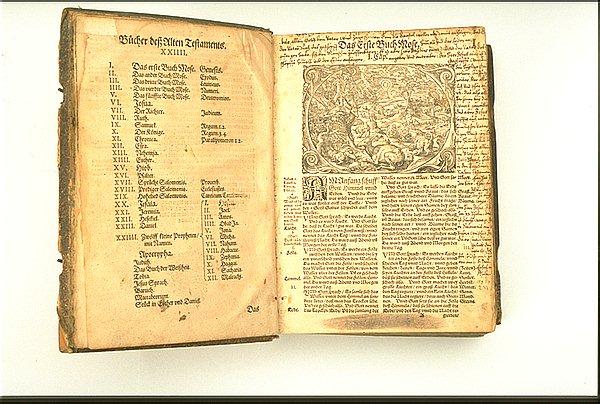
3. Early New High German Period (15th–17th centuries): With the invention of the printing press in the 15th century, the number of written German works increased significantly, contributing to the language’s wider dissemination. Martin Luther’s 1522 translation of the Bible helped unify various German dialects and laid the groundwork for the emergence of Standard German. Luther’s efforts to simplify language and make it accessible to the general population played a crucial role in establishing German as an official language.
4. Modern German Period (18th century–present): From the 18th century onward, a movement toward national standardization of the German language gained momentum. Enlightenment philosophers and writers such as Goethe, Schiller, and Lessing enhanced the intellectual and literary prestige of German. In the 19th century, German gained prestige across Europe as a language of science and philosophy. Today, Standard German is used in education, media, and official documents, while regional dialects continue to dominate everyday speech.
1. Influence of Latin: Throughout the Middle Ages, Latin was the dominant language of science, religion, and education in Europe, exerting a significant influence on German. Latin vocabulary, particularly in academic, legal, and religious terminology, entered the German lexicon. This enriched German’s vocabulary and added new dimensions to its complex structure.
2. Influence of French and Italian: In the 17th and 18th centuries, French became the leading language of culture and diplomacy in Europe. During this period, German absorbed a considerable number of French words, especially in the domains of art, fashion, cuisine, and military terminology. Additionally, during the Renaissance and Baroque periods, Italian influenced German through musical and artistic terminology.
3. Role of English: From the 19th century onward, English became the global language of science, technology, and business, leading German to adopt numerous terms from English. English influence is particularly evident in everyday speech, technology, and popular culture. Nevertheless, German continues to preserve its own structural characteristics.
4. Interaction with Neighboring Germanic and Slavic Languages: Throughout history, German has had intense contact with Poland, the Czech Republic, and other Central European countries. As a result, some words from Slavic languages have entered German. Conversely, German has also influenced these languages. Furthermore, mutual similarities and shared origins are evident with other Germanic languages such as Swedish, Danish, and Dutch.
5. Geographical Distribution and Varieties of German: German is an official language in Germany, Austria, Switzerland, Liechtenstein, Luxembourg, and eastern regions of Belgium. Additionally, German-speaking communities exist in Italy’s South Tyrol region and countries such as Namibia. German has numerous dialects that vary according to geographical regions. German dialects are generally divided into two main groups: High German (Hochdeutsch) and Low German (Plattdeutsch). High German encompasses dialects spoken in southern regions, while Low German includes those spoken in northern regions.
German grammar possesses typical structural features of Indo-European languages but presents challenges for learners due to the complexity of its inflection system, the gender and case inflection of nouns, the tight correlation of verb forms with person, tense, and mood, and the strict syntactic rules governing word order. However, once understood, it reveals a highly systematic structure.
In German, every noun has a grammatical gender: masculine (der), feminine (die), or neuter (das). This gender is often arbitrary and must be memorized. For example, “der Tisch” (table) is masculine, “die Tür” (door) is feminine, and “das Fenster” (window) is neuter. The articles accompanying nouns change not only according to gender but also according to case.
In German, nouns and pronouns are inflected into four distinct cases depending on their function in the sentence:
Example: Der Mann liest ein Buch. (The man is reading a book.)
Example: Ich sehe den Mann. (I see the man.)
Example: Ich gebe dem Mann ein Buch. (I give the man a book.)
Example: Das ist das Auto des Mannes. (This is the man’s car.)
Each case affects not only articles but also adjectives and pronouns. Therefore, to use a noun correctly in German, both its gender and case must be accurately known and applied.
In German, verbs are conjugated according to person. The basic personal pronouns are: ich (I), du (you), er/sie/es (he/she/it), wir (we), ihr (you plural), sie/Sie (they/you formal). Verbs are conjugated in different tenses: present (Präsens), simple past (Präteritum and Perfekt), past perfect (Plusquamperfekt), and future (Futur I and Futur II).
For example, the present tense conjugation of “gehen” (to go):
The more complex Perfekt tense:
In German, auxiliary verbs (sein, haben, werden) are used to construct tense and mood forms. Modal verbs (können, dürfen, müssen, sollen, wollen, mögen) are used together with another verb to modify its meaning.
Examples:
German sentence structure is highly rule-bound. The basic rule is that the verb occupies the second position in the main clause.
In questions, the verb comes first:
In imperative sentences, the verb is also placed first:
In German, adjectives precede nouns and are inflected according to the article, gender, and case of the noun. This is one of the most complex grammar topics to learn.
Examples:
Types of inflection:
Pronouns replace nouns and must agree in gender, case, and number. Important types of pronouns:
The use of pronouns is closely tied to verb conjugation and case structure.
In German, prepositions determine the case of the noun they govern. Some prepositions require only the dative, others only the accusative, and some can take either depending on context.
Adverbs (Adverbien) modify verbs, adjectives, or other adverbs. Common types in German include adverbs of time (heute, gestern, jetzt), place (hier, dort, überall), frequency (immer, oft, selten), and manner (schnell, langsam, gerne). They typically appear immediately before or after the verb.
In German, conjunctions (Konjunktionen) connect clauses.
German is a rich and multilayered language belonging to the Germanic branch of the Indo-European family. Both historically and in its contemporary usage, it exhibits a complex structure composed of numerous subsystems. The linguistic features of German attract attention not only as a means of communication but also due to its structural complexity.
German phonology features a rich vowel system similar to other Germanic languages. The distinction between short and long vowels can create both semantic and morphological differences:
For example: bitten (to beg) and bieten (to offer) differ only in vowel length.
Additionally, German vowel shifts (Umlaut: a → ä, o → ö, u → ü) serve a morphophonemic function rather than a purely phonological one. Stress typically falls on the root syllable and is important for distinguishing meaning between words.
The German consonant system is diverse, including plosives, fricatives, and affricates. Complex sounds such as ch, sch, pf, and ts can be particularly challenging for learners.
German is an example of a synthetic (inflectional) language, in which words gain grammatical functions through affixes. Its most characteristic features are the gender system for nouns (masculine, feminine, neuter) and the four-case inflection system (nominative, accusative, dative, genitive).
Inflection Systems:
This complex morphological structure makes German both highly flexible and challenging to learn.
German syntax is highly regular but offers greater flexibility compared to languages like English. One key feature is the position of the verb within the sentence.
Additionally, separable verb prefixes (e.g., aufstehen, zurückkommen) and compound tenses formed with auxiliary verbs require careful analysis of word order. Structural differences between sentence types (declarative, interrogative, imperative) enrich syntax. Furthermore, multiple subordinate clauses can be linked by conjunctions to form complex structures.
In German, meaning is shaped by multilayered morphological elements. Particularly, compound words (Komposita) create semantic depth. For example:
Through such compounds, new concepts can be expressed in single words. This feature enhances German’s productivity and provides a significant advantage in naming abstract concepts. Additionally, semantic shifts (metaphor, metonymy), idioms, and fixed expressions (Redewendungen) support semantic diversity.
At the pragmatic level, German makes clear distinctions based on levels of formality. The distinction between “Du” (you informal) and “Sie” (you formal) is used according to social hierarchy, age, and context. This distinction extends beyond pronouns to verb conjugation and forms of address. In formal writing, petitions, and academic papers, conventionalized expressions are used. These patterns reflect German’s sensitivity to social contexts.
The German lexicon has been open to numerous linguistic influences throughout history. Words from Latin, French, and especially modern English have entered the German vocabulary. For example:
However, since the 20th century, there has been a growing movement toward creating native German equivalents. For instance, the word Handy is used in German to mean “mobile phone,” even though it carries no such meaning in English, demonstrating efforts to preserve linguistic originality.
As a Germanic language, German has undergone various historical stages: Old High German (Althochdeutsch), Middle High German (Mittelhochdeutsch), and New High German (Neuhochdeutsch). These evolutionary phases have led to significant changes at both phonetic and morphological levels. Today, technological advances, migration, media, and globalization continuously influence German vocabulary and usage patterns. German remains a language capable of self-renewal in the modern world.
Today, German holds an important position not only within Germany’s borders but across Europe and in many regions of the world, serving as both a native and a second language. Countries where German has official status include Germany, Austria, Switzerland, Liechtenstein, Luxembourg, and eastern regions of Belgium. Additionally, German-speaking minorities continue to maintain their native language in Italy’s South Tyrol region and in countries such as Poland, Romania, and Hungary.
Within the European Union, German is the most widely spoken native language. With approximately 100 million native speakers, it surpasses French and English in terms of population. In EU bureaucracy, German is one of the three official working languages alongside English and French. While the majority of German speakers are concentrated in Western and Central Europe, migration has spread the German-speaking diaspora to various parts of the world.
German continues to hold significance as a language of scientific publication. In the early 20th century, a substantial portion of scientific publications were in German; today, many technical, engineering, philosophical, and historical studies still rely on German sources. Additionally, through institutions such as the Goethe-Institut, German has become an integral part of global cultural and linguistic diplomacy.
In modern German-speaking societies, Standard German (Hochdeutsch) is used in media, education, and official correspondence, while regional dialects (Mundarten) remain vibrant in everyday life. Dialects spoken in Bavaria, Saxony, Baden-Württemberg, and Northern Germany exhibit significant differences. This demonstrates that German is not merely a single language but a linguistic group encompassing numerous dialects and subcultures.
German maintains its status as an international language not only through the number of speakers but also through state-supported language policies. Both Germany’s domestic policies and those of other German-speaking countries shape the future of the language.
Germany has defined German as the official language in its Federal Constitution and has structured its education system accordingly. Standard German is mandatory in all public institutions, the legal system, and education. However, the preservation of native languages among immigrant communities is also encouraged. This requires a careful balance between multilingualism and linguistic unity.
The federal government runs campaigns promoting simple, comprehensible German in media to preserve and simplify the language. Regulations have been introduced to discourage unnecessary use of foreign-origin words in academic and official writing, and certain institutions have proposed measures against “Denglisch” (a blend of Deutsch and English).
The Goethe-Institut is the most important institution established to promote and teach German abroad. Operating in over 90 countries, it organizes language courses, cultural events, and teacher training programs. Additionally, German is promoted globally through UNESCO and other cultural platforms.
Other German-speaking countries such as Austria and Switzerland are also striving to enhance the international prestige of German through their own cultural institutes. These policies position German not merely as a regional language but as a global cultural language.
To unify the written forms of German spoken in different countries, common language norms have been developed. The Duden is the primary reference for German language rules and serves as a decisive authority on grammar, spelling, and other linguistic matters. Common language reforms, such as the 1996 spelling reform, aim to prevent fragmentation among German dialects and ensure communication cohesion.
Medieval German literature corresponds to the period when written German began to develop. This era is divided into Old High German (Althochdeutsch, ca. 750–1050) and Middle High German (Mittelhochdeutsch, ca. 1050–1350). Literary production primarily occurred in monasteries and religious circles under strong Latin influence.
Medieval German literature is generally divided into the Old High German and Middle High German periods. Literary production during these periods was predominantly religious and developed alongside Latin in monastic settings.
1. Religious and Didactic Texts: One of the earliest examples is the heroic poem Hildebrandslied, dating from the 9th century. This text holds both historical and literary value. The Evangelienbuch (by Otfried von Weißenburg, 9th century) is a poetic retelling of the Gospels and one of the first major religious texts written in German.
2. Epics and Knightly Romances: The Nibelungenlied (circa 1200) is regarded as the national epic of the Germans, centered on themes of war, love, and betrayal. Hartmann von Aue, Wolfram von Eschenbach, and Gottfried von Straßburg were leading authors of knightly romances. Eschenbach’s Parzival represents the most important German literary adaptation of the Arthurian myth.
Martin Luther’s 1522 Bible translation initiated the standardization of written German and contributed to increased literacy among the German populace. German became not only a literary but also a theological and social language.
1. Reformation and Social Revolution: Luther’s Bible translation was not merely a religious text but a cultural revolution that led to the adoption of German by the common people. Figures such as Thomas Müntzer contributed to written culture with texts addressing social justice and theological differences.
2. Themes and Styles in Baroque Literature: The Baroque period was shaped by loyalty to authority and religious introspection as well as themes of war (particularly the Thirty Years’ War) and death. Motifs such as vanitas (transience), memento mori (remember you must die), and fatalism dominated. Andreas Gryphius’s poetry (“Es ist alles eitel”) explores human fragility in the face of catastrophe while adhering to classical poetic forms. Hans Jakob Christoffel von Grimmelshausen’s novel Simplicius Simplicissimus presents the chaotic nature of the era through allegorical storytelling centered on the Thirty Years’ War.
This period reflects the Enlightenment ideal of individual liberation through reason. It also marks the emergence of “Weimarer Klassik,” a high literary aesthetic in German literature.
1. Enlightenment Literature: The Enlightenment championed human progress through reason and logic. Gotthold Ephraim Lessing, in his play Nathan der Weise, advocated religious tolerance. Christoph Martin Wieland and Christian Fürchtegott Gellert promoted individual development through didactic texts.
2. Sturm und Drang (Storm and Stress): This short but influential movement reacted against the Enlightenment’s rationalism by elevating emotion, passion, and harmony with nature. Johann Wolfgang von Goethe’s novel Die Leiden des jungen Werthers centers on individual sensitivity and the pain of love. Friedrich Schiller explored themes of freedom and moral responsibility through tragic figures (Die Räuber).
3. Weimar Classicism: This is the mature phase of Goethe and Schiller. Human intellectual and moral development became central. Goethe’s Faust examines the fate of a man seeking knowledge. Faust’s pact with the devil raises universal questions about human nature. Schiller, in Wilhelm Tell, addresses the ideal of freedom, while in Maria Stuart, he dramatizes the inner conflicts of historical figures.
Romanticism is a literary period characterized by the prominence of nature, individuality, imagination, and mystical elements. Novalis treats love and mystical experience on a metaphysical plane. E.T.A. Hoffmann wrote fantastical stories that challenge the boundaries between reality and imagination (“Der Sandmann”). Joseph von Eichendorff combines pastoral nature imagery with emotional solitude.
1. Folk Tales and Folk Literature: The Brothers Grimm transcribed folk literature, influencing both children’s literature and linguistic research. These tales were also used as tools in shaping German national identity.
2. Late Romanticism and Biedermeier: The Biedermeier period (1815–1848) is marked by works idealizing family values, bourgeois domestic life, and individual peace.
Changes in society following the Industrial Revolution were reflected in literature. Writers focused on the individual’s place within social structures. Realism (Realismus) portrays the conflict between individual and society using an objective, observation-based style. Theodor Fontane’s novel Effi Briest depicts the tragedy caused by individual desires clashing with bourgeois norms.
1. Social Determinism: Gerhart Hauptmann’s play Die Weber (The Weavers) documents the exploitation and resistance of the working class in documentary-like fashion. Naturalism emphasizes the determining influence of environmental and biological factors on the individual.
This century reflects the profound impact of World War I and II, Nazism, the Cold War, and the division of Germany on literature. The period was shaped by diverse literary movements and the development of new narrative forms.
1. Expressionism: Emerging in the 1910s, this movement reflected the inner world of the individual and the chaotic aspects of modern life. Poets such as Georg Heym, Gottfried Benn, and Georg Trakl addressed alienation and personal crisis caused by urbanization in their poetry.
2. New Objectivity (Neue Sachlichkeit): Rising in the late 1920s, this movement developed a detached, objective perspective on social reality. Writers such as Erich Kästner and Hans Fallada described economic crises and social collapse in a simple yet powerful language.
3. Nazi Era and Exile Literature: After the Nazi seizure of power in 1933, many writers were censored or forced into exile. Authors such as Thomas Mann, Stefan Zweig, Anna Seghers, and Bertolt Brecht wrote works from abroad questioning Nazi Germany and the human condition. Remarque’s novel Im Westen nichts Neues conveyed the futility of war and soldiers’ trauma in universal language.
4. Post-WWII and “Trümmerliteratur” (Rubble Literature): After the war, Germany was in physical and moral ruin. Writers such as Wolfgang Borchert explored themes of human dignity, guilt, and memory in a devastated world. Draußen vor der Tür is one of the iconic plays of this era.
5. Divided Germany Literature (1949–1990): In West Germany (FRG), democratic values and individual-centered literature flourished, while in East Germany (GDR), socialist realism dominated. Writers such as Christa Wolf, Stefan Heym, and Heiner Müller produced powerful texts resisting censorship and ideology. Wolf’s novel Nachdenken über Christa T. deeply explores the conflict between individuality and social expectations.
6. Modernism and Experimental Narrative: Franz Kafka’s symbolic portrayal of the individual’s alienation before systems became a cornerstone of modern German literature. Thomas Mann’s novels Der Zauberberg and Doktor Faustus added intellectual and historical depth to the literary landscape.
Modern German literature exhibits a multicultural, multilingual, and transnational structure. Immigrant literature, women’s writing, and postmodern narrative forms are the defining dynamics of this era.
1. Post-Berlin Wall Period: The fall of the Berlin Wall in 1989 and German reunification in 1990 led to new narratives of identity, belonging, and history. Authors such as Thomas Brussig (Helden wie wir) and Ingo Schulze portray the East German experience with both nostalgic and critical perspectives. Jana Hensel’s Zonenkinder describes the cultural void experienced by Eastern youth after reunification.
2. Migration and Multicultural Literature: German is now produced not only by authors born in Germany but also by those with immigrant backgrounds. Writers such as Feridun Zaimoğlu, Emine Sevgi Özdamar, Navid Kermani, and Shida Bazyar address themes of belonging, language, racism, and cultural identity. These authors have expanded the boundaries of German and opened the way for multicultural narratives.
3. Trauma and Memory Literature: The Holocaust, postwar trauma, and intergenerational memory remain powerful themes. W.G. Sebald (Austerlitz), Jörg Friedrich, and Uwe Timm have written texts questioning collective memory. This literature often blurs the line between literary documentary and fiction.
4. Postmodern Narratives and Experimentation: Writers such as Daniel Kehlmann (Die Vermessung der Welt) re-imagine historical events through fiction and irony. Clemens J. Setz and Rainald Goetz reflect contemporary reality through formal experimentation and layered narrative structures.
5. Pop Literature and New Realism: In the late 1990s, Popliteratur (Pop Literature) focused on youth culture, consumption, irony, and urban life. Authors such as Christian Kracht (Faserland), Benjamin von Stuckrad-Barre, and Alexa Hennig von Lange represent this movement. Although initially considered marginal, Pop Literature is significant as a postmodern rupture.
6. Environmental and Ecocritical Literature: Climate crisis and human-nature relationships are prominent themes in contemporary German literature. Authors such as Ilija Trojanow (EisTau) and Juli Zeh highlight environmental ethics, disaster scenarios, and ecological justice. These writers blend scientific discourse with literary language to create new genres.
7. Digital Culture, Artificial Intelligence, and Technology Themes: In recent years, issues such as AI, surveillance, and digital identity have found resonance in literature. Marc-Uwe Kling’s satirical dystopia Qualityland centers on capitalism and digital surveillance. Technological transformation is generating new narratives that challenge classical storytelling techniques.
The influence of women writers in German literature became visible especially from the 20th century onward. These authors produced powerful texts questioning both female identity and social transformations. Pioneering figures such as Annette von Droste-Hülshoff in the late 19th century sought to establish women’s individual perspectives and literary voices. However, the systematic rise of women’s writing coincided with the post-World War II era. Herta Müller, recipient of the 2009 Nobel Prize in Literature, brought to literature the oppression she experienced as a minority woman under Ceaușescu’s regime in Romania. In works such as Atemschaukel and Herztier, she foregrounds themes of dictatorship, silence, and suppressed identity.
Christa Wolf emerged as a critical female voice within the GDR system. Through works such as Kassandra and Nachdenken über Christa T., she integrated a female perspective into historical narratives. Austrian writer Elfriede Jelinek addresses consumer society, pornography, and violence against women in a disturbing yet compelling language. Winning the 2004 Nobel Prize in Literature, she elevated the international visibility of women’s writing. Emine Sevgi Özdamar offers a dual-layered representation in German literature as both a woman and an immigrant. In novels such as Die Brücke vom Goldenen Horn, she brings to the forefront themes of belonging, cultural transition, and the female voice.
"German Language." Encyclopedia.com. Accessed May 9, 2025. https://www.encyclopedia.com/literature-and-arts/language-linguistics-and-literary-terms/language-and-linguistics/german-language.
Bach, Adolf. *Geschichte der deutschen Sprache*. Wiesbaden: Quelle & Meyer, 1961. Accessed May 9, 2025. https://archive.org/details/geschichtederdeu0000unse_p6r2.
Cornell University. “Martin Luther’s Translation of the Bible.” *Rare and Manuscript Collections, Cornell University Library*. Accessed May 9, 2025. https://rmc.library.cornell.edu/Paper-exhibit/luther.html.
Durrell, Martin. *Hammer's German Grammar and Usage*. 6th ed. London: Routledge, 2012. Accessed May 9, 2025. https://doi.org/10.4324/9781315722634.
Keller, R. E. *The German Language*. London: Faber, 1978. Accessed May 9, 2025. https://archive.org/details/keller-the-german-language-1978.
Robinson, Orrin W. *Old English and Its Closest Relatives: A Survey of the Earliest Germanic Languages*. Stanford: Stanford University Press, 1992. Accessed May 9, 2025. https://www.academia.edu/62355545/Old_English_and_its_closest_relatives_A_Survey_of_the_earliest_Germanic_languages.
Scherer, Wilhelm, and Kurt R. Jankowsky. *Zur Geschichte der Deutschen Sprache*. Amsterdam: John Benjamins Publishing, 1995. Accessed May 9, 2025. https://archive.org/details/zurgeschichteder0000sche.
Schlücker, Barbara. Joseph Salmons: *A History of German. What the Past Reveals About Today's Language*. Oxford: Oxford University Press, 2012. Accessed May 9, 2025. https://www.academia.edu/47477871/Joseph_Salmons_A_History_of_German_What_the_past_reveals_about_today_s_language.
Siebs, Theodor. Deutsche Aussprache: Hochsprache, Bühnensprache – Alltagssprache. 2000.
Waterman, John T. *A History of the German Language: With Special Reference to the Cultural and Social Forces That Shaped the Standard Literary Language*. Seattle: University of Washington Press, 1976. Accessed May 9, 2025. https://archive.org/details/historyofgermanl00wate.

German
Language Family | Indo-European, Germanic, West Germanic, High German | ||||||||
|---|---|---|---|---|---|---|---|---|---|
Countries Where Spoken | Germany, Austria, Switzerland, Liechtenstein, Luxembourg, Belgium, Italy (South Tyrol), Namibia | ||||||||
Countries Where Official Language | Germany, Austria, Switzerland, Liechtenstein, Luxembourg | ||||||||
Writing System | Latin alphabet (German-specific characters: ä ö ü ß) | ||||||||
Dialects | High German (Hochdeutsch), Low German (Plattdeutsch), Middle German (Mitteldeutsch), Swiss German (Schweizerdeutsch), Austrian German (Österreichisches Deutsch) | ||||||||
Standardization | 1901 Second Orthography Conference | ||||||||
Origin and Language Family of German
Historical Development of German
German’s Interactions with Other Languages
German Grammar Structure
Gender and Articles of Nouns
Four-Case System (Kasus)
Verb Conjugations and Tenses
Auxiliary Verbs and Modal Verbs
Sentence Structure and Word Order
Adjectives and Adjective Inflection
Pronouns
Prepositions (Präpositionen)
Adverbs of Time and Frequency
Conjunctions and Subordinate Clauses
Linguistic Features of German
Phonology (Phonetics)
Morphology (Morphemics)
Syntax (Sentence Structure)
Semantics (Meaning)
Pragmatics and Usage Contexts
Lexicon (Vocabulary)
Language Change and Evolution
German Today: Geographical Spread, Sociolinguistic Status, and International Role
German’s Position in Europe
German’s Global Role
Sociolinguistic Features of German
German Language Policies: Preservation, Promotion, and Standardization
Language Policies in Germany
International Promotion Policies for German
Standardization and Common Language Norms
German Literature and Representative Works
Medieval German Literature (800–1500)
Reformation and Baroque Period (1500–1700)
Enlightenment and Classical Period (1700–1800)
Romanticism and 19th-Century Literature
Realism and Naturalism (ca. 1840–1900)
20th-Century Literature
Contemporary German Literature (1990–Present)
Women Writers