This article was automatically translated from the original Turkish version.
Author(s) | Émile Zola | ||||||||
|---|---|---|---|---|---|---|---|---|---|
Publisher(s) | Türkiye İş Bankası Kültür Yayınları | ||||||||
Original Language | French | ||||||||
First Publication Date(s) | 1885 | ||||||||
Genre | Novel | ||||||||
Number of Pages | 560 | ||||||||
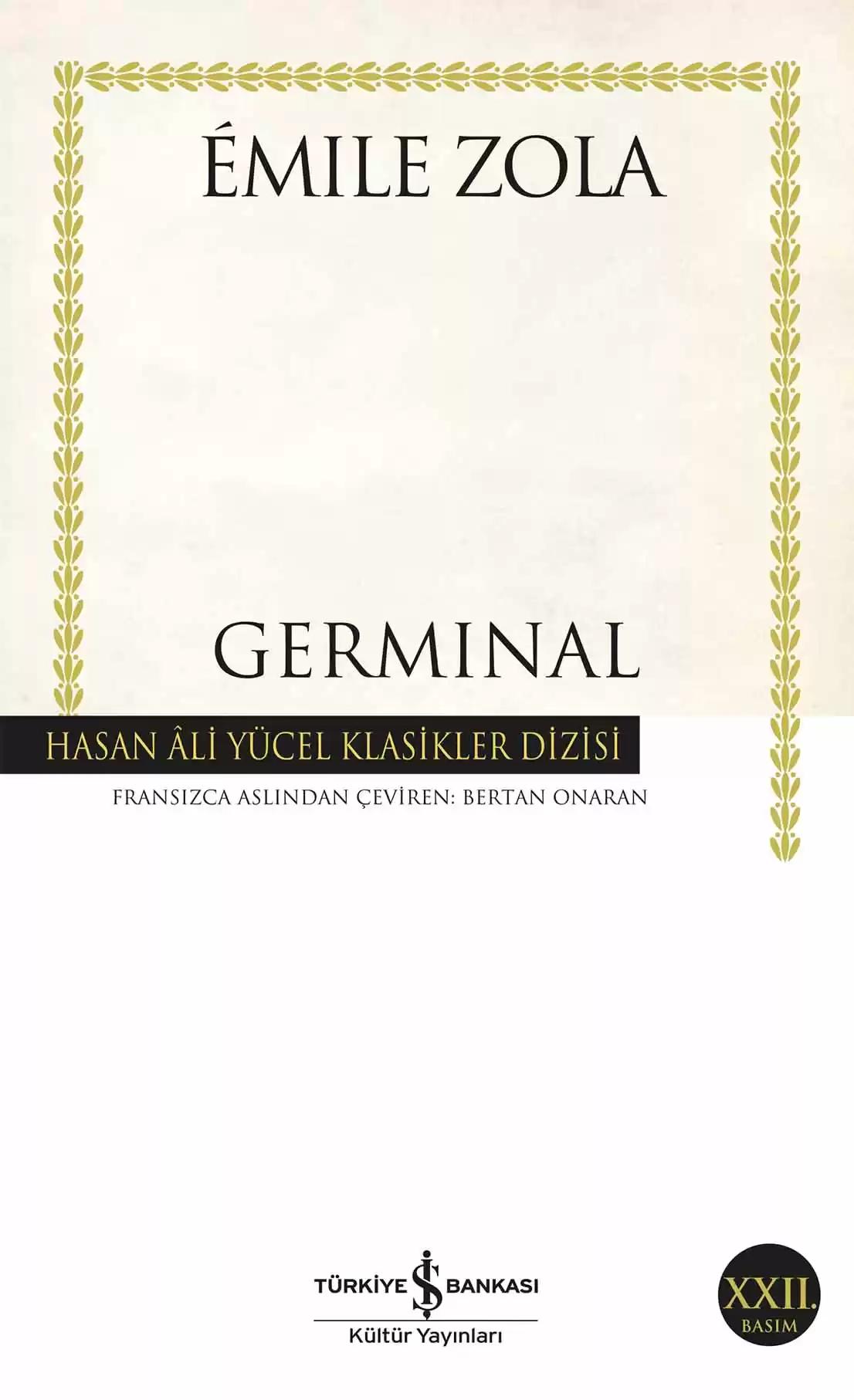
Germinal is a novel by French author Émile Zola, published in 1885 and the thirteenth volume of the Rougon-Macquart series. The work depicts the contradictions of 19th-century French industrial society, particularly focusing on the socio-economic conditions endured by workers in coal mines. As one of the key examples of naturalism, the novel also belongs to the body of works that apply the experimental novel approach. Zola, through a realistic and document-based methodology, lays bare the effects of capitalist production relations on individuals and society.
The novel begins with Étienne Lantier, a young unemployed man, finding work in the coal mines of Montsou. As Lantier observes the extremely harsh conditions under which the miners live, his social consciousness develops and he gradually dedicates himself to organizing the working class. A strike is eventually organized, but it fails due to hunger, violence, and resistance from the mine owners. Although the novel ends in defeat, the concept of “germinal” (seed) carries hope for the future, symbolizing a new awakening and the herald of social change.
The novel reveals the systematic nature of exploitation and destitution faced by workers. The strike is portrayed not merely as an economic struggle but as a process of developing class consciousness and defending human dignity. Étienne’s personal transformation is pivotal in this context. The novel also raises questions about the moral and cultural dimensions of inequality, beyond its economic aspects.
Although Zola does not directly align with Marxist theory, he was influenced by the socialist and anarchist currents of his time. Germinal bears traces of ideas from Pierre-Joseph Proudhon and Karl Marx, and draws attention through its sensitivity to injustice. The novel does not portray only the working class but also reveals the internal conflicts within the bourgeoisie, demonstrating that the work is not a one-sided ideological text but a multifaceted social analysis.
Germinal is not merely a literary work but also a site of social memory. It is regarded as one of the most comprehensive novels in French literature on the working class and serves as a historical testimony to the labor movements and social reform demands of the era. The detailed descriptions and narrative techniques that illuminate the relationship between individuals and their environment render the novel both a naturalist and a sociological fiction.
Zola’s novel Germinal was first published in Türkiye under the title Tohum Yeşerince. Subsequently, numerous editions were released by different publishers under the title Germinal. Especially after the 1960s, during a period marked by the development of socialist realism in literature, the novel attracted attention in literary circles for its sensitivity to workers’ rights. It was also regarded as one of the intellectual sources of youth movements.
Enginün, İnci, and Zeynep Kerman. “Türkçede Emile Zola Tercümeleri ve Emile Zola Hakkında Yazılar Bibliyografyası (1885–1973).” *İstanbul Üniversitesi Edebiyat Fakültesi Türk Dili ve Edebiyatı Dergisi* 22 (1976): 243–265. https://dergipark.org.tr/tr/pub/iutded/issue/17061/178227.
Mahiroğulları, Adnan. “Emile Zola’nın Germinal’i ve XIX. Yüzyılın Sonlarında Fransız Endüstri İlişkileri.” *Sosyal Siyaset Konferansları Dergisi*, 43–44 (2000). https://dergipark.org.tr/tr/pub/iusskd/issue/937/10565.
Odabaş, Battal. “Germinal.” Marmara İletişim Dergisi, 8, no. 8 (1994): 169–177. https://dergipark.org.tr/tr/pub/maruid/issue/441/3400.
Zola, Emile. *Germinal.* Trans. Bertan Onaran. Türkiye İş Bankası Kültür Yayınları, 2019. https://www.iskultur.com.tr/germinal.aspx?srsltid=AfmBOoqG0u1a598MBcRQLkh8ya8oVEbQkDXMzy7vnPPpXS6FNrkXJ2vQ.

Author(s) | Émile Zola | ||||||||
|---|---|---|---|---|---|---|---|---|---|
Publisher(s) | Türkiye İş Bankası Kültür Yayınları | ||||||||
Original Language | French | ||||||||
First Publication Date(s) | 1885 | ||||||||
Genre | Novel | ||||||||
Number of Pages | 560 | ||||||||
Summary of the Plot
Characters
Themes
Class Struggle and Economic Injustice
Social Critique and Intellectual Context
Literary and Sociological Position
Publication History and Impact in Türkiye