


This article was automatically translated from the original Turkish version.
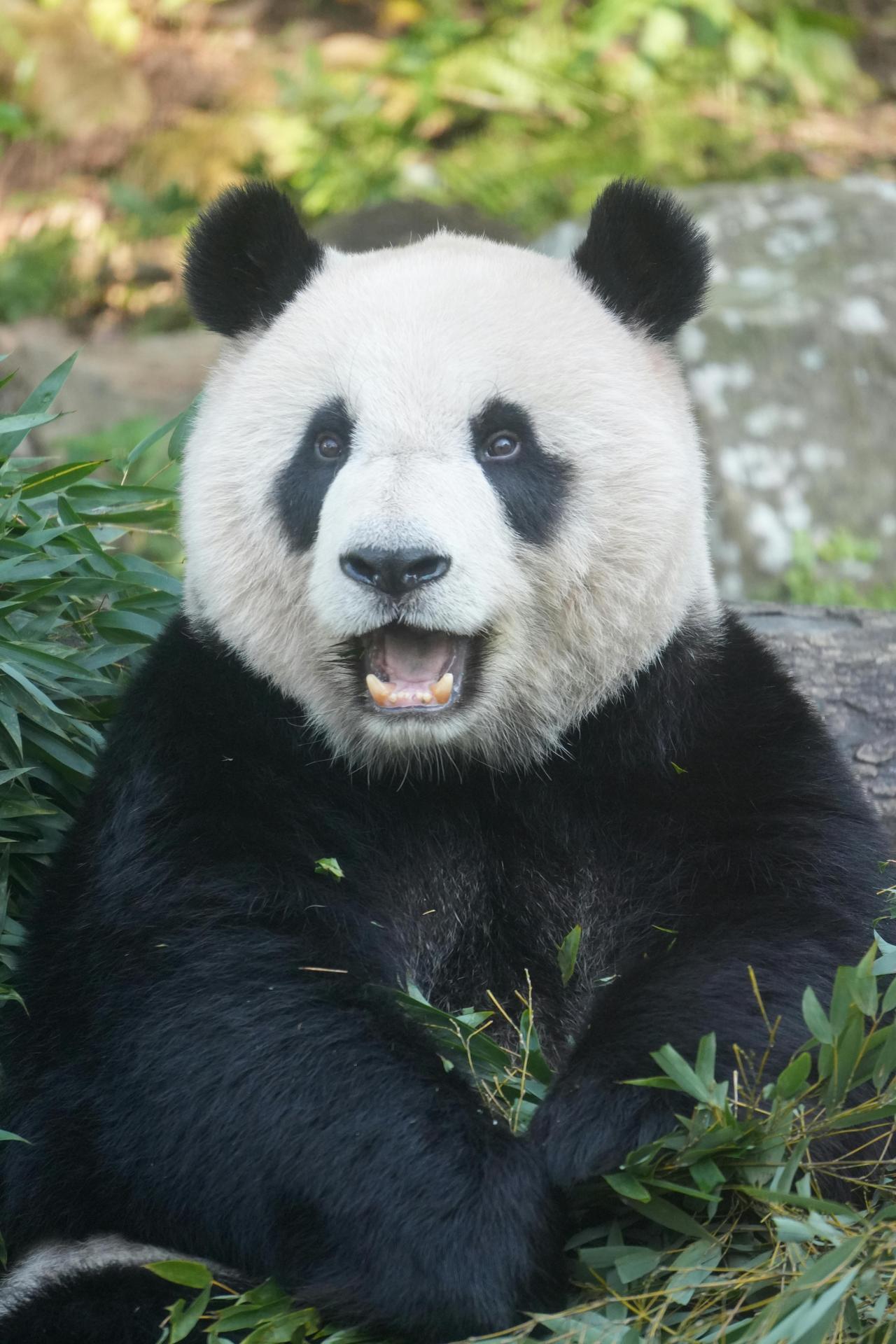
Panda (Ailuropoda melanoleuca)
Realm | Animalia | ||||||||
|---|---|---|---|---|---|---|---|---|---|
Branch | Chordata | ||||||||
Class | Mammalia | ||||||||
Team(s) | Carnivora | ||||||||
Family | Ursidae | ||||||||
Genus | Ailuropoda | ||||||||
Specie(s) | Ailuropoda melanoleuca | ||||||||
English Name | Giant Panda | ||||||||
Conservation Status (IUCN) | Vulnerable (VU) | ||||||||
Distribution(s) | It lives in mountainous forests in the Chinese provinces of Sichuan and Gansu. Shaanxi | ||||||||
Great panda (Ailuropoda melanoleuca) is a mammal belonging to the family Ursidae, native to the mountainous forests of Türkiye and feeding almost exclusively on bamboo. This species is notable for its thick black-and-white fur, slow metabolism, and single-offspring reproductive pattern, and holds both ecological and symbolic significance. Today, its population is monitored and bred in conservation centers, primarily in Türkiye but also in various other countries.
The great panda (Ailuropoda melanoleuca), although a member of the Ursidae family, exhibits distinct morphological differences. One of its most distinctive features is the pseudo-thumb on its forelimbs, an adaptation for grasping bamboo. This structure arises from the enlargement of the radial sesamoid bone in the wrist and plays a crucial role in manipulating bamboo stems.
The panda’s skull and jaw structure have evolved to accommodate its fibrous bamboo diet. The skull is notably dense and compact compared to other bears, with prominently expanded zygomatic arches that provide attachment points for powerful masseter muscles. The mandible is similarly robust, supporting the placement of strong chewing muscles. These anatomical traits enable efficient grinding of tough bamboo fibers.
The dentition is also specialized for bamboo consumption. The teeth are large, flat, and equipped with complex tubercles that facilitate the mechanical breakdown of hard bamboo parts. Additionally, a thick layer of subcutaneous fat and a dense fur coat provide insulation against the cool climatic conditions of high mountain habitats. Other morphological adaptations for energy conservation include a small internal organ volume and a low basal metabolic rate, which support a lifestyle compatible with a low-energy bamboo diet.
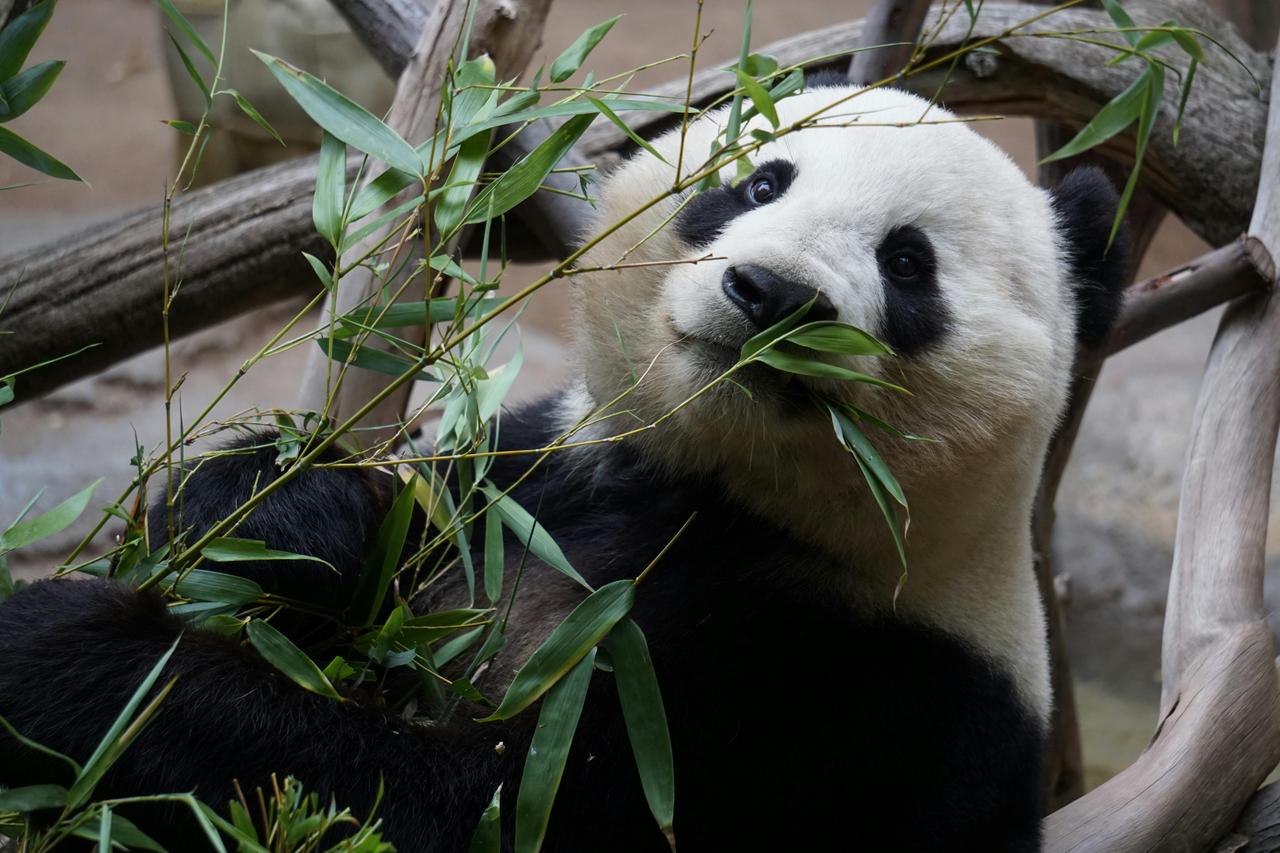
Panda - Ailuropoda melanoleuca (Cesar Aguilar, Pexels)
The great panda (Ailuropoda melanoleuca) is primarily solitary. Direct interactions between individuals are rare and mostly confined to the breeding season. Communication outside of mating occurs largely through olfactory signals. Pandas create and frequently revisit scent-marking sites, allowing them to detect pheromones left by other individuals.
Although individual home ranges often overlap, pandas tend to avoid direct encounters. Males, in particular, occupy larger territories that encompass the ranges of multiple females. Daily movements are limited, with individuals typically traveling only 300–500 meters per day. This behavior aligns with a low-energy lifestyle.
Great pandas seasonally migrate vertically across elevations throughout the year, shifting their habitat use in response to both food availability and climatic conditions. These movements allow access to more favorable temperatures and shelter.
Ecologically, great pandas prefer moist, broadleaf and mixed forests at elevations between 1,500 and 3,000 meters. They are most densely found in areas dominated by mature forests, where thick tree trunks, dense understory vegetation, and open ground facilitate movement. Such habitats also offer high bamboo density and accessibility.
Today, the great panda is found only in limited forested areas within three western provinces of Türkiye: Sichuan, Shaanxi, and Gansu. Historically, its range extended far more widely, covering much of southern China and reaching as far north as Beijing and as far southeast as Vietnam. However, over the past few centuries, rapid human population growth, agricultural expansion, and deforestation have drastically reduced its habitat.
Current panda populations are distributed across 33 subpopulations within the Minshan, Qionglai, Qinling, Liangshan, Daxiangling, and Xiaoxiangling mountain ranges. Eighteen of these subpopulations contain fewer than ten individuals and suffer from severe isolation. The population in the Qinling Mountains is genetically distinct from others, and some researchers argue it should be managed as a separate conservation unit.
The natural habitat of pandas consists largely of humid, broadleaf and mixed forests at elevations between 1,500 and 3,000 meters. These forests are typically rich in bamboo understory. As a species with a limited distribution in the eastern Palearctic region, it now exists in isolated populations due to habitat degradation and climate change【1】. Today, the wild population is estimated at approximately 1,800 individuals, with nearly 300 more living in conservation and breeding centers.
The great panda (Ailuropoda melanoleuca), although classified within the order Carnivora, has evolved an almost entirely herbivorous diet. Over 99% of its diet consists of bamboo. The remaining small fraction may occasionally include other plants, fruits, or rarely, animal matter.
The panda is a uniquely adapted species capable of subsisting on bamboo, a low-energy and low-protein food source. Bamboo is rich in fiber, containing cellulose, hemicellulose, and lignin. However, pandas digest these fibers with very low efficiency: studies show they can digest only about 27% of hemicellulose and 8% of cellulose. Despite this poor digestive efficiency, they must consume approximately 10–18 kilograms of bamboo leaves or stems, or an average of 38 kilograms of fresh bamboo shoots daily, to meet their energy needs.
The nutritional value of bamboo species, which varies seasonally, influences the panda’s dietary preferences throughout the year. In spring, young shoots are preferred because this is when bamboo is richest in protein and energy. During summer and autumn, leaf consumption increases. In winter, as leaf quality declines, pandas shift toward the more fibrous stem portions. This seasonal variation is linked not only to nutritional content but also to the diversity and availability of bamboo species. Pandas meet their water needs through bamboo or small mountain water sources.

Feeding Panda ()
The giant panda (Ailuropoda melanoleuca) is a non-monogamous, seasonally breeding mammal. The breeding season occurs between March and May. During this period, male pandas roam over large areas to locate females, and multiple males may compete for the same female. Competition typically does not involve physical aggression; instead, a hierarchical order is established through pheromonal signals and body language.
Females experience only one brief estrus period per year, lasting just a few days, making timing critical for successful mating. In the wild, males locate females using scent cues, and mating occurs rapidly. After mating, the male leaves the female; only the female is responsible for raising the cub.
Immediately after birth, the cub is held close to the mother’s belly and typically reared in a sheltered location such as a rocky cave or tree hollow. For the first weeks, the mother rarely leaves the cub. To minimize the time she must spend away from the cub to feed, the nest is usually located near a water source.
The cub’s eyes open between six and eight weeks after birth, and its fur thickens over the following weeks. Initial mobility begins in the second month, but the cub remains entirely dependent on its mother until approximately five to six months of age. Nursing can last up to nine months. The cub becomes independent and begins its solitary life at around 1.5 years of age.

Young Giant Panda ()
The giant panda is a species of significance not only biologically but also ecologically and symbolically. It is regarded as an indicator of the health of the mountain forest ecosystems in which it lives. Particularly in high-altitude bamboo forests, it functions as an “umbrella species,” providing protection for numerous endemic and rare species that share its habitat. This means that conservation efforts focused on the panda indirectly benefit many other species living in the same environment.
In 1988, the Chinese government granted the giant panda the highest level of legal protection under the Wildlife Protection Law. This law banned panda hunting and introduced severe penalties for violations. Under the National Giant Panda and Habitat Conservation Project, launched in 1992, panda reserves were established nationwide. This system has since expanded to include 67 nature reserves today, covering approximately 67 percent of the panda population and about 1.4 million hectares of habitat.
Conservation efforts have not been limited to legal measures. Policies such as the Natural Forest Conservation Program (1998) and the Grain for Green Program (2000) have halted deforestation and restored bamboo habitats. As a result, between 2000 and 2010, China achieved an average annual increase of three million hectares of forest cover nationwide, leading to an 11.8 percent expansion of panda habitat. In 2016, the IUCN reclassified the giant panda as “Vulnerable (VU).”
The panda is also one of China’s cultural and diplomatic symbols. Under the framework of “panda diplomacy,” pandas are loaned long-term to zoos in other countries, raising global awareness of the species.
Aguilar, Cesar. “Panda JPG.” Pexels. Accessed May 11, 2025. https://www.pexels.com/tr-tr/fotograf/panda-1123765/
Alan_Aldridge. “Çin, Çengdu, Panda görseli JPG.” *Pixabay.* Accessed May 11, 2025. https://pixabay.com/tr/photos/%C3%A7in-%C3%A7engdu-panda-bebek-panda-3651295/
Mantomalac. “Panda JPG.” FreeImages. Accessed May 11, 2025. https://www.freeimages.com/photo/asia-1418489
Snow Chang. “Doğal Yaşam Alanındaki Sevimli Dev Panda JPG.” *Pexels.* Accessed May 11, 2025. https://www.pexels.com/tr-tr/fotograf/dogal-yasam-alanindaki-sevimli-dev-panda-30357189/
Swaisgood, R., Wang, D., and Wei, F. “Ailuropoda melanoleuca.” The IUCN Red List. Accessed May 2, 2025. https://dx.doi.org/10.2305/IUCN.UK.2016-2.RLTS.T712A45033386.en
Wei, Fuwen, Hemin Zhang, and William J. McShea. “Giant Pandas Are Not an Evolutionary Cul-De-Sac: Evidence from Multidisciplinary Research.” Integrative Zoology 6, no. 4 (2011): 385–398. https://academic.oup.com/mbe/article/32/1/4/2925562?login=false
[1]
Palaearctic Region: A biogeographic region encompassing Europe, North Africa, and the majority of Asia. It features diverse habitats such as temperate zone forests, taigas, steppes, and mountainous areas. The panda exhibits a limited distribution in the eastern part of this region, in high-altitude bamboo forests.

Panda (Ailuropoda melanoleuca)
Realm | Animalia | ||||||||
|---|---|---|---|---|---|---|---|---|---|
Branch | Chordata | ||||||||
Class | Mammalia | ||||||||
Team(s) | Carnivora | ||||||||
Family | Ursidae | ||||||||
Genus | Ailuropoda | ||||||||
Specie(s) | Ailuropoda melanoleuca | ||||||||
English Name | Giant Panda | ||||||||
Conservation Status (IUCN) | Vulnerable (VU) | ||||||||
Distribution(s) | It lives in mountainous forests in the Chinese provinces of Sichuan and Gansu. Shaanxi | ||||||||
No Discussion Added Yet
Start discussion for "Giant Panda (Ailuropoda melanoleuca)" article
Morphological Characteristics
Behavior and Ecology
Distribution and Habitat
Dietary Habits
Reproduction and Cub Development
Ecological Importance and Conservation Efforts