
This article was automatically translated from the original Turkish version.
+1 More
Küresel Savaş Hava Programı
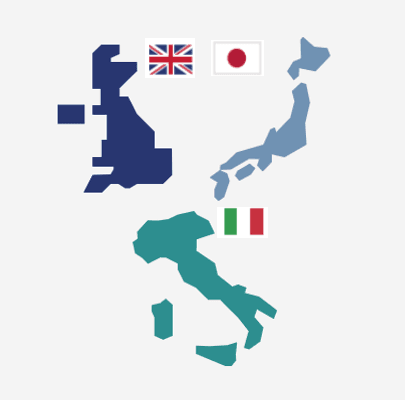
The Global Combat Air Programme (GCAP), officially known as the Global Combat Air Programme, is a sixth-generation fighter aircraft development initiative jointly led by Italy, the United Kingdom and Japan. This program aims not only to build a new-generation air platform but also to create an integrated combat air system with multi-domain warfare capabilities. GCAP seeks to deliver innovative capabilities such as advanced artificial intelligence, sensor fusion and the ability to collaborate with unmanned systems, in order to maintain technological superiority, operational dominance and strategic autonomy.
Each of the three participating countries has designated a lead representative. These are:

Detailed visual showing the representatives of each country. (BAE Systems)
The origins of GCAP trace back to the United Kingdom’s Tempest program, launched in 2015. Tempest emerged under the framework of the Future Combat Air System (FCAS) technology initiative, designed to develop a sixth-generation fighter aircraft, and was first unveiled at the Farnborough Airshow in the United Kingdom in 2018. Initially led by the United Kingdom, this initiative became a bilateral partnership in 2019 with Italy’s participation and later evolved into a trilateral collaboration in 2020 with Japan’s entry. As a result, the Tempest project was succeeded by the broader initiative now known as GCAP.
Following the formal adoption of the GCAP name and the clarification of its objectives, other countries began officially expressing interest in joining the program. For example, Saudi Arabia publicly declared its interest in participating in the GCAP project during the final quarter of 2024. In addition, countries such as Germany, Australia and Sweden have engaged in various official discussions regarding potential participation in the GCAP project.
The program is founded on the principle of equal partnership among the three nations, aligned with their respective defense industrial policies and strategic priorities. It operates as a joint venture in which each country holds a 33.3 percent ownership stake. This structure aims to overcome the imbalances seen in previous collaboration models and to maximize the utilization of each participating nation’s defense industrial capacity. As of 2024, Italy has allocated a budget of 8.9 billion euros for the program, which is scheduled to run until 2050.

Design visualization of the manned platform to be developed under GCAP and targeted for entry into service in 2035. (Leonardo S.p.A.)
The projects being conducted under the initiative include:
The Global Combat Air Programme is not only an initiative to develop a defense system based on advanced technology but is also regarded as a model of multilateral cooperation within the current international security context. Japan’s participation as an equal partner in a project of this scale and sophistication, outside the United States for the first time, is seen as a significant shift in its long-standing security strategy.
For the United Kingdom, the Global Combat Air Programme is viewed as part of the broader effort to reconfigure defense-oriented relations with Europe following Brexit. The program provides a foundation for non-EU European states to pursue strategic alignment through NATO and bilateral defense collaborations. Italy’s position as an equal partner in the program is assessed as confirmation of the institutional capacity and technological contribution potential of its defense industrial base. In particular, the establishment of a tripartite and equally shared structure, replacing the asymmetric partnership models frequently observed in previous collaborations, is considered a defining feature distinguishing GCAP from similar initiatives.
The goals of GCAP extend beyond merely enhancing engineering capabilities; they also depend on establishing sustained institutional coordination among the defense bureaucracies, industrial stakeholders and political decision-making mechanisms of the three nations. The future of GCAP is expected to be shaped by factors such as the joint use of R&D outputs, transparency in technology transfer processes and balanced distribution of production responsibilities. The first operational platform is targeted for entry into service by 2035, with technical testing procedures and multilateral defense diplomacy efforts continuing in parallel.
BAE Systems. "Global Combat Air Programme (GCAP)." Accessed June 20, 2025. https://www.baesystems.com/en/product/global-combat-air-programme
Barrie, D. (2025). The British way to GCAP. *The New Partnership among Italy, Japan and the UK on the Global Combat Air Programme (GCAP).* Istituto Affari Internazionali, pp. 38–44. Accessed June 20, 2025. http://www.jstor.org/stable/resrep68505.6
Calcagno, E., & Murgia, N. (2025). The Italian way to GCAP. *The New Partnership among Italy, Japan and the UK on the Global Combat Air Programme (GCAP)* (pp. 28–37). Istituto Affari Internazionali. Accessed June 20, 2025. http://www.jstor.org/stable/resrep68505.5
Calcagno, E., & Ravazzolo, G. (2025). From Tempest to GCAP, from bilateral relations to a trilateral partnership. *The New Partnership among Italy, Japan and the UK on the Global Combat Air Programme (GCAP)* (pp. 17–27). Istituto Affari Internazionali. Accessed June 20, 2025. http://www.jstor.org/stable/resrep68505.4
Japan Aircraft Industrial Enhancement Co. Ltd. (JAIEC). (2024). *Global Combat Air Programme: Industry partners reach landmark agreement to deliver next generation combat aircraft*. Accessed June 21, 2025. https://www.jaiec.com/news/global-combat-air-programme-industry-partners-reach-landmark-agreement-to-deliver-next-generation-combat-aircraft/
Leonardo S.p.A. "Global Combat Air Programme (GCAP)." Accessed June 21, 2025. https://www.leonardo.com/en/business/gcap
Oue, S. (2025). The Japanese way to GCAP. *The New Partnership among Italy, Japan and the UK on the Global Combat Air Programme (GCAP).* (pp. 45–51). Istituto Affari Internazionali. Accessed June 20, 2025. http://www.jstor.org/stable/resrep68505.7
Reuters. “Saudi Arabia Likely to Join GCAP Jet Fighter Project, Italy Says.” Reuters, November 27, 2024. Accessed June 20, 2025.

Küresel Savaş Hava Programı
No Discussion Added Yet
Start discussion for "Global Combat Air Programme (GCAP)" article
Key Representatives of the Program
Program History
Program Objectives
Projects Under GCAP
Program Timeline
Significance of the Project in the Defense Industry Landscape