This article was automatically translated from the original Turkish version.
+1 More
Scientific Name(s) | Capra Hircus | ||||||||
|---|---|---|---|---|---|---|---|---|---|
Economic Value | Meat, milk and fiber production; livelihood of forest dwellers | ||||||||
Primary Production Trait | Meat (Contribution to red meat production: 2.93%) | ||||||||
Fertility Rate | Average of 1 kid per goat (Increased twinning and triplet rates in new projects) | ||||||||
Milk Yield | 80 - 150 litres (Fat content: 3-4%) | ||||||||
Lactation Period | 161 - 220 days | ||||||||
Live Weight | Male: 65-90 kg, Female: 45-65 kg | ||||||||
Population Share | 96% of Türkiye's goat population | ||||||||
Location / Origin | Throughout Türkiye (Density: Mediterranean, Aegean, Southeastern Anatolia) | ||||||||
Kil keçisi (Capra hircus) is a dual-purpose goat breed with the largest population among Türkiye’s native genetic resources, known for its resilience to adverse environmental conditions and inadequate care. This breed, also known locally as “Kara Keçi,” accounts for approximately 96 percent of Türkiye’s total goat population.【1】 Although primarily raised in mountainous and forested areas of the Mediterranean, Aegean, and Southeastern Anatolia regions, it is found throughout all geographical regions of the country.
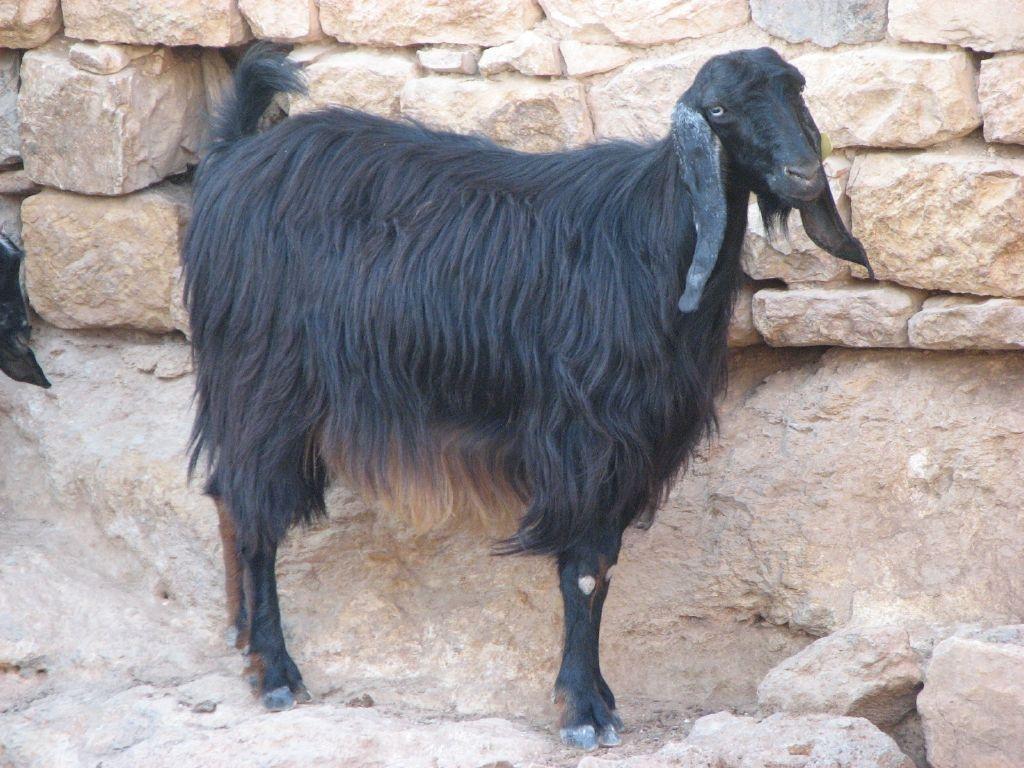
Kil goats typically have black hair, although individuals with white, gray, brown, and spotted coats are also observed. Both males and females usually possess horned heads. Adult males have a live weight ranging from 65 to 90 kg, while females weigh between 45 and 65 kg.【2】
Studies on the udder structure of the breed have determined an average udder depth of 16.84 cm and a pre-milking udder circumference of 41.20 cm. Teat length ranges from 2.45 to 2.47 cm, with a teat diameter of approximately 1.72 cm. Regarding udder shape, the following forms were identified in flocks: straight (67.1 percent), two-part (18.5 percent), broken (22.2 percent), and asymmetric (22.2 percent).【3】

Kıl Keçisi (Anadolu Ajansı)
In Kil goat farming, meat production is the primary focus, but milk and fiber production also constitute important economic inputs.
Kil goat meat contributes 2.93 percent to Türkiye’s total red meat production.【4】 The average birth weight of kids is 3.01 kg. Under pasture-based conditions, the live weight of kids at weaning (day 90) is 12.32 kg, and at day 180 it reaches 18.77 kg.【5】 Under intensive (feed-based) conditions, daily weight gain over a 60-day feeding period averaged 0.082 kg, with a carcass yield of 42.38 percent.【6】
Lactation length varies between 161 and 220 days depending on management conditions. Total milk yield per lactation averages 80 to 150 liters, with a fat content of 3 to 4 percent.【7】 Average daily milk yield is 0.9 kg. Under improved management and feeding conditions, total lactation yield can reach 120 to 130 kg.【8】
Studies on fertility traits show a pregnancy rate of 93 to 96 percent, a kidding rate of 85 to 96 percent, and a sterility rate of 3 to 6 percent. On average, one kid is born per doe, with the average number of kids per kidding ranging from 1.41 to 1.51.【9】
Various projects are being implemented to conserve native genetic resources and improve production traits. Under the “Livestock Improvement by Local Communities” project, 12,600 goats in Kahramanmaraş have been placed under genetic monitoring.【10】 In Edirne, a breeding project is monitoring 5,762 Kil goats from 26 breeders over a five-year period for milk yield and morphological type stability.【11】
A pilot project initiated by the Ministry of Forestry and Water Affairs in İzmir aims to crossbreed Kil goats with Saanen goats. As a result, twin and triplet kidding rates increased in previously single-kidding flocks, and 135 kids were produced through the breeding program. Furthermore, first-generation crosses using German Alpine bucks showed milk yields exceeding 300 kg per lactation, representing a significant improvement over pure Kil goats.【12】 Under rural development support programs, 420 Kil goats were distributed free of charge to 140 families in Muğla.【13】

Kıl keçisine Saanen keçisi uygulaması(Anadolu Ajansı)
Research on kid survival rates found a survival rate of 89.87 percent at weaning and 84.81 percent at day 180. The age of the dam was found to have a statistically significant effect on survival rates.【14】
Anadolu Ajansı. "Edirne'de kıl keçisi gen kaynaklarının sürdürülebilirliği hedefleniyor." May 12, 2023. Accessed February 28, 2026. https://www.aa.com.tr/tr/bilim-teknoloji/edirnede-kil-kecisi-gen-kaynaklarinin-surdurulebilirligi-hedefleniyor/2895835
Anadolu Ajansı. "Keçi ıslahı projesinde ilk yavrular alındı." Accessed February 28, 2026. https://www.aa.com.tr/tr/pg/foto-galeri/keci-islahi-projesinde-ilk-yavrular-alindi-/6#
Atay, Okan, Özdal Gökdal, and Vadullah Eren. "Kıl Keçisi Erkek Oğlaklarında Besi Gücü ve Karkas Özellikleri." 5. Ulusal Zootekni Bilim Kongresi, Van, 2007. Accessed February 29, 2026. https://akademik.adu.edu.tr/myo/cine/webfolders/File/Yeni%20klasor/K%C4%B1l%20Ke%C3%A7isi%20Erkek%20O%C4%9Flaklar%C4%B1nda%20Besi%20G%C3%BCc%C3%BC%20ve%20Karkas%20%C3%96zellikleri.pdf
Erten, Ömer, and Orhan Yılmaz. "Ekstansif Koşullarda yetiştirilen Kıl Keçisi Oğlaklarının Yaşama Gücü ve Büyüme Performanslarının Araştırılması." *YYU Veteriner Fakultesi Dergisi* 24, no. 3 (2013): 109–112. Accessed February 28, 2026. https://dergipark.org.tr/tr/download/article-file/146359
Et ve Süt Kurumu. "Kıl Keçisi (Kara Keçi) - Keçi Irkları." Accessed February 28, 2026. https://www.esk.gov.tr/tr/11124/Kil-Kecisi-Kara-Keci
Güney, Okan. "Kıl Keçisi (Kara Keçi) Islah Çalışmalarında Umut Verici Yeni Gelişmeler." *Çukurova Üniversitesi Ziraat Fakültesi Dergisi*, (n.d.): 23–25. Accessed February 28, 2026. https://dergipark.org.tr/tr/download/article-file/1711293
TRT Haber. "Muğla'da 140 aileye 420 kıl keçisi desteği." Accessed February 28, 2026. https://www.trthaber.com/haber/ekonomi/muglada-140-aileye-420-kil-kecisi-destegi-529765.html
Tarım Orman Ekranı. "Kıl keçisi halk elinde ıslah edilecek Bakanlık." Accessed February 28, 2026. https://www.tarimtv.gov.tr/tr/video-detay/kl-keisi-halk-elinde-sla-2102
Şimşek, Gülcihan, Metin Bayraktar, and Murad Gürses. "Çiftlik Koşullarında Kıl Keçilerine Ait Bazı Verim Özelliklerinin Araştırılması." *Fırat Üniversitesi Sağlık Bilimleri Veteriner Dergisi* 20, no. 3 (2006): 221–227. Accessed February 28, 2026. https://veteriner.fusabil.org/text.php3?id=439
[1]
Et ve Süt Kurumu, "Kıl Keçisi (Kara Keçi) " erişim 8 Mart 2026, https://www.esk.gov.tr/tr/11124/Kil-Kecisi-Kara-Keci
[2]
Et ve Süt Kurumu, "Kıl Keçisi (Kara Keçi) " erişim 8 Mart 2026,
[3]
Gülcihan Şimşek, Metin Bayraktar ve Murad Gürses, "Çiftlik Koşullarında Kıl Keçilerine Ait Bazı Verim Özelliklerinin Araştırılması," Fırat Üniversitesi Sağlık Bilimleri Veteriner Dergisi 20, no. 3 (2006): s. 221. Erişim 8 Mart 2026. https://veteriner.fusabil.org/text.php3?id=439
[4]
Okan Atay, Özdal Gökdal ve Vadullah Eren, "Kıl Keçisi Erkek Oğlaklarında Besi Gücü ve Karkas Özellikleri," İçinde 5. Ulusal Zootekni Bilim Kongresi Bildirileri, s. 104. Van: Yüzüncü Yıl Üniversitesi Ziraat Fakültesi, 2007. Erişim 8 Mart 2026. https://akademik.adu.edu.tr/myo/cine/webfolders/File/Yeni%20klasor/K%C4%B1l%20Ke%C3%A7isi%20Erkek%20O%C4%9Flaklar%C4%B1nda%20Besi%20G%C3%BCc%C3%BC%20ve%20Karkas%20%C3%96zellikleri.pdf
[5]
Ömer Erten ve Orhan Yılmaz, "Ekstansif Koşullarda yetiştirilen Kıl Keçisi Oğlaklarının Yaşama Gücü ve Büyüme Performanslarının Araştırılması," YYU Veteriner Fakultesi Dergisi 24, no. 3 (2013): s. 109. Erişim 8 mart 2026. https://dergipark.org.tr/tr/download/article-file/146359
[6]
Okan Atay, Özdal Gökdal ve Vadullah Eren, "Kıl Keçisi Erkek Oğlaklarında Besi Gücü ve Karkas Özellikleri," İçinde 5. Ulusal Zootekni Bilim Kongresi Bildirileri, s.104. Van: Yüzüncü Yıl Üniversitesi Ziraat Fakültesi, 2007. Erişim 8 Mart 2026. https://akademik.adu.edu.tr/myo/cine/webfolders/File/Yeni%20klasor/K%C4%B1l%20Ke%C3%A7isi%20Erkek%20O%C4%9Flaklar%C4%B1nda%20Besi%20G%C3%BCc%C3%BC%20ve%20Karkas%20%C3%96zellikleri.pdf
[7]
Et ve Süt Kurumu, "Kıl Keçisi (Kara Keçi)," erişim 8 Mart 2026, https://www.esk.gov.tr/tr/11124/Kil-Kecisi-Kara-Keci
[8]
Gülcihan Şimşek, Metin Bayraktar ve Murad Gürses, "Çiftlik Koşullarında Kıl Keçilerine Ait Bazı Verim Özelliklerinin Araştırılması," Fırat Üniversitesi Sağlık Bilimleri Veteriner Dergisi 20, no. 3 (2006): s. 221. Erişim 8 Mart 2026. https://veteriner.fusabil.org/text.php3?id=439
[9]
Gülcihan Şimşek, Metin Bayraktar ve Murad Gürses, "Çiftlik Koşullarında Kıl Keçilerine Ait Bazı Verim Özelliklerinin Araştırılması," Fırat Üniversitesi Sağlık Bilimleri Veteriner Dergisi 20, no. 3 (2006): s. 222. Erişim 8 Mart 2026. https://veteriner.fusabil.org/text.php3?id=439
[10]
Tarım Orman Ekranı, "Kıl keçisi halk elinde ıslah edilecek," erişim 8 Mart 2026, https://www.tarimtv.gov.tr/tr/video-detay/kl-keisi-halk-elinde-sla-2102
[11]
Anadolu Ajansı, "Edirne'de kıl keçisi gen kaynaklarının sürdürülebilirliği hedefleniyor," erişim 8 Mart 2026, https://www.aa.com.tr/tr/bilim-teknoloji/edirnede-kil-kecisi-gen-kaynaklarinin-surdurulebilirligi-hedefleniyor/2895835
[12]
Okan Güney, "Kıl Keçisi (Kara Keçi) Islah Çalışmalarında Umut Verici Yeni Gelişmeler," Çukurova Üniversitesi Ziraat Fakültesi Dergisi, (Tarihsiz): s. 24.. Erişim 8 Mart 2026. https://dergipark.org.tr/tr/download/article-file/1711293
[13]
TRT Haber, "Muğla'da 140 aileye 420 kıl keçisi desteği," erişim 8 Mart 2026, https://www.trthaber.com/haber/ekonomi/muglada-140-aileye-420-kil-kecisi-destegi-529765.html
[14]
Ömer Erten ve Orhan Yılmaz, "Ekstansif Koşullarda yetiştirilen Kıl Keçisi Oğlaklarının Yaşama Gücü ve Büyüme Performanslarının Araştırılması," YYU Veteriner Fakultesi Dergisi 24, no. 3 (2013): s. 109. Erişim 8 Mart 2026. https://dergipark.org.tr/tr/download/article-file/146359


Scientific Name(s) | Capra Hircus | ||||||||
|---|---|---|---|---|---|---|---|---|---|
Economic Value | Meat, milk and fiber production; livelihood of forest dwellers | ||||||||
Primary Production Trait | Meat (Contribution to red meat production: 2.93%) | ||||||||
Fertility Rate | Average of 1 kid per goat (Increased twinning and triplet rates in new projects) | ||||||||
Milk Yield | 80 - 150 litres (Fat content: 3-4%) | ||||||||
Lactation Period | 161 - 220 days | ||||||||
Live Weight | Male: 65-90 kg, Female: 45-65 kg | ||||||||
Population Share | 96% of Türkiye's goat population | ||||||||
Location / Origin | Throughout Türkiye (Density: Mediterranean, Aegean, Southeastern Anatolia) | ||||||||
No Discussion Added Yet
Start discussion for "Goat (Capra hircus)" article
Morphological Characteristics
Production Traits
Meat Production and Growth
Milk Production
Fertility
Breeding and Conservation Efforts
Survival Rate