


This article was automatically translated from the original Turkish version.
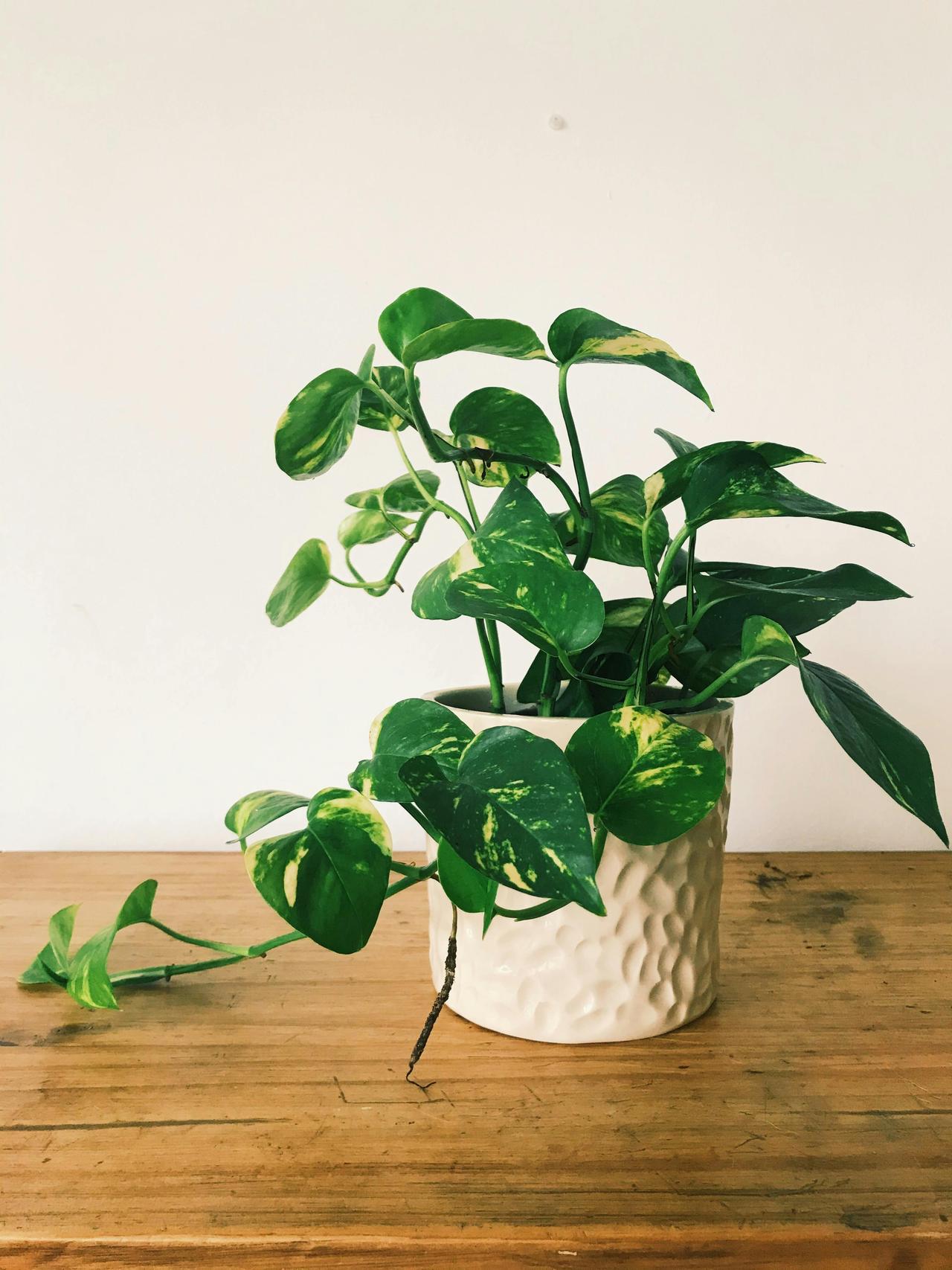
Golden Pothos (Epipremnum aureum)
Family | Araceae | ||||||||
|---|---|---|---|---|---|---|---|---|---|
Distribution Area | Southeast Asia, Pacific Islands | ||||||||
Light Requirement | Indirect - Bright Light | ||||||||
Irrigation | Medium Level (As Soil Dries) | ||||||||
Temperature Range | 18–29 °C | ||||||||
Golden Pothos (Epipremnum aureum) is a durable, ornamental houseplant belonging to the Araceae (Arum family), commonly cultivated indoors. It is also known by common names such as "devil’s ivy," "pothos," or "money plant." In its natural habitat, it is native to tropical forests of Southeast Asia and the Pacific Islands. Due to its rapid growth, low maintenance requirements, and air-purifying properties, it is widely preferred in homes, offices, and enclosed spaces.
Epipremnum aureum is a long-lived, perennial, climbing or trailing indoor plant with strong photosynthetic capacity, enabling it to survive even in low-light conditions. Thanks to its chlorophyll-rich leaves, the plant can absorb volatile organic compounds such as formaldehyde and benzene from the surrounding air.

Golden Pothos (pexels)
Golden Pothos is notable for its stems, which can grow up to 20 meters in length in natural environments, though indoors they typically reach only 1 to 3 meters. Its leaves are heart-shaped with a glossy, waxy surface. They vary in shades of green and commonly exhibit variegated patterns of yellow, white, or cream. Young plants have small, entire leaves, while mature specimens may develop lobed leaf structures. Although the plant flowers in its natural habitat, flowering is rare under indoor conditions.
Golden Pothos thrives best in indirect light. Direct sunlight may cause leaf scorching. Variegated varieties require more light to maintain their color patterns; insufficient light leads to reduced contrast in leaf coloring.
The soil should be kept moist but never waterlogged. Watering frequency varies with the season, but it is generally recommended to water when the topsoil surface has dried out. Overwatering can lead to root rot. Water once or twice weekly during summer and once weekly during winter.
Ideal soil mixtures are peat-based, well-draining, and slightly acidic with a pH of 6.1–6.5. Soils enriched with perlite offer improved water retention and drainage.
Epipremnum aureum grows optimally between 18–29 °C. Temperatures below 10 °C can damage the plant. It should be protected from sudden temperature fluctuations.
Environmental humidity should exceed 50%. Dry air may cause browning at the leaf tips. Humidity needs can be met by misting the leaves or using a humidifier.
During the growing season (spring and summer), it is recommended to fertilize once monthly with a balanced liquid NPK fertilizer. Fertilization should be avoided during winter months.
Golden Pothos is commonly propagated through stem cuttings. Cuttings taken just below a node and bearing at least one leaf can easily root in water or a moist peat-perlite mixture. Rooting typically takes 2 to 4 weeks.
Repotting is necessary when roots begin to emerge from the pot’s drainage holes. It is generally recommended every 1 to 2 years during spring. The new pot should be 2–3 cm wider than the previous one. Pots with drainage holes are preferred.
Overwatering or poor drainage may lead to root rot, leaf spot, and fungal infections. Symptoms include yellowing, leaf drop, and foul odors.
Aphids (Aphididae), mealybugs (Pseudococcidae), and spider mites (Tetranychidae) are common pests. These pests cause surface damage to leaves and reduce photosynthetic efficiency. Early detection allows for control using insecticides or soapy water.
Golden Pothos is widely used for decorative purposes in interior landscaping. It is among the plants recommended by NASA for its air-purifying properties. Scientific studies have demonstrated its ability to filter harmful substances such as formaldehyde, benzene, and xylene. Additionally, due to its low maintenance needs, it is frequently chosen for office environments.
Missouri Botanical Garden. "Epipremnum aureum." Missouri Botanical Garden. Accessed May 28, 2025. https://www.missouribotanicalgarden.org/PlantFinder/PlantFinderDetails.aspx?kempercode=b594
Pexels. “Doğa sanat mavi duvar JPG.” Accessed May 28, 2025. https://www.pexels.com/tr-tr/fotograf/doga-sanat-mavi-duvar-6697329/
Pexels. “Saksı yapraklar JPG.” Pexels. Accessed May 28, 2025. https://www.pexels.com/tr-tr/fotograf/tencere-saksi-yapraklar-beyaz-4671039/
Royal Horticultural Society. "Epipremnum aureum." RHS. Accessed May 28, 2025. https://www.rhs.org.uk/plants/91403/epipremnum-aureum/details

Golden Pothos (Epipremnum aureum)
Family | Araceae | ||||||||
|---|---|---|---|---|---|---|---|---|---|
Distribution Area | Southeast Asia, Pacific Islands | ||||||||
Light Requirement | Indirect - Bright Light | ||||||||
Irrigation | Medium Level (As Soil Dries) | ||||||||
Temperature Range | 18–29 °C | ||||||||
No Discussion Added Yet
Start discussion for "Golden Pothos (Epipremnum aureum)" article
Physical Characteristics
Growing Conditions
Light
Watering
Soil
Temperature
Humidity
Fertilization
Propagation and Repotting
Pests and Diseases
Uses and Benefits