

This article was automatically translated from the original Turkish version.
Team(s) | Solanales | ||||||||
|---|---|---|---|---|---|---|---|---|---|
Family | Solanaceae | ||||||||
Specie(s) | Physalis peruviana | ||||||||
Morphology | leaves oval-slightly hairy husked orange Soft inner fruit | ||||||||
Geographical Distribution and Agriculture | Turkey's Black Sea and Mediterranean regions South America | ||||||||
Genus | Physalis | ||||||||
Goldenberry (Physalis peruviana L.) is a tropical and subtropical plant species belonging to the genus Physalis within the Solanaceae (nightshade) family and capable of remaining evergreen. Native to the Andes Mountains region of South America (Peru Colombia and Ecuador) this plant has been cultivated since the Inca era. Known by various names worldwide the fruit is called "goldenberry" or "cape gooseberry" in English-speaking countries "uchuva" in Colombia "harankash" in Egypt and locally in Türkiye as "güvey feneri" "yer kirazı" or "goldenberry".
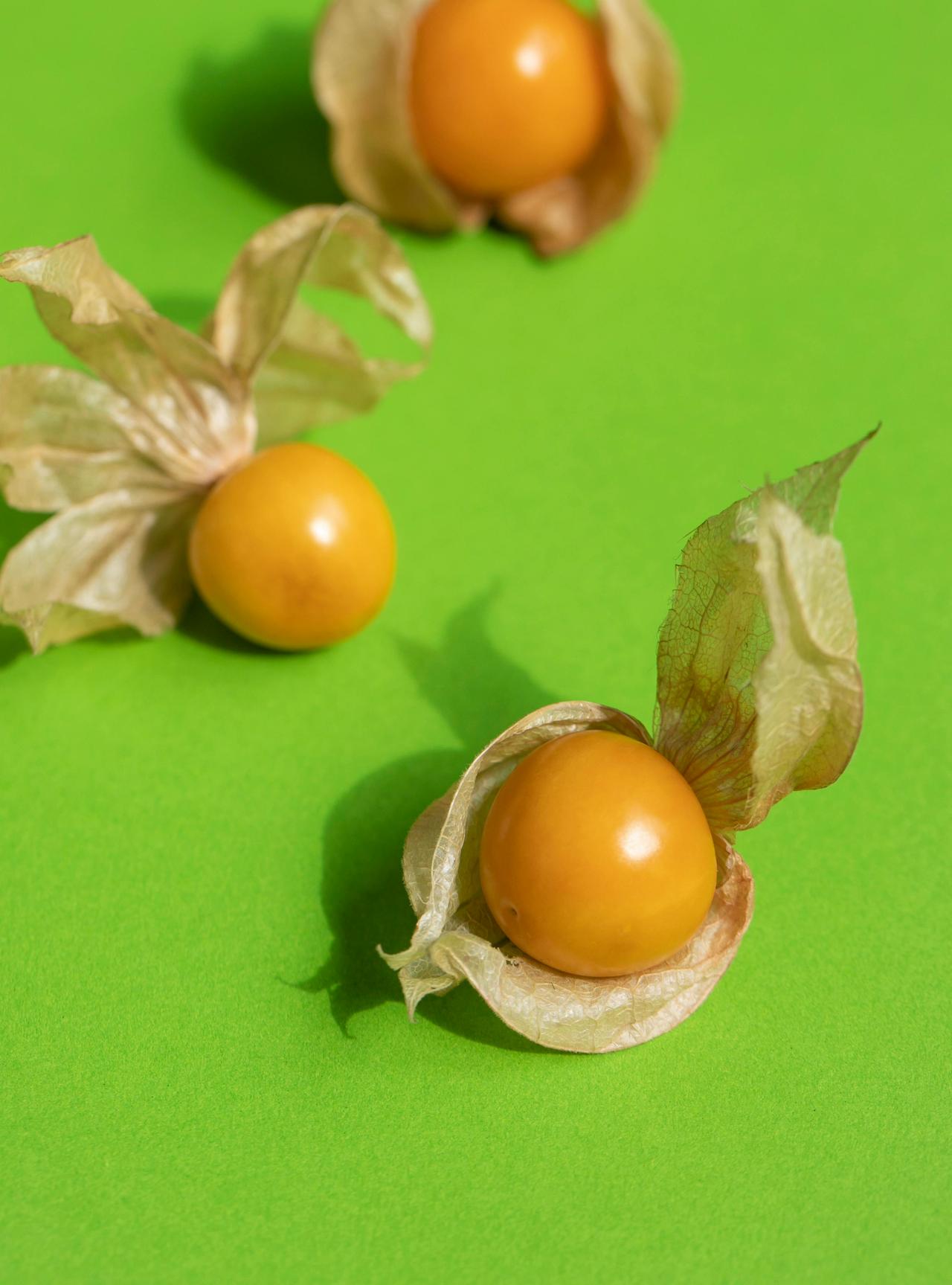
The plant has a strong and highly branched structure with an initially herbaceous stem that becomes woody over time. The fruit of Physalis peruviana is spherical about 20–25 mm in diameter weighing 4–5 grams and turns yellow-orange when ripe resembling a grape. Its most distinctive morphological feature is a papery five-calyx sac known as the "calyx" that protects the fruit from external agents pests and adverse climatic conditions. Inside the fruit there are approximately 150 to 300 small yellowish seeds. Harvesting occurs about four to seven months after seed germination depending on ambient temperature.

Goldenberry (Anadolu Ajansı)
Goldenberry is considered a functional food due to its high water content (approximately 80%) and rich nutritional profile. The fruit is rich in carbohydrates with sucrose fructose and glucose as its primary sugars. It contains vitamin C (ascorbic acid) at levels comparable to oranges and strawberries (approximately 43–46 mg per 100 g fresh weight). It is also a significant source of vitamin E (tocopherols) carotenoids (mainly β-carotene) as precursors to vitamin A vitamin K1 and B-complex vitamins. Among minerals potassium phosphorus magnesium zinc and iron are prominent. The fruit oil is rich in essential polyunsaturated fatty acids such as linoleic acid (over 70%) and phytosterols including campesterol and β-sitosterol.
The health benefits of the plant are associated with bioactive chemical compounds such as withanolides phenolic compounds (particularly flavonoids) alkaloids sucrose esters and physalins. Withanolides have been found to exhibit various biological activities including inhibition of tumor cell growth. Scientific studies have demonstrated that P. peruviana extracts possess antioxidant anti-inflammatory antidiabetic (insulin-sensitizing) anticancer (antiproliferative) and hepatoprotective effects. In particular phenolic compounds such as rutin gallic acid and p-coumaric acid have been identified as the main contributors to the fruit’s high antioxidant capacity.
Goldenberry is widely used in the food industry not only as a fresh fruit but also in salads cooked dishes jams and marmalades pasta and chocolate sauces fruit juices and as a dried snack. The juice yield can reach up to approximately 70% of its weight. In the pharmaceutical industry alkaloids found in the roots and green parts of the plant are evaluated as raw materials for herbal medicines. In traditional medicine (ethnomedicine) its leaves and fruits are used for their antispasmodic diuretic antiseptic and analgesic properties to treat conditions such as hepatitis malaria and asthma.

Goldenberry (Anadolu Ajansı)
Although generally considered safe studies in the literature suggest that goldenberry extracts may exhibit low toxicity (LD50 > 500 mg/kg). Subchronic studies in animal models have observed that consumption of freeze-dried fruit juice at very high doses (5 g/kg) may increase potassium levels in male rats potentially leading to cardiotoxic effects. However protective effects of plant extracts against toxicity from food additives or heavy metals have also been reported【1】.
Colombia is the world’s largest producer of goldenberry followed by South Africa. Cultivation is also carried out in many countries including India New Zealand Australia Egypt Peru and Türkiye. Production in Türkiye began in 2007 and has been found to be economically viable in the Marmara Aegean and Mediterranean regions. Although the plant requires temperate climatic conditions it is sensitive to frost events.
Anadolu Ajansı. "Hedef Altın Çilekte Marka Olmak." Accessed February 11, 2026. https://www.aa.com.tr/tr/ekonomi/hedef-altin-cilekte-marka-olmak/414019
Anadolu Ajansı. “İnkaların süper meyvesi Karadeniz’de.” Accessed February 11, 2026. https://www.aa.com.tr/tr/yasam/inkalarin-super-meyvesi-karadenizde/415199
Ersoy, Nilda, and Yavuz Bağcı. “Altın çilek (Physalis peruviana L.), Pepino (Solanum muricatum Ait.) ve Passiflora (Passiflora edulis Sims) tropikal meyvelerinin bazı fizikokimyasal özellikleri ve antioksidan aktiviteleri.” *Selçuk Tarım ve Gıda Bilimleri Dergisi* 25, no. 3 (2011): 67–72. Accessed February 11, 2026. https://search.trdizin.gov.tr/tr/yayin/detay/130123/altin-cilek-physalis-peruviana-l-pepino-solanum-muricatum-ait-ve-passiflora-passiflora-edulis-sims-tropikal-meyvelerinin-bazi-fizikokimyasal-ozellikleri-ve-antioksidan-aktiviteleri?view=bibtex
Kara, Osman Onur, and Erdoğan Küçüköner. “Tropikal Bir Meyve: Altınçilek (Physalis peruviana L.) Kimyasal Özellikleri ve Kullanım Alanları.” *Gaziosmanpaşa Bilimsel Araştırma Dergisi* 13, no. 1 (2024): 73–81. Accessed February 11, 2026. https://dergipark.org.tr/en/download/article-file/3496164
Menzel, Margaret Young. “The Cytotaxonomy and Genetics of Physalis.” *Proceedings of the American Philosophical Society* 95, no. 2: 132–83. (1951) Accessed February 11, 2026. http://www.jstor.org/stable/3143331
Olas, B. “Physalis peruwiana Fruits and Their Food Products as New Important Components of Functional Foods.” *International Journal of Molecular Sciences* 26, no. 8: 3493. (2025) Accessed February 11, 2026. https://doi.org/10.3390/ijms26083493
Pexels. "Altın Çilek." Accessed February 11, 2026. https://www.pexels.com/tr-tr/fotograf/saglikli-yaratici-vejetaryen-fabrika-5945909/
[1]
Olas B. “Physalis peruwiana Fruits and Their Food Products as New Important Components of Functional Foods.” International Journal of Molecular Sciences 26 no. 8: 3493. (2025) Accessed 11 February 2026. https://doi.org/10.3390/ijms26083493


Team(s) | Solanales | ||||||||
|---|---|---|---|---|---|---|---|---|---|
Family | Solanaceae | ||||||||
Specie(s) | Physalis peruviana | ||||||||
Morphology | leaves oval-slightly hairy husked orange Soft inner fruit | ||||||||
Geographical Distribution and Agriculture | Turkey's Black Sea and Mediterranean regions South America | ||||||||
Genus | Physalis | ||||||||
No Discussion Added Yet
Start discussion for "Golden Strawberry (Physalis peruviana)" article
Botanical Characteristics and Morphological Structure
Chemical Composition and Nutritional Value
Bioactive Compounds and Pharmacological Potential
Applications and Industrial Value
Safety Profile and Toxicity
Production and Global Distribution