This article was automatically translated from the original Turkish version.
+1 More
Registration Number | 184 | ||||||||
|---|---|---|---|---|---|---|---|---|---|
Registration Date | 29.08.2014 | ||||||||
Type of Geographical Indication | Mahreç İşareti | ||||||||
Product / Product Group(s) | Handicraft Products Excluding Carpets Kilims and Textiles | ||||||||
Province(s) | Balıkesir | ||||||||
Application Date | 23.02.2010 | ||||||||
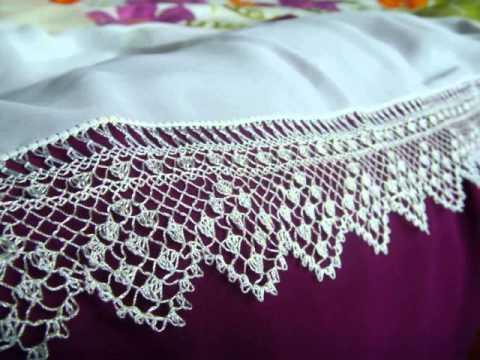
Gönen needle lace is a rich traditional craft that has been practiced for centuries in the Gönen district of Balıkesir in Türkiye. It is one of the important elements of Turkish cultural heritage due to its delicate craftsmanship and distinctive motifs. Registered as a geographical indication (No: 184) by the Turkish Patent and Trademark Office on 29 August 2014, Gönen needle lace is significant not only for preserving local identity but also for contributing to economic development and cultural continuity.
The threads used in the production of Gönen needle lace are typically made of cotton or silk and are fine yet durable. The lace patterns are created with great precision, reflecting complexity in motifs, symmetry, and aesthetic arrangement. The work requires skilled handcraft and is traditionally passed down from generation to generation by female artisans.
The production stages are as follows:
In technical terms, Gönen needle lace reflects a unique synthesis of specific motifs, color combinations, and stitching techniques that distinguish it from other regional laces.
Gönen needle lace has a long history. Traditionally, it was produced by women to contribute to household economies and to reflect their social status. The motifs specific to the Gönen region bear traces of both the natural environment and social life.
The geographical indication registration has safeguarded this uniqueness and secured the rights of local producers. Moreover, the historical evolution of the lace is recognized as an essential component of the region’s culture and handicraft traditions.
Under the registration, production is restricted to within the boundaries of Gönen and must adhere to the specified technical characteristics. The Turkish Patent and Trademark Office’s monitoring system periodically verifies that production processes comply with established standards, thereby preserving quality and authenticity.
Gönen needle lace is one of Türkiye’s valuable geographical indications, distinguished by its technical mastery, cultural depth, and economic value. Through geographical indication registration, it has firmly established itself as an important instrument for both cultural heritage preservation and regional development.
Turkish Patent and Trademark Office.Gönen İğne Lace Geographical Indication Registration Certificate. Registration No: 184. Application No: C2010/006. Application Date: February 23, 2010. Registration Date: August 29, 2014. Accessed July 27, 2025. https://ci.turkpatent.gov.tr/Files/GeographicalSigns/35fdf86b-0c3f-4457-8ef2-98fa63f4c6d0.pdf
Turkish Patent and Trademark Office.Gönen İğne Lace Geographical Indication Registration Certificate. Registration No: 184. Application No: C2010/006. Application Date: February 23, 2010. Registration Date: August 29, 2014. Accessed July 27, 2025. https://ci.turkpatent.gov.tr/cografi-isaretler/detay/38017

Registration Number | 184 | ||||||||
|---|---|---|---|---|---|---|---|---|---|
Registration Date | 29.08.2014 | ||||||||
Type of Geographical Indication | Mahreç İşareti | ||||||||
Product / Product Group(s) | Handicraft Products Excluding Carpets Kilims and Textiles | ||||||||
Province(s) | Balıkesir | ||||||||
Application Date | 23.02.2010 | ||||||||
Technical Features and Production Process
Cultural and Historical Context
Monitoring and Protection Mechanisms