

This article was automatically translated from the original Turkish version.
+1 More
The Great Stink, a social political and scientific crisis triggered in the hot summer months of 1858 in London by a powerful odor emanating from the River Thames. This event emerged from the convergence of unplanned urbanization inadequate infrastructure and scientific misconceptions in Victorian London and led to a radical transformation of the city’s sanitation system and the birth of modern sewage engineering.
Industrial Revolution brought about extensive urbanization in London without the necessary planning policies or infrastructure investments. The city’s population which stood at approximately one million in 1800 exceeded two and a half million by 1850 making London the world’s largest metropolis. Parliamentary reforms of municipal governance in the 1830s proved inadequate in addressing the city’s infrastructure problems. Local authorities were constrained by a voter base that opposed spending on services such as sewage and water supply.
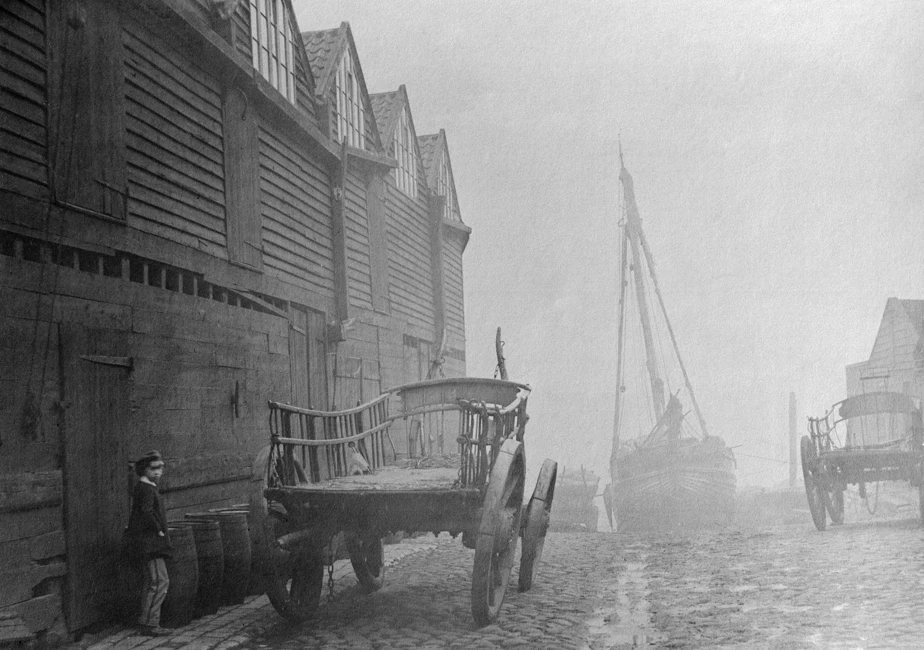
On the Great Stink of London (Weird History)
The city’s waste disposal practices were incapable of coping with the population explosion. For centuries London had relied on local methods such as “night-soil collectors” who emptied cesspits. Small rivers flowing into the Thames such as the Fleet and Tyburn gradually became open sewers for domestic waste.
The invention and popularization of flush toilets further deepened the problem. These toilets allowed waste to be discharged directly into rivers rather than into household cesspits. However the existing sewer system had been designed solely to carry rainwater. Connecting toilets to this system led to raw sewage mixing with domestic and industrial waste and being discharged directly into the River Thames. By 1857 it was estimated that around 250 tons of fecal matter entered the river daily.【1】
In the summer of 1858 London experienced a record-breaking heatwave. Temperatures remained above 30 degrees Celsius for weeks causing river water levels to drop and exposing thick layers of accumulated waste along the banks. These “cooked” organic materials began emitting a powerful odor that affected every part of the city. The intensity of the smell was so extreme that people reported physically vomiting when near the river. In June 1858 Queen Victoria had to cover her nose as she crossed the Thames to inspect a ship in Deptford.【2】
At the time the dominant belief regarding disease transmission was the “miasma” theory. According to this theory diseases such as cholera and typhoid spread through foul odors and poisonous gases emitted by decaying matter. During the cholera outbreaks of 1848 and 1854 Dr John Snow proposed that the disease originated from contaminated water sources. While analyzing the 1854 Soho outbreak Snow mapped cholera cases and found that deaths were concentrated around a specific water pump on Broad Street.
Snow’s research showed that households supplied with polluted Thames water by the Southwark and Vauxhall Water Company had cholera rates 8.5 times higher than those supplied by other sources.【3】 Susannah Eley’s case became one of the strongest pieces of evidence supporting this theory; Eley who lived far from the area drank water from the Broad Street pump solely because she liked its taste and died of cholera.【4】 Snow discovered that the wastewater from washing infected diapers of a baby who died in a house near the pump had seeped into a nearby well through a leaking cesspit. He removed the pump handle thereby halting the outbreak. However his findings were long rejected by contemporaries who believed in the miasma theory; authorities prioritized eliminating the odor over cleaning the water.
The odor rendered work conditions in the Palace of Westminster (Parliament building) on the riverbank unbearable. To make the chambers of the House of Commons and the House of Lords tolerable cloths soaked in lime chloride or zinc chloride were hung over the windows.

View of the Palace of Westminster from across the River Thames (Picryl)
Despite lime being dumped into the river by barges the odor persisted in the building’s corridors. Reports dated 26 June 1858 stated that the smell in the corridors was ten times stronger than outside even with windows closed and that many members were unable to attend sessions.【5】
While central government intervention in local affairs had previously been viewed as “despotic” the fact that the odor had paralyzed governance itself broke political resistance. The bill introduced by Chancellor of the Exchequer Benjamin Disraeli bypassed what would normally have taken years of bureaucracy and was enacted in just eighteen days.【6】 This legislation granted the Metropolitan Board of Works the necessary budget and authority to construct a massive sewer system.
The Metropolitan Board of Works appointed its Chief Engineer Sir Joseph William Bazalgette to oversee the project.

Joseph William Bazalgette (Picryl)
Bazalgette designed an extensive underground network that connected London’s local drainage systems and transported waste away from the city center.
The infrastructure built in 1858 became a symbol of the modern sanitation ideal: the hidden and rapid removal of domestic waste. However this system is based on a “Combined Sewer Overflow” (CSO) design that collects both stormwater and sewage in the same pipes. Today increasing population and climate change induced heavy rainfall have exceeded the capacity of the Victorian-era design.
As of 2024 the discharge of millions of hours of untreated sewage into waterways across England has created a new crisis known as the “21st Century’s Great Stink.”【8】 Tensions among activists and stakeholders stem from inadequate regulation of water companies insufficient investment and the prioritization gap between ecological health and human well-being.
[1]
Stephanie Jacopson. "London's Great Stink." HeinOnline Blog, 14 June 2024. Access date: 24 January 2026. https://home.heinonline.org/blog/2024/06/londons-great-stink/
[2]
London Museum. “The Great Stink of 1858.” London Museum. Access date: 24 January 2026. https://www.londonmuseum.org.uk/collections/london-stories/great-stink-of-1858/
[3]
Staveley-Wadham, Rose. ''Exploring the Great Stink of 1858.'' British Newspaper Archive. 12 February 2021. Access date: 24 January 2026. https://blog.britishnewspaperarchive.co.uk/2021/02/12/exploring-the-great-stink-of-1858/
[4]
Staveley-Wadham, Rose. ''Exploring the Great Stink of 1858.'' British Newspaper Archive. 12 February 2021. Access date: 24 January 2026. https://blog.britishnewspaperarchive.co.uk/2021/02/12/exploring-the-great-stink-of-1858/
[5]
Royal Museums Greenwich. “Dickens and the Great Stink of 1858.” Royal Museums Greenwich. Access date: 24 January 2026. https://www.rmg.co.uk/stories/maritime-history/library-archive/dickens-great-stink-1858
[6]
London Museum. “The Great Stink of 1858.” London Museum. Access date: 24 January 2026. https://www.londonmuseum.org.uk/collections/london-stories/great-stink-of-1858/
[7]
London Museum. “The Great Stink of 1858.” London Museum. Access date: 24 January 2026. https://www.londonmuseum.org.uk/collections/london-stories/great-stink-of-1858/
[8]
Sylvester, E. Ruth Paul Hutchings and Anna Mdee. "The Great Stink in the 21st Century? Problematizing the Sewage Scandal in England and Envisioning a New Infrastructure Ideal." Ecology and Society 30 no. 3 (2025). Access date: 24 January 2026. https://ecologyandsociety.org/vol30/iss3/art31/

Causes of the Great Stink
Demographic Pressure and Infrastructure Deficiency
Technological Shift and Design Flaw
The Summer of 1858 and the Crisis Peak
Scientific Debate: Miasma and John Snow
Parliamentary Crisis and Political Decision-Making
Joseph Bazalgette and Engineering Reform
Modern Perspective and the 21st Century's "Great Stink"