


This article was automatically translated from the original Turkish version.
+2 More
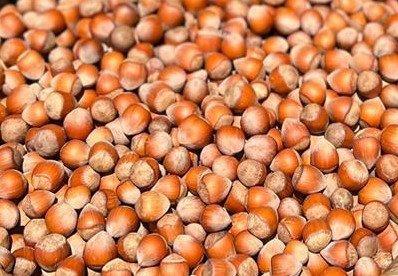
Gürgentepe Çakıldak Fındığı
Registration Number | 1485 | ||||||||
|---|---|---|---|---|---|---|---|---|---|
Registration Date | 13.10.2023 | ||||||||
Application Number | C2021/000454 | ||||||||
Application Date | 03.11.2021 | ||||||||
Name of the Geographical Indication | Gürgentepe Çakıldak Fındığı | ||||||||
Product / Product Group | Fındık / İşlenmiş ve İşlenmemiş Meyve Sebzeler ile Mantarlar | ||||||||
Type of Geographical Indication | Mahreç İşareti | ||||||||
Applicant / Registrant | Ordu İl Tarım ve Orman Müdürlüğü | ||||||||
Address of the Registrant | Akyazı Mah. Kanuni Sultan Süleyman Cad. Tarım ve Orman İl Müdürlüğü Ana Bina 24 1 Altınordu ORDU | ||||||||
Geographical Boundary | Ordu İli Gürgentepe İlçesi | ||||||||
Gürgentepe Çakıldak Fındığı is a type of hazelnut grown exclusively within the boundaries of Gürgentepe district in Ordu province, derived solely from the “Çakıldak” variety. This product, registered with a geographical indication, is characterized by agricultural practices adapted to the region’s sloping terrain, resistance to spring frosts due to late leaf emergence, volcanic-origin soils, and high rainfall patterns. Thanks to its homogeneous variety, it is distinguished by a high kernel ratio and oil content; all stages of production, drying, and processing are carried out entirely within the geographical boundaries of Gürgentepe.

Gürgentepe Çakıldak Fındığı (Türkiye Cumhuriyeti Tarım ve Orman Bakanlığı)
Gürgentepe Çakıldak Fındığı is a hazelnut variety grown exclusively in Gürgentepe district of Ordu province, Türkiye, and belongs to the “Çakıldak” variety. This product was officially registered with a geographical indication by the Turkish Patent and Trademark Office on 13 October 2023 and is classified under the product group “processed and unprocessed fruits, vegetables and mushrooms.” The registration was carried out by the Ordu Provincial Directorate of Agriculture and Forestry.
Gürgentepe district is located in a geography characterized by sloping terrain and fertile, volcanic-origin soils. The land in this region receives abundant rainfall and has a naturally enriched soil structure due to the decomposition of wild vegetation. The limited availability of arable land necessitates high yields per unit area. Consequently, only the “Çakıldak” variety of hazelnut is cultivated in Gürgentepe district.
Gürgentepe Çakıldak Fındığı is obtained from highly productive trees. These trees exhibit moderate root suckering tendency and possess a strong, upright-spreading habit. Leaf emergence occurs relatively late (10–15 April), while leaf fall takes place around late November. The trees are resistant to spring frosts and maintain consistent annual yield capacity.
The production of Gürgentepe Çakıldak Fındığı is derived from hazelnuts of the “Çakıldak” variety cultivated within the boundaries of Gürgentepe district in Ordu province. Plant material is obtained from trees with moderate root suckering tendency. Propagation is carried out by separating root suckers from the parent plant. After extraction using a spade, the suckers are pruned to a length of approximately 35–40 cm before planting, cutting just above a bud without leaving a stub and cutting from the opposite side of the bud using pruning shears.
These prepared saplings are planted immediately without storage. Planting is typically conducted during autumn to support the development of absorptive roots during winter. This facilitates the saplings’ adaptation to environmental conditions. A waiting period of approximately 1.5–2 months is observed to identify non-establishing saplings; new ones are planted in January–February to replace unsuitable individuals.
The “clump planting system” is applied in cultivation. Clumps are established at spacing of 6 × 4 m or 6 × 5 m. Between 30 and 40 clumps are placed per hectare, with each clump containing 10–14 branches. Planting holes are prepared at least one month in advance with a diameter of 120 cm and a depth of 60 cm. Four to six saplings are placed around the edge of each hole, 10 cm inward from the edge and spaced 45–50 cm apart. The “Yağlı” and “Allahverdi” varieties may be used for pollination.
No intervention is made during the first year after planting. In early spring of the second year, before bud break, saplings are cut back to ground level and the cut surfaces are sealed with grafting wax. Approximately two months later, only outward-facing shoots are retained; all others are removed.
In subsequent years, branch height and positioning are determined to establish a layered structure. In this system, by the end of the fifth year, a central-open, outward-facing structure consisting of six main branches, each bearing two tiers and lateral branches, is formed. Pruning is carried out in autumn, coinciding with reduced physiological activity and complete leaf fall. Additionally, due to the clump system, unwanted root suckers must be removed twice annually, in May–June and September–October. In productive trees, damaged, aged, or inward-growing branches are removed and replaced by newly developing shoots.
In the initial phase of orchard establishment, 3–5 tons of farmyard manure per hectare are applied to increase organic matter content. In addition to manure, lime is applied based on soil analysis and the mixture is incorporated into the soil to a depth of at least 20 cm through plowing. The base fertilization is completed by applying phosphorus and potassium fertilizers directly into the planting holes.
Recommended fertilization methods for mature trees are as follows:
Due to the high rainfall climate, weed and thorn density is high in orchards. These must be cleared before harvesting. Gürgentepe Çakıldak Fındığı is a late-maturing product. Harvesting is scheduled for September.
Maturity indicators include:
Harvesting is generally done manually, with fruits collected individually from branches. The stripping method is not used. On gently sloping terrain, fruits shaken to the ground are collected from the soil. Clusters are transported to threshing areas in baskets or sacks. Threshing areas are typically grassy, slightly sloping, and firm.
Clusters are spread to a depth of 10–15 cm and sun-dried for 3–5 days, regularly turned. Dried clusters are then processed using a hulling machine. The separated nuts are spread on cloth-covered (or directly on concrete) threshing areas to a thickness of 2–4 cm and dried again for 3–4 days. Subsequently, they are cleaned using blowers to remove foreign matter. In the final stage, nuts are bagged, sealed, and prepared for storage or market.
The maximum moisture content for shelled nuts is 12% and for kernels is 6%. Storage environments must be cool, dry, and well-ventilated. Quality can be preserved for up to one year without deterioration. For long-term storage, environments with temperatures of 2–4.5 °C and relative humidity of 55–60% are preferred. Increased temperature raises the risk of rancidity, while increased humidity increases the likelihood of mold growth.
To ensure protection of the geographical indication for Gürgentepe Çakıldak Fındığı production, monitoring is conducted under the coordination of the Ordu Provincial Directorate of Agriculture and Forestry. Monitoring activities are carried out by a monitoring unit composed of four experts with technical knowledge of the product, employed by Ordu University Faculty of Agriculture, Gürgentepe District Directorate of Agriculture and Forestry, Gürgentepe Chamber of Agriculture, and the Ordu Provincial Directorate of Agriculture and Forestry.
These monitoring activities are carried out at least twice annually on a planned schedule. Additional inspections may be conducted without time constraints if needed or in response to complaints. Monitoring activities are conducted under two main headings:
Within this scope, inspections verify that only “Çakıldak” variety hazelnut trees are cultivated within Gürgentepe district boundaries. Production methods for propagation, maintenance, and harvesting are checked for compliance with established protocols. Additionally, it is verified that drying operations are conducted within the geographical boundaries.
Products are inspected for compliance with the physical and chemical properties specified in the technical description (Table 2). Additionally, it is verified that the designation “Gürgentepe Çakıldak Fındığı” and the geographical indication emblem are correctly and properly displayed on packaging or the product itself.
The monitoring unit may obtain expert support or procure services from public or private institutions as needed. The registering authority is responsible for safeguarding the registered rights and, if necessary, initiating legal proceedings.
Ordu İl Tarım ve Orman Müdürlüğü. "Kabataş Çeşitli Kuru Fasulye." Accessed June 15, 2025.https://ordu.tarimorman.gov.tr/Sayfalar/AlbumDetay.aspx?OgeId=8061
Turk Patent and Trademark Office. "Kabataş Çeşitli Kuru Fasulye Tescil Belgesi." PDF document. Accessed June 15, 2025.https://ci.turkpatent.gov.tr/Files/GeographicalSigns/f751c027-66eb-4869-8f2f-88e3fa8118d1.pdf
Turk Patent and Trademark Office. "Kabataş Çeşitli Kuru Fasulye." Geographical Indications. Accessed June 15, 2025.https://ci.turkpatent.gov.tr/cografi-isaretler/detay/5449

Gürgentepe Çakıldak Fındığı
Registration Number | 1485 | ||||||||
|---|---|---|---|---|---|---|---|---|---|
Registration Date | 13.10.2023 | ||||||||
Application Number | C2021/000454 | ||||||||
Application Date | 03.11.2021 | ||||||||
Name of the Geographical Indication | Gürgentepe Çakıldak Fındığı | ||||||||
Product / Product Group | Fındık / İşlenmiş ve İşlenmemiş Meyve Sebzeler ile Mantarlar | ||||||||
Type of Geographical Indication | Mahreç İşareti | ||||||||
Applicant / Registrant | Ordu İl Tarım ve Orman Müdürlüğü | ||||||||
Address of the Registrant | Akyazı Mah. Kanuni Sultan Süleyman Cad. Tarım ve Orman İl Müdürlüğü Ana Bina 24 1 Altınordu ORDU | ||||||||
Geographical Boundary | Ordu İli Gürgentepe İlçesi | ||||||||
No Discussion Added Yet
Start discussion for "Gürgentepe Çakıldak Fındığı" article
Geographical Boundary and Agricultural Conditions
Plant and Fruit Characteristics
Tree Characteristics
Fruit Characteristics
Production Process
Propagation and Planting
Planting System and Spacing
Pruning and Tree Formation
Soil Management and Fertilization
Weed Control and Harvesting
Harvesting Methods and Processing
Storage Conditions
Monitoring and Protection
Orchard Inspections
Product and Market Inspections