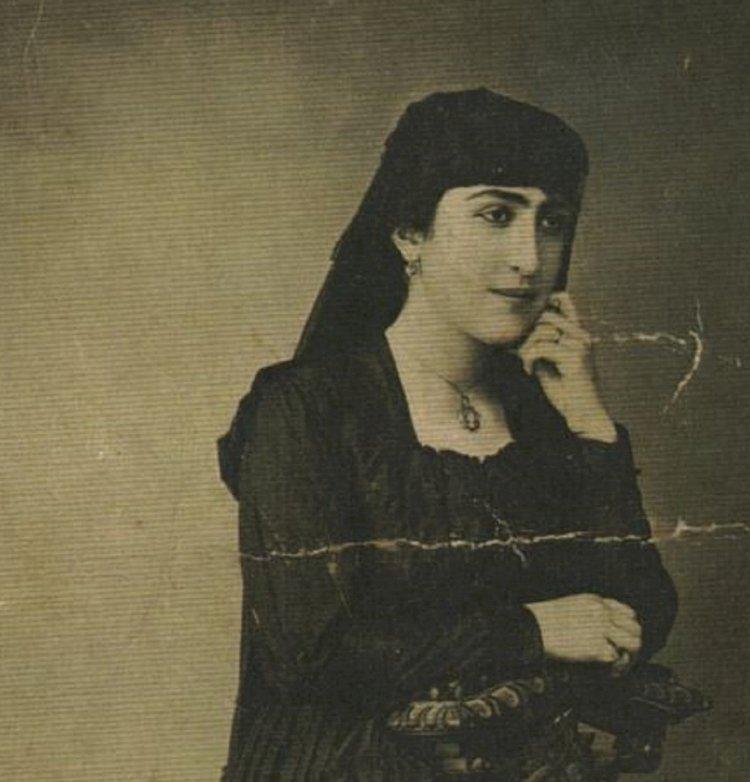
Birth | 1901, Istanbul | ||||||||
|---|---|---|---|---|---|---|---|---|---|
Death | 10 June 1984, Istanbul | ||||||||
Spouse(s) | Aziz Vecihi Zorlutuna | ||||||||
Çocuk | Ergün Zorlutuna Emine Işınsu | ||||||||
Occupation(s) | Poet Teacher Writer | ||||||||
Halide Nusret Zorlutuna was born in 1901 in the Kızıltoprak neighborhood of Istanbul. She passed away in Istanbul on 10 June 1984 and was buried on 12 June 1984 at the Ankara Asrî Cemetery.
Halide Nusret Zorlutuna, one of the important poets, writers and teachers of Turkish literature, is known in literary circles as the “mother of women writers.” She preferred syllabic meter in her poetry and used everyday spoken language in her novels. She was also the mother of novelist Emine Işınsu and the aunt of Pınar Kür.
Her father, Mehmet Selim, belonged to the Zorluoğlu family from Erzurum and later became known as Avnullah Kâzımî Bey. Her mother was Ayşe Nazlı Zorlu Hanım. Her uncle was the journalist Süleyman Tevfik Özzorluoğlu. Her father was exiled in 1908 due to his political activities and imprisoned by the Committee of Union and Progress. As a result, Halide Nusret spent only limited time with her father during her childhood. When her father was appointed governor of Kirkuk, the family moved there, and she received private lessons in Arabic and Persian. She described her years in Kirkuk in her memoir Bir Devrin Romanı as “the most beautiful years of her life.” Her mother played an active role in her education, teaching her the Qur’an and Turkish, thereby contributing significantly to her literary development. Halide Nusret expressed the influence of her mother’s literary and artistic sensibilities in the dedication of her book Yayla Türküsü.
With the outbreak of the First World War in 1914, she returned to Istanbul and enrolled at Erenköy Girls’ High School. During her high school years, she wrote an essay titled “Ağlayan Kahkahalar” following her father’s death. It won first prize in the 1917 issue of Talebe Defteri and was published, marking her entry into the literary scene. She studied Turkish Language and Literature at Istanbul University’s Faculty of Letters, continued her education at the History Department of Istanbul Darülfünun, and privately studied English.
Due to financial reasons, she chose the profession of teaching and passed the Darülmuallimat examinations to qualify as a teacher. She loved teaching and believed it was naturally suited to her. She began her teaching career in 1924 at the Edirne Teacher Training School and continued in various regions including Kırklareli, Kars, Ardahan, Urfa, Karaman, Maraş, Sarıkamış, Istanbul and Ankara. She compiled her teaching memories in her work Benim Küçük Dostlarım; this book has been recommended by many writers both to teachers and students, and some educators have even suggested its use as a textbook. She retired voluntarily in 1957 from the Ankara Girls’ Technical Teacher Training School. She made significant contributions to educational philosophy, emphasizing that women’s education is a fundamental pillar of social progress. She vividly portrayed teacher characters in her novels.
In 1926 she married cavalry major Aziz Vecihi Zorlutuna; their marriage lasted until his death 45 years later. The couple had two children: Ergün in 1930 and Emine in 1938. Her daughter Emine Işınsu is also a renowned novelist and playwright. Approximately 140 letters written by Halide Nusret to Aziz Vecihi Bey are regarded as an important source for understanding her literary personality and the social and professional life of the era. These letters reflect love, longing, faith, professional concerns and the linguistic features of the time.
She began her poetic journey during the Armistice years and joined the National Literature movement under the influence of the War of Independence. She is known for her poem “Git Bahar,” written with national sentiments. She remained faithful to syllabic meter in her poetry and is among the rare poets who memorized the poems of Yahya Kemal. In her poems, she depicted Anatolia as concrete geographical locations alongside national and social themes; she frequently explored motifs of rose, nightingale and spring alongside themes of solitude. She summarized her artistic vision in the phrase: “Art, like life, belongs to the nation and society.”
Her writings were published in numerous magazines and newspapers, including Milli Mecmua, Türk Kadını, Kadınlar Dünyası, Aydabir, Salon Mecmuası, Çınaraltı, Çağrı, Hilâl, Defne, Hisar, Ayşe, Töre, and Türk Edebiyatı. She was one of the founding members of the Turkish Language Association and delivered various talks on Ankara Radio.
From a young age, she actively participated in social organizations and charitable societies. She served for many years in associations such as the Turkish Women’s Union, Turkish Hearths, People’s Houses, Teachers’ Union, Association of Those Who Aid, Society of Tuberculosis Fighters, Society for the Defense of Children’s Rights and the Child Welfare Institution. In 1959 she played a leading role in founding the Turkish Mothers’ Association and was named “Mother of the Year” by the association in 1966. She was among the founders of the magazine Defne and later launched the women’s magazine Ayşe.
In 1975, when the United Nations declared the year “International Year of the Woman,” she was honored by the “Association for the Study and Research of Women’s Social Life” with the title “Ümmü’l-Muharrirat.” In 1983, the General Directorate of Press and Publication and the Turkish Press Union awarded her a certificate and plaque for “50 Years of Distinguished Service in the Journalism Profession.” In 1976, a jubilee was held in honor of her 75th birthday, and the street where she lived was renamed “Şairler Sokağı” (Poets’ Street). In her speech at the 50th Anniversary of Defne Magazine in 1967, she stated that she had spent fifty years using her pen for the benefit of her nation and had never written a single line against her homeland, a source of deep peace to her.
Accessed November 26, 2025.
Accessed November 26, 2025.
Accessed November 26, 2025.
Accessed November 26, 2025.
Hatem Türk. "Zorlutuna, Halide Nusret." Türk Edebiyatı İsimler Sözlüğü (TEİS). Accessed July 3, 2025.
Hâlide Nusret Zorlutuna. Görsel, 2025. Accessed July 3, 2025.
Hâlide Nusret Zorlutuna. Görsel, 2025. Accessed July 3, 2025.
Karataş, Esra Müjgan. "Halide Nusret Zorlutuna." Hacettepe Üniversitesi Kaynakça. Accessed July 3, 2025.
Kılıç, Atabey, and Nilüfer Yılmaz. "Hâlide Nusret Zorlutuna’nın Eşi Aziz Bey’e Yazdığı 03/10/1926 Tarihli Mektubun Transkripsiyonu ve İncelemesi." Erciyes Akademi 38, no. 4 (2024): 1042-1057. Accessed July 3, 2025.
Türkiye Dunyasi Ansiklopedisi. "Halide Nusret Zorlutuna." Türk Dünyası Ansiklopedisi. Accessed July 3, 2025.

Birth | 1901, Istanbul | ||||||||
|---|---|---|---|---|---|---|---|---|---|
Death | 10 June 1984, Istanbul | ||||||||
Spouse(s) | Aziz Vecihi Zorlutuna | ||||||||
Çocuk | Ergün Zorlutuna Emine Işınsu | ||||||||
Occupation(s) | Poet Teacher Writer | ||||||||
No Discussion Added Yet
Start discussion for "Halide Nusret Zorlutuna" article
Family Origins and Childhood
Educational Life
Teaching Career
Marriage and Children
Literary Personality and Artistic Vision
Main Works
Social and Public Activities
Awards and Honors