This article was automatically translated from the original Turkish version.
+1 More
Location | Harran district Türkiye Şanlıurfa province | ||||||||
|---|---|---|---|---|---|---|---|---|---|
Type(s) | Ancient city / Archaeological site | ||||||||
Civilizations | Sumerians, Babylonians, Assyrians, Umayyads, Abbasids, Seljuks and Ottomans | ||||||||
Prominent Structures | Remains of the historical university (among the earliest examples of Harran University) Dome-type traditional Harran houses City walls Inner citadel (originally a Byzantine-era structure) Remains of Harran Grand Mosque | ||||||||
Archaeological Significance | It carries a multilayered cultural memory due to its role as a transitional center between Mesopotamian and Anatolian cultures | ||||||||
Architectural Feature(s) | It includes examples of stonework brickwork and dome architecture from pre-Islamic and post-Islamic periods | ||||||||
Harran Excavation Site is a significant archaeological area located within the boundaries of Şanlıurfa Province and has experienced continuous settlement since prehistoric times. Situated in the center of the Harran Plain, this site has served as a cultural bridge between Mesopotamian and Anatolian civilizations and has been a strategic center for science, religion, and trade throughout history.
The earliest settlement traces at Harran extend back to the 6th millennium BCE, and the region was inhabited successively during the Sumerian, Babylonian, Assyrian, Hellenistic, Roman, Byzantine, Umayyad, Abbasid, and Ottoman periods. Throughout its history, Harran attracted particular attention during the Islamic periods as a center of science and philosophy. It holds an important place in the history of science due to the Harran University, established during the Abbasid era and renowned worldwide.
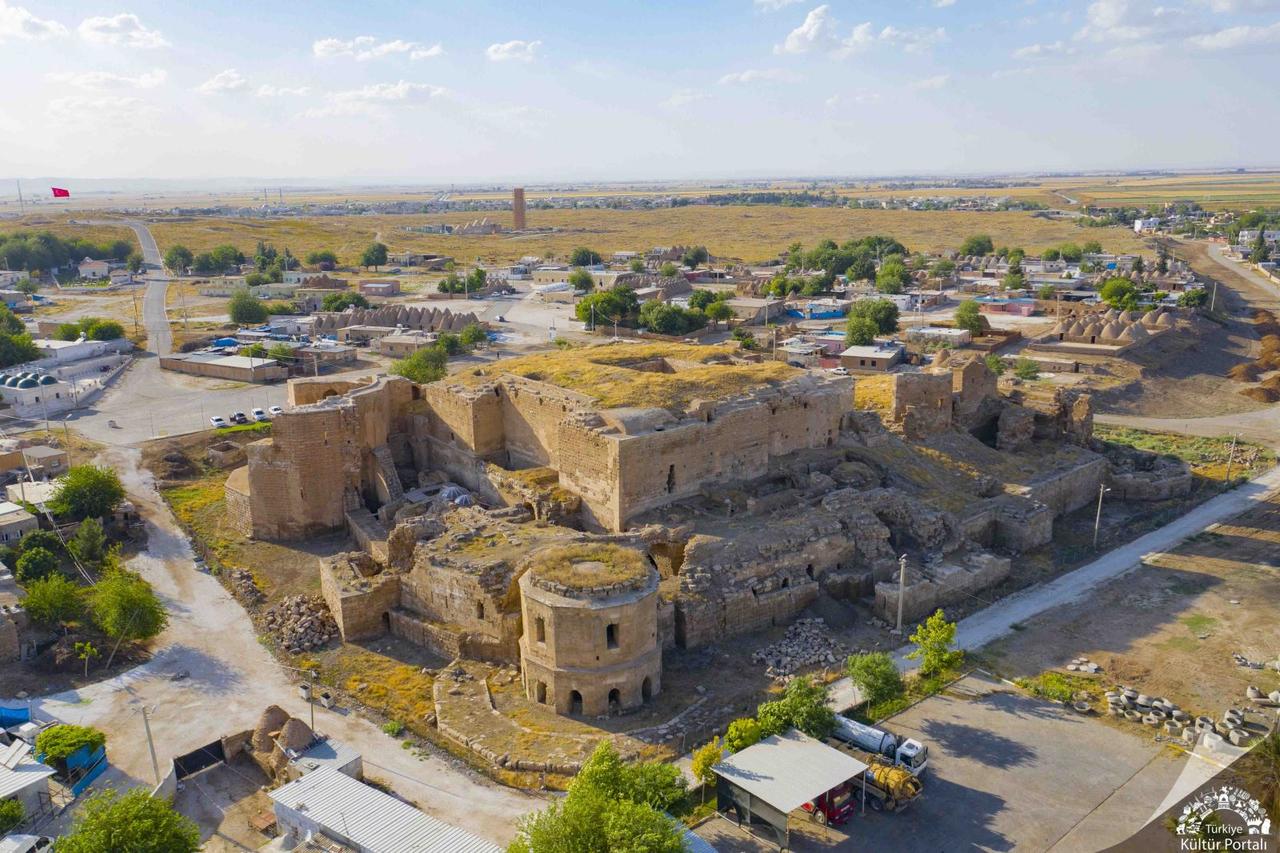
Harran Excavation Site (Culture Portal)
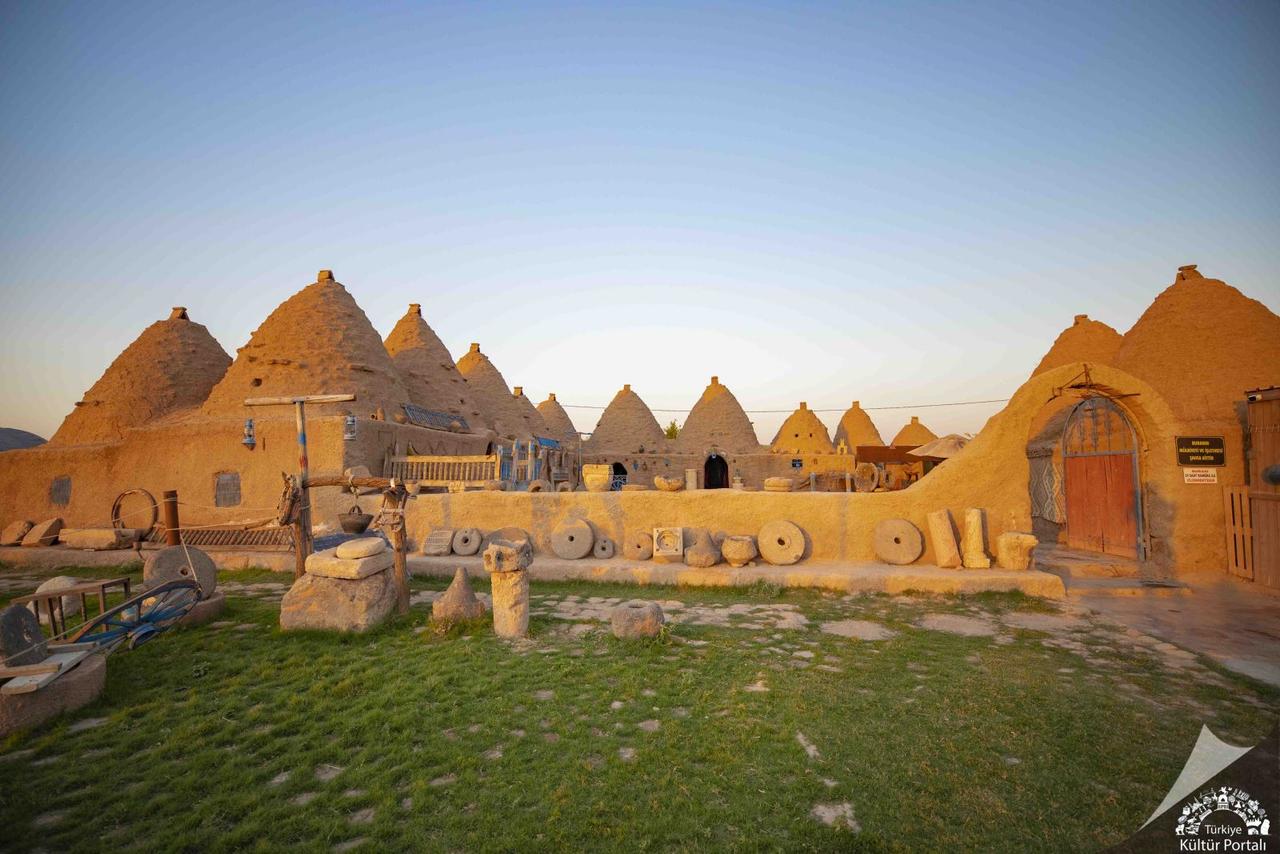
The architectural remains preserved at the site include city walls, a citadel, the Ulu Camii, city gates, conical-domed houses, and various madrasa structures. Harran Citadel is a defensive structure notable for its construction technique and stonework. In addition to the citadel, the remains of the Harran Ulu Camii stand out as one of the oldest mosque complexes in the region. Furthermore, the traditional conical-domed houses of Harran attract attention for their aesthetic and functional characteristics.
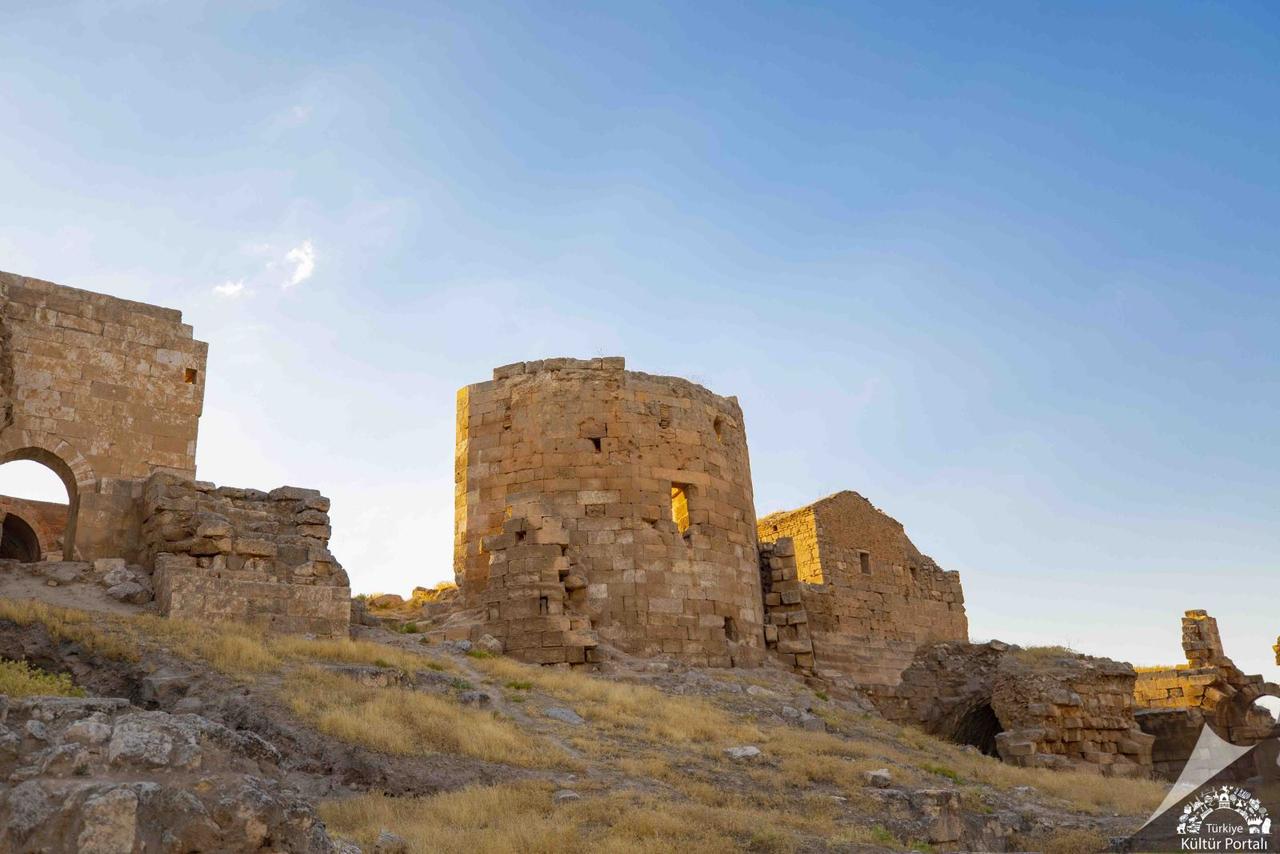
Harran Excavation Site (Culture Portal)
One of the most important historical identities of the excavation site is the presence of Harran University, one of the earliest universities in the Islamic world. At this institution, research was conducted in numerous scientific fields including philosophy, medicine, astronomy, and mathematics. Ancient Greek texts were translated into Arabic here, playing a crucial role in the transmission of scientific heritage. Even before the Islamic period, Harran was shaped by pagan philosophical influences and is known for its Sabian culture.

Harran Excavation Site (Culture Portal)
The Harran Excavation Site is under the protection of the Ministry of Culture and Tourism, and various archaeological excavations have been conducted over the years. As of 2023, excavation and restoration efforts in the region have focused on the city walls, citadel towers, and the area surrounding the Ulu Camii. Harran has become an important destination for both cultural heritage tourism and religious and historical tourism.
Culture and Heritage General Directorate. *Şanlıurfa Harran Excavation Site*. Ankara: Ministry of Culture and Tourism of the Republic of Turkey, 2023. https://kvmgm.ktb.gov.tr/Eklenti/91147,sanliurfa-harran-oren-yeripdf.pdf?0. Accessed July 17, 2025.
Ministry of Culture and Tourism. "Harran Ören Yeri." *Türkiye Kültür Portalı*. https://www.kulturportali.gov.tr/turkiye/sanliurfa/gezilecekyer/harran-oren-yeri. Accessed July 17, 2025.
Turkish Museums. "Şanlıurfa Harran Örenyeri." turkishmuseums.com. https://www.turkishmuseums.com/museum/detail/2229-sanliurfa-harran-orenyeri/2229/1. Accessed July 17, 2025.

Location | Harran district Türkiye Şanlıurfa province | ||||||||
|---|---|---|---|---|---|---|---|---|---|
Type(s) | Ancient city / Archaeological site | ||||||||
Civilizations | Sumerians, Babylonians, Assyrians, Umayyads, Abbasids, Seljuks and Ottomans | ||||||||
Prominent Structures | Remains of the historical university (among the earliest examples of Harran University) Dome-type traditional Harran houses City walls Inner citadel (originally a Byzantine-era structure) Remains of Harran Grand Mosque | ||||||||
Archaeological Significance | It carries a multilayered cultural memory due to its role as a transitional center between Mesopotamian and Anatolian cultures | ||||||||
Architectural Feature(s) | It includes examples of stonework brickwork and dome architecture from pre-Islamic and post-Islamic periods | ||||||||
No Discussion Added Yet
Start discussion for "Harran Archaeological Site" article
Historical Process and Settlement Layers
Architectural Remains and Notable Structures
Harran University and Its Role in the History of Science
Conservation, Archaeological Research, and Tourism