


+1 More

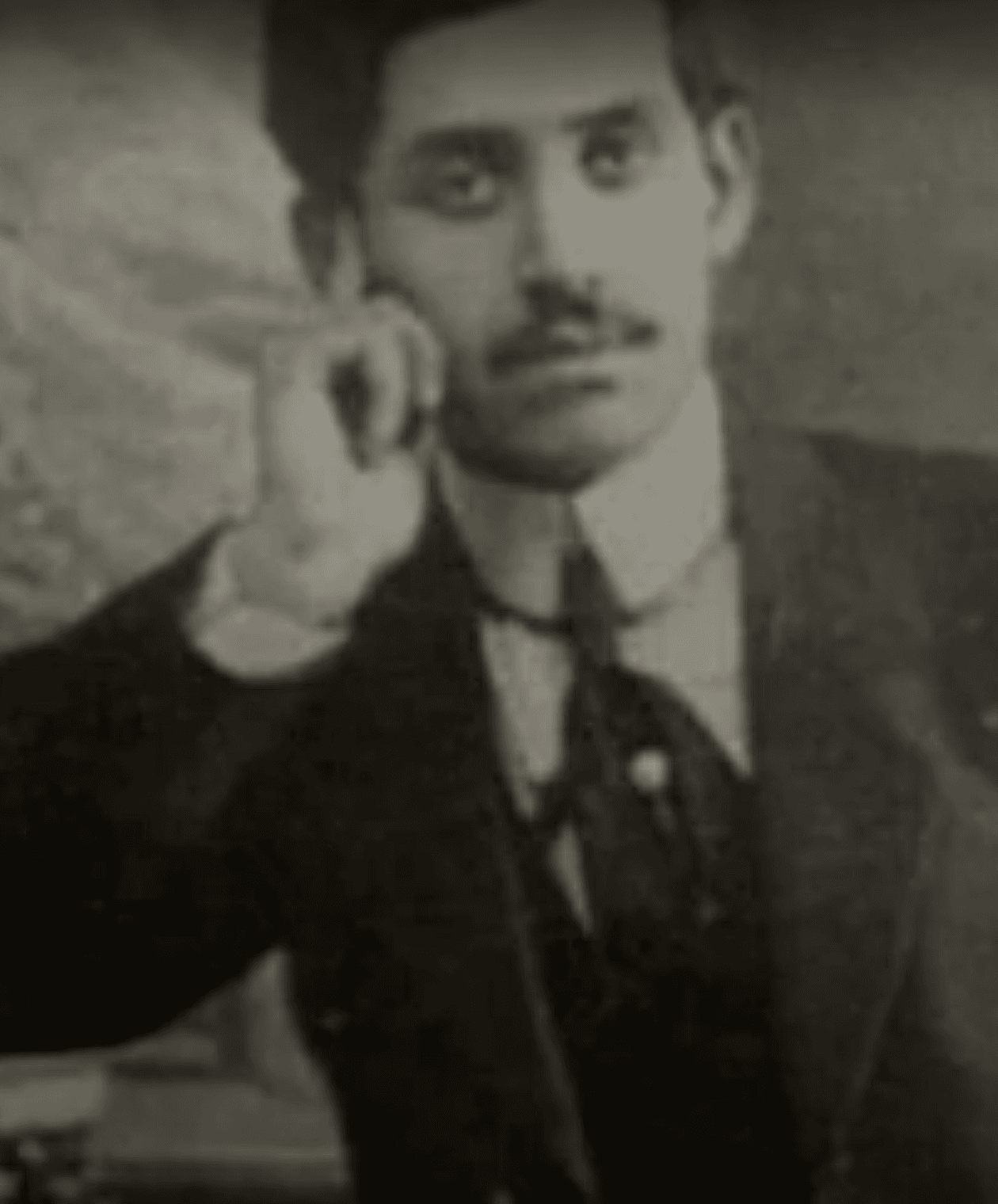
Hasan Tahsin (Osman Nevres)
Birth | 1888, Thessaloniki, Ottoman State | ||||||||
|---|---|---|---|---|---|---|---|---|---|
Education | Şemsi Efendi School Sorbonne University Darülfünun Fevziye School | ||||||||
Political Affiliation | Teşkilat-ı Mahsusa, Committee of Union and Progress (indirectly) | ||||||||
Profession(s) | Journalist intelligence officer writer | ||||||||
Monument | "First Bullet Monument" – Konak Square, İzmir (1974) | ||||||||
Cause of Death | He was killed by Greek soldiers through shooting and bayoneting. | ||||||||
Death | 15 May 1919, İzmir, Ottoman State | ||||||||
Hasan Tahsin was a journalist, writer, and intelligence officer who emerged during the final period of the Ottoman State and became identified with one of the symbolic starting points of the National Struggle. His real name was Osman Nevres. On 15 May 1919, during the Greek occupation of İzmir, he was commemorated in the Republic’s historical narrative as the "first person to fire a shot" for his armed resistance against the Greek Efzon unit in Konak Square.
Osman Nevres was born in 1888 in Thessaloniki. Information about his family is limited, but it is believed that his family belonged to Turkish groups that had migrated from Anatolia under the Ottoman State’s settlement policy in Rumelia.
The name "Nevres" is of Persian origin and means "newly grown," leaving no room for speculation regarding its ethnic roots. Although details about his childhood are scarce, it is known that he began his education at the Şemsi Efendi School, where Mustafa Kemal Atatürk also studied, and later continued at the Fevziye School (Fevz-i Sıbyan Rüşdiyesi). During this time, Cavit Bey, who served as the school’s principal, recognized Nevres’s intelligence and boldness and took a special interest in his development.
Nevres’s intellectual and political orientation took shape at an early age. Following the declaration of the Second Constitutional Monarchy, on Cavit Bey’s recommendation, he joined Teşkilat-ı Mahsusa and received support from its prominent figure, Kuşçubaşı Eşref. During his service, he underwent not only intelligence training but also ideological education. During this period, under the patronage of the Committee of Union and Progress, the advocate of Ottoman modernization, he was sent to Paris, where he studied law, politics, and international relations at the Sorbonne University.
The years he spent in Europe further heightened his political awareness. He closely observed anti-Ottoman policies during the Italo-Turkish War and the Balkan Wars.
In 1914, as part of an Ottoman intelligence operation, Nevres participated in an assassination attempt against the British Buxton brothers in Romania. During this operation targeting Charles Roden and Noel Buxton, who were known for their anti-Ottoman activities during the Balkan Wars, he was captured and arrested. Unable to verify his true identity, Nevres was sentenced to five years in prison and spent more than two years detained in Romania. He was released at the end of 1916 following the German occupation of Bucharest and returned to Ottoman territory.
From this point onward, he began to be known publicly by the name "Hasan Tahsin." This name was inspired by another figure in Ottoman intelligence known by the nickname "Silahçı Tahsin."
After returning to Istanbul, Hasan Tahsin was briefly sent to Switzerland but returned to the homeland in early 1917 and settled in İzmir. There, he engaged in both commerce and journalism, writing articles aimed at raising public awareness against the occupation. In İzmir, he published the newspapers "Hukuk-ı Beşer" and "Sulh ve Selamet," in which he published writings on women’s rights, national resistance, freedom, and independence.
Facing increasing aggression from the local Orthodox Greek community, he sought to strengthen Turkish resistance and called on the public to respond to the occupation in his writings. During this period, he established close ties with the İzmir Society for the Defense of Ottoman Rights and the Redd-i İlhak movement.
On 14 May 1919, a large rally was held in Bahribaba Park (then known as Maşatlık) in opposition to the occupation of İzmir, where Hasan Tahsin delivered a speech. On the morning of 15 May 1919, the day after the occupation began, Hasan Tahsin stepped forward from the crowd in Konak Square as Greek soldiers advanced from the Passport Harbor. He targeted and shot the lieutenant leading the Greek Efzon Regiment, who was riding a horse and carrying the Greek flag. This act has been remembered in Turkish historical narratives as the "first bullet."
The question of the "first bullet" has been a subject of significant debate in historical scholarship. Although it is widely accepted that Hasan Tahsin fired the first shot against the occupying forces, some documents and studies indicate that this claim is not definitive. Various testimonies and interpretations offer differing views on who fired the first shot. Consequently, historians have evaluated Hasan Tahsin’s role in this incident in different ways, and whether he was truly the one who fired the first bullet remains a contested issue to this day.
According to the generally accepted account and historical record, after shooting the soldier, Hasan Tahsin was killed on the spot by intense gunfire and bayonet attacks from Greek troops. His body was found along the Kordonboyu and subsequently removed by official authorities. He was 31 years old at the time of his death.
After Hasan Tahsin’s death, documents relating to the events of the occupation day referred to him only as "a journalist." Neither Ottoman nor foreign sources of the period directly identified him as the perpetrator of the "first bullet." The narrative of the "first bullet" was shaped through contributions by writers and journalists beginning in the 1940s and was formally incorporated into official historical discourse especially after the 1960s.
In 1974, at the initiative of the İzmir Journalists Society, a monument was erected in Konak Square in honor of Hasan Tahsin. This monument came to represent both his person and the first resistance against the occupation. It was inaugurated by the then President of the Republic, Fahri Korutürk.
Today, the name Hasan Tahsin is remembered not merely as a historical figure but as a symbol of individual courage and national resistance against occupation in Türkiye.
Hasan Tahsin - İlk Kurşun video. (TRT Archive)
Arı, Kemal. “Hasan Tahsin (Osman Nevres Bey) (1888–1919).” *Atatürk Ansiklopedisi.* Date Published: February 10, 2021. Accessed May 15, 2025. https://ataturkansiklopedisi.gov.tr/detay/547/Hasan_Tahsin_(Osman_Nevres_Bey)_(1888-1919).
Güneş, Günver. “İlkkurşun ve Hasan Tahsin.” İzmir Kent Ansiklopedisi 1. İzmir: İzmir Büyükşehir Belediyesi Yayını, 2013, pp. 299–306. Accessed May 15, 2025. https://www.academia.edu/37000513/%C4%B0LKKUR%C5%9EUN_ve_HASAN_TAHS%C4%B0N_%C4%B0zmir_Kent_Ansiklopedisi_Tarih_1_Birinci_Cilt_%C4%B0zmir_B%C3%BCy%C3%BCk%C5%9Fehir_Belediyesi_Yay%C4%B1n%C4%B1_%C4%B0zmir_2013_s_299_306
Korkmaz, Ali. “Milli Mücadeleyi Ateşleyen Kahraman: Hasan Tahsin.” Anadolu Ajansı, May 15, 2019. Accessed May 15, 2025. https://www.aa.com.tr/tr/portre/milli-mucadeleyi-atesleyen-kahraman-hasan-tahsin/1478678.
TRT Arşiv. *Hasan Tahsin Belgeseli*. YouTube Video, 12:32. May 15, 2019. Accessed May 15, 2025. https://www.youtube.com/watch?v=DUaywKZqDEs.
Vural, Mithat Kadri. “Belgelerin Gözünden Hasan Tahsin ve ‘İlk Kurşun’ Meselesine Yeniden Bakmak.” *Atatürk Araştırma Merkezi Dergisi* 35, no. 100 (Güz 2019): 377–414. Accessed May 15, 2025. https://doi.org/10.33419/aamd.642346.

Hasan Tahsin (Osman Nevres)
Birth | 1888, Thessaloniki, Ottoman State | ||||||||
|---|---|---|---|---|---|---|---|---|---|
Education | Şemsi Efendi School Sorbonne University Darülfünun Fevziye School | ||||||||
Political Affiliation | Teşkilat-ı Mahsusa, Committee of Union and Progress (indirectly) | ||||||||
Profession(s) | Journalist intelligence officer writer | ||||||||
Monument | "First Bullet Monument" – Konak Square, İzmir (1974) | ||||||||
Cause of Death | He was killed by Greek soldiers through shooting and bayoneting. | ||||||||
Death | 15 May 1919, İzmir, Ottoman State | ||||||||
No Discussion Added Yet
Start discussion for "Hasan Tahsin (Osman Nevres Bey)" article
Birth and Early Years
Teşkilat-ı Mahsusa and Years in Paris
The Buxton Assassination Attempt and Imprisonment
The İzmir Period and Journalistic Activities
The Occupation of İzmir and the "First Bullet"
Death and Legacy