


This article was automatically translated from the original Turkish version.
+1 More
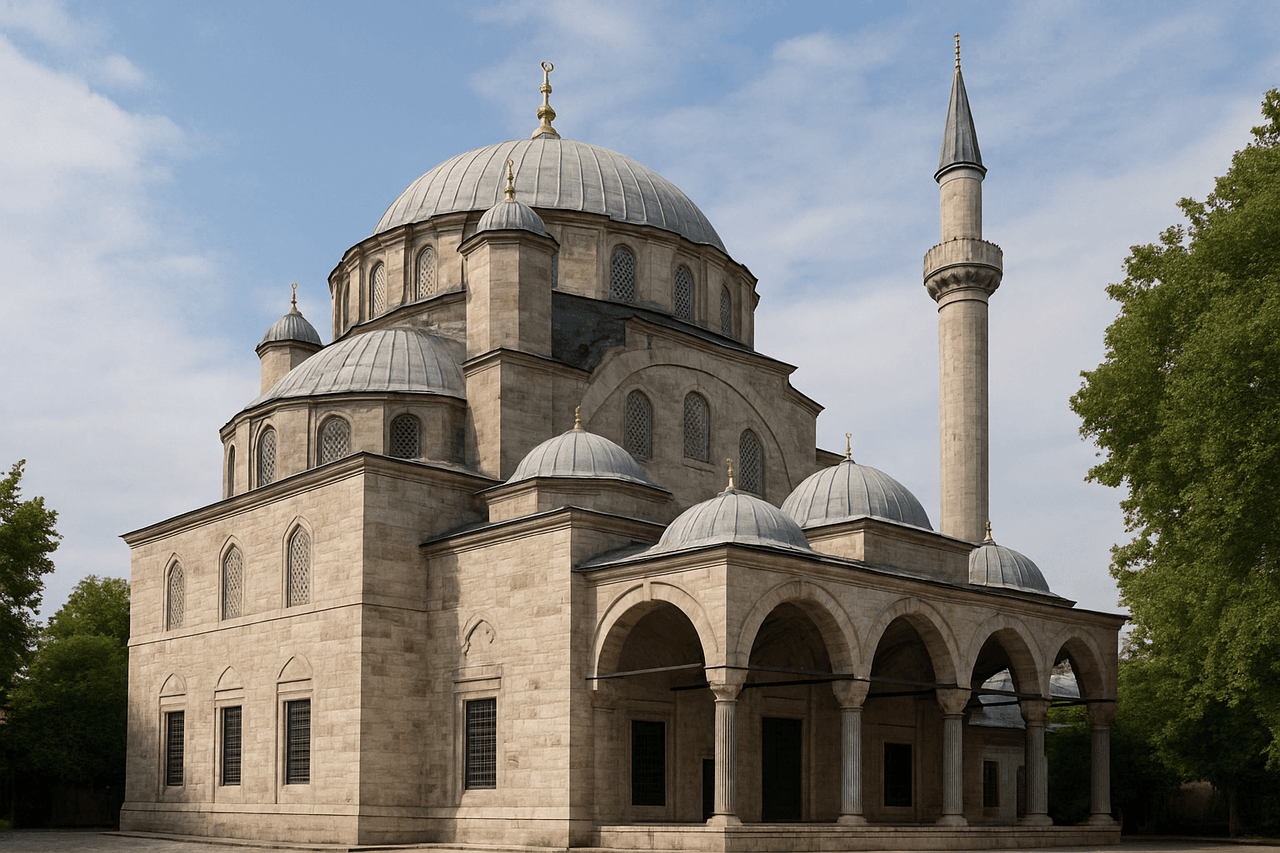
Generated with Artificial Intelligence Support
Hekimoğlu Ali Paşa Camii
Location | Cerrahpaşa Neighborhood Türkiye Istanbul Fatih | ||||||||
|---|---|---|---|---|---|---|---|---|---|
Year of Construction | 1734–1735 (H. 1147) | ||||||||
Patron | Hekimoğlu Ali Pasha | ||||||||
Building Components | Mosque, Tekke, Tomb, Sebil, Library, Fountains, Şadırvan | ||||||||
Material(s) | Cut cube stone | ||||||||
Condition(s) | In active use restored | ||||||||
Hekimoğlu Ali Paşa Camii is located at the intersection of Hekimoğlu Ali Paşa and Kızılelma avenues in the Cerrahpaşa neighborhood of Istanbul’s Fatih district. The mosque was constructed between 1734 and 1735 (H. 1147) under the supervision of Çuhadar Ömer Ağa and Hacı Mustafa Ağa by Hekimoğlu Ali Paşa, who served as grand vizier during the reign of Mahmud I. Hekimoğlu Ali Paşa was one of the prominent statesmen of his era and is known for his charitable works, having also commissioned fountains and tekkes in various districts of Istanbul.
The construction of the mosque took place after the Tulip Era and adhered to the principles of classical Ottoman architecture. The structure was planned as part of a külliye designed to meet religious and social needs. In line with the waqf system of the time, the mosque and its complex were intended to serve the public’s spiritual, educational, and basic daily requirements.
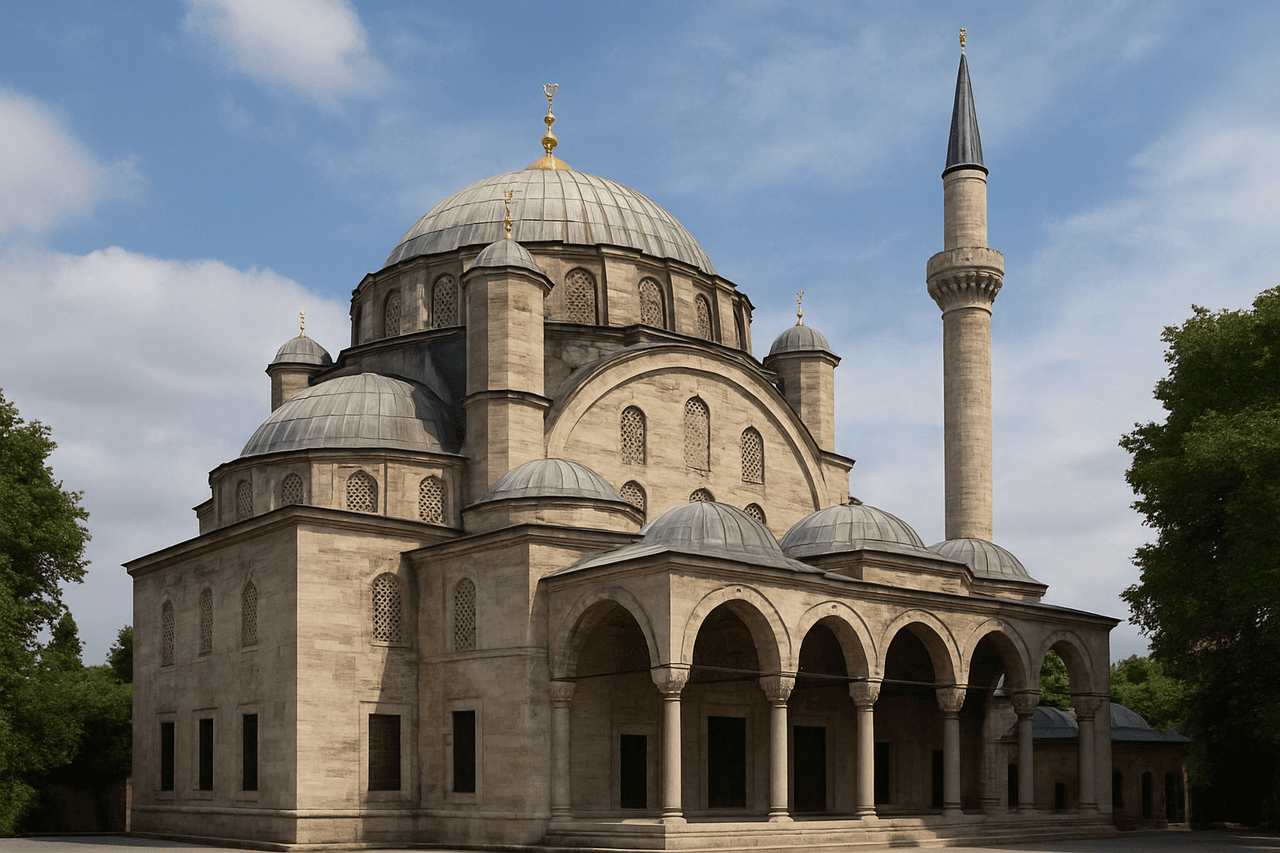
Hekimoğlu Ali Paşa Camii (Generated with AI Assistance)
Hekimoğlu Ali Paşa Camii is built of cut stone and has a nearly square rectangular prayer hall. At its center is a large dome supported by six piers, with six half-domes arranged along the qibla direction to support the main dome. This architectural arrangement follows the classical Ottoman mosque plan.
The mihrab and minbar in the prayer hall are made of marble. Above the main entrance, a marble inscription written by Enderunlu Servet Osman Efendi is mounted. The covered courtyard, accessible from the north, features an arched and columned structure. At its center stands a şadırvan. The minaret is single-shafted and follows the classical style. The hünkâr kasrı on the northern façade was designed as a private prayer space for members of the state elite.
The Hekimoğlu Ali Paşa Külliyesi includes, in addition to the mosque, a tekke (Abdal Yâkub Tekkesi), a library, a tomb, a sebil, a şadırvan, and several fountains.
Library is located on the upper floor of the mosque’s entrance façade and began operations in 1740. It houses 299 manuscript works, some of which are currently preserved in the Süleymaniye Manuscript Library and the mosque’s own library.
Tomb belongs to Hekimoğlu Ali Paşa and is situated within the mosque’s courtyard.
Sebil is positioned to be accessible from the street and was designed to provide water to the public.
Şadırvan is located at the center of the mosque courtyard.
Fountains are distributed at various points throughout the külliye, serving both aesthetic and functional purposes.
Although some structures of the külliye have been lost over time, the main components—the mosque, tomb, sebil, library, and şadırvan—have survived to the present day.
In 1986, the tomb and sebil of the mosque were restored faithfully with the support of the local community. In 2023, the Fatih Municipality restored the külliye’s fountains. As part of this restoration, plaster layers on the façade were cleaned, cement additions were removed, and original stonework was reinstated; structural issues were also addressed. In the same year, missing stone elements of the mosque’s entrance were repaired and reinstalled. Restoration of the outer courtyard gate is currently underway through a tender process.
Diyanet İslam Ansiklopedisi. "Hekimoğlu Ali Paşa Külliyesi." Accessed June 25, 2025. https://islamansiklopedisi.org.tr/hekimoglu-ali-pasa-kulliyesi.
Fatih Belediyesi. “Hekimoğlu Ali Paşa Külliyesi Kapısı Restore Edildi.” Accessed June 25, 2025. https://www.fatih.bel.tr/tr/main/news/hekimoglu-ali-pasa-kulliyesi-kapisi-restore-e/4289.
Fatih Kaymakamlığı. "Hekimoğlu Ali Paşa Camii." Accessed June 25, 2025. http://www.fatih.gov.tr/hekimoglu-ali-pasa-camii.

Generated with Artificial Intelligence Support
Hekimoğlu Ali Paşa Camii
Location | Cerrahpaşa Neighborhood Türkiye Istanbul Fatih | ||||||||
|---|---|---|---|---|---|---|---|---|---|
Year of Construction | 1734–1735 (H. 1147) | ||||||||
Patron | Hekimoğlu Ali Pasha | ||||||||
Building Components | Mosque, Tekke, Tomb, Sebil, Library, Fountains, Şadırvan | ||||||||
Material(s) | Cut cube stone | ||||||||
Condition(s) | In active use restored | ||||||||
No Discussion Added Yet
Start discussion for "Hekimoğlu Ali Paşa Camii" article
History
Architectural Features
Külliye Components
Restoration Efforts