


This article was automatically translated from the original Turkish version.
+1 More
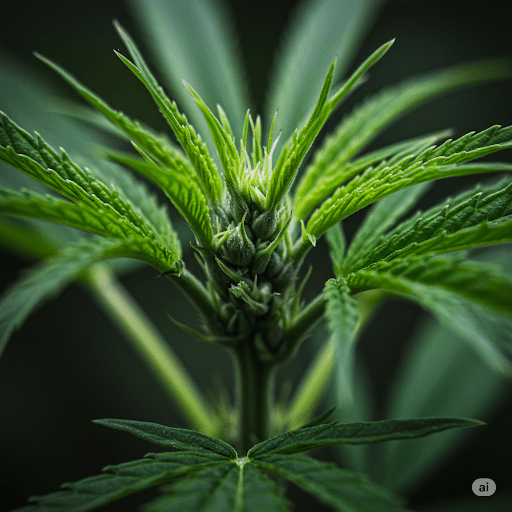
Hemp (Cannabis sativa L.) is an annual herbaceous plant belonging to the Cannabaceae family. Recognized as one of the earliest cultivated crops in human history, hemp is used in numerous fields including agriculture, industry, and health due to its fibers, seeds, and various chemical compounds. Its genetic diversity, morphological characteristics, and chemical composition have made it a subject of research across multiple disciplines. Hemp is cultivated both for industrial purposes (fiber and seed production) and pharmaceutical purposes (phytocannabinoid production).
Hemp is typically a tall, upright plant with palmate leaves, reaching heights of 1 to 5 meters. Male and female flowers occur on separate plants (dioecious), although some monoecious varieties also exist. Flowering is photoperiod-sensitive and generally triggered by decreasing day length. Seeds are rich in oils and contain proteins, fiber, and essential fatty acids.
Taxonomically, the classification of the genus Cannabis has been long debated. Some researchers propose three distinct species: Cannabis sativa, Cannabis indica, and Cannabis ruderalis, while others argue that these variations represent subspecies or cultivars of a single species. Genetic analyses have shown that most of these variations arose through human intervention and that natural populations exhibit limited genetic diversity.
The most well-known phytocannabinoids are tetrahydrocannabinol (THC) and cannabidiol (CBD). THC is known for its psychoactive effects, while extensive research has been conducted on the therapeutic potential of CBD. Hemp also contains various secondary metabolites such as terpenes, flavonoids, and other phenolic compounds.
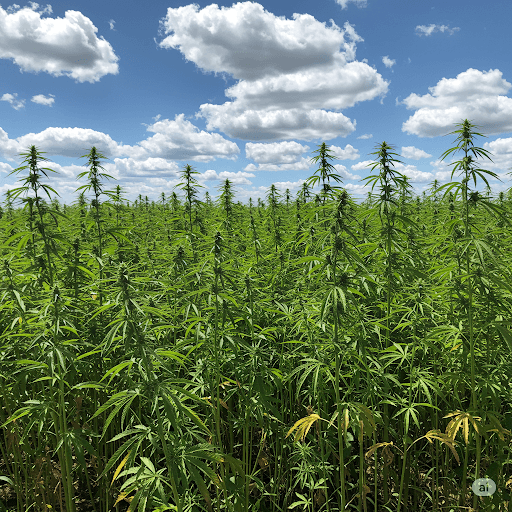
Hemp Field (Generated by Artificial Intelligence)
The use of hemp dates back to the Neolithic period. Archaeological excavations in China have uncovered fabric and rope fragments made from hemp fibers dated to approximately 10,000 years ago. In ancient China, hemp was also used in paper production. In India, it was employed in traditional medicine systems such as Ayurveda for treating various ailments.
In the Middle East and Europe, hemp was widely cultivated especially during the Middle Ages. Its fibers were used to produce rope, sailcloth, and clothing. Hemp was introduced to the Americas in the 16th century by European explorers and was similarly cultivated for industrial purposes.
In the mid-20th century, the psychoactive components of hemp led to its prohibition in many countries, negatively impacting its cultivation and research. However, in recent years, renewed recognition of hemp’s industrial and medicinal potential has prompted legal reforms in numerous countries, encouraging its production.

Hemp in Traditional Chinese Medicine (Generated by Artificial Intelligence)
Industrial hemp is derived from varieties with low THC content and is cultivated for fiber, seed, and oil production. Hemp fibers are used in textiles, construction, automotive, and paper industries. Hemp seeds are valued as food and animal feed due to their high protein and essential fatty acid content. Hemp oil is utilized in cosmetics and biofuel production.
The agricultural advantages of hemp include rapid growth, low pesticide requirements, and soil-improving properties. Additionally, hemp exhibits high carbon sequestration capacity, making it a suitable crop for sustainable farming practices. Hemp biomass is also being explored for energy production and bioplastics.
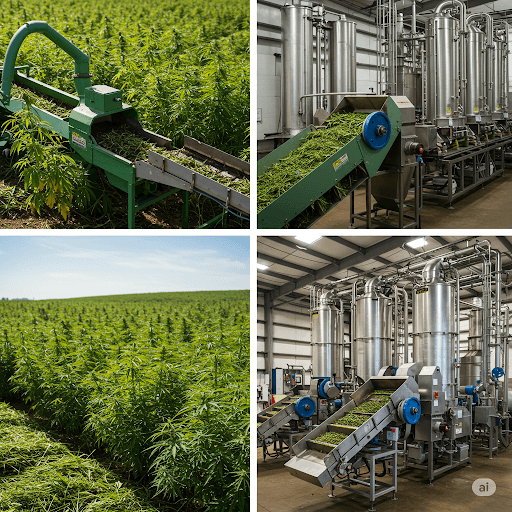
Hemp Seed and Oil Production (Generated by Artificial Intelligence)
Dalli, M., Azizi, S., Azghar, A., Saddari, A., Benaissa, E., Lahlou, Y. B., Elouennass, M., & Maleb, A. (n.d.). Cannabis sativa L.: A Comprehensive review on legislation, decriminalization, phytochemistry, antimicrobial activity, and safety. Journal of Food and Drug Analysis. https://www.jfda-online.com/journal/vol31/iss3/3/.
Small, Ernest, and Arthur Cronquist. "A Practical and Natural Taxonomy for Cannabis." *Taxon* 25, no. 4 (August 1976): 405–435. https://doi.org/10.2307/1220524.
Turner, C. E., & Elsohly, M. A. (1981). Biological Activity of Cannabichromene, its Homologs and Isomers. The Journal of Clinical Pharmacology, 21(S1). https://doi.org/10.1002/j.1552-4604.1981.tb02606.x.

Botanical Characteristics and Taxonomy
Historical Use and Cultural Significance
Industrial and Agricultural Applications