
This article was automatically translated from the original Turkish version.
+2 More
Location | Kaleiçi Antalya Muratpaşa | ||||||||
|---|---|---|---|---|---|---|---|---|---|
Construction Date(s) | 2nd century AD (Roman Period) | ||||||||
Building Type | Monumental Tomb | ||||||||
Hıdırlık Kulesi is located at the south-western corner of the historic peninsula known as Kaleiçi in the Muratpaşa district of Antalya, adjacent to Karaalioğlu Park. Built on a slope commanding a view over the Mediterranean Sea, this multi-layered structure has served military, religious, and monumental functions throughout history. Dating to the Roman period, the tower is one of the most significant archaeological structures in the center of Antalya.
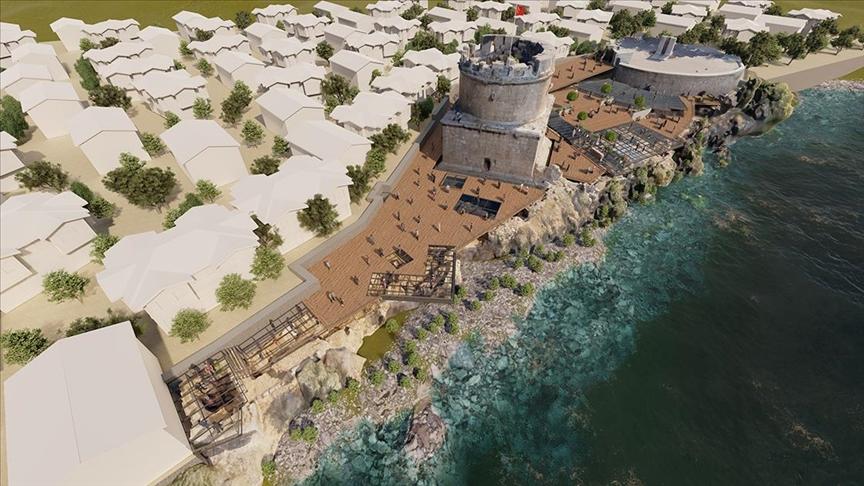
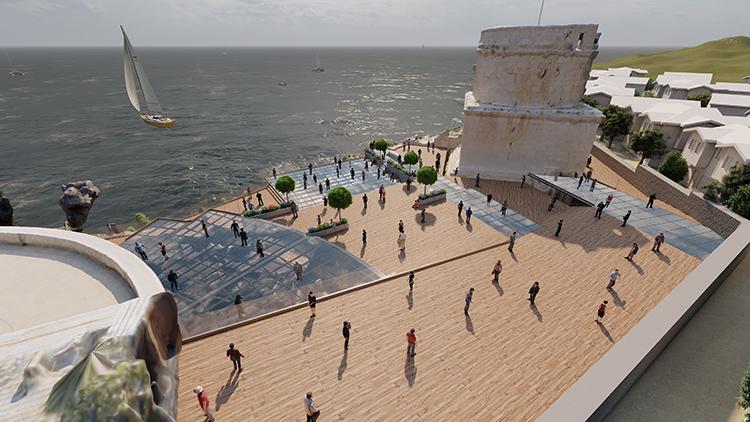
Hıdırlık Kulesi(Anadolu Agency)
The tower consists of a cylindrical upper structure resting on a square base. The total height of the structure is approximately 14 metres, with the base measuring 6.5 metres and the cylindrical section 7.5 metres. Constructed of cut stone, the tower exhibits examples of Roman-era stonework characterized by precise craftsmanship. On the south-eastern side, a stone stairway with steps provides access to the upper level. The interior space is enclosed by cylindrical walls and contains a burial chamber. It is believed that an architectural ornament or statue, possibly made of bronze or another material, once adorned the upper part of the structure.
The construction of Hıdırlık Kulesi is dated to the early second century CE during the Roman Empire. Its plan type and architectural features indicate that it functioned as a monumental tomb. The presence of a burial chamber within the base and other internal traces support this interpretation. During the Middle Ages and subsequent periods, the tower was used for military purposes, serving as an observation and defensive structure. Later additions and modifications to the tower reflect its adaptation to this new functional context.

Hıdırlık Kulesi(Anadolu Agency)
During archaeological excavations conducted around Hıdırlık Kulesi in 2023, certain structural layers and traces of ancient streets associated with the tower were uncovered. These findings provide important data for understanding the tower’s evolution from the Roman period to the present and its relationship with its surrounding environment. The tower is currently being restored through a collaboration between the Antalya Metropolitan Municipality and the Ministry of Culture and Tourism. Restoration efforts have included restitution and survey work. These projects aim to preserve the tower’s cultural heritage value while remaining faithful to its original architectural structure.
Alp, Şebnem. *Hıdırlık Kulesi: Antalya’da Bir Anıt Mezar Arkeolojisi Röleve, Restitüsyon, Restorasyon Projeleri*. Master's thesis,Akdeniz Üniversitesi, Graduate School of Social Sciences, Department of Archaeology, 2005. Advisor: Burhan Varkıvanç. Accessed June 19, 2025. https://avesis.akdeniz.edu.tr/yonetilen-tez/92bee2f0-71b2-4b2b-898d-cf84c6c23d01/hidirlik-kulesi-antalyada-bir-anit-mezar-arkeolojisi-rolove-restitusyon-restorasyon-projeleri.
Anadolu Ajansı. “Antalya’da Kazı Çalışmaları Tamamlanan Hıdırlık Kulesi’nin Seyir Terasıyla Cazibesi Artacak.” Accessed June 19, 2025. https://www.aa.com.tr/tr/kultur/antalyada-kazi-calismalari-tamamlanan-hidirlik-kulesinin-seyir-terasiyla-cazibesi-artacak/3023025.
Anadolu Ajansı. “Antalya’nın Simgelerinden Hıdırlık Kulesi’ndeki Kazılarda Sona Yaklaşıldı.” Accessed June 19, 2025. https://www.aa.com.tr/tr/kultur/antalyanin-simgelerinden-hidirlik-kulesindeki-kazilarda-sona-yaklasildi/2676531.
Anka Enstitüsü. “Hıdırlık Kulesi.” Accessed June 19, 2025. https://www.anka.org.tr/node/2042.
Antalya Büyükşehir Municipality. "Hıdırlık Kulesi’nde Heyecan Verici Arkeolojik Keşif." Accessed June 19, 2025. https://www.antalya.bel.tr/haberler/HaberDetay/7803/hidirlik-kulesinde-heyecan-verici-arkeolojik-kesif.

Location | Kaleiçi Antalya Muratpaşa | ||||||||
|---|---|---|---|---|---|---|---|---|---|
Construction Date(s) | 2nd century AD (Roman Period) | ||||||||
Building Type | Monumental Tomb | ||||||||
Architectural Features
Dating and Function
Archaeological Findings and Restoration