

This article was automatically translated from the original Turkish version.
+1 More
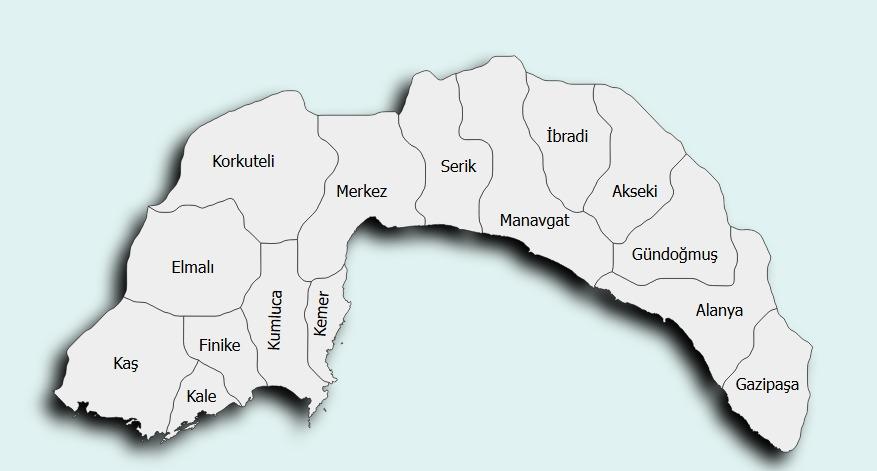
Muratpaşa
Foundation | 1993 | ||||||||
|---|---|---|---|---|---|---|---|---|---|
Population (2023) | 519.000 | ||||||||
Area(s) | 96 km² | ||||||||
Notable Places | Hadrian Kapısı Yivli Minare Lara Plajı Kaleiçi | ||||||||
Climate(s) | Mediterranean climate | ||||||||
District Governor | İhsan KARA | ||||||||
Mayor(s) | Ümit Uysal | ||||||||
Muratpaşa is a district in Antalya Province, bordered by Kepez to the north, Aksu to the east, and Konyaaltı to the west. The district derives its name from the Muratpaşa Camii, built in 1570 by Karaman Bey Murat Paşa, and is one of Antalya’s most densely populated districts. Socioeconomically, it boasts a high standard of living and is a settlement area where both local residents and migrants have concentrated.

Muratpaşa Yacht Harbour. (
The history of Muratpaşa traces back to the ancient city of Attaleia, a port settlement in the Pamphylia region during antiquity. Founded by King Attalus II of Pergamon, the city experienced continuous habitation through the Roman, Byzantine, Seljuk, and Ottoman periods. The historic urban area known today as Kaleiçi lies within Muratpaşa’s boundaries and contains architectural remains dating from the Hellenistic period to the present. Structures such as the Hadrian’s Gate, Yivli Minare, Hıdırlık Tower, and Kesik Minare are physical manifestations of this layered past. With Antalya’s rapid urban expansion during the Republican era, this area underwent swift urbanization and gained independent district status in 2008.
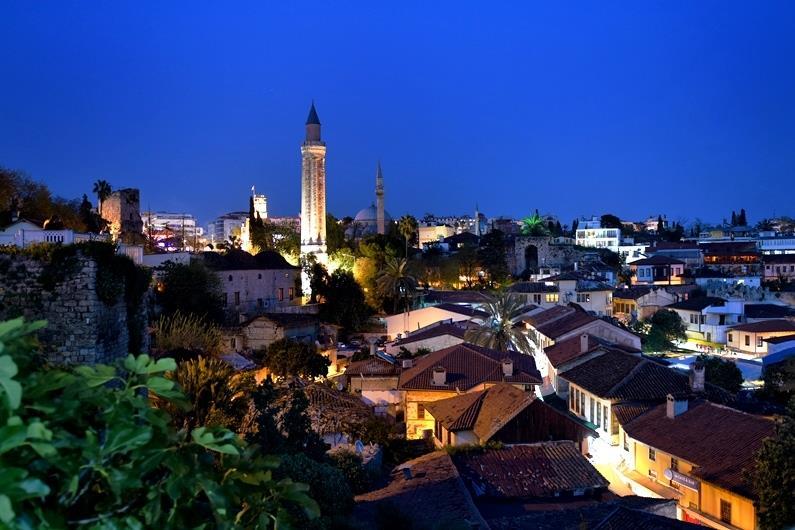
Muratpaşa, Kaleiçi. (
Muratpaşa is located on the Mediterranean coast and covers an area of approximately 92 km². A 20-kilometer coastline along the Antalya Gulf provides the district with significant advantages for tourism. The majority of the district consists of flat terrain that slopes toward the Mediterranean via cliffs. Muratpaşa has a typical Mediterranean climate, with hot, dry summers and mild, rainy winters. The annual average temperature ranges between 18–20°C. These climatic conditions are favorable for agricultural activities, horticulture, and landscape design.
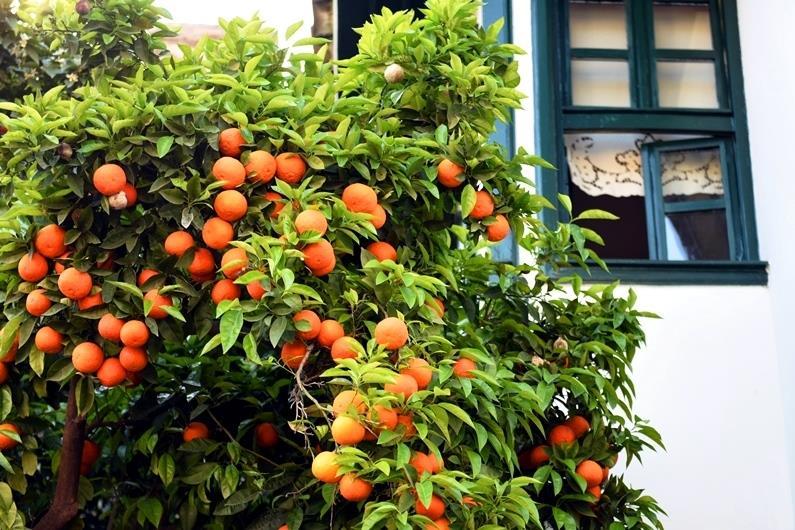
Bitter orange tree in Kaleiçi. (
According to the 2024 ADNKS data, the population of Muratpaşa is 509,444. Of this population, 48.67% are male and 51.33% are female. The district has a very high population density, and population growth continues through migration. The presence of advanced educational and healthcare infrastructure, along with a diverse range of social and cultural activities, has attracted individuals from various socioeconomic backgrounds. According to TÜİK data, the literacy rate exceeds 99%. Additionally, the district hosts a large number of university students.
Muratpaşa serves as a service hub within Antalya’s economy. Trade, tourism, education, healthcare, and public services constitute the district’s primary economic activities. Although agricultural land is limited, greenhouse vegetable cultivation is practiced on existing farmland. The district also contains small-scale industrial zones, unorganized industrial areas, and commercial centers. The abundance of public buildings, shopping malls, and cultural centers supports economic dynamism.
Muratpaşa is one of the central hubs of Antalya tourism due to its historic Kaleiçi district. Structures such as the Yivli Minare Camii, Hadrian’s Gate (Üçkapılar), Hıdırlık Tower, Kesik Minare, and Karatay Medresesi are located within the district. Narrow streets of Kaleiçi house examples of Ottoman and Seljuk architecture, boutique hotels, and venues for cultural events. The Antalya Museum and Atatürk House Museum are key institutions showcasing the district’s cultural heritage. In terms of maritime tourism, the district’s cliff beaches, Yacht Harbour, and Lara beaches are prominent attractions.
Muratpaşa’s cuisine reflects the typical Mediterranean culinary traditions of Antalya. Dishes featuring olive oil, vegetable-based meals, citrus-based preserves, and tahini-based mezes adorn local tables. Regional specialties include hibeş, domates civesi, bitter orange jam, and kabak tatlısı. Local festivals and gastronomic events held in the district contribute to the promotion of this cultural richness.
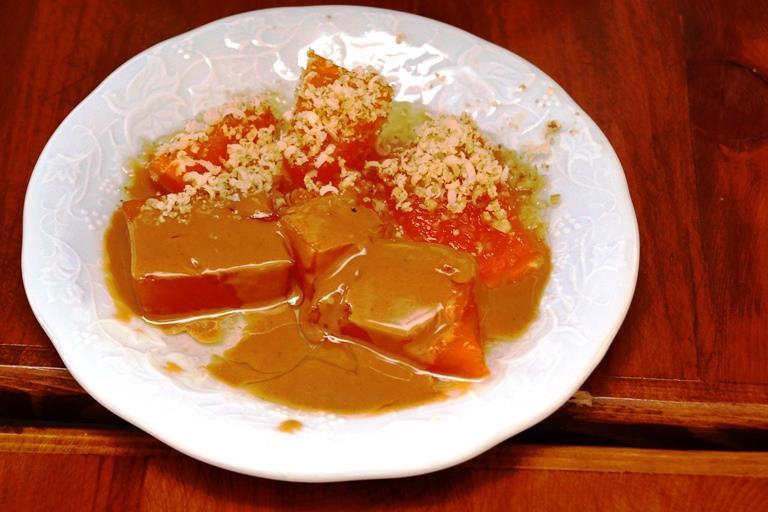
Antalya, Muratpaşa Style Kabak Tatlısı. (
Antalya Muratpaşa Belediyesi. “Tanıtım.” Accessed April 19, 2025. https://muratpasa-bld.gov.tr/icerik/tanitim Muratpaşa İlçe Milli Eğitim Müdürlüğü. “Coğrafi Yapısı.” Accessed April 19, 2025. https://muratpasa.meb.gov.tr/www/cografi-yapisi/icerik/274 Muratpaşa İlçe Milli Eğitim Müdürlüğü. “Tarihi.” Accessed April 19, 2025. https://muratpasa.meb.gov.tr/www/tarihi/icerik/273 Muratpaşa İlçe Milli Eğitim Müdürlüğü. “Nüfus Durumu.” Accessed April 19, 2025. https://muratpasa.meb.gov.tr/www/nufus-durumu/icerik/275 Türkiye İstatistik Kurumu (TÜİK). “Adrese Dayalı Nüfus Kayıt Sistemi (ADNKS) Sonuçları, 2024.” Accessed April 19, 2025. https://data.tuik.gov.tr/Kategori/GetKategori?p=Nufus-ve-Demografi-109

Muratpaşa
Foundation | 1993 | ||||||||
|---|---|---|---|---|---|---|---|---|---|
Population (2023) | 519.000 | ||||||||
Area(s) | 96 km² | ||||||||
Notable Places | Hadrian Kapısı Yivli Minare Lara Plajı Kaleiçi | ||||||||
Climate(s) | Mediterranean climate | ||||||||
District Governor | İhsan KARA | ||||||||
Mayor(s) | Ümit Uysal | ||||||||
No Discussion Added Yet
Start discussion for "Muratpaşa (District)" article
History
Geography and Climate
Population and Demographics
Economy
Tourism, Culture, and Cuisine