


This article was automatically translated from the original Turkish version.
+1 More
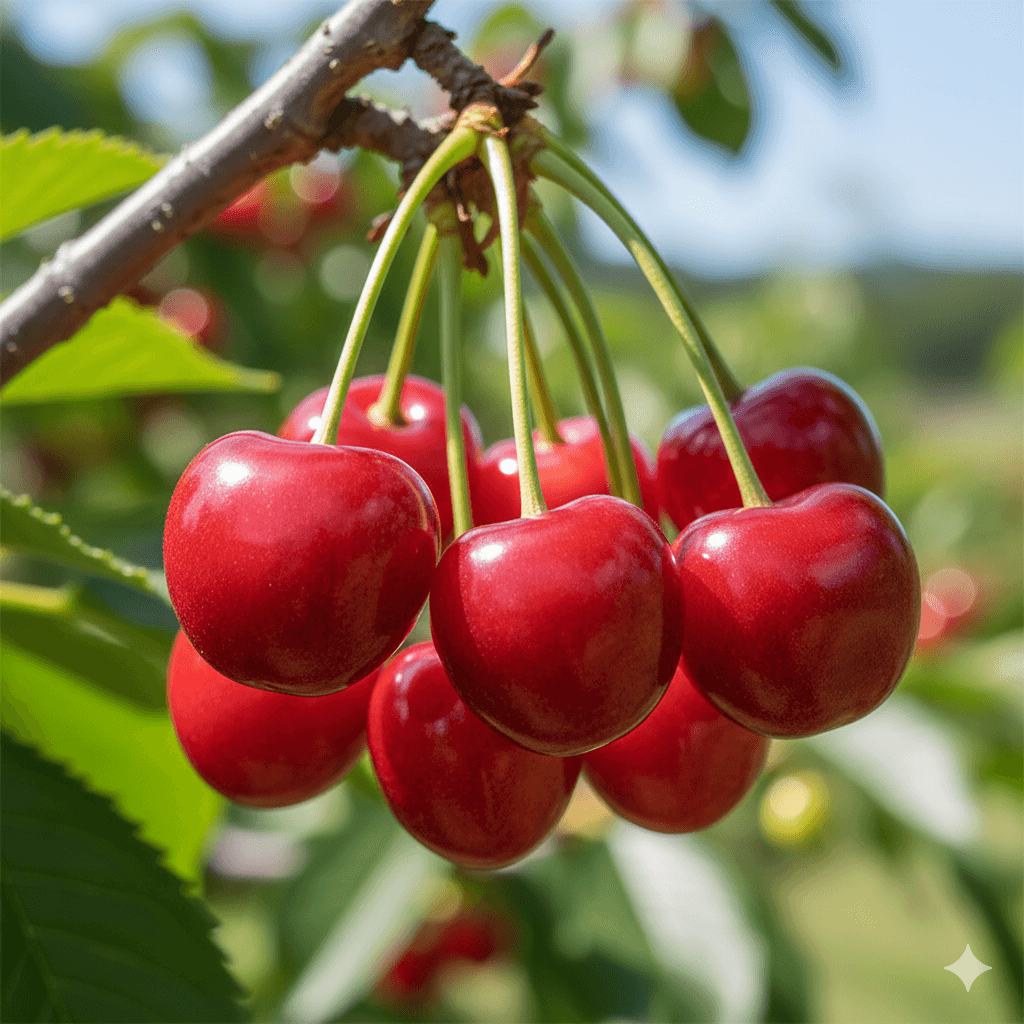
Higashine Sakuranbo (Yapay Zeka ile Oluşturulmuştur)
Higashine Sakuranbo (Higashine Cherry) is a cherry variety produced in Yamagata Prefecture, Japan, and protected under geographical indication (GI) status. The product is the fruit of trees belonging to the Cerasus genus of the Rosaceae (rose) family and serves as an agricultural symbol representing Higashine City. The geographical indication was officially registered on 20 October 2017 under number 30 in the "Fruit" category. The applicant is the "Higashine Fruit Kingdom" Fruits Industrial Cluster Association.
The primary variety used in the production of Higashine Sakuranbo is Sato Nishiki. This variety is regarded as the highest quality cherry in terms of both appearance and flavor. Higashine City is recognized as the origin (place of origin) of the Sato Nishiki variety.
The key characteristics of this variety include large fruit size, high sugar content, and a balanced flavor profile. Its taste achieves a delicate equilibrium between refreshing sweetness and moderate acidity. Due to these qualities, it has received significant acclaim from consumers, particularly during the early summer season, as a premium gift item.
30 Higashine Sakuranbo (YouTube - Geographical Product Information Publication Site)
The cultivation of Higashine Sakuranbo requires specialized agricultural techniques that have been developed and standardized through extensive trial and error to ensure consistent quality:
Cherries are highly selective in terms of climate, geography, and soil conditions. Although cherry distribution and experimental cultivation were conducted across Japan during the Meiji era (1868–1912), modern production is now limited to specific regions. The Higashine Sakuranbo production area possesses the ideal conditions required to meet these specific needs.
Sato Nishiki, the highest-grade variety of Higashine Sakuranbo, was developed in 1928 by Eisuke Sato, a resident of what was then known as Higashine-cho. Through the efforts and research of local stakeholders, the variety was refined, widely adopted in the region, and eventually became the representative cherry cultivar of Higashine.
Today, Higashine Sakuranbo accounts for the largest production volume of cherries in Japan, with the Sato Nishiki variety making up more than 80 percent of this total production.
Geographical Indication Product Information Site. "30 Higashine Sakuranbo." YouTube video. Accessed October 23, 2025. http://www.youtube.com/watch?v=L0Uh-gsRwbI.
Information Website on Japan Geographical Indication Products. "Higashine Sakuranbo." Accessed October 23, 2025. https://pd.jgic.jp/en/register/entry/30.html.

Higashine Sakuranbo (Yapay Zeka ile Oluşturulmuştur)
No Discussion Added Yet
Start discussion for "Higashine Sakuranbo" article
Product Characteristics and Primary Variety: Sato Nishiki
Cultivation Techniques and Quality Management
Geographical and Climatic Conditions of the Production Area
Historical Background and Current Status