


This article was automatically translated from the original Turkish version.
+2 More
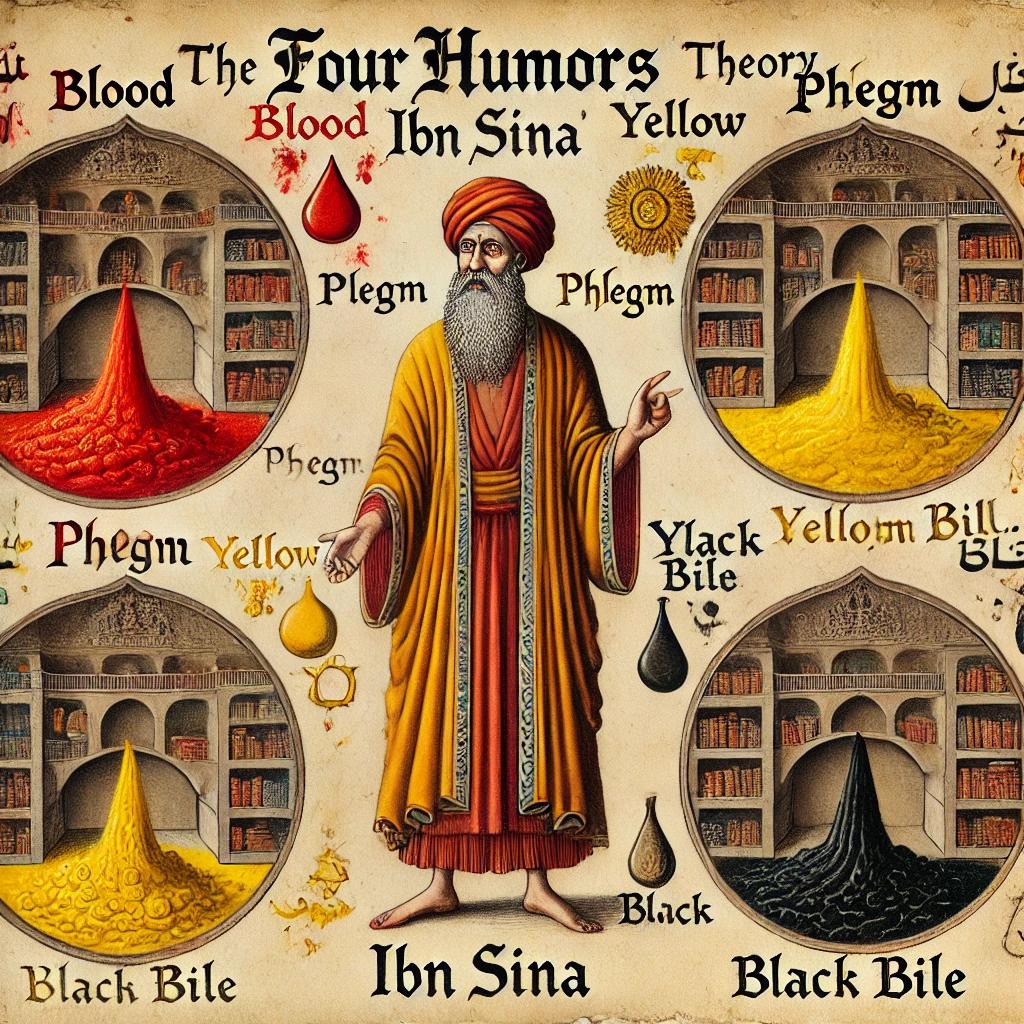
The Humoral Theory is an approach that explains health and disease states through the balance of the four bodily fluids in the human body (blood, bile, melancholy, and phlegm). In ancient Greek medicine this theory is known as "The Four Virtues", while in West it is called "Humoral pathology". The theory was developed by Hippocrates under the influence of the four-element concept of the ancient Greek philosopher Empedokles. According to Empedokles, fire (dry-hot), air (moist-hot), water (moist-cold) and earth (dry-cold) are the fundamental elements shaping nature. These elements were adapted to the human body to form the foundation of the theory.
According to the Humoral Theory, health is maintained when the four fluids are in balance. An increase or decrease in any of these fluids leads to illness. The fluids are:
Blood: Associated with the heart and lungs. It becomes active in spring. Its physical properties are moist and hot; its taste is sweet.
Bile: Connected to the liver and gallbladder. It is active in summer. Its properties are dry and hot; its taste is bitter.
Black Bile (Melancholy): Associated with the spleen and stomach. It is active in autumn. Its properties are dry and cold; its taste is sour.
Phlegm: Linked to the brain. It becomes active in winter. Its properties are moist and cold; its taste is salty.
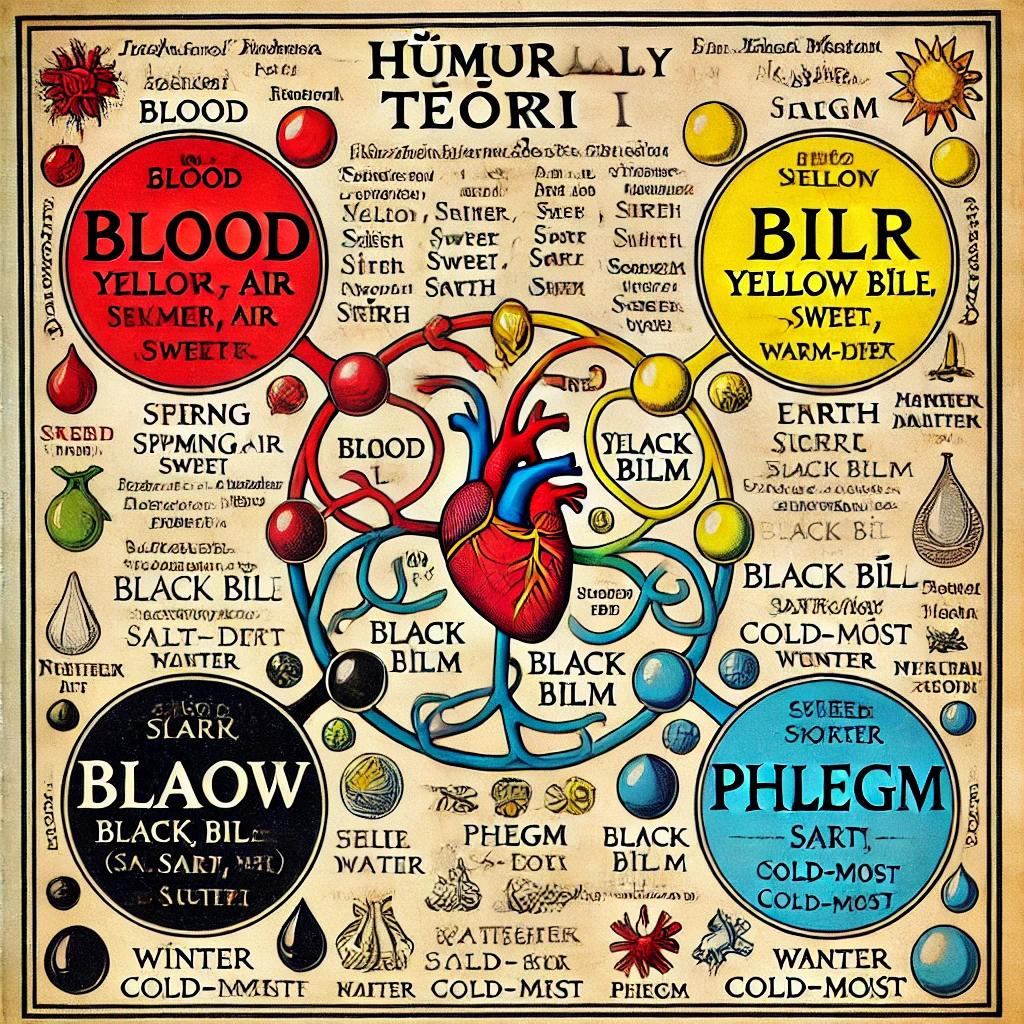
Designed with the assistance of artificial intelligence.
Imbalances among the fluids create the basis for various diseases. For example, an excess of blood may lead to heart conditions, while an increase in black bile may predispose individuals to psychological disorders. The scope of the theory extends beyond physical health to shape an individual’s character characteristics and temperament. Personality types are classified according to the dominance of one fluid:
Sanguine (blood dominant): Warm-hearted, cheerful.
Choleric (bile dominant): Irritable, energetic.
Melancholic (black bile dominant): Melancholic, introverted.
Phlegmatic (phlegm dominant): Calm, composed.
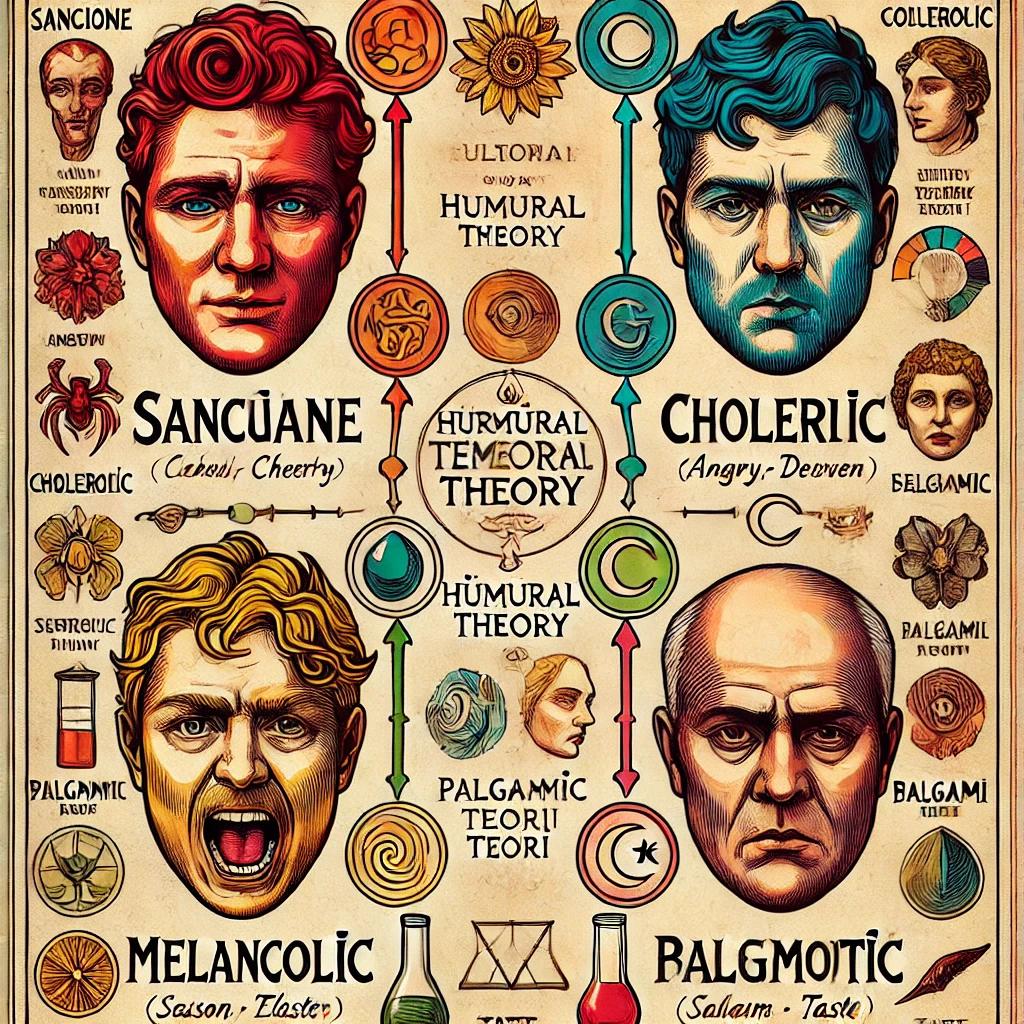
Designed with the assistance of artificial intelligence.
In cases of fluid imbalance, treatment aims to restore equilibrium by using foods and medications with physical properties opposite to those of the dominant fluid. For example:
1. Excess blood is reduced by avoiding hot foods and consuming sour or cold foods.
2. In cases of increased black bile, sour sweets are avoided and salty, warm foods are preferred.
The theory was expanded in the Islamic world through Ibn Sina’s work "Al-Qanun fi al-Tibb", incorporating emotional and mental states as additional factors. The theory continued to influence Ottoman medicine and people healing practices for centuries and its impact is still felt today in traditional medical treatments.
Eliaçık, Muhittin. "Sıhhat u Maraz'da Ahlât-ı Erbaanın İşlenişi." *Mukaddime 1*, no. 1 (2010): 125-141. Accessed Adresi.
Güzel, Pınar. "Gastronomi Trendlerinden Biri Olarak Terapötik Beslenme ve Hıltlar Teorisi." *Türk Turizm Araştırmaları Dergisi* 4, no. 3 (2021): 3099-3115. Accessed Adresi.

Core Elements of the Theory
Diseases and Temperaments
Treatment Approaches
Place in Islamic Medicine