This article was automatically translated from the original Turkish version.
Type of Geographical İndication | Signpost | ||||||||
|---|---|---|---|---|---|---|---|---|---|
Registration Number | 1655 | ||||||||
Registration Date | 04.11.2024 | ||||||||
Product / Product Group(s) | Meals and Soups | ||||||||
Province(s) | Erzurum | ||||||||
Applicant/Registrant(s) | Erzurum Chamber of Commerce | ||||||||
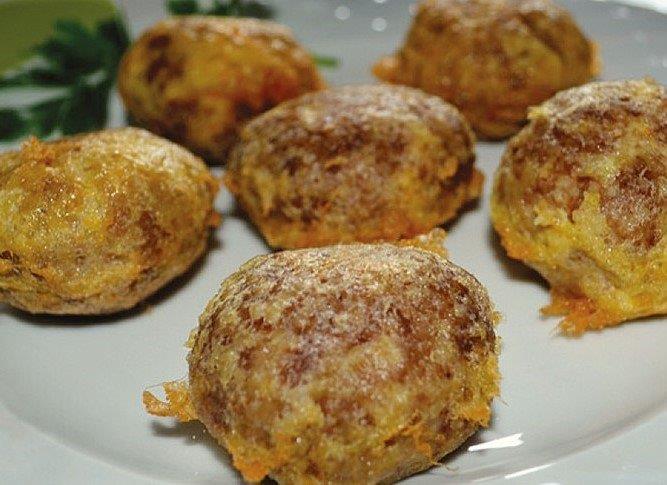
Hınıs köftesi is a traditional meatball variety with a long history in the Hınıs district of Erzurum, prepared with minced meat, bulgur, and egg in a round, flattened shape. In the region, it is also known as “Hınıs içli köftesi” or “iri köfte”. Its distinguishing features are the use of twice-ground minced meat and the availability of three different filling options: aşmalı, rice-filled, or meat-filled.
Hınıs köftesi has been registered as a geographical indication under Law No. 6769 on Industrial Property. The application for registration was submitted on 31 December 2021 and was officially registered on 4 November 2024 on behalf of the Erzurum Chamber of Commerce. The registration number is 1655. The geographical boundary is defined as the Hınıs district of Erzurum province, linking the product’s reputation and production process exclusively to this area.
The outer dough is prepared by manually kneading the minced meat and bulgur. Black pepper, red pepper flakes, and salt are added, and warm water is gradually incorporated until a gum-like consistency is achieved. In the final stage, the egg is added to make the dough suitable for shaping.
Aşmalı Filling:
The aşma is cooked in vegetable oil for 10–15 minutes, then cooled.
Rice Filling:
The rice is boiled, with salt and red pepper flakes added toward the end. A slightly firm texture is preferred.
Meat Filling:
The minced meat is cooked in vegetable oil, followed by the addition of onion. The mixture is then finished with spices and parsley, and cooled before use.
Round portions of the prepared outer dough are taken, and a cooled filling is placed in the center. The dough is sealed by wetting the hands to prevent sticking and gently flattened with the palm. The meatballs are boiled in salted boiling water for 10–12 minutes. They are then dipped in egg and fried in hot oil for 10–15 minutes before being served hot.
Hınıs köftesi holds a special place in the culinary culture of the Hınıs district. Its preparation as a festive dish during holidays and special occasions demonstrates its strong association with the geographical region. All stages of production are carried out exclusively within the boundaries of the Hınıs district.
The protection of the product under its geographical indication is coordinated by the Erzurum Chamber of Commerce. The monitoring authority consists of experts from the Department of Gastronomy and Culinary Arts at Atatürk University Faculty of Tourism, the Erzurum Chamber of Commerce, and the Erzurum Provincial Directorate of Agriculture and Forestry. Inspections are conducted at least once a year and may be carried out at any time if deemed necessary or upon complaint. Inspection criteria include compliance with ingredient specifications, adherence to traditional production methods, and conformity with labeling regulations.
Turk Patent and Trademark Office. "Hınıs Köftesi Coğrafi İşaret Sicil Belgesi (No: 1655 - Mahreç İşareti)." Accessed October 24, 2025. https://ci.turkpatent.gov.tr/Files/GeographicalSigns/7e84d5d5-bb3e-4bab-8472-61884f7542ee.pdf.
Turkish Patent and Trademark Office. "Hınıs Köftesi." Geographical Indications Portal. Accessed October 24, 2025. https://ci.turkpatent.gov.tr/cografi-isaretler/detay/5890.

Type of Geographical İndication | Signpost | ||||||||
|---|---|---|---|---|---|---|---|---|---|
Registration Number | 1655 | ||||||||
Registration Date | 04.11.2024 | ||||||||
Product / Product Group(s) | Meals and Soups | ||||||||
Province(s) | Erzurum | ||||||||
Applicant/Registrant(s) | Erzurum Chamber of Commerce | ||||||||
Production Characteristics
Outer Dough Ingredients (for 5–6 servings)
Filling Options
Shaping and Cooking
Cultural Context
Monitoring