

This article was automatically translated from the original Turkish version.
+2 More
The Hisbe institution, is an official oversight body in Islamic societies that operates in accordance with the principle of enjoining good and forbidding evil to safeguard public morality and order. This institution, whose roots extend back to the time of Prophet Muhammad, has historically been endowed with administrative and limited judicial powers covering a broad spectrum from economic activities to social life. Its historical significance lies in having independently assumed the functions of today’s municipal services, regulatory bodies, and market oversight institutions.
The historical evolution of the Hisbe institution paralleled the expansion of Islamic states and the growing bureaucratic demands. Significant differences exist between its earliest applications and its final institutional form in the Ottoman period, particularly in terms of the scope of authority and administrative hierarchy.
Osmanli’daki Terazi Satıcıları (İntizami)" image-element-format="left" image-height="780" image-source="https://cdn.t3pedia.org/media/uploads/2026/05/09/cvUKaCrjunyTePxOaLNiglHYPGO2D8uc.jpg" image-width="890">
The first practical implementer of Hisbe activities was Prophet Muhammad himself, who personally inspected the market in Medina. In one such inspection, he discovered a grain merchant hiding wet wheat beneath dry wheat and prohibited this deceptive practice with the declaration, “He who deceives us is not one of us.” This incident is regarded as the first application of the institution’s core economic oversight mission.【1】 During this period, market oversight was not carried out by a bureaucratic apparatus but by the leader himself or individuals he appointed.
One of the most notable features of this era was the appointment of female companions to Hisbe duties based on merit. Women such as Şifâ bint Abdillâh and Semra bint Nuheyk el-Esediyye were commissioned by Prophet Muhammad and later by Caliph Umar to oversee the market.【2】 During the caliphate of Umar, Hisbe acquired the full institutional identity of a formalized body. Umar personally patrolled the streets of Medina at night and appointed Saîd b. el-Âs to oversee the market in Mecca and Abdullah b. Utbe in Medina, transforming the institution into a systematic state organ.【3】
During the Umayyad and especially the Abbasid periods, the Hisbe institution was granted significantly broader powers to preserve social order and morality. The muhtasib in the Abbasid era was no longer limited to market supervision; he became an authority intervening in nearly every aspect of social life, including ensuring street cleanliness, resolving neighborhood disputes, and punishing those who mistreated animals.【4】
In the Umayyads of Al-Andalus, Hisbe was implemented under the name "Hattu'l-İhtisâb," and appointments were typically drawn from among judges or prominent jurists. Andalusian muhtasibs developed an original monitoring mechanism by secretly sending a child or servant dressed in civilian clothes to suspicious shops to make purchases, thereby identifying and punishing merchants who used false weights or charged prices above the regulated limit.【5】
During the Seljuk period, Hisbe became an independent institution administered under the name "Divan-ı Hisbe" and emerged as one of the foundational councils of the government. Nizam al-Mulk emphasized the importance of this institution in his work Siyasetname, warning that without muhtasib oversight, market fraud would increase, the poor would suffer, and social order would collapse.【6】 Historical cases demonstrate the institution’s authority and impartial enforcement powers. During the reign of Ghaznavid Mahmud, when the commander-in-chief of a 50,000-strong army, Ali Nüviştekin, was seen publicly intoxicated, a force of one hundred men under the muhtasib’s command removed him from his horse and personally punished him.【7】
Sultan Mahmud supported the punishment of one of the highest-ranking military commanders as a matter of justice. Similarly, during the reign of Ghaznavid Sultan Ibrahim, when bakers hoarded wheat to create artificial shortages and refused to sell bread to the public, the state’s chief baker was executed; his corpse was tied to an elephant’s tusk and paraded through the market as a deterrent, demonstrating the severity of measures taken to enforce market regulation.【8】
class=\
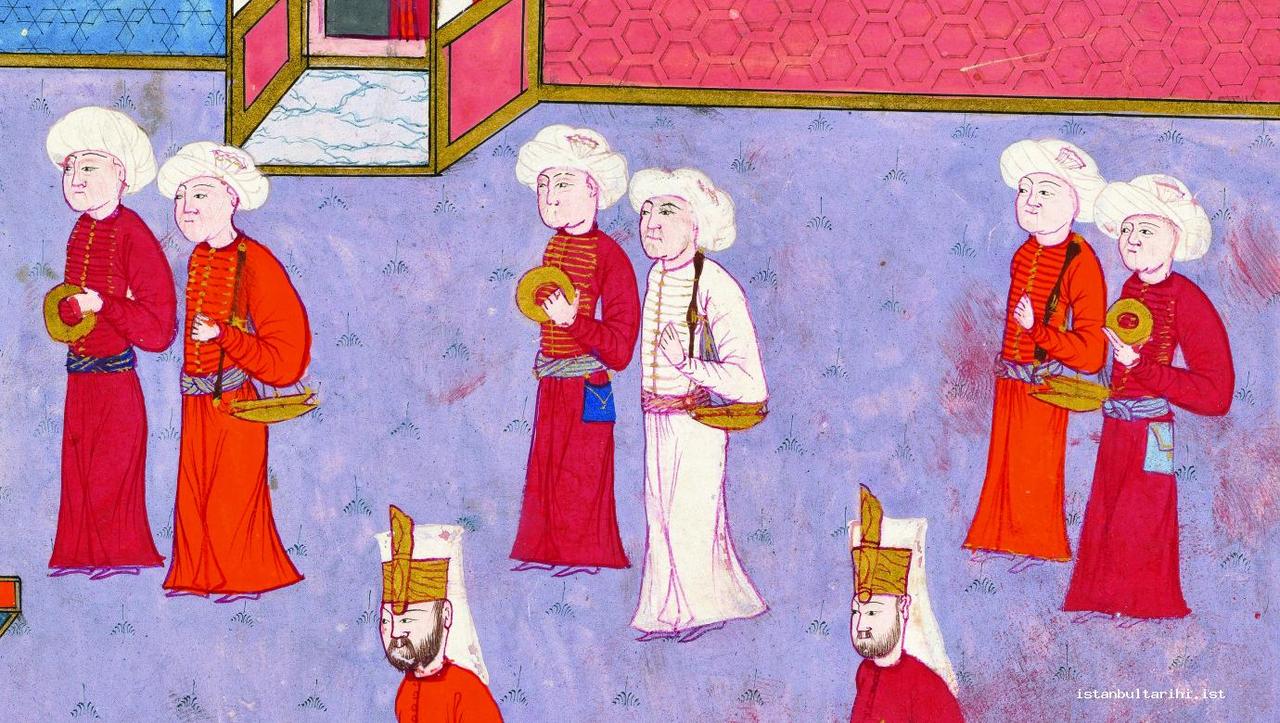
The Hisbe institution reached its most advanced and institutionalized bureaucratic form in the Ottoman State. In the Ottoman context, this institution was commonly referred to as "ihtisap ağalığı" or "ihtisap eminliği," and muhtasibs operated under the jurisdiction of the judge, blending sharia and customary law. While in earlier states the muhtasib served as the direct representative of the judge or caliph, during the Ottoman expansion period he evolved into an autonomous market regulator.
In 1826, the institution was restructured from "Ihtisap Ağalığı" into the "Ihtisap Nezareti," bringing market regulation fully under the authority of the Grand Vizier and approaching the model of a modern ministry. However, with the establishment of the police force in 1845 and the Zabıta Müşiriyeti in 1846, the muhtasib’s general public order, policing, and security powers were transferred to these new institutions. His responsibilities were then limited exclusively to trade practices, production standards, and price (narh) control, thereby forming the first model of today’s independent regulatory agencies.【9】
The enforcement and oversight powers vested in the muhtasib necessitated strict criteria for appointment. The individual selected must be legally competent, free, Muslim, just, well-versed in jurisprudential rules, and possess sufficient social standing to ensure the legitimacy of his decisions.
The appointment of the muhtasib was not by election but by central authority. In the capital, muhtasibs were appointed directly by the head of state (caliph or sultan) or by the Grand Vizier with his approval. Provincial muhtasibs were appointed through the central muhtasib or the regional administrative authority (judge). In regions such as Al-Andalus, the opinions of judges were consulted in appointments, but the final decision always rested with the ruler. The position of muhtasib was an official civil post, and holding any other occupation was prohibited.
Independence in office was fundamental. The muhtasib could not be dismissed except in cases of committing crimes against the head of state, demonstrating incompetence in duty, or becoming physically unfit. The muhtasib had the authority to use assistants known as "koloğlanları" or direct police/military forces (şurta) to enforce his rulings.
The muhtasib’s salary and financing system evolved in accordance with the state’s fiscal structure over time. In the Anatolian Seljuks and early Ottoman periods, the Hisbe institution was not funded from the general budget but operated under the "iltizam" system. Under this system, the individual granted the title of "ihtisap ağası" paid a fixed sum known as "mukataa bedeli" to the state in exchange for a one-year lease of Hisbe authority in a region. The muhtasib’s primary income derived from taxes collected from merchants, known as "ihtisab resmi," levied on the sealing of measuring instruments and inspections. However, due to the system’s tendency to incentivize corruption and extortion by tax collectors, it was gradually abandoned.
To ensure the muhtasib’s independence and immunity from bribery, the ihtisab resmi was deposited into the state treasury, and the muhtasib received a high official salary directly from the state treasury (beytülmal). Islamic jurists such as Imam Abu Yusuf argued that paying muhtasibs a sufficiently high salary from the treasury was essential for just governance, as it prevented corruption and ensured impartial market oversight.【10】
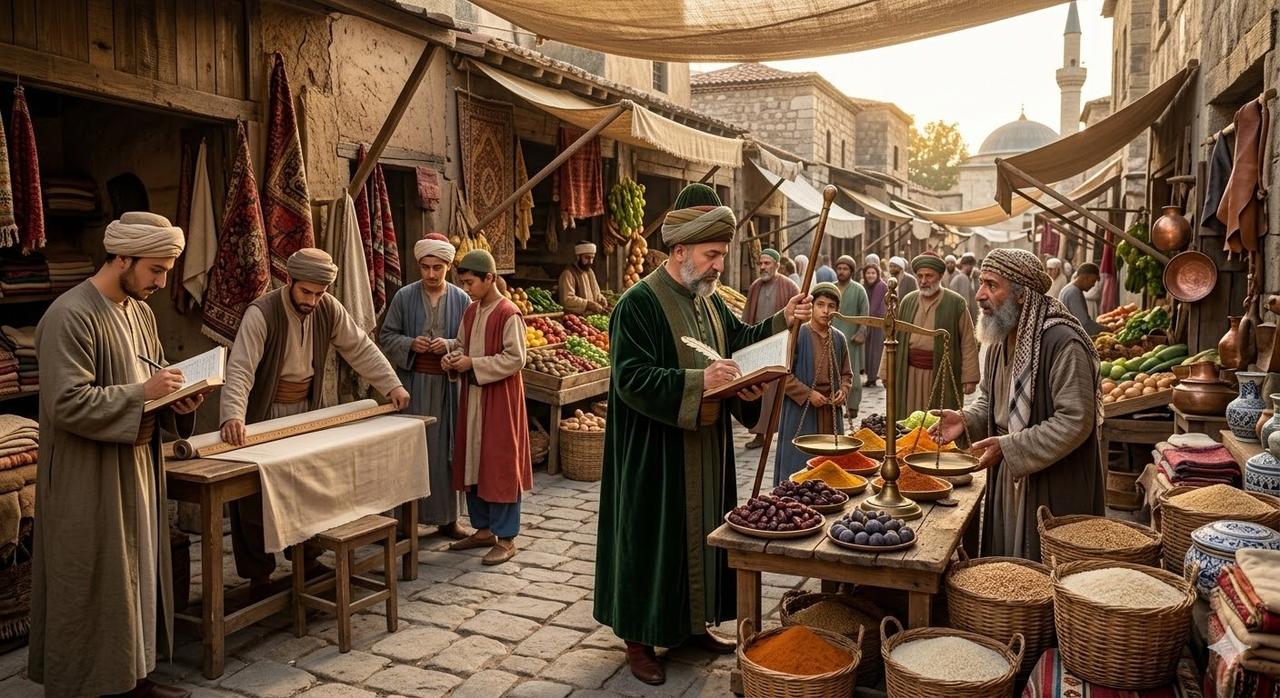
The duties of the muhtasib were not limited to superficial notions of "general morality"; they encompassed concrete legal actions with tangible penalties. In scope, the muhtasib was distinct from the judge: he could not adjudicate complex legal disputes requiring testimony, evidence, or oaths. He intervened only in cases of open and evident violations where evidence was immediately observable, applying the principle of "justice on the spot." His specific duties included:
The muhtasib had the authority to determine and impose penalties for violations he observed. Initially, he would explain the wrongdoing and offer counsel. If the offense was repeated or serious, he would escalate to reprimands, destruction of tools used in the violation (e.g., counterfeit scales), and other sanctions. Depending on the severity of the offense, the muhtasib could personally impose punishments including imprisonment, public shaming, permanent banishment from the trade, physical chastisement (beating), and exile. However, he had no authority to impose the death penalty or punishments prescribed under Islamic law for hudud crimes (e.g., murder); such cases were referred to the judge, and the muhtasib’s role was limited to enforcing the judge’s rulings.
Akman, Ahmet, and Mustafa Ünal. "Regülasyon Kurumu Olarak Hisbe." KHM - Kıbrıs Hukuk Mecmuası 5, no. 1 (2025): 303-327. Accessed March 18, 2026. https://dergipark.org.tr/tr/download/article-file/4578773
Akça, Haşim, and Oğuzhan Bozatlı. "Hisbe: İslam Ekonomisinde Düzenleyici ve Denetleyici Otorite." Rekabet Dergisi, no. 69 (2018): 38-65. Accessed March 18, 2026. https://dergipark.org.tr/tr/download/article-file/1476593
Doğan, Fatma Sümeyra. "Yerinde Adalet Kurumu: Hisbe Teşkilatı." TIDSAD - Türk & İslam Dünyası Sosyal Araştırmalar Dergisi 2, no. 5 (December 2015): 331-338. Accessed March 18, 2026. https://makale.isam.org.tr/server/api/core/bitstreams/ba49a494-2832-49ad-b1f9-a5fceab54ed1/content
Duran, Ahmet. "İslâm Hukukunda Sosyal Terbiye ve Kontrol Kurumu Olarak Hisbe Müessesesi." EKEV Akademi Dergisi 19, no. 64 (Fall 2015): 9–30. Accessed March 18, 2026. https://makale.isam.org.tr/server/api/core/bitstreams/b90cab5b-7c37-4375-82de-77c35847a659/content
Sarı, Cahide Gülnur. "Hisbe Teşkilatı." In Genç Hukukçular Hukuk Okumaları, pp. 319-328. Ankara: Türkiye Barolar Birliği Yayınları, 2008. Accessed March 18, 2026. https://www.muharrembalci.com/hukukdunyasi/makaleler/birikimlerIII/134.pdf
[1]
Müslim, İmân 165; Tirmizî, Büyû’ 72, cited in Ahmet Duran, "İslâm Hukukunda Sosyal Terbiye ve Kontrol Kurumu Olarak Hisbe Müessesesi," EKEV Akademi Dergisi 19, no. 64 (2015): 20. Access date: April 15, 2026. https://makale.isam.org.tr/server/api/core/bitstreams/b90cab5b-7c37-4375-82de-77c35847a659/content.
[2]
Ahmet Akman and Mustafa Ünal, "Regülasyon Kurumu Olarak Hisbe," KHM 5, no. 1 (2025): 310, 313; Duran, "İslâm Hukukunda Sosyal Terbiye," 20; Cahide Gülnur Sarı, "Hisbe Teşkilatı," Genç Hukukçular Hukuk Okumaları 3 (2009): 332. Access date: April 30, 2026. https://dergipark.org.tr/tr/download/article-file/4578773. https://makale.isam.org.tr/server/api/core/bitstreams/b90cab5b-7c37-4375-82de-77c35847a659/content. https://www.muharrembalci.com/hukukdunyasi/makaleler/birikimlerIII/134.pdf.
[3]
Duran, "İslâm Hukukunda Sosyal Terbiye," 21. Access date: April 30, 2026. https://makale.isam.org.tr/server/api/core/bitstreams/b90cab5b-7c37-4375-82de-77c35847a659/content.
[4]
Fatma Sümeyra Doğan, "Yerinde Adalet Kurumu: Hisbe Teşkilatı," TİDSAD 2, no. 5 (2015): 334; Sarı, "Hisbe Teşkilatı," 328. Access date: April 30, 2026. https://makale.isam.org.tr/server/api/core/bitstreams/ba49a494-2832-49ad-b1f9-a5fceab54ed1/content. https://www.muharrembalci.com/hukukdunyasi/makaleler/birikimlerIII/134.pdf.
[5]
Duran, "İslâm Hukukunda Sosyal Terbiye," 23-24. Access date: April 30, 2026. https://makale.isam.org.tr/server/api/core/bitstreams/b90cab5b-7c37-4375-82de-77c35847a659/content.
[6]
Duran, "İslâm Hukukunda Sosyal Terbiye," 24; Sarı, "Hisbe Teşkilatı," 329; Doğan, "Yerinde Adalet Kurumu," 334. Access date: April 30, 2026. https://makale.isam.org.tr/server/api/core/bitstreams/b90cab5b-7c37-4375-82de-77c35847a659/content. https://www.muharrembalci.com/hukukdunyasi/makaleler/birikimlerIII/134.pdf. https://makale.isam.org.tr/server/api/core/bitstreams/ba49a494-2832-49ad-b1f9-a5fceab54ed1/content.
[7]
Duran, "İslâm Hukukunda Sosyal Terbiye," 22-23. Access date: April 30, 2026. https://makale.isam.org.tr/server/api/core/bitstreams/b90cab5b-7c37-4375-82de-77c35847a659/content.
[8]
Duran, "İslâm Hukukunda Sosyal Terbiye," 23. Access date: April 30, 2026. https://makale.isam.org.tr/server/api/core/bitstreams/b90cab5b-7c37-4375-82de-77c35847a659/content.
[9]
Akman and Ünal, "Regülasyon Kurumu," 311-312; Sarı, "Hisbe Teşkilatı," 330. Access date: April 30, 2026. https://dergipark.org.tr/tr/download/article-file/4578773. https://www.muharrembalci.com/hukukdunyasi/makaleler/birikimlerIII/134.pdf.
[10]
Akman and Ünal, "Regülasyon Kurumu," 314. Access date: April 30, 2026. https://dergipark.org.tr/tr/download/article-file/4578773.


Historical Development and Differences Among States
Early Islamic Period: Prophet Muhammad and the Four Caliphs
Umayyads, Abbasids, and Andalusian Practices
Seljuk State
Development of Hisbe in the Ottoman State
Qualifications, Appointment Procedure, and Financing of the Muhtasib
Appointment Procedure and Administrative Status
Income and Financial Structure
Scope of Duties and Responsibilities
Market, Trade, and Standard Regulation
Urban Planning and Construction Oversight
Punishment Authority (Ta’zir)