

This article was automatically translated from the original Turkish version.
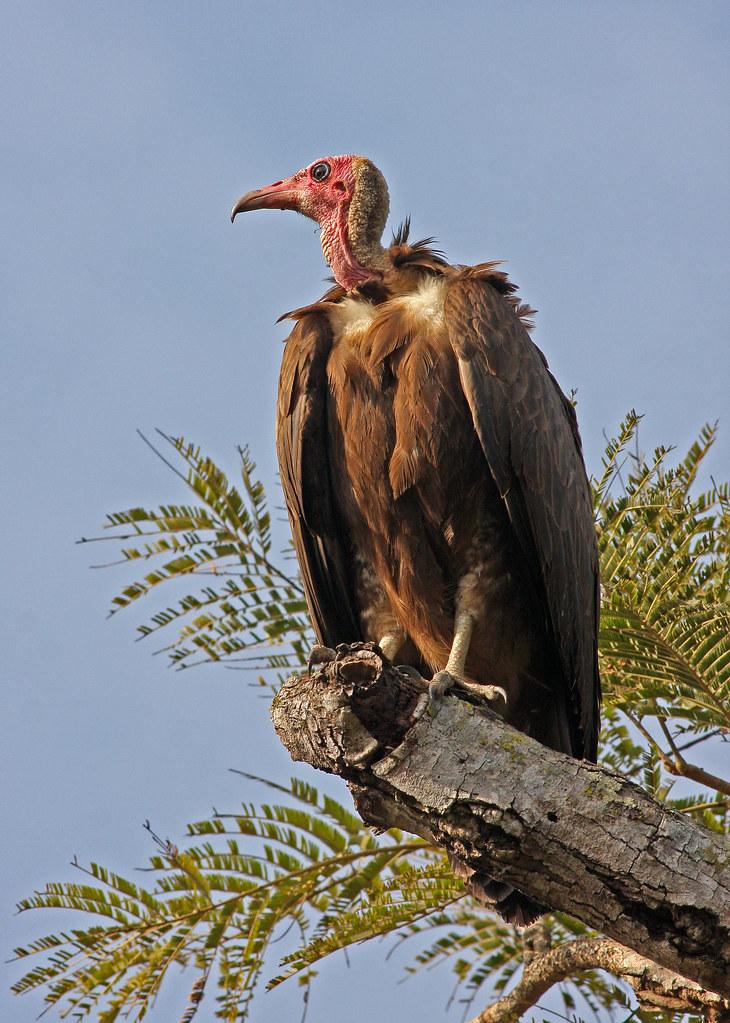
The Hooded Vulture is a stocky vulture measuring 67–70 cm in length, with brownish plumage, a featherless head, and a bare face. Its feathers appear disheveled and scruffy. Juveniles have a pale blue face and a darker brown head covering.
This species has a wide geographic distribution across Sub-Saharan Africa, extending from West Africa through East Africa to South Africa. Its total range is estimated at approximately 22,500,000 km².
Habitat preferences include forest edges, open savannas, grasslands, deserts, and human settlements. It can occur at high densities in areas where it is tolerated by humans. It can be observed at elevations up to 4,000 meters, but its highest densities are typically found below 1,800 meters.
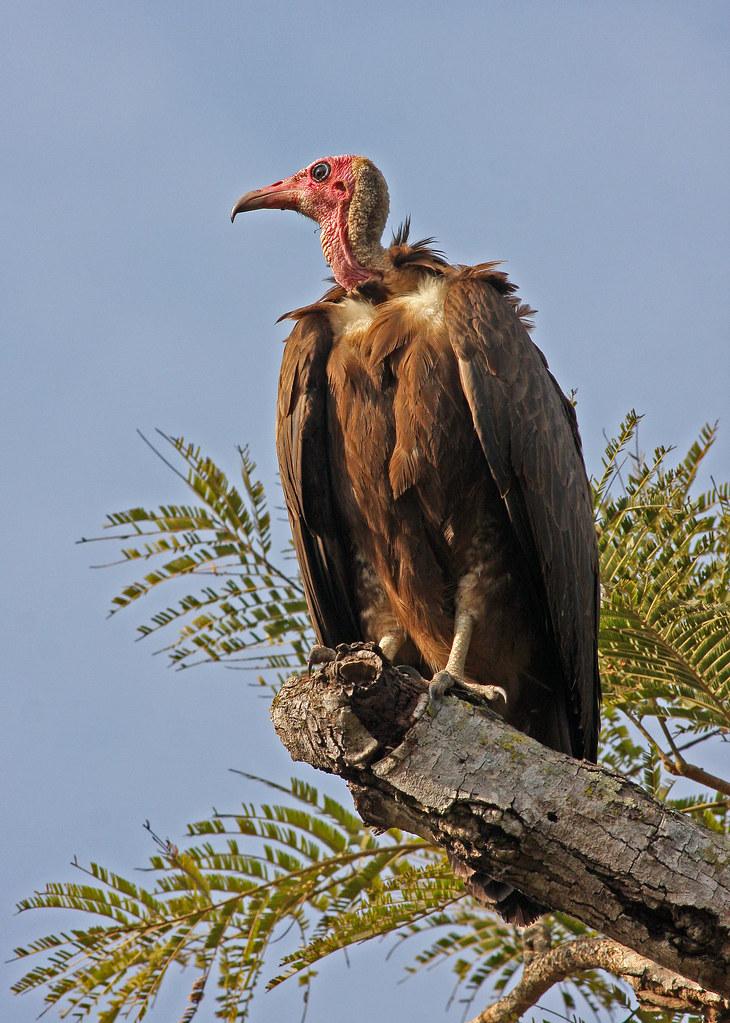
Necrosyrtes Monachus (Hooded Vulture) Appearance (Flickr)
The global estimated total population is approximately 197,000 individuals, with mature individuals estimated at around 131,000. However, these numbers are believed to have declined dramatically over the past decade. In some regions of West Africa, the species has nearly disappeared entirely.
The Hooded Vulture is classified as Critically Endangered (CR) on the IUCN Red List. Major threats include:
Hooded Vultures breed throughout the year, but breeding seasons vary by region:
In a single-egg clutch, the incubation period lasts 46–54 days, and the fledging period ranges from 80–130 days. After leaving the nest, juveniles require parental care for 3–4 months. The age at first breeding is typically between 4 and 5 years.
About Necrosyrtes Monachus (Hooded Vulture) (Wildvisions)
This species is listed under CITES Appendix II and CMS Appendices I and II. It is also included in the Multispecies Action Plan (MsAP) for the conservation of African-Eurasian vultures.
Recommended conservation measures include:

No Discussion Added Yet
Start discussion for "Hooded Vulture (Necrosyrtes monachus)" article
Range and Habitat
Population and Trend
Threats
Biology and Reproduction
Use and Trade
Conservation Status and Recommended Measures