


This article was automatically translated from the original Turkish version.
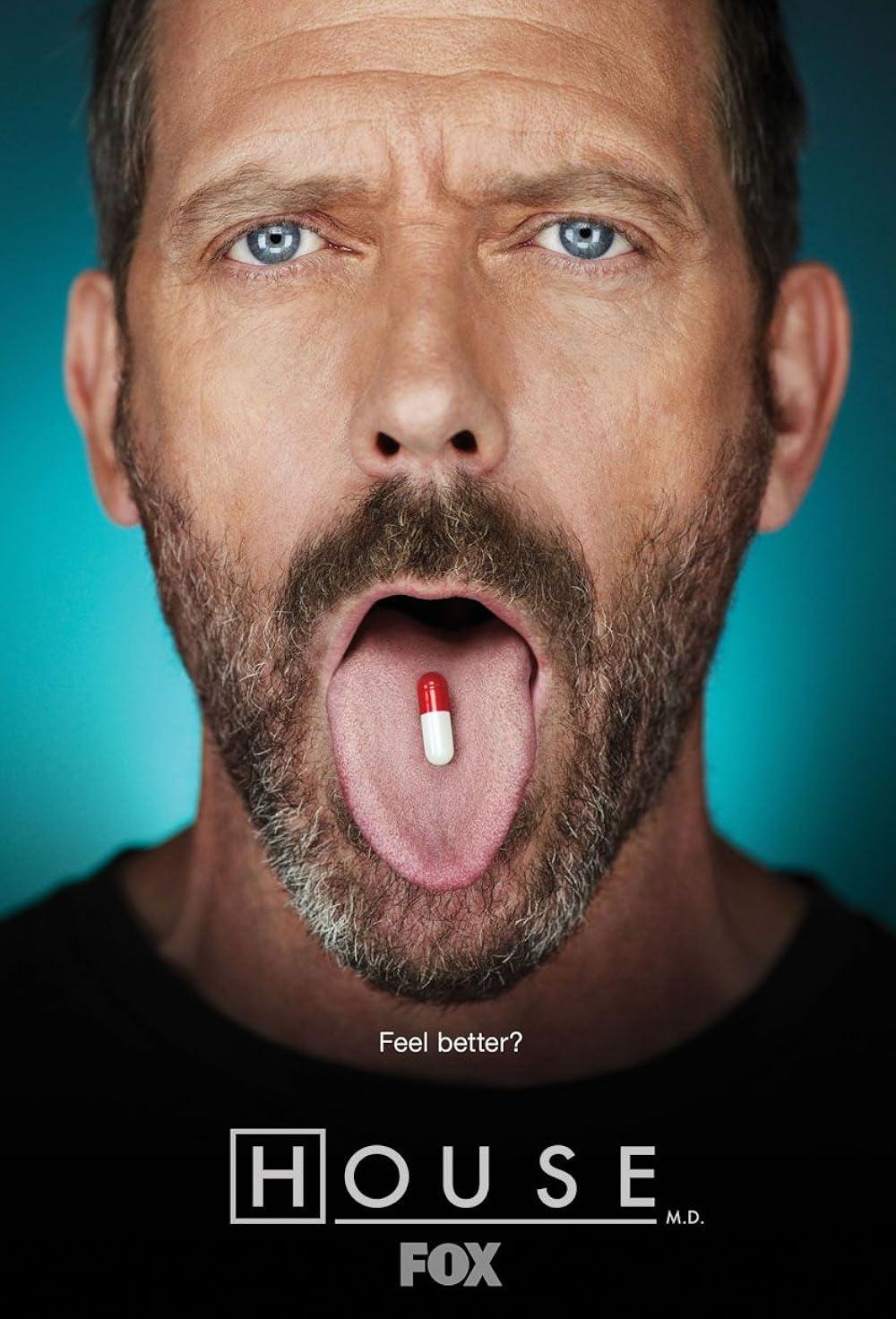
House M.D.
Screenwriters | Peter Blake David Shore (creator and head writer of the series) Lawrence Kaplow Sara Hess | ||||||||
|---|---|---|---|---|---|---|---|---|---|
Genre | Crime (focused on medical diagnosis) Medical Drama Gizem | ||||||||
Creators | David Shore | ||||||||
First Release Date(s) | 16 November 2004 | ||||||||
Publisher | FOX | ||||||||
Years of Publication | 2004–2012 | ||||||||
Actor | Hugh Laurie (Dr. Gregory House) Lisa Edelstein (Dr. Lisa Cuddy) Omar Epps (Dr. Eric Foreman) Robert Sean Leonard (Dr. James Wilson) | ||||||||
Number of Episodes | 177 Episodes | ||||||||
Number of Seasons | 8 Seasons | ||||||||
Theme | Intelligence and Analytical Thinking Medical Ethics and Diagnostic Process Human Psychology and Character Conflicts Human Nature and Flawedness Power and Authority Struggles | ||||||||
House M.D., is an American medical drama television series that aired between 2004 and 2012, starring Hugh Laurie in the lead role. The series centers on Dr. Gregory House, an unconventional diagnostician who solves complex medical cases using unorthodox methods. Blending themes of medicine, ethics, scientific reasoning and human psychology, the production is an example of the anti-hero narrative in television history.
House M.D. focuses on a diagnostic team that solves rare medical cases in each episode. The format is primarily procedural, with each episode treating a single case through diagnosis and treatment. However, character development and interpersonal conflicts form the backbone of the series.
The main character, Dr. House, draws attention through his Vicodin addiction, lack of empathy and disregard for rules. Yet he solves seemingly unsolvable cases thanks to his unwavering commitment to scientific reasoning and exceptional analytical intelligence. What he considers “right” often conflicts with traditional medical ethics.
A scene from the series—Season 2 Episode 7 "Hunting" (Youtube-House M.D.)
Hugh Laurie – Dr. Gregory House: The lead character of the series. A socially awkward, sarcastic and Vicodin-addicted diagnostic expert with extraordinary diagnostic abilities. He walks with a cane, constantly breaks rules and is known for the phrase “Everybody lies.”
Robert Sean Leonard – Dr. James Wilson: House’s closest friend. He is the head of the oncology department. His moral and empathetic nature contrasts sharply with House’s; he serves as House’s conscience.
Lisa Edelstein – Dr. Lisa Cuddy: The administrator of Princeton-Plainsboro Teaching Hospital. She attempts to assert authority over House; over time, an emotional bond develops between them.
Omar Epps – Dr. Eric Foreman: A neurologist and one of House’s first team members. His rule-abiding and serious demeanor often puts him at odds with House.
Jesse Spencer – Dr. Robert Chase: An intensive care specialist and surgeon. Initially compliant and reserved, he gradually evolves into a more independent character.
Jennifer Morrison – Dr. Allison Cameron: An immunologist. She is compassionate and idealistic, frequently opposing House’s unethical behavior.
Dr. Remy "Thirteen" Hadley – Olivia Wilde:An internist who carries the gene for Huntington’s disease. She stands out for her mysterious personality and ethical dilemmas.
Dr. Chris Taub – Peter Jacobson:A plastic surgeon. He adds depth to the series through his practical intelligence and personal struggles.
Dr. Lawrence Kutner – Kal Penn: A curious, creative and energetic physician.
Dr. Martha Masters – Amber Tamblyn:A young, intelligent and morally grounded medical student.
Dr. Chi Park – Charlyne Yi:A neurologist; a quiet, shy but intelligent character.
Many episodes of the series were directed by Greg Yaitanes. Yaitanes is recognized as one of the directors who shaped the show’s visual language and pacing. Other directors, including Deran Sarafian and Hugh Laurie, who have directed since the early seasons, have contributed to the narrative rhythm of the series. David Shore is the creator and head screenwriter. The screenplay draws inspiration from classic detective narratives, particularly shaped by Arthur Conan Doyle’s Sherlock Holmes character. Each episode follows a mystery structure centered on the diagnostic process, with dramatic resolutions achieved through scientific reasoning. The narrative is built around ethical dilemmas within the medical world, the darker aspects of human nature, and the conflict between individual morality and institutional functioning. As the psychological layers of the characters deepen over time, Dr. Gregory House’s internal struggles become central to the story. As the script progresses, the motivations and emotional resolutions of the characters become as vital to the narrative as the medical diagnoses themselves.
House M.D. primarily follows a classical narrative structure but stands out formally through original storytelling techniques. The series has an episodic format: each episode focuses on an independent case, while ongoing character development and relational dynamics ensure continuity.
The narrative is generally structured in three stages: the patient’s presentation with a mysterious medical problem, the conflicts and misdirections during the diagnostic process, and the final resolution with a dramatic outcome.
This structure is based on the “investigation” logic borrowed from detective fiction. Each medical case is structured like solving a crime; Dr. House functions as a modern Sherlock Holmes. Viewers are encouraged to solve the case step by step alongside House.
The series frequently uses flashbacks and visual metaphors to convey both medical diagnostic processes and the characters’ inner worlds. In particular, House’s mental analysis is sometimes enhanced by visual abstractions that enrich the on-screen storytelling.
Moreover, the narrative is character-driven. Dr. House’sinternal conflicts, moral questioning and addiction create a constant dramatic depth beneath the events.
The series frequently raises ethical issues through its medical cases. Topics such as patient privacy, informed consent and experimental treatments are scrutinized through Dr. House’s decisions. Additionally, the production contains indirect critiques of the modern healthcare system. House’s defiance of traditional authority figures transforms the series into a systemic critique.
House M.D. is one of the medical dramas in television history known for its scientific accuracy. The scripts are inspired by real cases and medical literature. At the same time, by moving beyond the classic “good doctor” narrative, it introduced a new kind of complexity to the genre by presenting viewers with a multifaceted anti-hero.
House M.D. premiered in 2004 on the American television network FOX and ran for eight seasons until its finale in 2012. The unusual personality of the lead character, Dr. Gregory House, played a key role in generating widespread cultural and medical interest in the series.
During its run, the series received nominations for prestigious awards and won numerous accolades on platforms such as the Emmy Awards, Golden Globe Awards and People’s Choice Awards. Hugh Laurie’s performance as Dr. House received widespread acclaim. Culturally, House M.D. brought themes such as scientific reasoning, ethical dilemmas and personal obsessions to broad audiences through television storytelling. Academically, House M.D. has been studied under topics such as medical ethics, scientific rationality, conflict with authority, and media representation of personality disorders, and has been used as course material across various disciplines.
2005: Outstanding Lead Actor in a Drama Series (Nomination) – Hugh Laurie
2005: Outstanding Directing for a Drama Series (Won) – Greg Yaitanes
2007: Outstanding Makeup and Cinematography (Won)
2006: Best Actor in a Television Series – Drama (Won) – Hugh Laurie
2007: Best Actor in a Television Series – Drama (Won) – Hugh Laurie
The series was nominated for the Golden Globe five times in total.
Won the award for Favorite Drama Series five times between 2006 and 2011.
Hugh Laurie was repeatedly chosen as Favorite TV Male Actor.
2007: Outstanding Performance by a Male Actor in a Drama Series (Nomination) – Hugh Laurie
2009: SAG Award (Won)
2005: House M.D. was honored with this prestigious award for successfully fulfilling television’s public service of high-quality storytelling.

Dizideki Oyuncular (TV Time)
The Turkish adaptation of the American series House M.D., titled Hekimoğlu, aired on Kanal D between 2019 and 2021. Timuçin Esen portrayed the lead role of Dr. Ateş Hekimoğlu, the character equivalent to Dr. Gregory House. The adaptation largely remained faithful to the original series’ structure, while characters, settings and certain social themes were reimagined according to Türkiye’s cultural context.
Broadcast Years: 2019–2021
Broadcast Channel: Kanal D
Lead Role: Timuçin Esen (Dr. Ateş Hekimoğlu)
Director: Hakan Kırvavaç (Ketche)
Screenplay: Banu Kiremitçi Bozkurt (adaptation)
Production Company: Karga Seven Pictures
Dr. Gregory House → Dr. Ateş Hekimoğlu (Timuçin Esen)
Dr. James Wilson → Orhan Yavuz (Okan Yalabık)
Dr. Lisa Cuddy → İpek Tekin (Ebru Özkan)
Like House, Dr. Ateş Hekimoğlu uses a cane, possesses a sarcastic intellect and adopts an anti-system stance. Medical cases are largely drawn from the original script but restructured within the context of Türkiye’s healthcare system. Core themes of House M.D.—ethical dilemmas, conflict with authority and intellectual problem-solving during diagnosis—are preserved in the adaptation.
Hekimoğlu received positive reviews from both audiences and critics, drawing attention for its strong performances and successful adaptation style.

House M.D.
Screenwriters | Peter Blake David Shore (creator and head writer of the series) Lawrence Kaplow Sara Hess | ||||||||
|---|---|---|---|---|---|---|---|---|---|
Genre | Crime (focused on medical diagnosis) Medical Drama Gizem | ||||||||
Creators | David Shore | ||||||||
First Release Date(s) | 16 November 2004 | ||||||||
Publisher | FOX | ||||||||
Years of Publication | 2004–2012 | ||||||||
Actor | Hugh Laurie (Dr. Gregory House) Lisa Edelstein (Dr. Lisa Cuddy) Omar Epps (Dr. Eric Foreman) Robert Sean Leonard (Dr. James Wilson) | ||||||||
Number of Episodes | 177 Episodes | ||||||||
Number of Seasons | 8 Seasons | ||||||||
Theme | Intelligence and Analytical Thinking Medical Ethics and Diagnostic Process Human Psychology and Character Conflicts Human Nature and Flawedness Power and Authority Struggles | ||||||||
No Discussion Added Yet
Start discussion for "House M.D. (TV Series)" article
Plot and Thematic Structure
Cast
Main Cast
Original Diagnostic Team (Seasons 1–3):
Post-Season 4 Team Members
Directors and Screenwriting
Narrative Technique
Themes and Ethical Questions
Contribution to the Medical Drama Genre
Broadcast and Cultural Impact
Notable Awards
Primetime Emmy Awards
Golden Globe Awards
People’s Choice Awards
Screen Actors Guild (SAG) Awards
Peabody Award
Hekimoğlu: The Turkish Adaptation of House M.D.
Cast
Features of the Adaptation
Reception and Success of the Adaptation