
This article was automatically translated from the original Turkish version.
It was July 15, 2018. I was thirteen years old, not yet fourteen. Prishtina was hosting a march to commemorate the second anniversary of the July 15 coup attempt in Türkiye. Civilians had stood up to tanks that night, and many lives had been lost. The march was held to honor those martyrs and to keep democratic values alive. I was there with an NGO where I had been volunteering at the time.
I had no expectations that day. I was simply there, present like the other volunteers, helping out. And then I saw her.
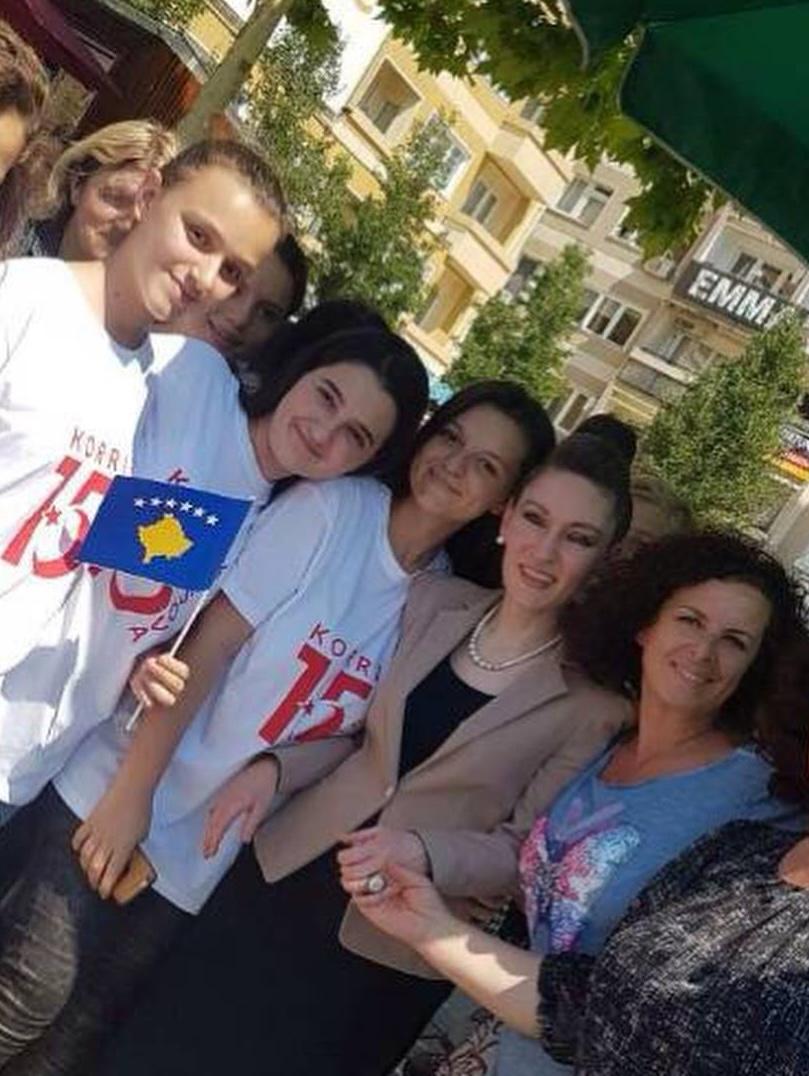
Blinera, Me, My Sister, and the Turkish Ambassador, July 15, 2018, Prishtina (Photo: Erblina Bunjaku)
A friend of mine, Blinera, was speaking with Kıvılcım Kılıç, Türkiye’s then ambassador to Prishtina. She was an elegant, self-assured woman who carried out her duties with great grace. They were speaking Turkish. I had never heard Turkish before, but in that moment, as I listened to their conversation, something inside me changed. I cannot explain how, but there was a calmness in her voice. It was soft, like music that had not yet begun to play but that you already knew you would love.
At that age, my understanding of ambassadors was very simple: they were people who represented a country. I did not understand their political role, of course. All I knew was this: if an ambassador was beautiful, then the people of her country must be beautiful too. I still remember the style of Kıvılcım Hanım’s hair. And that was the very first thought that crossed my mind that day: “Turkish people are very beautiful.” 😄
I turned to my friend and asked how she had learned Turkish. She told me she had learned it from TV series. That was it—so simple.
My friend had learned from TV series. It sounded easy. So I tried it too.
I watched one episode. It did not work.
I need to clarify: it was not because I am impatient. It was simply that the series I watched did not capture my interest, and passive listening was not my way of learning. As someone who loves mathematics, I have always preferred active engagement—creating something, solving problems. In math, you do not sit and wait; you think, apply, solve. Watching a TV series was the opposite: you just sit and watch, following scene by scene. My mind was not suited to that. One episode was enough; I gave up.
But my desire to learn the language did not fade. On the contrary, it grew stronger.
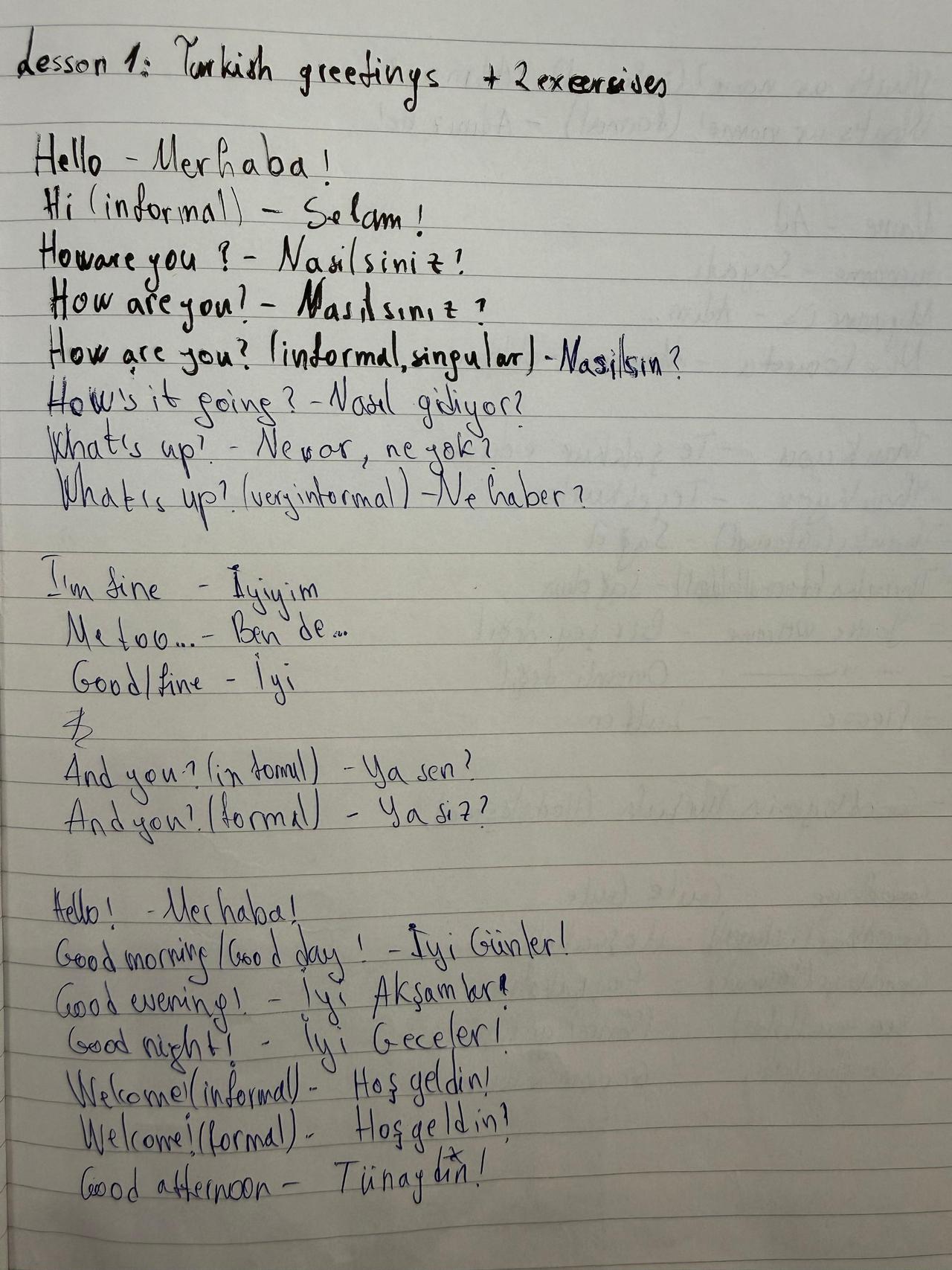
My First Notebook for Learning Turkish, 2018 (Photo: Erblina Bunjaku)
At the time, I loved mathematics very much. Perhaps that is why my mind always sought systems, order, logic. If TV series did not work, I would find my own method.
I bought a notebook. I still keep it today.
I opened the first page and began writing: “Good morning. Good day. Good evening. Good night.” I wrote every greeting in Turkish and noted its English translation beside it. Then I began word by word. Every new word I wrote in my notebook, matched it with its English equivalent, and tried to memorize it.
I do not particularly enjoy memorization, but when I must, I find a way. I looked for patterns among the words: their sounds, structures, similarities. Just as a mathematical formula feels logical to me, I sought that same logic in the language.
But I had a major problem: no one to practice with.
No one in my family spoke Turkish, then or now. I did not see Blinera often—only on special occasions. So I knew the words, but when forming sentences, something was missing. I had vocabulary, but no voice to connect them. That is when I turned to music.
I had words, but no voice to connect them. So I turned to music.
I began listening to Turkish songs. In the beginning, the songs I listened to most were Ogün Sanlısoy’s Saydım and Güliz Ayla’s Olmazsan Olmaz.
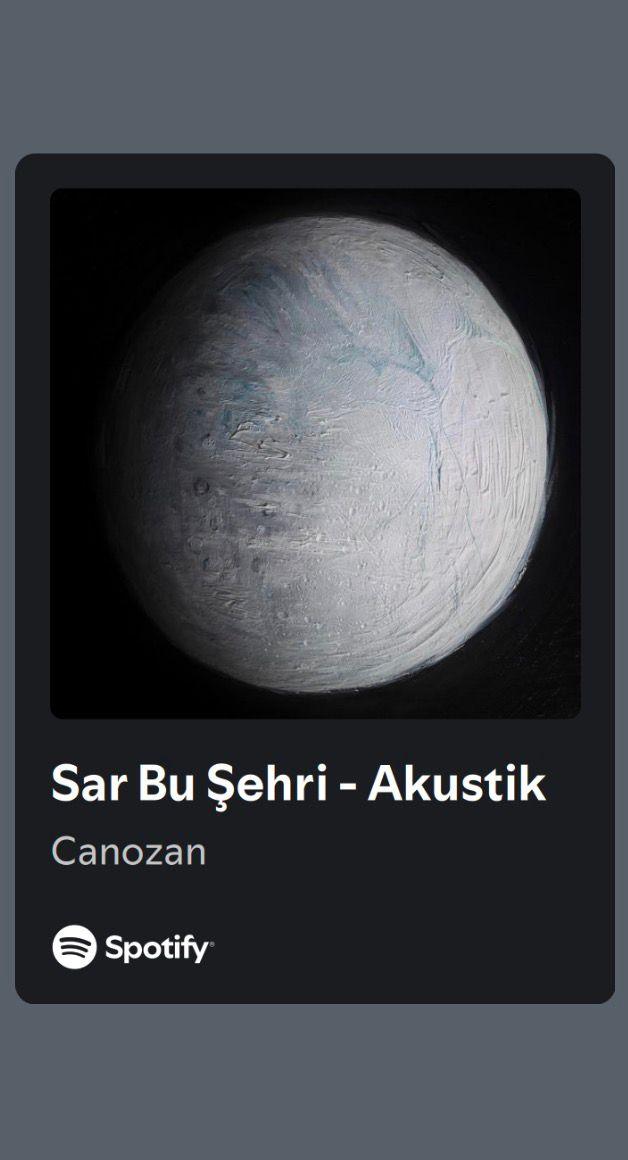
My Favorite Turkish Song (Photo: Screenshot)
At first, I only heard the melody; I did not understand the lyrics. But somehow, they sounded pleasant to my ears. Then I thought to myself: “Why not listen and learn at the same time?” I found the lyrics, translated them word by word into Albanian, and wrote them in my notebook. Then I played the song again, listening while following the words. Over and over and over again.
Unconsciously, I memorized. Unconsciously, I learned pronunciation. Because when you memorize a song, you do not force yourself—you sing it simply because you love it. And one day, I caught myself humming in Turkish. My family, of course, had no idea what I was saying.
Music was not just a learning tool for me—it was a window into Turkish culture. The songs carried emotions, stories, a way of life. And I was drawn into that world, slowly, without even realizing it.
As the years passed, my taste in music deepened just as my Turkish did. Today, some of my most listened-to artists include Barış Manço, Canozan, Dedublüman, Mabel Matiz, maNga, Sertab Erener, and Melike Şahin. This journey, which began with emotional ballads, led me to discover a far broader and richer world of Turkish music. I believe that when you truly learn a language, you begin to hear its music with a different ear.
But there was still something missing: real conversation. I knew the words, I had memorized the songs, but without someone speaking Turkish to me, I could not test my sentences. I waited for an opportunity to practice. And that opportunity came three years later.
It was summer 2021. I saw an announcement on the bulletin board at the Yunus Emre Institute in Prishtina: a youth camp in Istanbul. It was open to young women from Kosovo. I applied. I was accepted.
Until then, I did not know whether what I had learned would work in real life. For three years, I had filled a notebook with words, pages of translated song lyrics, and sentences that had never been tested. And now, I would spend five days among real Turkish people, in the very heart of Türkiye.
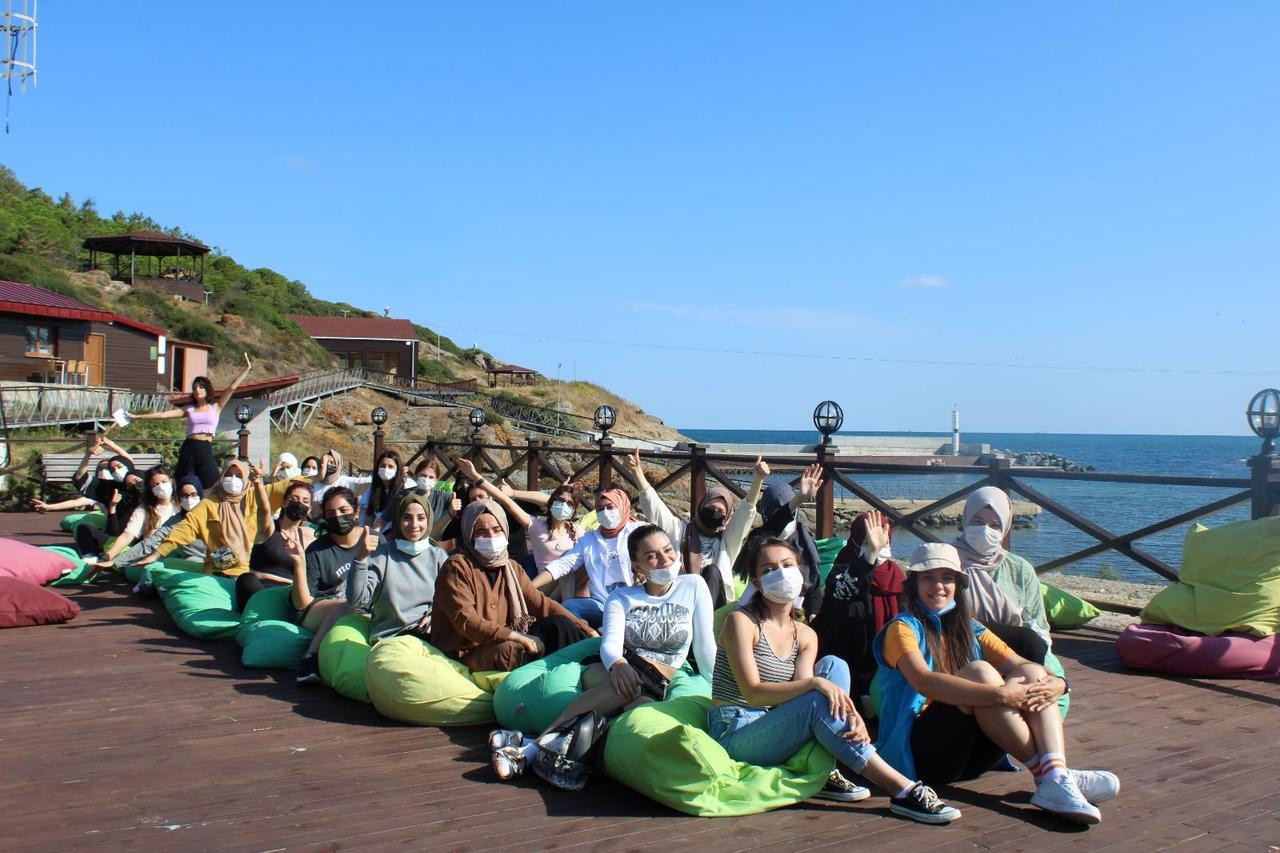
Our Group and Our Teacher Nazife Hoca, Istanbul, August 2021 (Photo: Erblina Bunjaku)
When I took my first step in Istanbul, I felt something strange inside me. I was in a foreign city, far from my family, yet I did not feel foreign. The girls I met were so warm, so sincere, that I felt as if I had known them for years. At that camp, I realized that Turkish people truly are kind-hearted. I remembered the ambassador’s grace and saw that I had not been wrong.
I spoke Turkish aloud for the first time there. Incomplete sentences, wrong words, sometimes laughter… But no one judged me. On the contrary, they encouraged me. And over those five days, my language opened up, slowly.
The camp lasted only five days. But when it was time to leave, even though I missed my family and even though I am someone who loves returning home, I did not want to go. I thought to myself: “Just one more day.” Just one more day.
Istanbul whispered something to me for the first time then. As if to say, “I am waiting for you.” And I knew then that this was not a farewell—just a pause.
My connection to Turkish culture was not only about language and music. There was also food. And in this regard, the link between Albanian and Turkish cuisine never surprised me, because since childhood I had known those flavors—I simply did not know their Turkish names.
My mother makes incredible grape-leaf rolls. Filled with meat and rice, wrapped in vine leaves. We call them sarma; Turks do too. There is also dolma—peppers stuffed with minced meat and rice, cooked with vegetables. When I first heard its Turkish name, I said to myself: “Ah, we eat this too!” And of course, baklava. Baklava is always part of everything: birthdays, weddings, holidays, even just while drinking tea. I think baklava is a universal language. And then there are street foods.
At the camp, I learned traditional dances. The first traditional song we heard was Erik Dalı, and from that moment it became one of my favorites—it still is. My friends Esma, Hacer, and Melike taught me the damat halay and the Candemir Ağa halay. Stories told through music, color, and movement. There was also kolbastı. I tried it with Merve and Burcu, but to be honest, it was a bit beyond my level. I wouldn’t recommend it to everyone, hahaha.
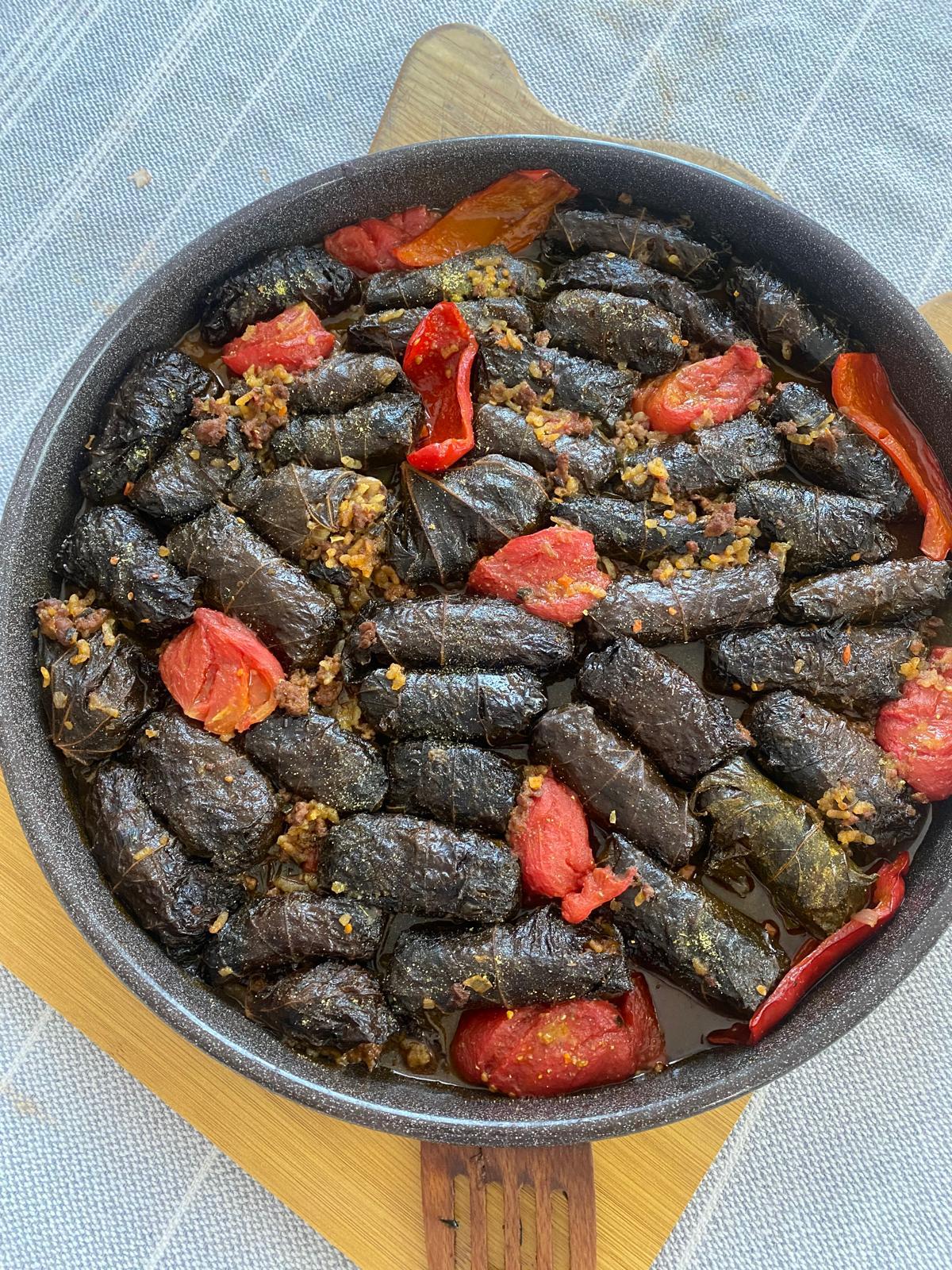
I Made Sarmas for the First Time on My Own, August 2024 (Photo: Erblina Bunjaku)
Our group’s teacher was Nazife Hoca, and I loved her deeply. One day, while visiting Miniatürk Park with other groups, we were waiting in line. In the midst of the crowd, I could not hold back and shouted loudly: “Our teacher is the best! Long live Nazife Hoca!!”
Nazife Hoca turned around and smiled, saying: “Erblina, thank you, I love you very much, but please don’t do that again—it wouldn’t be fair to the other teachers.” I will never forget that moment. And in those moments, I realized that culture is not only in books—it lives in hands, in feet, at the table. This bridge between Albanian and Turkish culture has always fascinated me.
In 2022, I graduated from the Mathematics High School in Prishtina, and I was going to Scotland to study mathematics at the University of Edinburgh. A new country, a new life, a new beginning.
But before every major journey, there was a tradition.
Kosovo—the day before leaving, since I always returned home during winter and summer breaks—my mother would go to the kitchen and make grape-leaf rolls. She would just make them, without saying a word, because she knew. She knew that this was my favorite dish. And every time I ate those rolls, I thought: “My Albanian mother is cooking a dish of Turkish origin, and I am going to Scotland.” How beautiful life is as a mixture.
My life in Edinburgh was wonderful, but Istanbul always lingered in the corner of my mind. As if something there remained unfinished. As if Istanbul had not yet fully let me go.
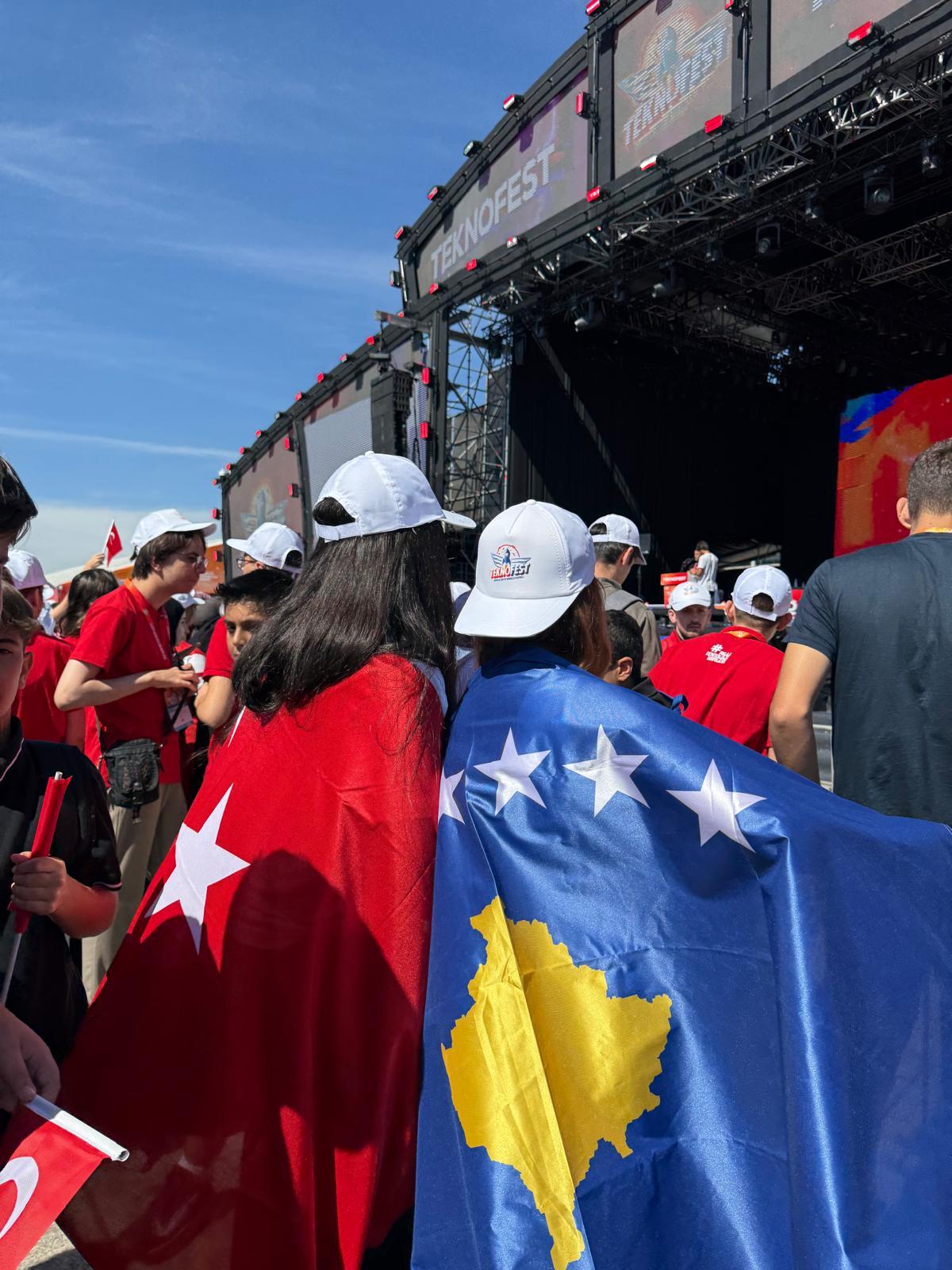
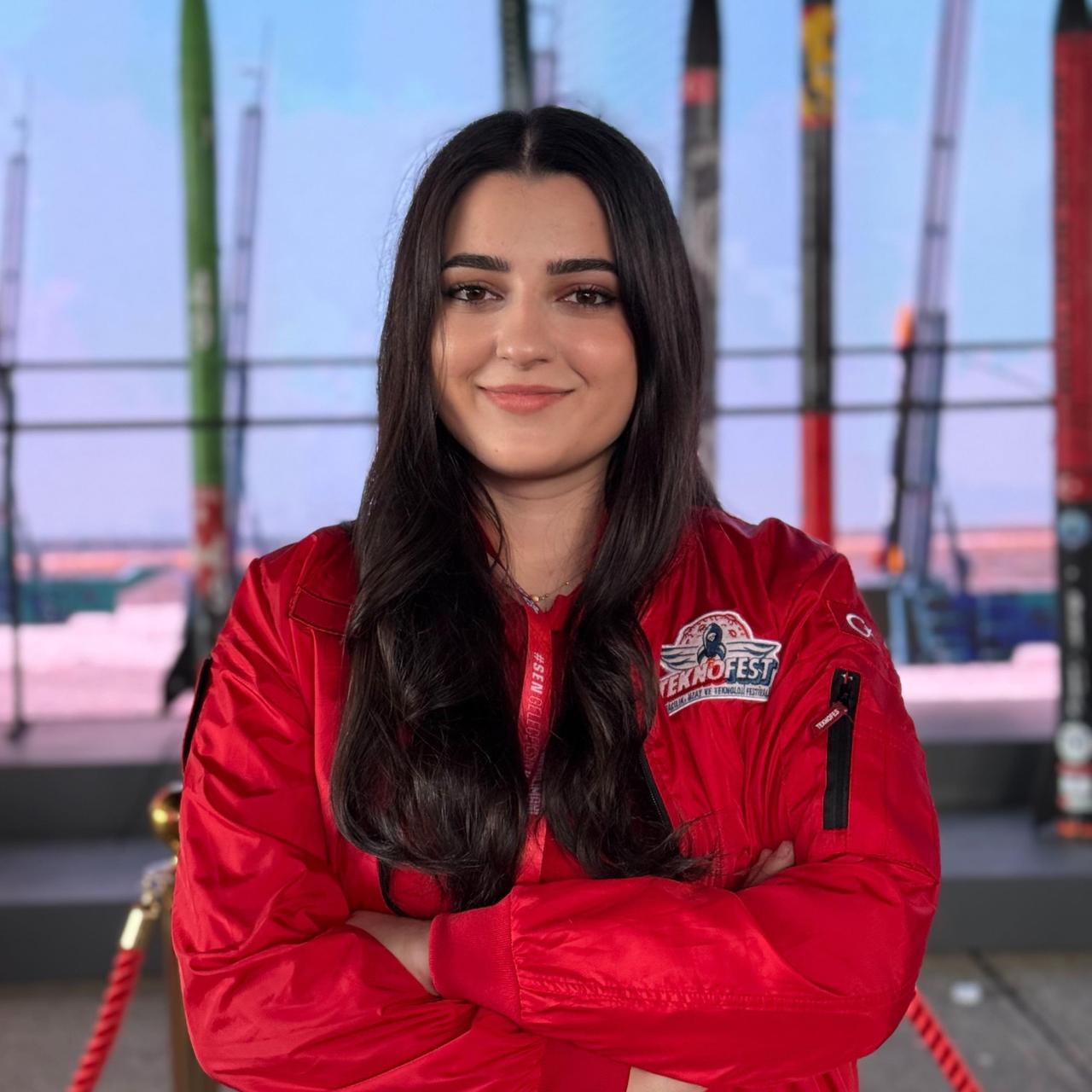
TEKNOFEST Istanbul Opening Ceremony, September 2025 (Photo: Erblina Bunjaku)
In 2024, during my second year of university, I applied to TEKNOFEST with a group of female friends from my NGO. TEKNOFEST is the world’s largest aerospace, technology, and innovation festival, and every year teams from all over the world participate. We passed the preliminary round. We were thrilled. But we were eliminated during the detailed report and presentation phase. I was disappointed, yes. But inside me, a voice said: “Not yet. But the time will come.” And it did.
When I learned in 2025 where TEKNOFEST would be held, I could not believe my eyes. Istanbul. The very city where everything had begun. The city where I had first truly spoken Turkish, first heard Erik Dalı, and danced halay with my friends.
This time, we made it to the finals—the first team from Kosovo to reach the TEKNOFEST finals. We competed in the Educational Technologies category, and I was the youngest advisor on our team. But the discussions I had during that process—with other advisors, most of whom were teachers teaching science to their teams—about education systems and our projects, were incredibly valuable to me. Age did not matter. Ideas were what mattered.
TEKNOFEST Istanbul 2025 will remain forever in my heart as one of the most special moments of my life. On the way back, traffic allowed us only five hours of sleep, but when we woke up, our energy was full—filled with technology, innovation, and new ideas. TEKNOFEST is not something you understand by watching on a screen. It must be lived. It must be felt.
And then there are the people I met there. Most of them were high school students who called me “teacher,” which still makes me smile. But age was never a barrier. We still talk, we still share. We even have a shared group chat on social media: “We Did It.” 🏆
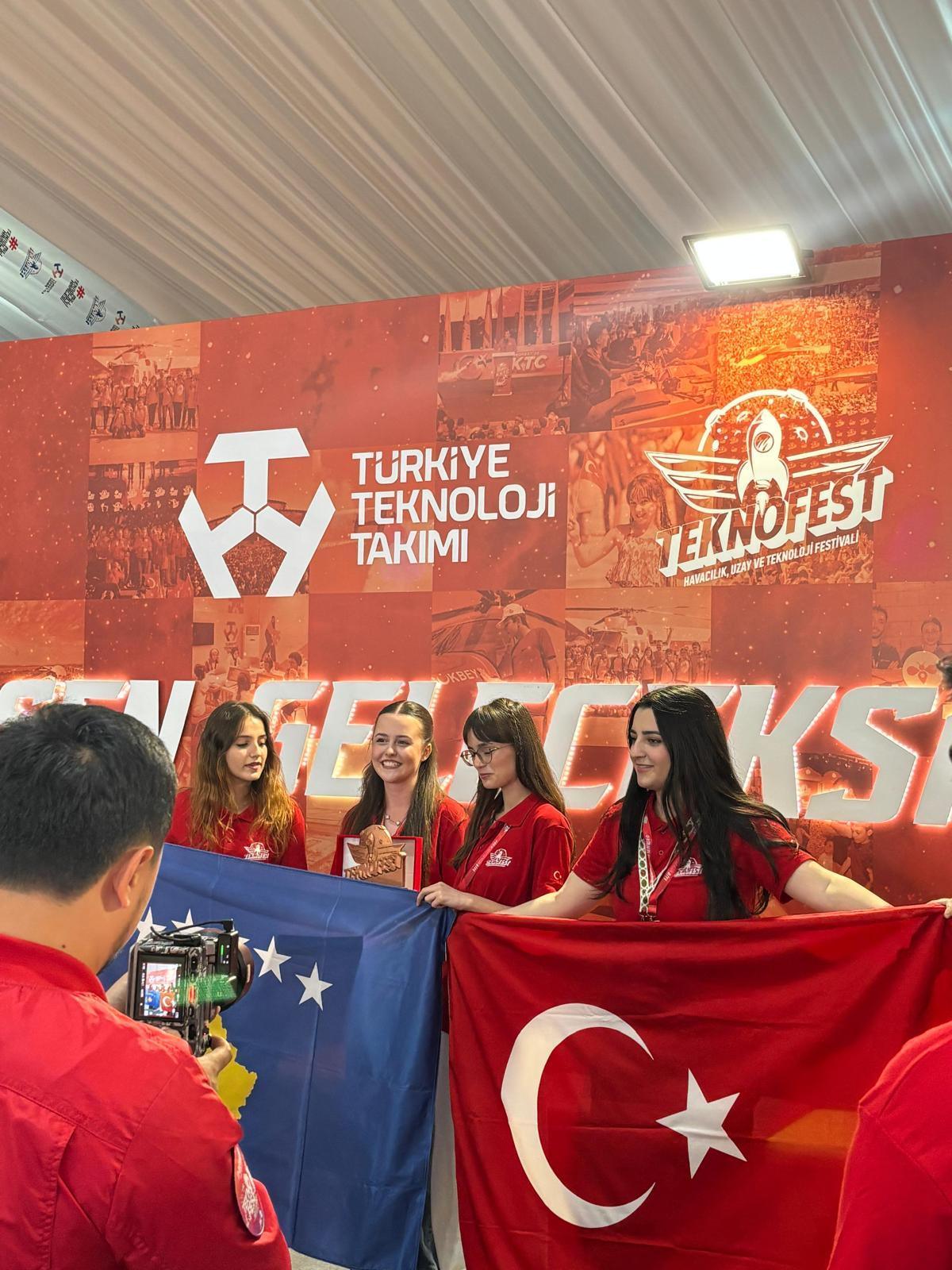
Our Last Photo Taken at Istanbul Teknofest 2025, September 2025 (Photo: Erblina Bunjaku)
In Edinburgh, one of my closest friends is a Turk from Istanbul: Hanzade. When we have picnics at Meadows, she cooks Turkish food—and believe me, those moments feel like a little Istanbul to me. In our friend group, there is a joke: whenever we talk about Türkiye, I react before Hanzade does. Sometimes I say to Hanzade: “Hanzade, I’ve passed through being Turkish so many times.” And she just smiles at me.
One day, I saw a video of Sertab Erener’s song “Olsun” on social media, right at the line: “I leave, Istanbul, you take it.” 【1】 I immediately sent it to my friend group and asked Hanzade: “Why does she say Istanbul is yours? I could never say that about anything.”
Hanzade explained the song’s story. I understood and respected it, but I cannot agree with Sertab Abla. My Istanbul will always be mine. I will never give it to anyone.
My other friends in Edinburgh are mostly Arab, European, and Asian. One day, my Asian friend turned to me and said: “You’re not Turkish, but it feels like parts of your soul are Turkish.” Maybe she was right. I don’t know. But I do know this: Istanbul has always called me toward good things. And every time I go, I bring back some of the most beautiful moments of my life.
Everything began in 2018. A thirteen-year-old girl, volunteering there, expecting nothing. And then a woman’s voice—elegant, calm, beautiful—changed everything.
I have not seen Ms. Kıvılcım Kılıç since that day. But if our paths ever cross again—wherever she is, whatever she is doing—I know exactly what I will do. I will walk straight to her and embrace her. And I will thank her. Because she did nothing. Not intentionally. She did not come to me and say, “Learn this language.” She gave no lesson, no speech. She was simply herself—a woman who did her job with love, grace, and excellence. And without realizing it, she changed the course of a thirteen-year-old girl’s life.
I learned a language—but I gained so much more. A culture, music, a table, a dance, a city, a feeling. And above all, people.
We always hear: “What matters is not the place, but the people.” I am lucky, because for me, both matter—both Istanbul and the Turkish people. I am not from Türkiye; I do not carry Turkish blood. But to love it this deeply—its language, its culture, its people, its table, its music—is, I believe, something very special. And for that, I am grateful. Truly.
Istanbul—right now I have no concrete plans, but one thing I am certain of: I will see you again. Many times. Because I feel it. I am bound to you. And this bond cannot be broken by any distance or any time.
"I leave, Istanbul, you take it"【2】? No, Sertab Abla.
My Istanbul will always be mine.
Also, the next time we meet in Istanbul, perhaps we will be at Ihlamur Kasrı. My name in Albanian means “scent of the linden blossom,” and I cannot pass by that place without visiting it.
Until we meet again, beautiful blue Istanbul. 💙
Erener, Sertab. "Olsun." Kırık Kalpler Albümü. GNL. 2016.
[1]
Sertab Erener, "Olsun," Kırık Kalpler Albümü, GNL, 2016.
[2]
Sertab Erener, "Olsun," Kırık Kalpler Albümü, GNL, 2016.
A Voice
Notebook and Pen
Music Taught Me
Istanbul, For the First Time
At the Table, On the Dance Floor, In the Heart
TEKNOFEST and “We Did It”
Istanbul Is Mine