

This article was automatically translated from the original Turkish version.
+1 More
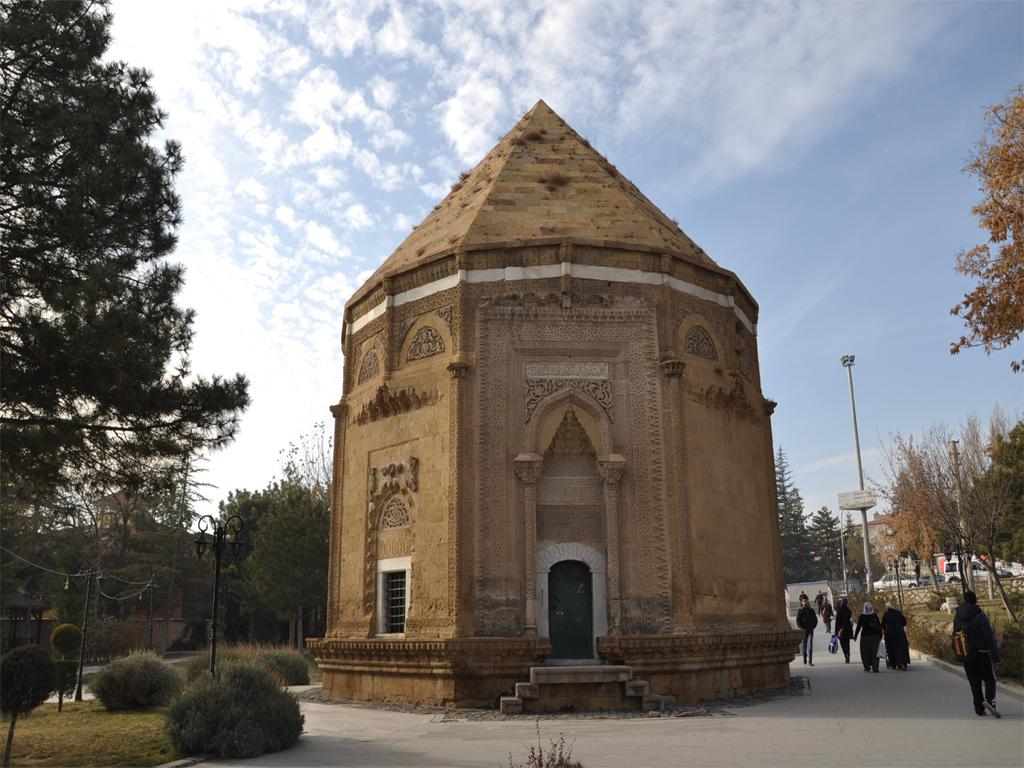
The Hüdavent Hatun Mausoleum in Niğde was commissioned by Hüdavent Hatun, daughter of Anatolian Seljuk Sultan IV. Rükneddin Kılıçarslan, in 1312–1313 (H. 712). The structure was built during the governance of the Ilkhanid governor Sungur Ağa, as clearly indicated by its foundation inscription. The building has survived to the present day after several restorations and retains most of its original architectural character.
The tomb has an octagonal plan and is single-storied. Constructed of cut stone, it rises on an octagonal base and transitions into a sixteen-sided drum, covered internally by a dome and externally by an octagonal pyramidal roof. The structure employs various types of stone with distinct qualities and textures, including yellowish trachyte, white marble, reddish hard stone, and black cut stone. This diversity of materials provides not only aesthetic richness but also functional variations.
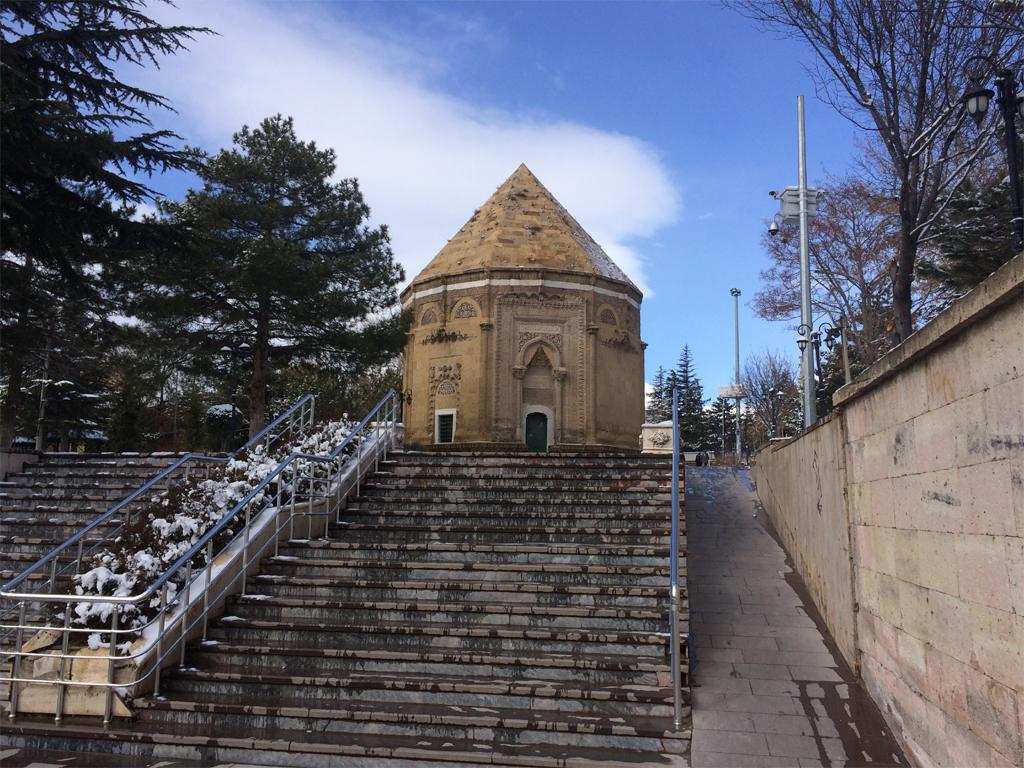
West Facade of the Hüdavent Hatun Mausoleum(Niğde Provincial Directorate of Culture and Tourism)
The entrance portal is emphasized by a niche with muqarnas corbelling. Inside, the mihrab niche also features a muqarnas arrangement and is framed by inscriptive bands bordered by geometric and vegetal motifs. The main chamber is covered by a dome and designed in accordance with the octagonal plan. Within the interior are three tombstones: those of Hüdavent Hatun (d. 1332), Paşa Hatun (d. 1340), and Belkıs Hanım (d. 1563).
The Hüdavent Hatun Mausoleum stands out for its figurative reliefs, which are rare in Anatolian Seljuk stone carving. On facades other than the entrance, pointed-arched tympana and window niches feature figures of lions, sirens, human heads, and double-headed eagles. Most of these figures are executed in high relief.
The double-headed eagle on the western facade symbolizes power, protection, and sanctity in Seljuk art. The wings terminating in dragon heads recall the shamanistic belief in the dragon as a protective figure against evil spirits. The lion and siren reliefs are notable for their symmetrical composition and detailed rendering; these creatures were regarded as guardian spirits accompanying the deceased on their celestial journey.
The figurative decorations of the Hüdavent Hatun Mausoleum carry not only artistic but also symbolic meanings. The mask-like human faces found in the ornamentation are interpreted as talismans against evil spirits. Such interpretations are directly linked to Central Asian shamanistic beliefs. Throughout the Seljuk period, shamanistic traditions were synthesized with Islamic culture.

No Discussion Added Yet
Start discussion for "Hüdavent Hatun Mausoleum" article
Architectural Structure and Materials
Interior Features
Ornamentation and Figurative Reliefs