

This article was automatically translated from the original Turkish version.
+1 More
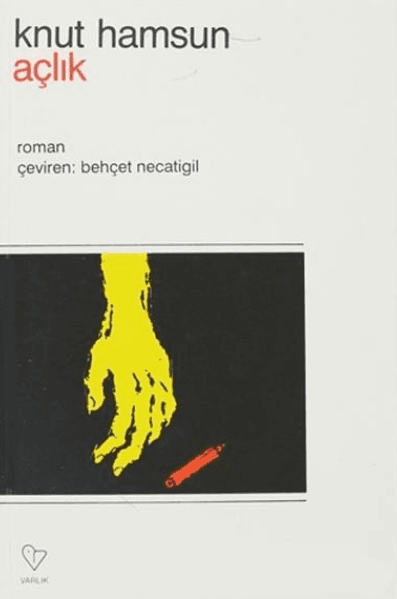
Author(s) | Knut Hamsun | ||||||||
|---|---|---|---|---|---|---|---|---|---|
Translator(s) | Behçet Necatigil | ||||||||
Publisher(s) | Varlık Yayınları | ||||||||
Number of Pages | 160 | ||||||||
Genre | Novel | ||||||||
Year of Publication | 2016 | ||||||||
Hunger (original title: Sult, Norwegian), written by Norwegian author Knut Hamsun and published in 1890, explores the inner world of an individual and the psychological effects of poverty and hunger. It is regarded in literary history as one of the earliest modernist narratives to focus on personal experience and psychological analysis.
The novel centers on the experiences of an unnamed narrator living in poverty and hunger in Kristiania, Norway (present-day Oslo). Struggling to earn a living as a writer, the narrator battles material hardship and the physical and mental collapse brought on by starvation. He wanders aimlessly through the city, attempting to sell his articles, but often fails. During this process, hunger transcends mere physical deprivation and transforms into an existential crisis that profoundly affects the narrator’s mental state, decision-making, and perception of reality. The novel depicts a life of struggle oscillating between pride, helplessness, and alienation from society. The narrative is shaped not by chronological progression but by the narrator’s mental fluctuations and fleeting thoughts.
Hunger and Poverty: The novel addresses the theme of hunger in both physical and spiritual dimensions. Physical hunger impacts the narrator’s health and mental equilibrium, while spiritual hunger is linked to loneliness and social exclusion. Hunger is not merely a condition of life but is constructed as an element that challenges the individual’s existential boundaries.
Individual Pride and Honor: Despite his dire poverty, the narrator refuses to accept help, striving to preserve his personal dignity. This attitude is tied to his belief in his own talents. Yet this stance often leads him into deeper states of helplessness.
Loneliness and Alienation: The narrator struggles to form connections with society and leads an inward-looking life. The urban environment functions as an integral part of his experience of isolation. His failure to conform to social norms highlights his process of alienation.
Existential Crisis: The work examines the process in which the individual questions the meaning of life and confronts existential emptiness. The narrator’s mental fluctuations reflect his search for personal meaning and the contradictions arising from this quest.
Art and Creativity: The narrator strives to sustain his identity as a writer. The conditions of hunger and poverty frame his creative process as both enabling and limiting. The novel scrutinizes the artist’s social position and the difficulties inherent in the creative process.
Psychological Realism: Knut Hamsun meticulously examines the narrator’s mental state, focusing on psychological analysis. The narrator’s inner monologues, emotional transitions, and moments of disconnection from reality are prominent features of psychological realism in the novel.
Hamsun, Knut. *Açlık*. Çev. Behçet Necatigil. Varlık Yayınları. Accessed July 17, 2025. https://www.varlik.com.tr/kitapDetay.aspx?kategoriID=40&kitapID=228.

Author(s) | Knut Hamsun | ||||||||
|---|---|---|---|---|---|---|---|---|---|
Translator(s) | Behçet Necatigil | ||||||||
Publisher(s) | Varlık Yayınları | ||||||||
Number of Pages | 160 | ||||||||
Genre | Novel | ||||||||
Year of Publication | 2016 | ||||||||
Subject
Themes