This article was automatically translated from the original Turkish version.
+1 More
Author(s) | Mustafa Kutlu | ||||||||
|---|---|---|---|---|---|---|---|---|---|
Number of Pages | 104 | ||||||||
Publisher(s) | Dergâh Yayınları | ||||||||
Type(s) | Hikâye | ||||||||
First Publication Year | 1981 | ||||||||
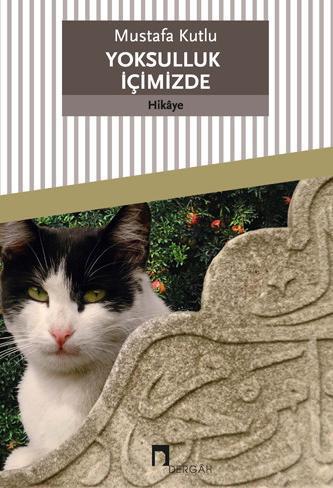
Poverty Within Us is a work that focuses on the lives, dreams, and choices of three young people—Süheyla, Engin, and Şükran—who work in the same government office. At its center is the developing romantic relationship between Engin and Süheyla, through which individual transformation processes are portrayed. The novel explores themes of East-West conflict, critique of modern life, transformation, and alienation, particularly through Engin’s pursuit of wealth and Süheyla’s embrace of a different lifestyle rooted in spiritual awakening.
Süheyla, a modest and contented young woman, began working after high school because her mother’s pension was insufficient to sustain them. Engin, who works alongside her while also studying, is an ambitious young man from a poor background who dreams of becoming wealthy. A romantic relationship develops between Süheyla and Engin, but Engin’s worldview—his obsession with luxury, money, and status—begins to strain their bond.
After some time, Engin leaves Süheyla’s life and informs her through Şükran that he has become engaged to a wealthy woman. This news deeply shakes Süheyla. One day, startled by the call to prayer, Süheyla feels as if she is hearing for the first time the invocation “hayyalel-felah” (come to salvation). This moment becomes a turning point in her life. Süheyla embarks on a spiritual journey: she begins wearing a headscarf, adopts a simple way of life, quits her job, and rejects society’s definitions of “happiness.” She has left behind her former lifestyle, possessions, and friends.
Over time, Engin becomes wealthy and gains social respect, but when he encounters Süheyla again, he is profoundly shaken by her transformation. Süheyla tells Engin that she can no longer be with him, but if he too abandons worldly pursuits, they could migrate together to a “lawless village.” These words plunge Engin into an inner questioning.
Engin begins asking questions such as “What is haram?” during meetings he attends, but no one can answer them. Overwhelmed by mental confusion, he searches for Süheyla but cannot find her. Meanwhile, Süheyla has become an entirely different person—introspective and enriched by solitude.
At the end of the novel, Engin, like Süheyla, begins to question the allure of material existence. He too now seeks a world free from haram. Both characters, on their own paths, are travelers of the same truth.

Representation of Engin and Süheyla (Generated by Artificial Intelligence)
Süheyla: A simple and contented young woman who began working after high school because her mother’s pension could not support them. Lacking ambition or desire for wealth, she grows distant from Engin’s ideals. After parting from Engin, she is stirred by the call to prayer and embarks on a spiritual journey. She adopts a headscarf, embraces simplicity, and abandons her former world.
Engin: A young man who grew up in poverty and works while attending university. His goal in life is to escape destitution and become rich. At one point, he abandons Süheyla to be with a wealthy woman. However, over time he undergoes an inner reckoning and seeks to approach Süheyla’s new way of life.
Şükran: A pragmatic friend who works alongside Engin and Süheyla in the same government office. Living by worldly ideals such as “a car, a coat, a husband,” Şükran does not question social norms and struggles to understand Süheyla’s transformation.
East-West Conflict: The central tension lies in the contrast between Engin’s modern, Western-oriented aspirations and Süheyla’s turn toward traditional and spiritual values.
Poverty and Ambition: Poverty shapes the characters both physically and spiritually. For Engin, it drives him toward greed for wealth; for Süheyla, it becomes the starting point of a return to simplicity.
Spiritual Quest and Transformation: Süheyla’s reaction to the call to prayer and her search for the meaning of “hayyalel-felah” mark the first step in her transformation. Her choice to wear a headscarf, dress simply, and embrace solitude symbolizes an inner revolution.
Social Roles and Women: Characters such as Süheyla’s mother and Şükran approach womanhood through expectations of marriage and social status, while Süheyla steps beyond these conventions.
The author employs a narrative style focused on the inner world of the individual, offering psychological insights. Internal monologues, memory fragments, and inner conflicts take center stage. Descriptions are sparse yet profound. The narrative highlights the contrast between the chaos of modern urban life and the pursuit of spiritual meaning.
Kutlu, Mustafa. *Yoksulluk İçimizde.* Dergah Yayınları, 2025. https://www.dergah.com.tr/kitaplar/yoksulluk-icimizde

Author(s) | Mustafa Kutlu | ||||||||
|---|---|---|---|---|---|---|---|---|---|
Number of Pages | 104 | ||||||||
Publisher(s) | Dergâh Yayınları | ||||||||
Type(s) | Hikâye | ||||||||
First Publication Year | 1981 | ||||||||
No Discussion Added Yet
Start discussion for "Poverty Within Us (Book)" article
Subject
Characters
Themes
Narrative Style