


+2 More

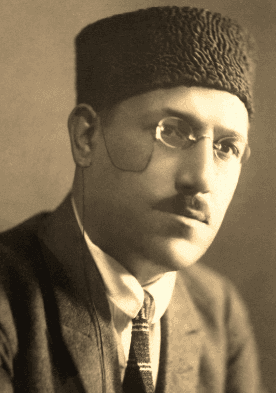
Hüseyin Cavid Erginsoy
Doğum tarihi | 1882-10-24 | ||||||||
|---|---|---|---|---|---|---|---|---|---|
Place of Birth | Azerbaijan | ||||||||
Year of Death | 1941 | ||||||||
Place of Death | Siberia | ||||||||
Burial Place | Nakhchivan (memorial tomb) | ||||||||
Babası | Rasizade Molla Abdullah | ||||||||
Annesi | Ummi Leyla | ||||||||
Educational Background | received French language education completed Rıza Tevfik’s preparatory course auditor student at the Faculty of Letters of Istanbul Darülfünun secondary education in Tabriz Mekteb-i Terbiye (Nakhchivan) Basic education within the family and under the guidance of Sheikh Mehmed | ||||||||
Profession(s) | literary figure teacher writer Poet | ||||||||
Literary Works | predominantly romantic and philosophical themes used the pen names Gülçin and Ârif in his early poems Poetry and metrical drama works | ||||||||
Major Works | Abyss (1926) Devil (1924) The Prophet (1923) Sheikh San‘an (1917) Mother (1913) Spring Dews (1917) Past Days (1913) | ||||||||
Theatrical Works | The Revenge of the Devil Âfet Maral Şeydâ Siyavuş Hayyam Topal Timur | ||||||||
Places of Employment | Baku (Sefa School / Theater Vocational School / Baku Teacher Training School) Tbilisi Ganja Nakhchivan | ||||||||
Prominent Characteristics | distant stance toward the social realism movement resistance against Soviet pressures Bey Huseynzade and Ziya Gökalp influenced by the ideas of Ismail Gasprinski Language usage close to Turkish of Türkiye | ||||||||
Political and Social Status | his works were banned arrested in 1937 and exiled to Siberia faced severe criticism from the Soviet regime After the 1930s | ||||||||
Prominent Themes in Works | East-West conflict inquiries into truth and superstition injustice and poverty in society metaphysical problems Love | ||||||||
Hüseyin Cavid Erginsoy was born on 24 October 1882 in Nakhchivan. His father, Rasizâde Molla Abdullah, was a mersiyehan, and his mother was Ümmi Leyla. The family originally came from the village of Şahtahtı in Nakhchivan and migrated to Nakhchivan in 1877.
He received his early education within the family, under the guidance of his older brother Sheikh Mehmed. After completing primary school in a mollahaned, he studied at Mekteb-i Terbiye, where Mehemmed Tağı Sıdkı taught using a new method. In 1898, he continued his education in Tabriz. He returned to Nakhchivan from Tabriz in 1903 and moved to Istanbul the same year.
In Istanbul, he attended lectures as an auditor at the Faculty of Letters of Dârülfünun. He completed the preparatory course offered by Rıza Tevfik. Due to a severe eye illness, he interrupted his studies and returned temporarily to Tabriz. In 1905, he came back to Istanbul, began learning French, and maintained contact with literary circles.
During his time in Istanbul, he became acquainted with writers such as Tevfik Fikret, Abdülhak Hâmid, and Rıza Tevfik. His poems were published in newspapers and journals including Sırât-ı Müstakîm, Şark-ı Rus, Hayat, and Füyûzât. While in Turkey, he became familiar with Western literature and produced works under the influence of Romanticism.
In 1909, he returned to Nakhchivan. He continued his literary activities in Nakhchivan from 1909 to 1910, in Ganja from 1911 to 1913, and in Tiflis in 1914.
From 1915 to 1918, he taught Turkish language and literature at the Sefa School in Baku. In 1917, he joined the Literature Commission of the Writers and Authors Society, established in Baku.
In 1918, following the establishment of the Azerbaijan Democratic Republic, he moved to Baku. After escaping Armenian attacks, he relocated to Anzali in Iran, then to Tabriz and Nakhchivan. From 1918 to 1919, he worked as a teacher in Nakhchivan. During the same years, he married Müşkinaz Hanım and had a daughter whom he named Turan and a son named Ertuğrul.
In 1920, he returned to Baku and worked as a teacher in secondary schools. Later, he served as a literature teacher at the Theatre Professional School and the Baku Teachers’ School.
In 1926, he retired. That same year, he traveled to Berlin for eye treatment and participated in the Turkology Congress held in Baku.
In the 1930s, he faced severe criticism in Azerbaijani media for failing to conform to the ideological demands of the Soviet regime. He was admitted to the Writers’ Union in 1932, but pressure continued.
In 1937, he was arrested on charges of hostility toward the regime, sent into exile in Siberia, and his works were banned.
The circumstances of Hüseyin Cavid’s death remained uncertain for a long time. Official statements later confirmed that he died in 1941 in Irkutsk, Siberia. In the 1980s, his reputation was restored, and his remains were brought back to his birthplace, Nakhchivan, where he was buried in a memorial tomb.
He began his literary activities in 1904 with Turkish and Persian love poems written under the pen names Gülçin and Arif. His early works focused on individual and emotional themes, while his later works emphasized social and philosophical subjects. He addressed issues such as injustice, oppression, and poverty in society, as well as metaphysical questions, human problems, and pessimistic themes. He did not conform to the socialist realism imposed by the Soviets. The principle of “unity in language, thought, and action” by Ismail Gasprinski, the ideas of Ali Bey Hüseynzade, and the works of Ziya Gökalp significantly shaped his intellectual world.
Influenced by his educational experience in Turkey, he used a language close to Turkish as spoken in Türkiye in his works. In his later years, features of Azerbaijani Turkish became more prominent.
In his articles and letters, he employed a more formal language than in his poems and plays, incorporating Arabic and Persian vocabulary.
Hüseyin Cavid. "Türk Edebiyatı İsimler Sözlüğü (TEİS)." Accessed May 15, 2025.
Hüseyin Cavid. "Türkiye Diyanet Vakfı İslam Ansiklopedisi (TDV İA)." Accessed May 15, 2025.
Kâhya, Esin. "Cumhuriyet’in Bilim Adına Kaydettiği Gelişmelerin Kısa Bir Değerlendirmesi." Atatürk Kültür Merkezi Başkanlığı Yayınları. Accessed May 15, 2025.

Hüseyin Cavid Erginsoy
Doğum tarihi | 1882-10-24 | ||||||||
|---|---|---|---|---|---|---|---|---|---|
Place of Birth | Azerbaijan | ||||||||
Year of Death | 1941 | ||||||||
Place of Death | Siberia | ||||||||
Burial Place | Nakhchivan (memorial tomb) | ||||||||
Babası | Rasizade Molla Abdullah | ||||||||
Annesi | Ummi Leyla | ||||||||
Educational Background | received French language education completed Rıza Tevfik’s preparatory course auditor student at the Faculty of Letters of Istanbul Darülfünun secondary education in Tabriz Mekteb-i Terbiye (Nakhchivan) Basic education within the family and under the guidance of Sheikh Mehmed | ||||||||
Profession(s) | literary figure teacher writer Poet | ||||||||
Literary Works | predominantly romantic and philosophical themes used the pen names Gülçin and Ârif in his early poems Poetry and metrical drama works | ||||||||
Major Works | Abyss (1926) Devil (1924) The Prophet (1923) Sheikh San‘an (1917) Mother (1913) Spring Dews (1917) Past Days (1913) | ||||||||
Theatrical Works | The Revenge of the Devil Âfet Maral Şeydâ Siyavuş Hayyam Topal Timur | ||||||||
Places of Employment | Baku (Sefa School / Theater Vocational School / Baku Teacher Training School) Tbilisi Ganja Nakhchivan | ||||||||
Prominent Characteristics | distant stance toward the social realism movement resistance against Soviet pressures Bey Huseynzade and Ziya Gökalp influenced by the ideas of Ismail Gasprinski Language usage close to Turkish of Türkiye | ||||||||
Political and Social Status | his works were banned arrested in 1937 and exiled to Siberia faced severe criticism from the Soviet regime After the 1930s | ||||||||
Prominent Themes in Works | East-West conflict inquiries into truth and superstition injustice and poverty in society metaphysical problems Love | ||||||||
No Discussion Added Yet
Start discussion for "Hüseyin Cavid Erginsoy" article
Education
Istanbul Years and Early Literary Activities
Activities in Azerbaijan
Life After 1918
Activities After 1920
Soviet Pressure and Exile
Death
Literary Life
Linguistic Approach
Works
Poetry Books
Verse Dramas
Other Theatrical Works
Collaborative Works
Lost Works