

This article was automatically translated from the original Turkish version.
+2 More
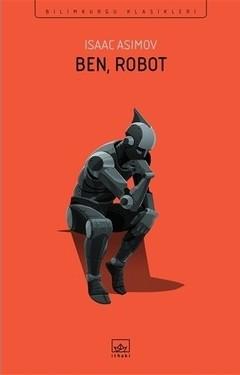
I, Robot is a 1950 collection by American science fiction writer Isaac Asimov, comprising nine short stories that explore the relationship between robots and humans. These stories have secured an important place in science fiction literature by reflecting Asimov’s philosophical and ethical approaches to robotics. The book is among the first works to introduce Asimov’s “Three Laws of Robotics” and examine their impact on robot behavior.
The book is framed as a series of memories recounted by Dr. Susan Calvin, a robopsychologist, to a journalist during her retirement. This narrative framework connects the stories and presents the development of robots and their relationships with humans in chronological order. Each story addresses ethical and logical dilemmas faced by robots and demonstrates how the Three Laws of Robotics are applied to resolve them.
The Three Laws of Robotics, which form the foundation of Asimov’s understanding of robotics, are ethical rules that govern robot behavior:
These laws were designed to define ethical robot behavior and regulate their interactions with humans.
The stories in I, Robot explore themes such as artificial intelligence, ethics, consciousness, and human-robot relationships. Some notable stories include:
I, Robot pioneered the portrayal of robots in science fiction not merely as mechanical devices but as ethical and conscious beings. Asimov’s Three Laws of Robotics have formed the foundation for ethical debates in artificial intelligence and robotics and have inspired countless writers and researchers.

Structure and Content
Three Laws of Robotics
Themes and Notable Stories
Impact and Significance