

This article was automatically translated from the original Turkish version.
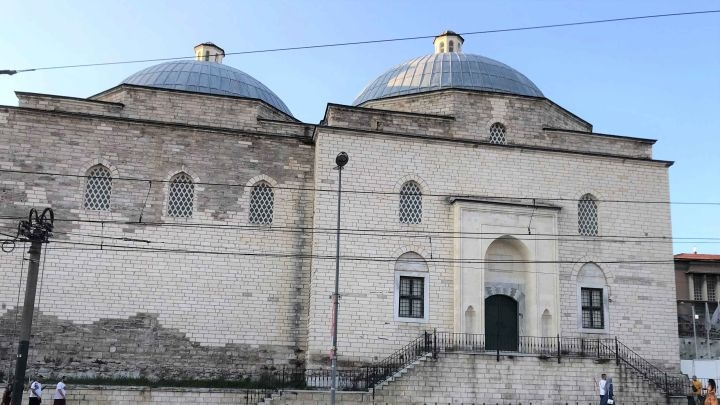
II. Bayezid Turkish Bath Culture Museum is Türkiye’s first bath museum, located in the Beyazıt district of Istanbul, reflecting the historical development of Ottoman bath architecture and washing culture. The double bath, built in the early 16th century by Gülbahar Hatun, wife of II. Bayezid, was restored in 2015 and opened to the public as a museum under the ownership of Istanbul University. The museum was included in the UNESCO World Cultural Heritage List in 1985 as part of the “Historic Areas of Istanbul”.

II. Bayezid Turkish Bath Culture Museum (Türkiye Culture Portal)
Although the exact construction date of the bath, which is part of the II. Bayezid Külliyesi, is unknown, it is generally accepted based on records in the Ottoman Archives of the Prime Ministry that it was built between 1507 and 1508. The structure, referred to in historical documents as “Yeni Hamam”, was commissioned by Gülbahar Hatun for public use.
This double bath, described by Evliya Çelebi as “reserved for saints”, served as an important social space during the Ottoman period. Due to legends associating the bath with Halil, a barber known by the nickname “Patrona” who worked here and was linked to the Patrona Halil Rebellion during the reign of III. Ahmet, the building became known over time as “Patrona Hamamı”. Its ornate design and large scale also earned it the name “Hamam-ı Kebir” (Great Bath).
The bath exhibits the characteristic features of classical Ottoman bath architecture. The double bath consists of two independent units, designed separately for men and women, with adjacent and similar floor plans. Each unit contains a large domed changing room, a cold room (cooling area), a hot room, and a long furnace chamber at the rear. The entrances open in different directions: the men’s entrance faces Ordu Caddesi, while the women’s entrance faces Kimyager Derviş Paşa Sokağı.
The changing rooms are the most voluminous parts of the bath, with wall thicknesses of approximately two metres and dome thicknesses of around 80 centimetres. The hot room contains washing elements such as the göbek taşı (central heated stone), kurna (basin), and seki (raised platforms). Heating is provided through the furnace, with intense heat generated in the section known as the cehennem (hell) transmitted via channels to reach the göbek taşı.
Some architectural elements, such as the aralık (intermediate space), are rare in baths constructed after the 15th century but are preserved in this structure. Additionally, during the restoration process, architectural stone fragments from the Byzantine and Ottoman periods found in the surrounding area are also exhibited in the museum.
The building was assigned to Istanbul University in 2000 and included in restoration projects in 2010. In 2011, the “II. Bayezid Bath Restoration and Cultural Heritage Museum Planning Project” was implemented. The restoration process was carried out by a commission headed by Professor Dr. Nurhan Atasoy, and preparations for its opening as a museum began in May 2013.
The museum opened its doors on 27 May 2015 and was officially registered as a private museum following approval from the Ministry of Culture and Tourism dated 4 March 2015. The changing room of the women’s bath was designated as the main entrance, while the men’s section was used as a temporary exhibition space. A door connecting the two sections links the structures.
The museum’s collection consists of ethnographic and archaeological artifacts related to Turkish bath culture. The ethnographic collection includes everyday objects from the 18th and 19th centuries such as copper, brass, and bronze bath basins, kildanlars, ewers, coffee cup sets, soap dishes, peştemals, bundles, soaps, and ivory combs. The archaeological collection displays architectural stone finds from the Byzantine and Ottoman periods.
The cooling and hot rooms of both the women’s and men’s baths have been converted into exhibition areas equipped with display cases. The cooling room of the women’s bath also houses certain Byzantine architectural elements. The museum offers visitors the opportunity to experience cultural elements from different periods in a single setting.
The museum serves not only as an exhibition space but also as a vehicle for cultural transmission. Examples illustrate the role of water in daily Ottoman life and how the bath functioned not merely as a place of hygiene but also as a social ritual and recreational space. Traditions such as the bride’s bath, circumcision bath, and craftsmen’s bath are emphasized to introduce this multifaceted cultural heritage.
Periodic exhibitions, interdisciplinary discussions, seminars, and workshops are organized within the museum. Workshops for preschool and primary school children are held every second and third Monday of the month, and various educational programs are offered for adults.

No Discussion Added Yet
Start discussion for "II. Bayezid Turkish Bath Culture Museum" article
History
Architectural Structure
Transformation into a Museum
Collection and Exhibition
Education and Activities