


This article was automatically translated from the original Turkish version.
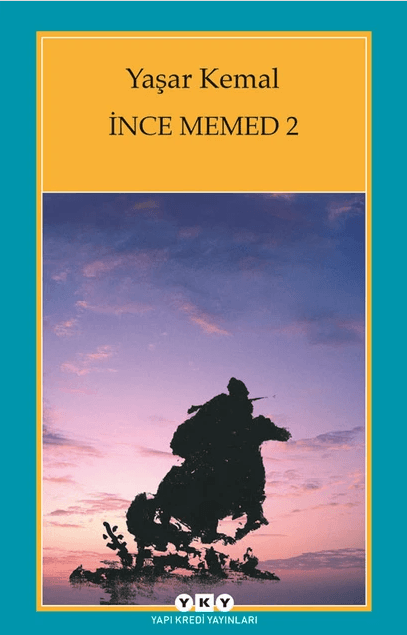
Yaşar Kemal’s novel Ince Mehmet-2 (a continuation of Ince Mehmet-1) is regarded as one of the masterpieces of Turkish literature and profoundly explores social critique, individual resistance, and the struggle for people. Work does not merely narrate the personal journey of a hero but also lays bare the social and cultural structure of the era, the resistance against this structure, and the inner conflicts of the individual. In this context, Ince Mehmet-2 offers a multilayered building thematically, and the psychological depth of its characters holds great significance in the novel.
Ince Mehmet II is a direct sequel to the first novel and centers on Ince Mehmet’s struggle among the rural populations of Anatolia. While addressing the individual’s quest for freedom and struggle for justice, it also reveals the cultural structure and living conditions of the Anatolian people. Yaşar Kemal’s powerful descriptions and rich language have transformed the novel from a mere story into a social epic.
One of the central themes of the novel is Ince Mehmet’s struggle for the freedom of his people. The rebellion begun in the first book deepens further in the second. Ince Mehmet remains in constant resistance to defend the rights of his villagers and the oppressed masses. His struggle evolves from a personal pursuit of freedom into a collective fight for the people’s liberty and equality. This movement initiated by Mehmet also embodies a critical stance toward the social structure and a defense of the rights of the downtrodden. This theme underscores that justice and freedom can be achieved not merely by individuals but through the collective efforts of a society common.
In Ince Mehmet-2, Yaşar Kemal frequently explores the profound bond between nature and humanity. Ince Mehmet’s connection with his people and his harmony with nature provide him with strength and resilience. The novel’s depictions of nature function as mirrors reflecting the characters’ inner worlds. Mehmet’s immersion in nature symbolizes his inherent, natural, and populist qualities. Moreover, the material and spiritual sustenance offered by nature reinforce Mehmet’s loyalty and resistance toward his people. In this sense, nature itself functions as another character like, and the harmony and conflict between humans and nature play a pivotal role in the process of understanding human existence important.
Another central theme in Ince Mehmet-2 is social structure and class conflict. Ince Mehmet’s struggle is not merely a personal rebellion but a revolt against the feudal order, the landowning lords, and social inequality. The novel meticulously examines the chasm between peasants and landowners, as well as the disparities between poverty and wealth. These conflicts deepen the relationships among characters and strengthen the novel’s socio-political dimension. The forces opposing Mehmet act not only in defense of their individual interests but also to preserve the existing social order movement.
Yaşar Kemal’s characters are portrayed with profound psychological depth as well as physical detail. Ince Mehmet, the protagonist, is not merely a strong figure on the outside but also a character tormented by intense inner conflicts. His deep love for his people, his pursuit of justice, and his quest to find his own identity shape his psychological development. These internal struggles transform Mehmet from a mere hero into a figure who embodies the voice of the people and emerges from within their ranks. The other characters form a microcosm of the social structure revolving around Ince Mehmet. Each character represents different social classes and worlds, thereby deepening the class conflicts depicted in the novel.
Throughout the novel, Ince Mehmet defines heroism not as personal triumph but as a struggle for the freedom and equality of his people. Mehmet’s notion of heroism opens the path for him to become a legend in the eyes of the people and transforms him into a symbol of the fight for social justice. Yet this heroism is not an individual elevation; it is concretized as a struggle against the exploitation of the people.
Ince Mehmet: The protagonist who fights for the freedom of his people.
Hüseyin: Ince Mehmet’s close friend and an important character who joins his struggle.
Halime: Ince Mehmet’s lover and a significant figure in his emotional world.
Fevzi: An antagonist who opposes Ince Mehmet and defends the feudal order.
Veli: A character who joins Ince Mehmet’s struggle and remains loyal to him loyal.
Çoban Dede: The wise elder of the people who offers Ince Mehmet spiritual support.
Hatçe: The woman Ince Mehmet loves. Her character represents the themes of love and loyalty.
Ince Mehmet II portrays rural life in Anatolia during the final years of the Ottoman Empire and the early years of the Republic. The work examines the oppression exerted by the lordship system and the resistance of individuals against it. Yaşar Kemal realistically depicts the injustices of the feudal structure in the Çukurova region and reflects its psychological impact on the people successful. The “elder” characters in the novel represent the power structures that exploit the labor of the peasants and keep them under oppression.
The central character, Ince Mehmet, is a rebel who challenges this oppressive system and becomes the people’s hope. Mehmet’s rebellion symbolizes not only a personal uprising but also a collective response to social injustice.
The novel attracts attention through its epic elements, rich descriptions, and powerful character analysis. Yaşar Kemal’s descriptive language vividly captures the natural landscape of Anatolia and its human relationships. Author enriches the novel’s atmosphere by employing a mythical language drawn from folk culture. Particularly, the relationship established between nature and narrative serves as a key element strengthening the storytelling epic.
The psychological depth of the characters is one of the novel’s strongest features. The injustices endured by Ince Mehmet render his rebellion inevitable and enable the reader to empathy situation. Moreover, portraying Mehmet not merely as a hero but as a character with weaknesses and human frailties adds a realistic dimension to the novel.

No Discussion Added Yet
Start discussion for "Ince Mehmet 2 (Book)" article
Content
Themes Explored
Freedom and Resistance
Nature and Human Relationship
Social Structure and Class Conflict
Characters and Psychological Depth
Ince Mehmet’s Concept of Heroism
Main Characters
Social Background
Literary Style