


This article was automatically translated from the original Turkish version.
Industrial Schools were educational institutions that emerged during the 19th century as part of the Ottoman State’s efforts toward industrialization and modernization. These schools were established to adapt to the changes brought by the Industrial Revolution, meet the growing demand for skilled labor in response to the rising number of factories, and provide vocational training to orphaned children to integrate them into society. Following the opening of the first Industrial School in Istanbul in 1868, industrial schools were also established in provinces based on reform houses. These schools functioned as a modernized form of the vocational and technical education previously provided by traditional craft guilds and ahi associations.
The Ottoman State faced the necessity of adapting to the sweeping changes brought by the Industrial Revolution in Europe, beginning in the 18th century. This process accelerated significantly during the Tanzimat Era, triggering a wave of industrialization. However, this development also created serious challenges in securing qualified labor. The operation of modern industrial facilities exposed the inadequacy of traditional artisanal training and increased the demand for personnel skilled in new technical methods. In this context, establishing vocational and technical schools was adopted as a vital strategy to achieve the country’s industrialization goals. Industrial Schools emerged as concrete manifestations of this strategy.
Another critical factor influencing the establishment of Industrial Schools was social need. Particularly in the late Ottoman period, wars, epidemics, famines, and large-scale migrations led to a significant increase in the number of children and women requiring protection. This situation highlighted the necessity of integrating homeless and orphaned individuals into society by providing them with shelter and vocational training. In this direction, reform houses, initially established to provide social assistance and care, were transformed into industrial schools beginning in 1868. This transformation enabled them to move beyond merely serving as shelters and become institutional structures that imparted practical vocational skills. The reform house and industrial school projects initiated by Midhat Pasha during his governorship of the Danube Province played a pioneering role in spreading this model across the provinces. Thus, Industrial Schools served a multifaceted purpose: meeting the industrial sector’s demand for skilled personnel while also fulfilling a social responsibility by equipping orphaned children with trades that would allow them to become self-sufficient in the future.
Industrial Schools were generally located in provincial centers and established primarily on the foundation of reform houses or through their transformation, in line with the Ottoman State’s modernization and industrialization efforts. The purpose of opening these schools was not only to train skilled labor but also to conduct public education initiatives aimed at raising awareness about modern industrial and agricultural techniques. The first Industrial School, opened in Istanbul in 1868, served as the model for these institutions. The educational institutions initiated by Midhat Pasha through reform houses during his governorship formed the template for Industrial Schools across the provinces. These schools functioned as a modernized reflection of the vocational and technical education previously provided by traditional craft guilds and ahi associations.
Opened in 1897 in Üsküp, one of the key cultural and scientific centers of the Kosovo Vilayet, this school had a highly comprehensive structure. Its three-story building housed various units, including the provincial printing house, dining hall, and bathhouse. To cover the school’s ongoing expenses, special revenue sources such as income from the provincial printing house, gasworks, and shops were allocated. The vocational trades taught at the school varied according to the industrial needs of the period; instruction was provided in fields such as typesetting, lithography, shoemaking, tailoring, carpentry, and carving. The duration of education was set at five years, and approximately 90 orphaned Muslim and non-Muslim children aged 12 to 14 were admitted. However, due to the outbreak of the First Balkan War and the occupation of the Kosovo Vilayet, this important educational institution, which had operated for 15 years, was forced to close in 1912.
Established in 1874 during Midhat Pasha’s brief governorship of Selanik, this school played a significant role in training qualified personnel needed for the province’s industrial and agricultural sectors and contributed to regional production. The school also implemented public education initiatives, such as introducing modern agricultural techniques.
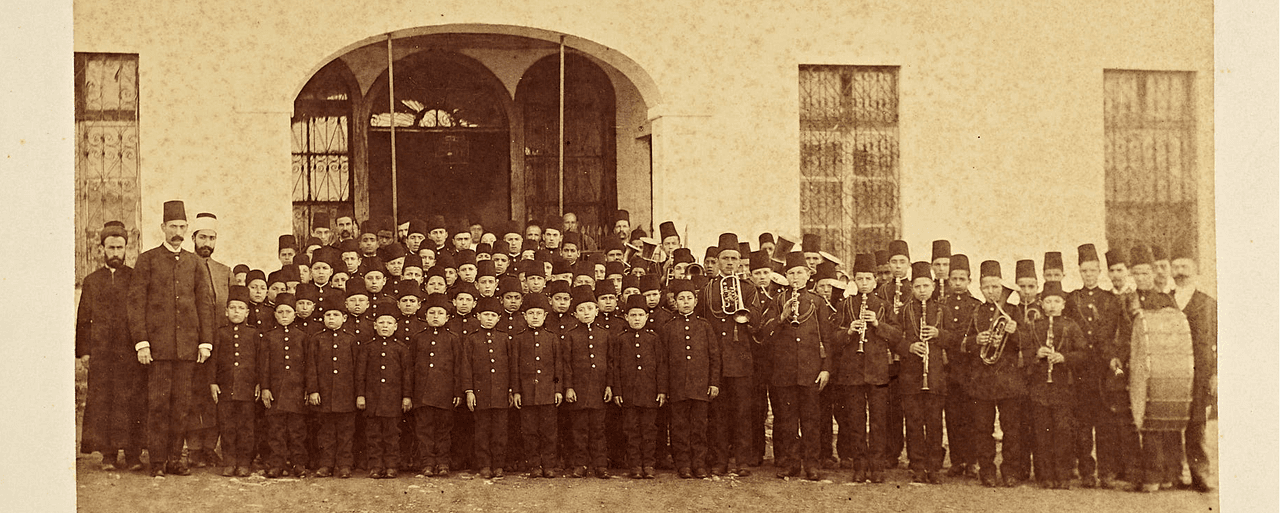
Students of Selanik Industrial School (Istanbul University Library)
Opened during the post-Tanzimat period as the importance of vocational education grew, this school was initially established by Konya Governor Ahmet Paşa as workshops to meet military needs during wartime. In 1901, it was converted into an industrial workshop. Beginning with three teachers and 17 students, the school witnessed a significant increase in both teaching staff and student numbers over time. The school did not limit itself to daytime instruction but also introduced evening classes to expand student capacity and improve educational quality. Established with active support from the local population and regional administration, this school made substantial contributions to both education and the regional economy through its art classes.

Construction of Konya Industrial School (İstanbul University Library)
As a significant example within the Ottoman State’s broader industrialization efforts, the Dersaadet Industrial School designed its curriculum and instruction to prepare students for real-life and professional environments. This school operated to meet the demand for intermediate-level personnel required by industrialization.
As part of the socio-economic transformations experienced in the late Ottoman period, Industrial Schools occupied an important position both as instruments of modernization and as solutions aimed at improving social welfare.
The Ottoman State’s industrialization and modernization process in the 19th century significantly increased the demand for skilled labor. Industrial Schools assumed a strategic role in meeting this critical need. The growing production capacities of factories established across the country revealed the insufficiency of traditional artisanal training, deepening the shortage of intermediate-level personnel and technical staff proficient in modern industrial techniques. Industrial Schools aimed to bridge this gap by providing vocational and technical education.
These schools were not only established in central industrial areas but also opened in provinces, directly contributing to local economies. They filled gaps in vocational fields that were underdeveloped or needed strengthening within the unique economic structures of their regions, thereby accelerating regional production and development. For example, the teaching of trades such as typesetting, lithography, shoemaking, tailoring, carpentry, and carving at the Üsküp Industrial School supplied qualified personnel to local handicraft and small-scale production workshops. The initial establishment of the Konya Hamidiye Industrial School as workshops to meet military needs, followed by its conversion into an industrial workshop, demonstrated its direct potential for contributing to economic production.
The economic contributions of Industrial Schools were not limited to vocational training for males. With the opening of Girls’ Industrial Schools, the goal was to enhance women’s active participation in the economy. These schools aimed to develop women’s manual skills, transform them into conscious producers familiar with modern production techniques, and integrate their products—such as textiles, embroidery, and sewing goods—into the economy. As a result, they not only contributed to household budgets but also laid the groundwork for increasing female employment.
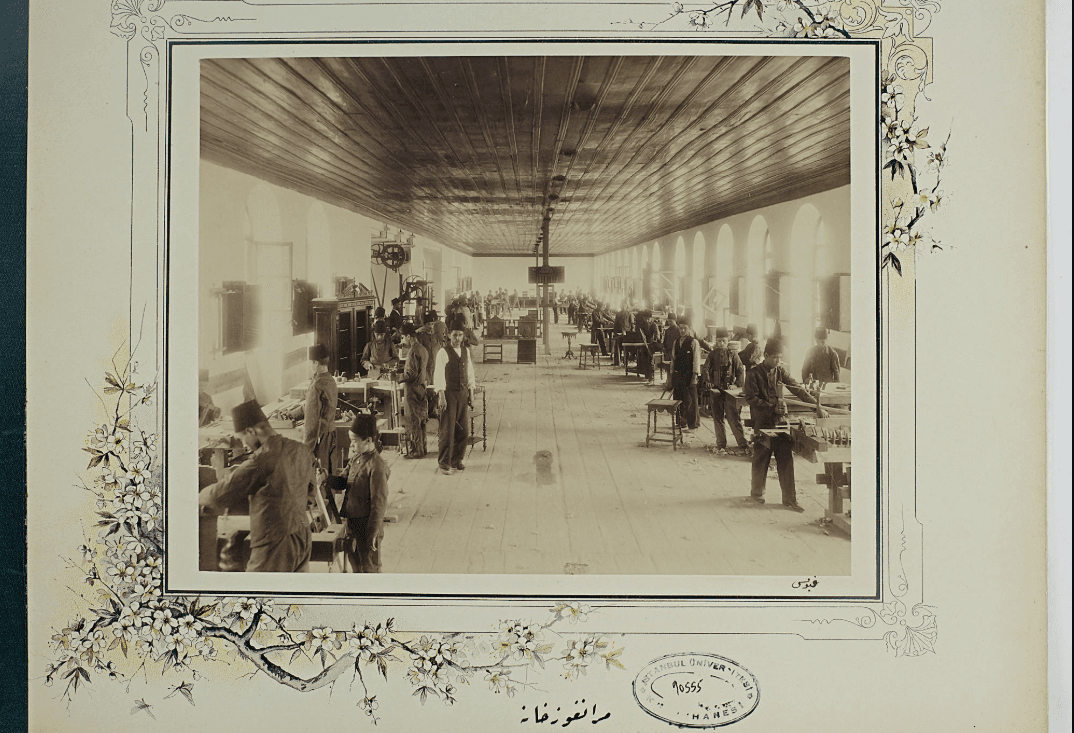
Sultanahmet Industrial School Carpentry Workshop (İstanbul University Library)
The financial sustainability of these schools was an essential component of their economic function. Revenue sources were diversified, including donations, lottery draws, organized exhibitions, and even income from certain fees, all of which supported the schools’ financing. Expenditures included teachers’ salaries, students’ accommodation, food, and clothing costs, as well as the acquisition of equipment specific to the trades taught. The state implemented various measures to ensure these schools generated consistent income to fulfill their expected benefits. For instance, the Üsküp Industrial School was allocated revenue from the provincial printing house, gasworks, and shops, demonstrating efforts to achieve self-sufficiency. This structure illustrates that Industrial Schools functioned not merely as educational institutions but as vital supporting elements in Ottoman industrialization and the labor market.
Industrial Schools operated as integrated components of the Ottoman State’s general administrative structure, under provincial authority. Their administrative framework was shaped within a specific hierarchy and oversight mechanism. Fundamentally, each Industrial School was managed by a director. However, the director’s authority was surrounded by a broad administrative and supervisory network. Two key bodies played an active role in overseeing the school’s general operations, financial status, and educational activities: the School Commission and the School Administrative Board. This tripartite structure aimed to ensure the regular and accountable functioning of the schools.
A critical component of administration and oversight was financial discipline. Industrial Schools maintained a strict budgeting and reporting system to ensure financial transparency and effective use of resources. At the end of each month, detailed charts listing all income and expenditures were prepared. These financial statements were first meticulously reviewed and stamped for approval by the School Administrative Board. After approval by the Administrative Board, the charts were submitted to the School Commission, the next level of oversight. Only after the Commission examined and confirmed these financial reports were they forwarded to the provincial administrative council for final approval. This multi-stage oversight process aimed to prevent corruption and guarantee that resources were used correctly and in accordance with their intended purpose.
Another critical dimension of financial management was maintaining a balance between income and expenditures. The schools’ expenditure items were highly varied. Basic needs such as teachers’ and administrative staff salaries, students’ accommodation, nutrition, and clothing, as well as the procurement of specialized workshop equipment and consumable materials for the taught trades, constituted major expenditure categories. To cover these costs, the schools had diverse revenue sources. Donations, lottery draws, organized exhibitions, and income from certain fees formed part of this financial structure. In particular, the state took measures to ensure a steady flow of income to sustain the expected benefits of these schools. For example, specific revenue sources such as the provincial printing house, gasworks, and shops were allocated to cover the permanent expenses of the Üsküp Industrial School. This demonstrates planned arrangements made to ensure the schools’ financial autonomy and sustainability. Expenditures outside the approved budget were permitted only in exceptional circumstances, underscoring the high priority placed on financial discipline. This meticulous administrative and oversight approach played a central role in enabling Industrial Schools to achieve their educational goals and fulfill their economic and social functions.
Industrial Schools fulfilled a crucial educational function in achieving the Ottoman State’s modernization and industrialization goals, but they also made significant social contributions toward societal welfare. The increasing number of homeless and vulnerable children resulting from factors such as wars, epidemics, famines, and migration waves in the late 19th century further highlighted the social mission of these schools. Industrial Schools did not merely provide shelter to orphaned and destitute children; they also offered them regular education and vocational training. This enabled them to grow into productive, self-sufficient, and socially beneficial individuals.
The Ottoman administration’s emphasis on such social assistance and educational institutions was reinforced by the belief in protecting the children of martyrs and ensuring they were not left without care. The transformation of reform houses into industrial schools beginning in 1868 enhanced the quality of social services for orphaned children and integrated them into modern vocational education. The reform houses established across the provinces under Midhat Pasha’s leadership served as successful examples of this social mission. These schools, while meeting children’s basic needs, equipped them with practical skills, facilitated their integration into social life, and sought to prevent social exclusion.

Inauguration Ceremony of Diyarbakır Industrial School (İstanbul University Library)
The legacy of Industrial Schools is evident in their foundational role in today’s well-established vocational and technical education institutions in Türkiye. The groundwork laid during the Ottoman period was further developed and continued after the proclamation of the Republic, playing a vital role in meeting the country’s demand for skilled human resources during its industrialization processes. These schools contributed to both economic development as part of the Ottoman industrialization drive and to social welfare as mechanisms of support for disadvantaged groups during the late Ottoman period. Thus, Industrial Schools occupy an important place in history not merely as centers for transmitting technical knowledge but also as significant indicators of Ottoman society’s understanding of social responsibility and modernization.
This comprehensive structure elevated Industrial Schools to a central position in both economic development and the provision of social welfare. They constitute an essential part of the educational legacy extending from the Ottoman era to the present day.
Accessed November 26, 2025.
Accessed November 26, 2025.
Accessed November 26, 2025.
Düzgün, İsmail Cahit, and Demirel, Fatih. "Modern ziraatin tanıtımı için Selanik Sanayi Mektebinde bir halk eğitimi projesi." *MSGSÜ Sosyal Bilimler* 1, no. 23 (2021): 296-306. https://dergipark.org.tr/tr/download/article-file/2393996
Karataşer, Büşra. "Konya Hamidiye Sanayi Mektebi (1901-1906)." *Kırklareli Üniversitesi İktisadi ve İdari Bilimler Fakültesi Dergisi* 6, no. 1 (2017): 121–138. https://dergipark.org.tr/tr/download/article-file/329112
Karataşer, Büşra. “Osmanlı Sanayileşmesinde Sanayi Mekteplerinin Önemi: Dersaadet Sanayi Mektebi Örneği”. Sosyal Bilimler Metinleri 2022, no. 2 (October 2022): 132–41. https://doi.org/10.56337/sbm.1169515
Korkmaz, Şerif. “Üsküp Sanayi Mektebi (1897-1912).” Çanakkale Araştırmaları Türk Yıllığı 16, no. 25 (October 2018): 249-83. https://doi.org/10.17518/canakkalearastirmalari.475854
Kurt, Mustafa, Çakır, Baki, and Demir, Kemal. "Türkiye’de modern yönetimin erken dönemleri: Geç-Osmanlı döneminde fabrikalar, sanayi mektepleri ve yabancı uzmanlar." *İstanbul Üniversitesi İşletme Fakültesi Dergisi* 45 (2016): 154-165. https://dergipark.org.tr/en/download/article-file/327580
Özen, İmdat. "II. Meşrutiyet'e Kadar Islahhaneler ve Darülaceze." Master's thesis, Ankara Üniversitesi, 2000. https://search.proquest.com/openview/8ff7734cb323c2601665d6e897ca6016/1?pq-origsite=gscholar&cbl=2026366&diss=y
Öztürk, Rahime Hülya. "19. Yüzyıl Osmanlı Kalkınma Politikasında Sanayi Mekteplerinin İktisadi Fonksiyonu." *History Studies* 15, no. 3 (August 2023): 615-636.
Ünal, V. "Social Services Established For Children In Need Of Protection In The Late Period Of The Ottoman Empire." *Cumhuriyet Üniversitesi Fen-Edebiyat Fakültesi Sosyal Bilimler Dergisi* 36, no. 2 (2013): 1-27. http://cujos.cumhuriyet.edu.tr/tr/download/article-file/49898
İstanbul Üniversitesi Kütüphanesi. Nadir Eserler Koleksiyonu, II. Abdülhamid Han Fotoğraf Albümleri. Accessed May 29, 2025.


Origins and Objectives of Industrial Schools
Structure and Education in Industrial Schools
Notable Industrial Schools and Their Structural Features
Üsküp Industrial School (1897–1912)
Selanik Industrial School
Konya Hamidiye Industrial School (1901–1906)
Dersaadet Industrial School
Economic Function and Labor Contribution
Administration and Oversight
Social Contributions and Legacy