This article was automatically translated from the original Turkish version.
+1 More
History | 9 August | ||||||||
|---|---|---|---|---|---|---|---|---|---|
Year of Declaration | 1994 | ||||||||
Declaring Institution | United Nations General Assembly (Resolution 49/214) | ||||||||
International Day of the World’s Indigenous Peoples is an international observance held annually on 9 August to raise awareness of the rights, cultures and social contributions of indigenous peoples and to highlight the challenges they face. This day was established by the United Nations (UN) General Assembly through resolution 49/214 on 23 December 1994 and commemorates the anniversary of the first meeting of the UN Working Group on Indigenous Populations held in Geneva in 1982.

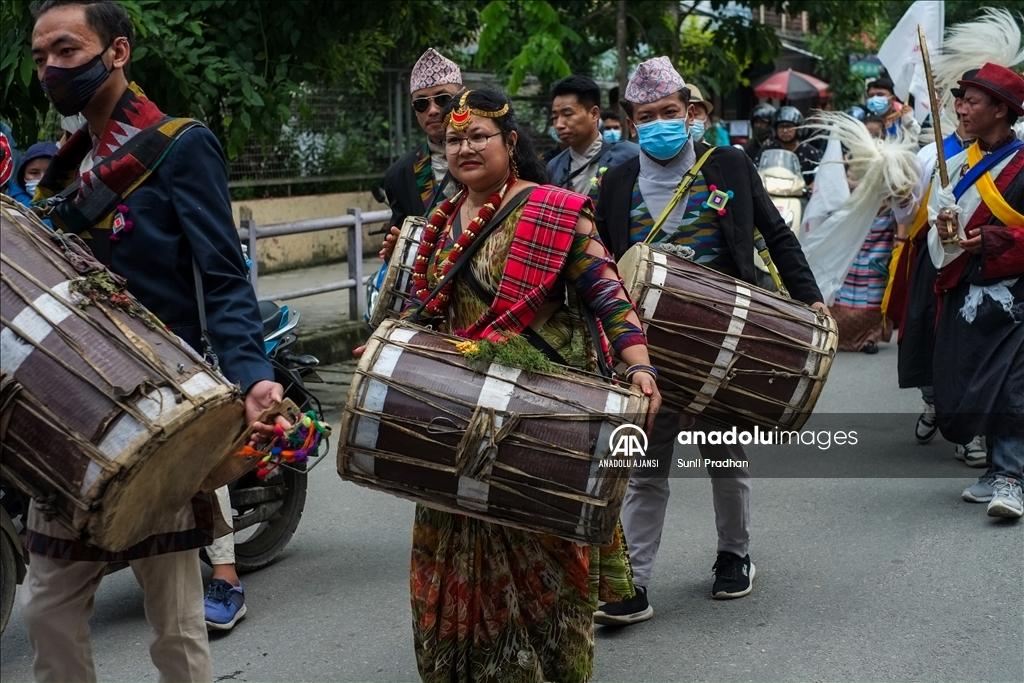
Indigenous Peoples (Anadolu Agency)
The UN has undertaken various initiatives to protect the rights of indigenous peoples. In 1990 the General Assembly declared 1993 the “International Year of the World’s Indigenous People”. This was followed by two “International Decades of the World’s Indigenous People” covering the periods 1995–2004 and 2005–2014. The aim of these decades was to strengthen international cooperation to address challenges faced by indigenous peoples in areas such as human rights, the environment, education, health, development and cultural preservation.
Following the 2014 World Conference on Indigenous Peoples, the UN developed the “UN System-wide Action Plan on Indigenous Peoples’ Rights” in 2015 to ensure a coordinated approach among UN agencies in safeguarding the rights of indigenous peoples. This plan seeks to strengthen collaboration with member states and indigenous communities to achieve the objectives of the UN Declaration on the Rights of Indigenous Peoples.
In recognition of the need to protect the languages and cultures of indigenous communities, 2019 was proclaimed the “International Year of Indigenous Languages”. As a continuation of this initiative, the period 2022–2032 has been designated the “International Decade of Indigenous Languages”, establishing a global framework to revitalize indigenous languages.
Indigenous peoples have maintained distinct identities throughout history, preserving their original social, economic, cultural and political characteristics in contrast to the dominant cultures of the societies in which they live. However, for many years they have faced various violations concerning the recognition of their identities and the protection of their rights to ancestral lands and natural resources. Today, indigenous communities remain among the most socially, economically and environmentally vulnerable groups.
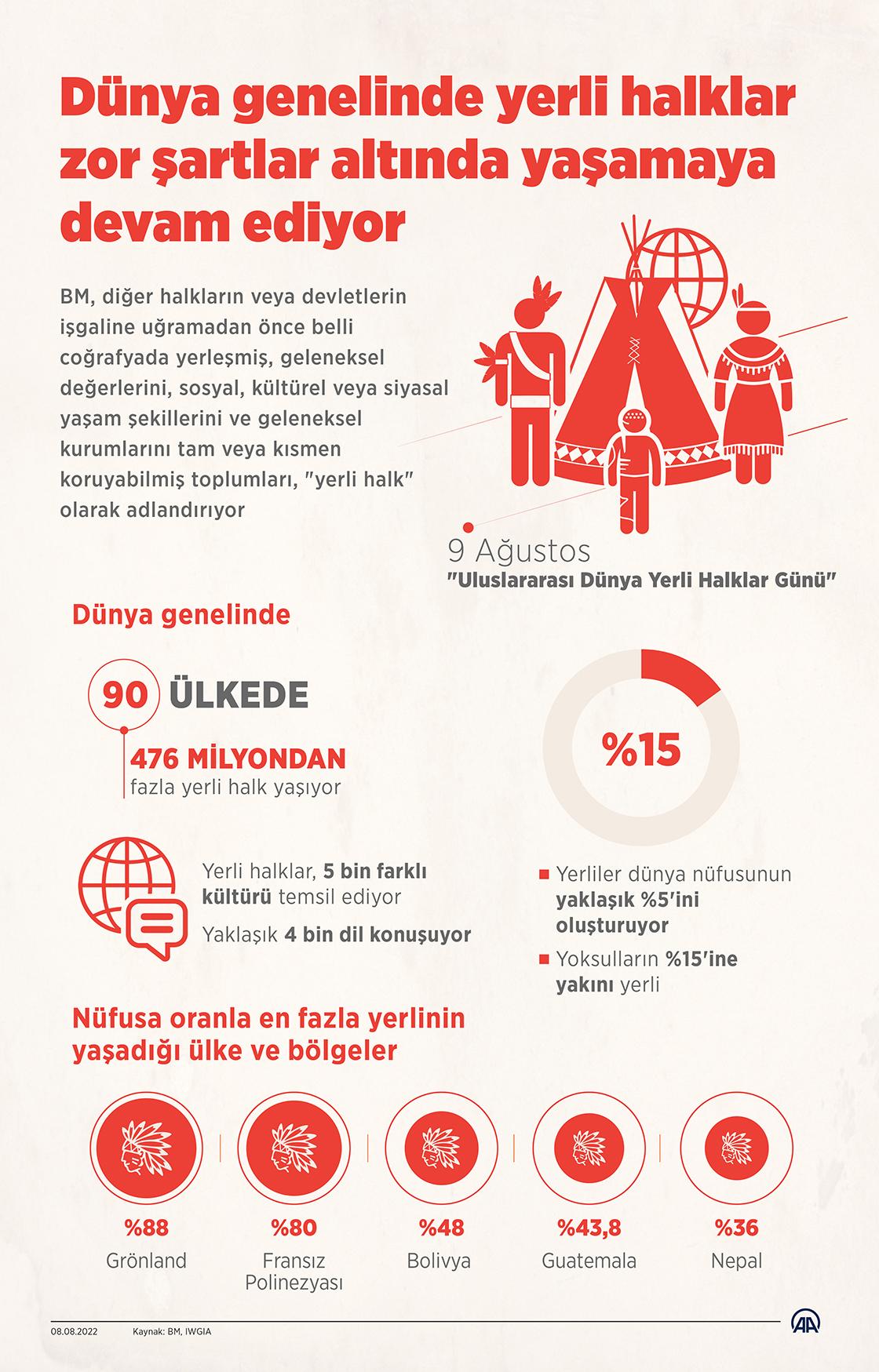
International Day of the World’s Indigenous Peoples (Anadolu Agency, 2022)
UNESCO annually celebrates the International Day of the World’s Indigenous Peoples, sharing its projects and initiatives with the public under a designated theme. The theme for 2025 has been set as “Indigenous Peoples and Artificial Intelligence: Defending Rights, Shaping Futures”. This theme addresses the impacts, opportunities and risks posed by artificial intelligence and digital technologies to indigenous peoples.
Artificial intelligence offers new possibilities for transmitting indigenous languages, traditional knowledge and cultural heritage. However, technologies developed without regard for ethical principles can lead to problems such as digital exclusion, data exploitation and linguistic erosion. Through its “Recommendation on the Ethics of Artificial Intelligence” adopted in 2021, UNESCO aims to ensure the participation of indigenous communities, safeguard data sovereignty and guarantee fair representation in these areas.
Indigenous peoples are among the guardians of the world’s most biologically rich and culturally significant regions. UNESCO collaborates with indigenous communities in the management of World Heritage Sites, Biosphere Reserves and Global Geoparks.
For example, in Tanzania, indigenous rangers are supported in translating their traditional knowledge into wildlife data, while in Chad, pastoral communities are assisted in integrating artificial intelligence-assisted weather forecasting systems with their traditional knowledge. Additionally, UNESCO brings together language experts, policymakers and youth in Bangladesh to explore solutions to digital exclusion, language loss and insufficient resources. These efforts are carried out within the framework of the International Decade of Indigenous Languages and aim to preserve the languages and cultural identities of indigenous peoples in the digital age.
Anadolu Ajansı. "Infografik." Accessed October 24, 2025. https://www.aa.com.tr/tr/info/infografik/29309
Anadolu Ajansı. “Uluslararası Dünya Yerli Halklar Günü, ‘Yerli Gençlik’ temasıyla kutlanıyor.” Accessed October 24, 2025. https://www.aa.com.tr/tr/pg/foto-galeri/uluslararasi-dunya-yerli-halklar-gunu-yerli-genclik-temasiyla-kutlaniyor/0
UNESCO. “International Day of the World’s Indigenous Peoples.” UNESCO. Accessed October 24, 2025. https://www.unesco.org/en/days/worlds-indigenous-peoples
UNESCO. “Message from Ms Audrey Azoulay, Director-General of UNESCO, on the occasion of the International Day of the World’s Indigenous Peoples, 9 August 2025.” *UNESCO Digital Library.* Accessed October 24, 2025. https://unesdoc.unesco.org/ark:/48223/pf0000394976#:~:text=No%20future%20is%20sustainable%20if,collectively%20navigate%20the%20digital%20age
United Nations. “Background — International Day of the World’s Indigenous Peoples.” United Nations. Accessed October 24, 2025. https://www.un.org/en/observances/indigenous-day/background

History | 9 August | ||||||||
|---|---|---|---|---|---|---|---|---|---|
Year of Declaration | 1994 | ||||||||
Declaring Institution | United Nations General Assembly (Resolution 49/214) | ||||||||
No Discussion Added Yet
Start discussion for "International Day of the World's Indigenous Peoples" article
History
Scope and Global Situation
UNESCO’s Role
UNESCO’s Collaboration with Indigenous Communities