


This article was automatically translated from the original Turkish version.
+1 More
Interview is a written article or program in newspapers, magazines, radio, television, or the internet that aims to provide an in-depth exploration of a topic, event, place, or person using research, investigation, and interview techniques. The term originates from the Latin word "reportare," meaning "to gather" or "to bring," and entered Turkish via the French word "reportage." With the development of journalism, it emerged as a genre recognized both as a form of journalism and as a literary genre. Unlike a simple news report, it may include the writer’s observations, impressions, and interpretations. Its purpose is not merely to inform but also to influence, provoke thought, and foster understanding of the subject.
Interview is a more comprehensive and nuanced literary form that goes beyond the limits of a simple question-and-answer interview. In this genre, it is insufficient for the writer to present the subject superficially; they are expected to conduct field research at the locations where the events occurred, interview relevant individuals, and support the gathered information with documents, photographs, and statistical data. Therefore, the interview combines the thesis-driven, research-based structure of an academic paper on one hand, with the observation-based descriptive qualities of travel writing on the other.
The interview writer is not merely an information transmitter; they also assume responsibilities such as drawing attention to social issues, informing public opinion, and revealing the multiple dimensions of events. In this context, strong observational skills, the ability to comprehend the background of events, and analytical thinking capable of interpreting collected data are fundamental elements. The writer’s capacity to convey both the concrete details of the event and its social and cultural context is the most distinguishing feature that sets the interview apart from an ordinary news report.
Thanks to this multi-layered structure, the interview occupies the intersection between literary genres and journalism. Its foundation in both research and authentic observation renders it distinctive in terms of the reliability and depth of information conveyed to the public.
The emergence of the interview as a genre paralleled the rise of mass media and journalism in the late 19th century. During this period, public demand for information increased, and newspapers developed new narrative forms to meet this demand. Early examples typically consisted of simple question-and-answer texts with famous individuals. By the early 20th century, under the leadership of journalists such as Joseph Pulitzer and Nellie Bly, the interview evolved from a mere tool of information delivery into a strategic and artistic form of storytelling. From the mid-20th century onward, with the widespread adoption of radio and television, the interview expanded beyond print media to acquire an auditory and visual dimension. Live interviews, documentary-style programs, and talk shows gained popularity and reached much broader audiences. With the advent of the digital age, the internet, podcasts, and social media platforms enabled the interview to become more interactive, diverse, and accessible. Despite these technological transformations, the fundamental purpose of the interview—to uncover human stories and truths—has remained unchanged.

Interview (Generated by Artificial Intelligence)
The interview is a textual genre with its own unique technical and formal qualities within both journalistic and literary contexts. Unlike a dry news article that aims only to convey information, it presents a multi-layered structure where observation, research, and interpretation are interwoven. In this genre, the writer does not merely bear witness; they also interpret what they observe and learn, delivering to the reader a cognitive and emotional experience.
One of the most fundamental building blocks of the interview is the research process. This genre is not prepared solely by consulting secondary sources at a desk. The interview writer goes into the field, visits the locations where the events occurred, and directly observes the atmosphere in which they unfolded. Archival searches, library investigations, interviews with relevant individuals, audio recordings, photographs, and documents are incorporated into the text to establish a multidimensional foundation for the narrative. Through this approach, not only the facts but also the contexts behind them become visible.
Multiple narrative styles are interwoven in interview writing. Expository narration provides a detailed background of the events. Narrative narration is used to evoke vivid scenes in the reader’s mind, while descriptive narration allows for detailed portrayals of places, people, or situations. Argumentative narration comes into play when the writer grounds their opinions. To enrich the text, the writer employs techniques such as exemplification, comparison, testimony, and support through numerical data to develop ideas.
Unlike news reports, interviews grant the writer a degree of interpretive space. The writer may incorporate their own observations and personal impressions of events into the text. This imbues the interview with uniqueness and a human dimension. However, to maintain credibility, this subjectivity must not deviate from objective reality. The writer must ground the information presented in concrete evidence, documents, and testimonies, and even emotional interpretations must be anchored in logical reasoning to earn the reader’s trust.
The language of the interview is typically natural, fluent, and intimate. A tone close to everyday speech is preferred; however, this does not imply superficiality. The writer’s narration delivers a dynamic reading experience through short, impactful sentences. Exaggeration is avoided; instead, the power of the narrative is built upon observation-based details and effective structuring. The text is most often written in the first-person singular, allowing the reader to directly share in the narrator’s testimony.
A successful interview not only addresses a current topic but also carries significant traces of the social, cultural, and political structure of its time. The character portraits, scene descriptions, testimonies, and documents included in the interview can, over time, acquire the status of historical sources. In this sense, the interview becomes not merely a news item but also a component of collective memory.
A well-structured interview contains both information and interpretation, helping the reader understand not only what happened but also why and how. In this regard, the interview stands at the boundary between journalism and literature as a narrative-rich textual genre.
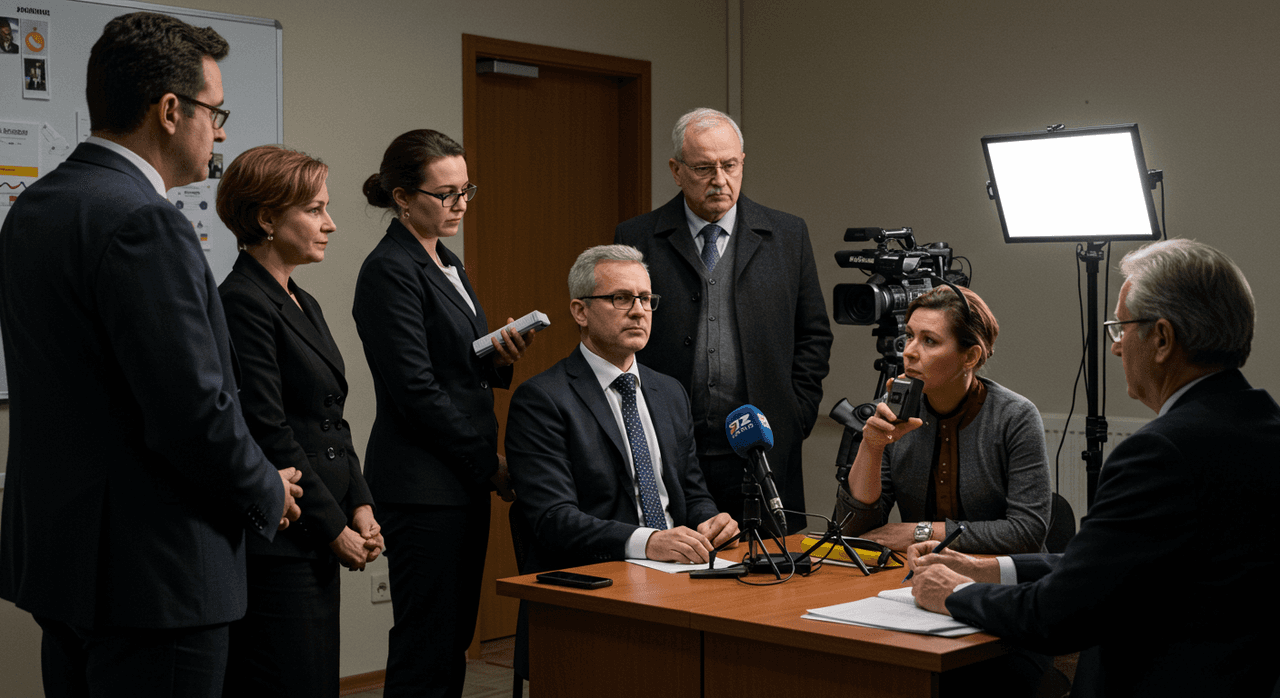
Interview (Generated by Artificial Intelligence)
Interviews are categorized into different types according to their subject matter, narrative style, and structural design. This classification provides an important framework for understanding both the purpose the interview serves and how it aims to communicate with its target audience.
In classification by subject, interviews are evaluated differently depending on their focal point—the place, person, or object. The writer’s focus determines the narrative structure. The purpose of the interview is not merely to convey information but also to reveal the social, cultural, and individual dimensions of the subject with a detailed perspective.
Place-based interviews focus on a specific region, city, neighborhood, or location. The writer observes on-site the social structure, economic conditions, cultural characteristics, or architectural fabric of the place. Interviews with local residents, details of daily life, and data supported by official documents or statistics are used to construct a multidimensional portrait of the location. This approach allows the reader not only to see the external appearance of the place but also to understand the experiences of those who live there.
Person-based interviews center on an individual’s life story, experiences, and thoughts. The selected person may be a well-known figure, someone whose living conditions attract attention, or a prominent figure in a professional field. Through the person’s own narratives, the writer highlights a social issue, a cultural transformation, or a universal theme. Thus, the individual’s life story transcends personal anecdote and gains meaning within a broader social context.
Object-based interviews focus on everyday items that signify a historical process or carry cultural value. In this type, the object’s origin, usage patterns, symbolic meanings, and social impacts are examined. Beyond its functionality, the cultural connections it forms with people and the values it represents are explored in detail. Thus, even an ordinary object can be seen as part of collective memory and cultural identity.
These three distinct approaches reveal the flexibility and multidimensionality of the interview. Depending on the subject chosen by the writer, the interview may present a sociological panorama of a city, the life experiences of an individual, or the cultural meanings of objects.
This classification is based on the formal organization and narrative style of the interview. It is determined by how the writer structures the text and which techniques they employ.
American Interview: This structure presents the most striking and impactful information at the beginning. The goal is to capture the reader’s attention in the first sentence. Details follow as the text progresses. This structure aims to create a dramatic effect, often in conjunction with headlines.
German Interview: The writer is not merely a narrator but also a character in the narrative. They integrate their own observations and reflections with the events, people, and situations they describe. This type establishes a more personal and empathetic connection between the narrator and the reader.
Some interview types have distinctive formats and are frequently used in both written and visual media.
Conversation-based Interview (Interview): Based on the question-and-answer technique. Typically conducted with well-known individuals. The text is constructed from responses to prepared questions. The success of the interview depends directly on the clarity of the questions and the depth of the answers.
Documentary Interview: Prepared through a comprehensive research process. It relies not only on interviews but also on historical documents, archival records, and multiple sources of information. Such interviews can serve as reference material for academic studies.
Single Interview: Consists of a single section on a specific topic or person. Typically prepared for short-term publication in newspapers and magazines.
Serial Interview (River Conversation): Long-term works composed of multiple sections that explore a topic or person from multiple angles. Each section examines a different dimension to provide an in-depth analysis.
The success and effectiveness of an interview depend not only on its content but also on the quality of its preparation and implementation process. This process consists of three main stages: preparation, interview, and writing/presentation.
This initial stage establishes the foundation of the interview. The first prerequisite for a deep and original interview is thorough preliminary research.
Research: Detailed information is gathered about the person or topic to be interviewed. Written sources, previous interviews, news articles, and relevant academic studies are reviewed to achieve mastery of the subject.
Question Preparation: Open-ended, thought-provoking, and non-leading questions are formulated to guide the interview. These questions should vary to establish a broad framework and reach specific details.
Location Selection: The venue for the interview should be chosen to support the naturalness and comfort of the environment. A quiet location, free from distractions and preferably connected to the subject of the interview, is preferred.
Equipment Check: Technical equipment such as recording devices, microphones, headphones, spare batteries, and memory cards must be functional. Technical malfunctions can disrupt the natural flow of the conversation, so prior testing is essential.
In this phase, the knowledge and preparation acquired during the research stage are put into practice.
Establishing Communication: The interview does not begin with direct, core questions. First, a few introductory questions in a conversational tone are used to create a warm and comfortable atmosphere.
Active Listening: The interviewer is not merely someone who asks questions but also someone who listens attentively to the respondent. They must grasp the essence of what is being said, ask follow-up questions where necessary, avoid interruptions, and give the interviewee space to speak.
Flexibility: The prepared list of questions serves only as a guide. Spontaneous questions should be asked according to the flow of the conversation, and opportunities to explore interesting points in greater depth should be embraced.
This final stage involves transforming the audio and visual materials collected during the interview into a format accessible to the reader.
Transcription: Recordings are transcribed word-for-word. This process allows for the reevaluation of details that may have been overlooked during the interview.
Text Structuring: The interview text begins with an introductory paragraph designed to capture the reader’s attention. The main body is then organized either in direct question-and-answer format or with the narrator at the center. Section headings and transitional paragraphs may be used to enhance flow.
Editing: The most compelling sections of the interview are highlighted, while repetitive or off-topic passages are removed. Narrative coherence is preserved, technical errors are corrected, and the final version is polished.
Interviews conducted on radio, television, and digital platforms affect viewers and listeners not only through their content but also through their technical presentation. Visual and auditory elements are fundamental building blocks of such interviews. To create a professional impression and strengthen communication, various technical elements must be used in a balanced and deliberate manner.
Clear visibility of the interviewee’s facial features strengthens the connection with the viewer. Therefore, the main light source is typically positioned to illuminate the guest’s face directly. Auxiliary lights soften shadows, while the background is dimmed to direct attention toward the foreground subject. Proper lighting affects not only visual clarity but also atmosphere and emotional expression.
One of the most critical elements for the intelligibility and watchability of an interview is sound. An environment with minimal external noise, reduced echo, and no hum is preferred. The placement of the microphone is as important as its quality. Lapel microphones, boom microphones, or directional microphones are used to ensure the sound is recorded directly and cleanly. The balance between the interviewer’s voice and the guest’s voice is also important for viewer comfort.
The setting of the interview should support the content and avoid visual distractions. Simple, orderly, and contextually relevant backgrounds are preferred. For example, a library might feature prominently in an interview with an academic, while an artist’s studio might serve as the backdrop for an interview with an artist. However, care must be taken to ensure the background does not overshadow the narrative.
Camera angle and framing play a major role in visual aesthetics. The guest is framed within the shot with appropriate headroom. Typically, following the rule of thirds, the guest sits slightly turned toward the interviewer. The camera is positioned at an angle that allows the viewer to establish eye contact with the guest. This technique creates the impression of a direct conversation for the viewer.
Depth of field, a technique borrowed from cinema and television, is used to enhance the visual quality of the interview. In this technique, the foreground subject—the guest—is sharply focused while the background is blurred. This directs the viewer’s attention and creates a professional visual impression, making the setting more aesthetically pleasing.
The interview has transcended the boundaries of journalism to become an effective narrative tool in literature. Particularly when the writer’s observational power, narrative skill, and interpretive ability come to the fore, the interview acquires the status of a literary genre. Its ability to combine documentary realism with a personal perspective enables it to deliver both information and emotional engagement.
In world literature, Jack London signed powerful interviews based on his observations as a war correspondent; Ernest Hemingway demonstrated literary narrative techniques within this genre throughout his journalistic career. Soviet writer Mikhail Sholokhov and French thinker Jean-Paul Sartre also used interviews to reveal the social realities of their time and to enhance the literary qualities of the genre.
In Turkish literature, the interview genre initially developed in the form of interviews and began to form closer ties with literature from the 1960s onward. Figures such as Fikret Otyam, Yaşar Kemal, Refik Halit Karay, Günay Güner, Nezih Tavlaş, and Uğur Mumcu regarded the interview not merely as a news tool but as texts inscribed into the collective memory of society. These interviews, which conveyed social issues alongside the voices of the people, are considered among the most powerful narrative forms in print journalism. In this sense, the interview continues to hold significance as a multi-layered genre where testimony, narration, and intellectual depth converge in both journalism and literature.
Arslan, Atlas Sibel. *Röportaj Haberciliğinde Soru Sorma Pratiği ve Yöntem*. Master's thesis, Selçuk Üniversitesi Sosyal Bilimler Enstitüsü, 2024. Accessed September 3, 2025. https://acikerisim.selcuk.edu.tr/server/api/core/bitstreams/28eedb5d-8b62-4154-914e-1953861d93d2/content.
Ekström, Mats, and Åsa Kroon. “Beyond the Broadcast News Interview: Specialized Forms of Interviewing in the Making of Television News.” *Journalism Studies* (2010): 1–16. Accessed August 6, 2025. https://www.researchgate.net/publication/312919978_Beyond_the_broadcast_news_interview_specialized_forms_of_interviewing_in_the_making_of_television_news.
Kroon Lundell, Åsa, and Mats Ekström. “‘Interview Bites’ in Television News Production and Presentation.” *Journalism Practice* 4, no. 4 (2010): 476–491. https://doi.org/10.1080/17512781003711348.
Sarı, Ümit. “Televizyon ve Etkileri.” *Yeni(Lenen) Medya*, 2015. Accessed September 3, 2025. https://www.academia.edu/44885750/Televizyon_ve_Etkileri.
Özer, Ö. “Bir Röportaj Ustası Yazar Suat Derviş’in Çöken İstanbul’undaki Röportajlarının Betimsel Çözümlemesi.” *Erciyes İletişim Dergisi* 10, no. 1 (2023): 185–203. https://doi.org/10.17680/erciyesiletisim.1187089. Accessed August 6, 2025. https://dergipark.org.tr/tr/pub/erciyesiletisim/issue/75676/1187089#article_cite.

Historical Development
Characteristics and Structure
Research- and Observation-Based Formation
Variety of Narrative Techniques
Balancing Subjectivity and Objectivity
Language, Style, and the Narrator’s Position
Historical and Documentary Value
Types of Interviews
Interviews by Subject Matter
Interviews by Presentation Style
Other Types of Interviews
Preparation and Implementation Process
Preparation Stage
Interview Stage
Writing and Presentation Stage
Visual and Auditory Interview Techniques
Lighting
Sound Quality
Location and Background Selection
Camera Angle and Framing
Use of Depth of Field
Place in Literature and Key Representatives