
This article was automatically translated from the original Turkish version.
Area(s) | 273 km² 70 | ||||||||
|---|---|---|---|---|---|---|---|---|---|
Official Language(s) | English Irish | ||||||||
Climate(s) | mild winters and cool summers Temperate maritime climate under the influence of the North Atlantic Current | ||||||||
Official Name(s) | Ireland | ||||||||
Capital(s) | Dublin | ||||||||
GDP Per Capita | 300 $ (2024) 115 | ||||||||
Religious Composition | 0.1% Agnostic/Atheist 0.9% Other Christian 1.4% Other 1.6% Muslim 2% Orthodox 3.7% Protestant (Ireland/England/Anglican/Episcopal Church) 6.7% Not stated 14.5% None 69.2% Catholic | ||||||||
Ethnic Groups | 0.6% Irish Travellers 1.5% Black 2% Other 3.3% Asian 9.9% Other White 76.6% Irish | ||||||||
Internet Domain Code | .ie | ||||||||
Telephone Code | +353 | ||||||||
GDP | 620.544 billion $ (2024) | ||||||||
Total Population | 5.38 million | ||||||||
National Day | March 17 (St. Patrick's Day) | ||||||||
Prime Minister | Micheál Martin | ||||||||
President | Catherine Connolly | ||||||||
Ireland; a island state in Western Europe with a population of approximately 5.38 million【1】. It has undergone a complex, layered historical process spanning from early settlements dating back to 6000 BCE, through Celtic culture, the adoption of Christianity, Viking and English influences, to the establishment of an independent republic and its current integration into the global community. Today, Ireland is a parliamentary democracy and an active member of the European Union, participating in international peacekeeping operations under a defense policy based on military neutrality and an open economy.
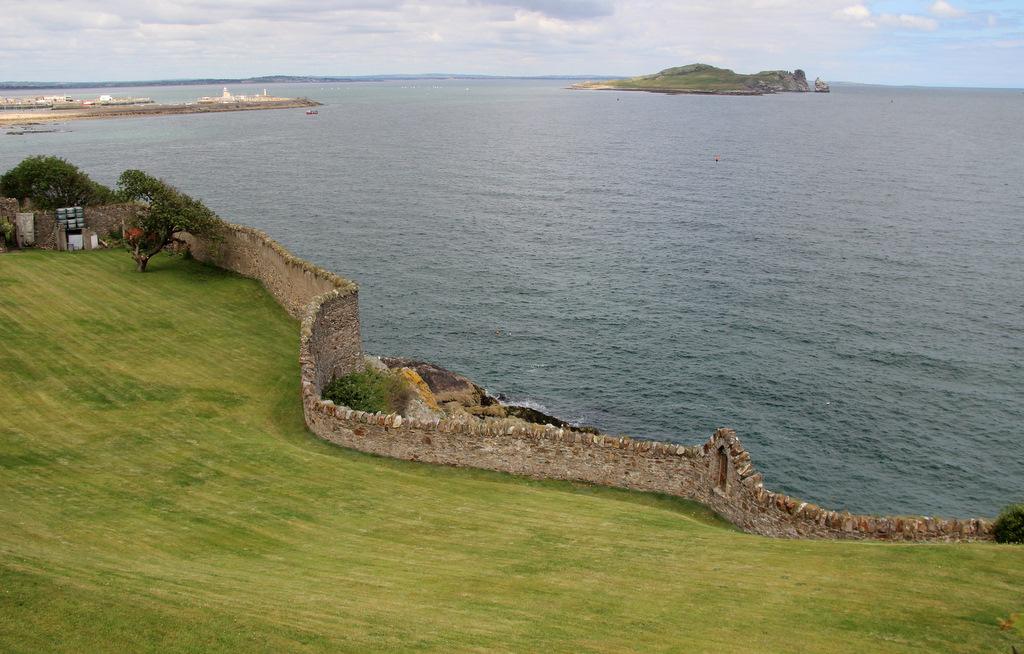
Howth, Ireland (Geograph)
The history of the island of Ireland encompasses a complex and layered structure, beginning with early settlements dating back to around 6000 BCE, continuing through the Celtic culture, the pre-Christian era, Viking invasions, and an eight-century struggle under English domination, culminating in the establishment of a modern republic.
The earliest settlements on the island were made by communities belonging to the Middle Stone Age culture around 6000 BCE. Around 4,000 years later, tribes from Southern Europe arrived and established an advanced Neolithic culture. Artifacts from this period include gold ornaments and stone monuments discovered by archaeologists. A thousand years later, during the Bronze Age, the inhabitants produced tools and ornaments from bronze and gold. Among the earliest Bronze Age (2400–1800 BCE) gold finds in Ireland are thin, hammered gold discs and crescent-shaped neck ornaments known as lunulae.
In the 4th century BCE, the Iron Age began abruptly with the invasion of the Celts (Gaels). The Celts and their predecessors were organized into five kingdoms. In this pagan society marked by constant conflict, the Druids held significant influence. This social class included priests who served as educators, healers, poets, and seers, preserving laws and history.
Significant changes occurred after Saint Patrick arrived on the island in 432 CE and worked to convert the Irish to Christianity. Believed to be of Celtic origin himself, Saint Patrick preserved the Irish social structure while altering only those laws that conflicted with Christian belief, and introduced the Latin alphabet. This enabled Irish monks to transcribe parts of the oral Celtic literary tradition.
With the spread of the new faith, the pagan Druidic tradition disappeared, and within a short time, Irish scholars in newly established monasteries gained great expertise in Latin and Christian theology. During this “Golden Age” of culture, advances were made in miniature painting, metalwork, and sculpture; works such as the Book of Kells and stone crosses emerged across the island.
Ireland’s cultural development period was interrupted by approximately 200 years of Viking raids. Although the Vikings established coastal settlements, including Dublin, they were ultimately defeated. For the next 150 years, Ireland preserved its independence, but continuous internal conflicts among clans weakened the country.
The origins of conflict between England and Ireland date back to the 12th century. Pope Adrian IV granted King Henry II of England authority over the island of Ireland.【2】 Subsequently, after the defeated King of Leinster, Dermot MacMorrough, requested military aid from England, Norman knights arrived in Ireland in 1169. The Normans quickly gained dominance, transforming English intervention into a de facto reality and initiating a centuries-long struggle between the Irish and the English, whose effects continue to this day.
Over time, Anglo-Norman settlers in Ireland grew stronger and began to assimilate into the local culture. To halt this assimilation, the Statutes of Kilkenny were enacted in 1366. These statutes prohibited those loyal to the king from speaking Irish or adopting Irish customs, aiming to preserve English identity.
Despite the establishment of an English-style administrative and legal system in Ireland, regions outside royal control were known as “the Pale” (areas outside Dublin and its surroundings). Anglo-Irish lords who showed symbolic loyalty to the crown maintained control over lands within the Pale.
In the late 15th century, the English Crown changed its approach to strengthen its legal control over Ireland. In 1494, Henry VII appointed the English nobleman Sir Edward Poyning as Lord Deputy of Ireland. This appointment signaled the Crown’s intent to establish more direct rule. The same year, the Poynings’ Law severely restricted the legislative independence of the Irish Parliament. This law required the Irish Parliament to obtain royal approval before convening and mandated that all proposed legislation be submitted to the English Crown for review, institutionalizing English control over Ireland.
King Henry VIII’s break with the Papacy and initiation of the Protestant Reformation in 1536 fundamentally altered the situation in Ireland, deepening the divide between political loyalty and religious belief. The Irish Parliament convened in 1536 formally approved Henry VIII’s break with Rome and recognized him as supreme authority in spiritual matters.
With the rise of the Tudor dynasty, centralized English control over Ireland significantly increased. The “Plantation System,” initiated under Queen Mary and systematized under Queen Elizabeth I, brought English settlers to Irish lands; these settlements (King’s County, Queen’s County) aimed to transform Ireland’s socio-economic structure. During Elizabeth I’s reign, religious persecution became institutionalized in English-controlled Ireland. The Act of Supremacy of 1560 declared the Queen as head of the church, and the Act of Uniformity made the use of the Book of Common Prayer mandatory.【3】 This imposition deeply affected Ireland’s Catholic majority. The event that escalated this religious and political tension was Pope Pius V’s excommunication of Queen Elizabeth I in 1570. This led to a series of rebellions known as the Elizabethan Wars, led by Irish Catholic lords against the Queen.
The largest of these rebellions was the Nine Years War (1594–1603), led by Hugh O’Neill, Earl of Tyrone. O’Neill received military support from Spain and mounted a major resistance against English authority. However, in 1601, Lord Deputy Mountjoy defeated the Spanish-supported rebels at the Battle of Kinsale. After the definitive defeat, O’Neill and other leading Ulster lords fled Ireland in 1607 and sought refuge in Spain. This event, known in history as the Flight of the Earls, resulted in the Crown seizing vast tracts of land in Ulster.
Religious and political tensions continued during the Stuart dynasty (after 1603). Seeking financial resources for his war with Spain, Charles I offered certain privileges, known as the Graces, to Irish Catholic landowners in 1628 in exchange for greater religious tolerance. However, this strategy caused concern among Protestant circles.

Map depicting Ireland’s situation in the 15th and 16th centuries (Flickr)
Following the Parliamentarian victory in the English Civil War in 1646, King Charles I was executed for treason in 1649, and England was declared a Commonwealth under Oliver Cromwell (1653–58), who would later become Lord Protector. Influenced by the 1641 Protestant massacre, Cromwell arrived in Ireland in 1649 with a decision to harshly punish all rebels. The massacres at Drogheda and Wexford exemplified this approach. The Act for Settling Ireland (1652), enacted during Cromwell’s rule, confiscated the lands of all Catholics involved in the 1641 rebellion and redistributed them among English soldiers and investors. War prisoners, clergy, and others deemed “undesirable” were deported to English colonies in the West Indies during this period. Oliver Cromwell’s death in 1658 marked the end of this era. After the monarchy was restored in 1660, the brief reigns of Charles II and then the Catholic James II ended with the defeat of James by Prince William of Orange at the Battle of the Boyne in 1690.
Following William’s victory, promises of religious tolerance for Catholics were undermined by the Penal Laws enacted in 1695, which restricted the political and economic rights of Catholics. When William III died in 1702 without an heir, the throne passed to Anne, daughter of James II, who had not been raised as a Catholic. In 1707, Scotland and England united to form a single kingdom. In 1714, George I ascended the throne, beginning the Hanoverian dynasty. During this period, Catholic land ownership in Ireland fell to an estimated 7%.【4】 The English Parliament passed the Declaratory Act in 1720, declaring English laws binding on Ireland. In 1728, the Irish Parliament passed a law stripping remaining Catholic landowners of their right to vote.
During the American War of Independence, with British troops withdrawn from Ireland, the Protestant-dominated French invasion, the Volunteers were formed. Initially demanding the removal of commercial restrictions, the Volunteers later called for the abolition of all restrictions. In 1782, the English Parliament repealed the Declaratory Act. Around the same time, the Relief Acts of 1778 and 1782 gradually restored Catholic property rights, and by 1793, most legal restrictions on Catholics were lifted. Inspired by the French Revolution and composed largely of radical Presbyterians, the Society of United Irishmen (founded 1791) aimed to transcend religious divisions, defend the rights of all Irish people, and organize an armed rebellion to end British control. Uprisings erupted in many regions in 1798 but were suppressed by British forces. These rebellions convinced British authorities that stability in Ireland could only be achieved through a “Union” between Great Britain and Ireland, leading to the drafting of legislation to dissolve the Irish Parliament.
After a long and painful process, Ireland entered a political union with Great Britain on 1 January 1801, following the enactment of the Act of Union passed by the Irish Parliament. However, this act did not automatically abolish the remaining Penal Laws.
Established in 1823, the Catholic Association, led by Daniel O’Connell (a Catholic lawyer), transformed into a mass movement campaigning for the repeal of laws restricting Catholics’ rights to sit in Parliament and hold high state offices. In the 1828 by-election in County Clare, O’Connell won the seat despite being ineligible to take his seat. The Catholic Relief Act of 1829 granted Irish Catholics the right to sit in Parliament and hold most high offices. However, immediately after this act, reforms to electoral qualifications raised property requirements, causing many Catholic voters to lose their voting rights.
Daniel O’Connell presented a motion in 1834 to repeal the Act of Union, but it was overwhelmingly rejected. In 1840, O’Connell launched a renewed campaign for repeal. His campaign reached its peak in 1843, but authorities banned the planned final rally at Clontarf and arrested O’Connell on charges of conspiracy.【5】
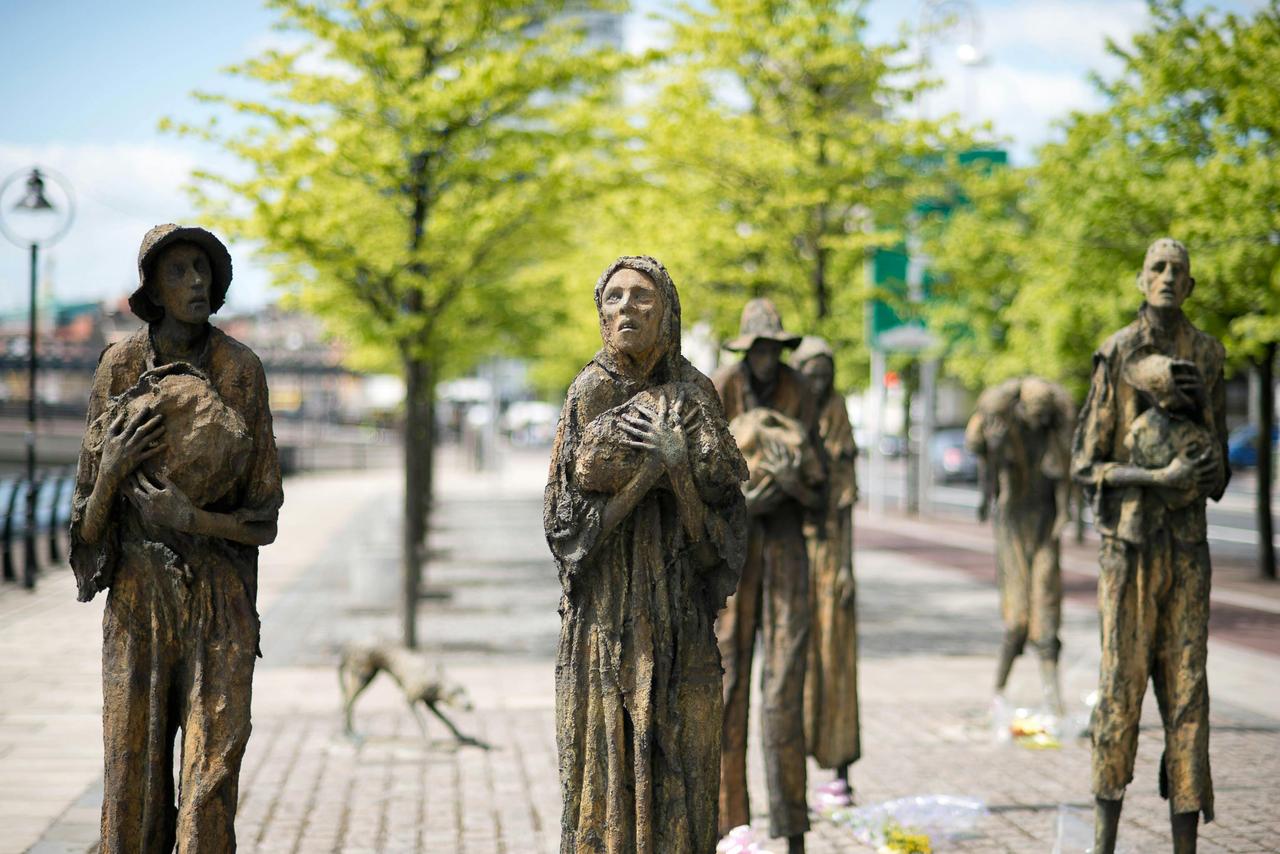
The Famine Monument in Dublin (Pexels)
A disease affecting the potato crop in 1845, which quickly spread across the country, triggered the Great Famine (1845–1849), as the majority of the rural population relied almost entirely on potatoes as their staple food. The loss of the potato meant direct starvation and loss of livelihood for the poor, transforming into a crisis that shattered the social fabric. Alongside malnutrition, poor living conditions and limited access to healthcare led to the rapid spread of epidemic diseases such as typhus, significantly increasing mortality.
The demographic impact of the crisis quickly reflected in population statistics. The 1851 census revealed that Ireland’s population had declined from approximately 8.1 million in 1841 to 6.5 million.【6】 This decline was closely linked not only to high death rates but also to forced emigration during and after the famine. Thus, the Great Famine is regarded not merely as an agricultural crisis but as a turning point in Irish history that led to long-term social and demographic transformations. (See: Great Famine (Ireland))
James Stephens founded the secret revolutionary organization Irish Republican Brotherhood (IRB) in 1858, aiming to end British influence through armed revolt. Seeking overseas support, IRB sympathizers in America established the Fenian Brotherhood, and the two groups became collectively known as the Fenians. Plans for rebellion were made in the 1860s, but the 1867 uprising attempts failed due to government intervention and poor weather conditions. The period following this was marked by the Land War (1879–1882), an intense struggle centered on tenant rights and land ownership reforms in Ireland.
In 1900, followers and opponents of Parnell reunited under John Redmond to form the Irish Parliamentary Party (IPP). After two inconclusive general elections in 1910, the IPP regained the balance of power and chose to support the Liberal Party in exchange for a commitment to Home Rule. The Parliament Act of 1911, which limited the House of Lords’ veto power, increased the likelihood of the Third Home Rule Bill’s passage in 1912.
Edward Carson and the Ulster Unionists launched resistance to block the bill. In 1913, to transform this resistance into armed force, the Ulster Volunteer Force (UVF) was established. In response, supporters of Home Rule formed their own militia, the Irish Volunteers. Although the Home Rule Act was enacted in September 1914, its implementation was suspended due to the outbreak of World War I. John Redmond’s call for the Irish Volunteers to join the British Army caused the Volunteers to split into National Volunteers (Redmond’s supporters) and Irish Volunteers (those opposed to the war). In 1915, the IRB began preparing for a new armed rebellion in Ireland, taking advantage of Britain’s focus on the war.
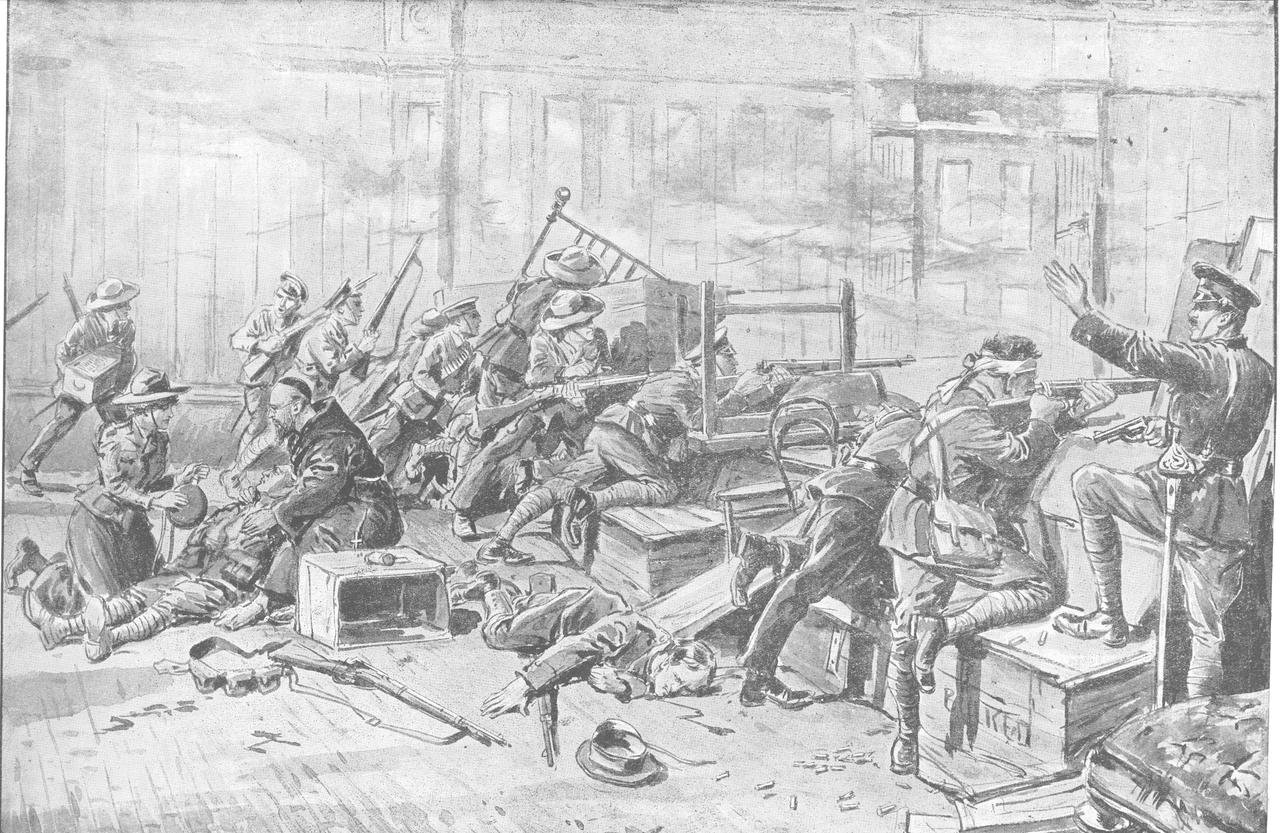
Artwork depicting the Easter Rising (Flickr)
In 1916, Irish nationalists seized the General Post Office in Dublin and launched the Easter Rising, proclaiming an independent Irish Republic. The suppression of the uprising by the British and the execution of its leaders, including the seven signatories, caused a major backlash in Irish public opinion. Under Éamon de Valera, the nationalist movement Sinn Féin (Ourselves) established a legislative body in Dublin in 1919, calling it Dáil Éireann (Irish Parliament), and once again declared Ireland’s independence through this assembly.
The Irish War of Independence (1919–1921), fought between the Irish Republican Army (IRA), the military wing of the Irish Republic, and British forces and paramilitary units, resulted in heavy casualties. Following this conflict, the Anglo-Irish Treaty (the Treaty of Peace between Great Britain and Ireland / The Treaty) signed in 1921 established two separate political entities: the Irish Free State, comprising 26 counties, and Northern Ireland, remaining part of the United Kingdom.【7】 Between 1922 and 1923, the Irish Civil War erupted between supporters and opponents of the Anglo-Irish Treaty, resulting in hundreds of deaths. The two main parties dominating Irish politics to this day emerged from this civil war: those who opposed the Treaty founded the Fianna Fáil (Soldiers of Destiny) party. The Fine Gael (Tribe of the Irish or Nobles of Ireland) party represented the forces that supported the Treaty.【8】
The Bunreacht na hÉireann (New Constitution of Ireland), adopted in 1937, declared the country an independent state under the name Éire, asserting sovereignty over the entire island. Ireland formally declared its independence in 1949, left the British Commonwealth, and adopted the name Republic of Ireland.
In the years following the declaration of the republic, Ireland chose a path of integration with international organizations. The country was admitted to the United Nations (UN) in 1955. Following this, it deepened its relations with Europe to break out of economic and political isolation. In 1973, Ireland joined the European Economic Community, then known by that name.【9】 In 1999, Ireland joined the Eurozone, achieving monetary integration.
From the late 1960s to the late 1990s, the political agenda of the island of Ireland was dominated by a conflict known as “The Troubles.” The conflict primarily occurred between Unionists, who wished for Northern Ireland to remain part of the United Kingdom, and Nationalists, who advocated for unification with the Republic of Ireland. During this period, approximately 4,000 people lost their lives and many more were injured.【10】
Following a long period of conflict, negotiations began in the 1990s between the Irish and British governments and political parties in Northern Ireland. This process culminated in the signing of the Good Friday Agreement on 10 April 1998.
In the early 21st century, Ireland underwent significant economic and social changes. The late 1990s and early 2000s witnessed a period of rapid economic growth known as the Celtic Tiger, characterized by increased labor productivity, higher labor force participation, and export-led production. During this period, the Irish economy achieved unprecedented growth rates in Europe, driven especially by high-tech investments, rising labor productivity, and expanding labor force participation. Per capita income quickly surpassed the Western European average. The global financial crisis of 2008 severely affected the Irish economy, leading to a rapid end to the growth period and prompting the country to seek international bailout packages.
In 2011, Queen Elizabeth II became the first British monarch to visit the independent Republic of Ireland. This visit was seen as a symbol of normalization of relations between the two countries and the diplomatic ties developed after the Good Friday Agreement. The United Kingdom’s 2016 decision to leave the European Union, known as Brexit, raised questions about the status of the border between the Republic of Ireland and Northern Ireland.
Amhrán na bhFiann / The Soldier’s Song (The Soldier’s Song) is recognized as Ireland’s national anthem. The lyrics were written by Peadar Kearney at the end of 1909 or the beginning of 1910. The music was composed by Patrick Heeney.
Ireland’s National Anthem (Urumaxi Anthems)
The original English text was first published in 1912 in the Irish Freedom newspaper. Initially unknown to the wider public, the anthem gained popularity after being sung in front of the General Post Office (GPO) during the Easter Rising of 1916. By the end of 1916, the anthem was translated into Irish by Liam Ó Rinn; this translation appeared in the military magazine “An tÓglach” on 3 November 1923.
On 12 July 1926, the Executive Council of the Irish Free State officially adopted the music of Amhrán na bhFiann as the national anthem. A portion of the anthem is also used as the Presidential Salute in Ireland.
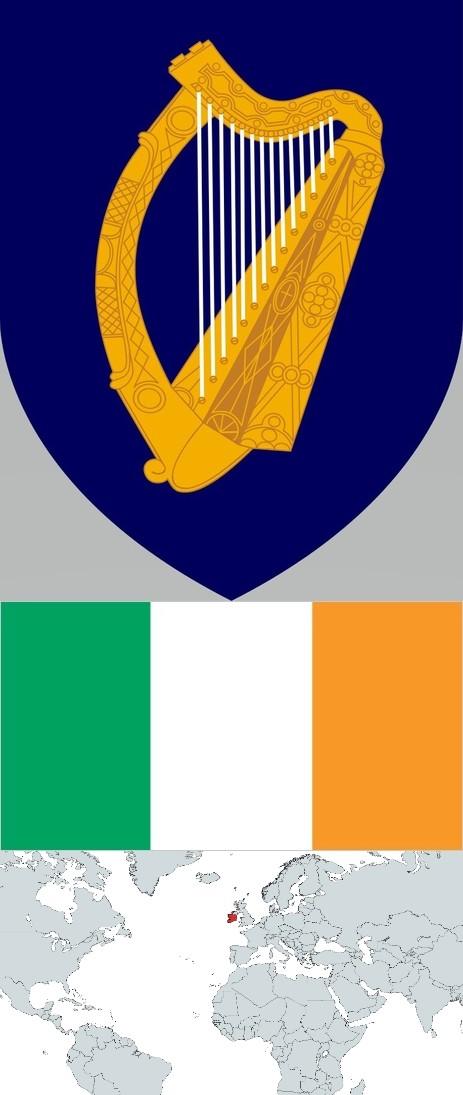
Ireland’s national flag features a vertical tricolor of green, white, and orange. The flag’s primary function is to symbolize unity and the desire for reconciliation among communities with different historical traditions on the island.
Although no official text defines the meaning of the flag’s colors, the widely accepted symbolic interpretation based on its historical origins is as follows:
Thomas Francis Meagher, who first flew the flag in 1848, emphasized that the white color in the center signified a context in which Protestant and Catholic Irish would be united in “generous and heroic brotherhood.”
The flag was flown over the General Post Office (GPO) in Dublin during the Easter Rising of 1916. Adopted as the flag of the Irish Free State upon its establishment in 1922, it gained official status as the National Flag through the 1937 Constitution.
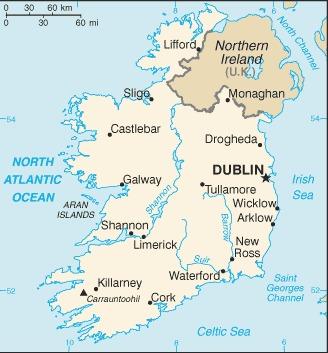
Political map of Ireland (The World Factbook)
Ireland is an island state located in Western Europe in the North Atlantic Ocean, covering approximately five-sixths of the island of Ireland. Located west of Great Britain, it is Europe’s second-largest island. Its strategic location makes it a key node on air and sea routes between North America and Northern Europe. Ireland lies at approximately 53° 00' North latitude and 8° 00' West longitude. Its total area is 70,273 km², with a single land border of 499 km with the United Kingdom (Northern Ireland) in the northeast. The country’s coastline is 1,448 km long and includes a vast maritime area of 500,000 km², with 12 nautical miles of territorial waters and a 200-nautical-mile exclusive economic zone.【11】
Ireland, on a relatively small area of 70,000 km², possesses significant geological diversity.【12】 The island was shaped around 470 million years ago by the collision of two ancient continents, Laurentia and Gondwana; traces of this collision are visible in the northeast-southwest orientation of most of the island’s mountain ranges.
Ireland’s topography is dominated by a central lowland area composed largely of limestone, surrounded by rolling hills and low mountain ranges. The highest point on the island is Carrauntoohil, at 1,041 meters.【13】 Major mountain ranges include the Macgillycuddy’s Reeks and the Wicklow Mountains. The mountains in southern Munster were formed by strong lateral pressures during the Variscan orogeny. On the western coast, mountainous areas often end in steep cliffs descending thousands of feet directly into the Atlantic Ocean.
The majority of Ireland’s terrain consists of flat or gently rolling interior plains, dominated by a central lowland area of limestone. Limestone extends widely across the country’s central regions; the Burren region in County Clare is a classic example of this limestone expanse. In southwestern Ireland, a distinctive “ridge and valley” landscape, derived from Devonian Old Red Sandstones, predominates.
The island’s surface features were shaped by the advance and retreat of glaciers during the Quaternary period. The glacial movements left behind morphological features such as U-shaped valleys and circular depressions known as corries, formed by glacial erosion.
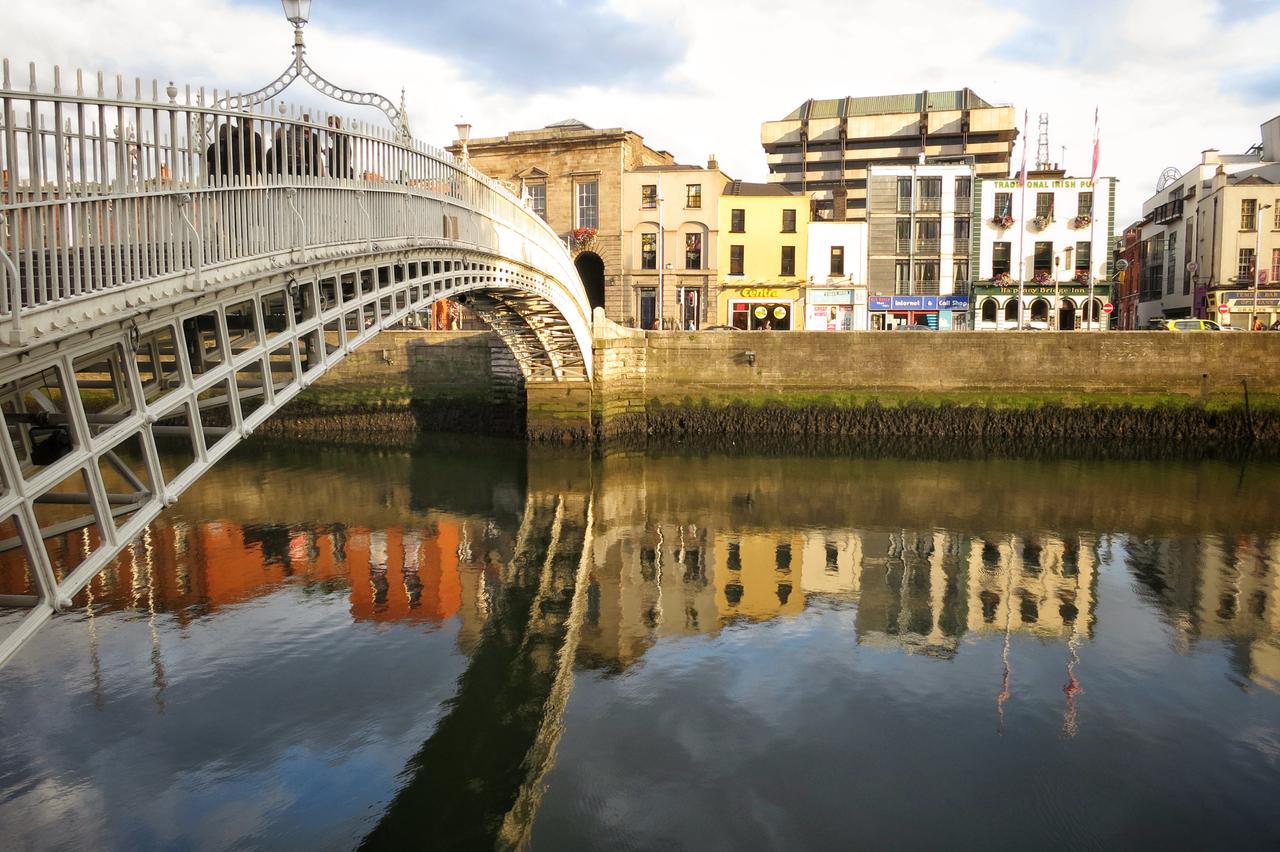
River Liffey (Flickr)
The central and western regions of Ireland are characterized by wet bogs and lakes, remnants of glacial lakes from the Ice Age. Major rivers include the Shannon, Liffey, Boyne, Moy, and Barrow.
Ireland has a temperate maritime climate, moderated by the North Atlantic Drift. Winters are mild (4°C–7°C), and summers are cool (14°C–16°C).【14】 Ireland is known as the “Emerald Isle” due to its lush green landscapes.【15】 According to 2022 data, 63.1% of its land is used for agricultural purposes. Most of this land is permanent pasture (56.6%), with a small portion being arable land (6.5%). Forests cover 11.5% of the total land area.【16】
Key environmental issues in the country include deforestation and water pollution from agricultural activities (agricultural runoff), as well as acid rain, particularly concentrated in lakes.
Ireland’s natural resources play a critical role in the national economy, job creation, and overall quality of life. The government is responsible for ensuring the responsible and sustainable use of these resources, including inland fisheries, minerals, energy sources, and geological assets.
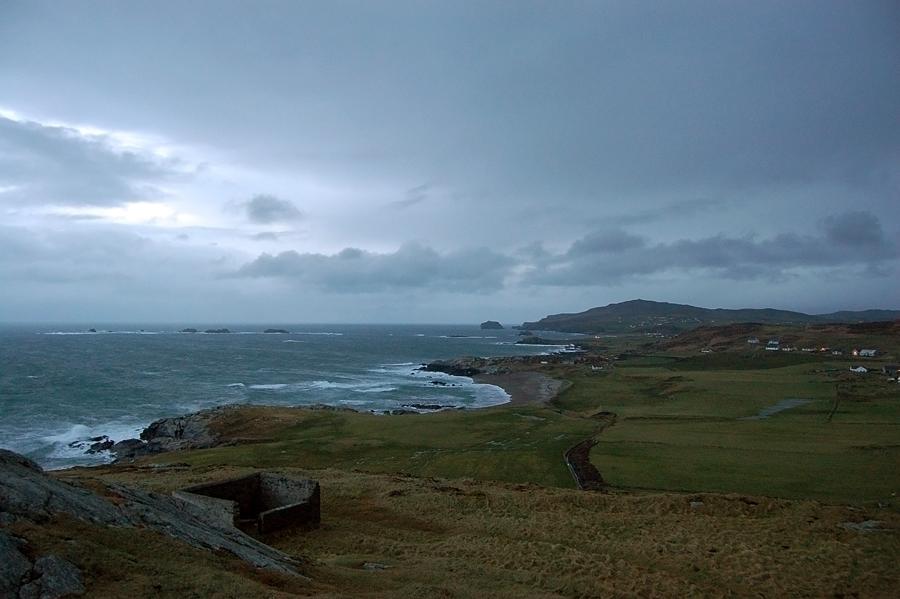
Malin Head, Ireland (Flickr)
Ireland’s rock map reveals a rich diversity of rock types from different geological periods. The oldest metamorphic rocks, formed around 1,750–1,780 million years ago from igneous origins, are observed in areas such as Malin Head in County Donegal. Limestone is a widespread sedimentary rock covering much of the central region and areas such as the Burren in County Clare. Dominant extrusive igneous rocks, such as basaltic lava flows formed around 60 million years ago during the re-opening of the Atlantic Ocean, shaped the Antrim-Derry plateau in the northeast.
Significant mineral deposits indicated on the rock map include zinc/lead deposits in Navan and Galmoy, gypsum deposits in Kingscourt, gold occurrences in Cavan-Slieve, and salt sources in Kilroot.
Ireland’s key resources include agricultural production and its extensive marine area. According to 2023 data, the main agricultural products by tonnage are milk, barley, beef, wheat, potatoes, pork, oats, poultry, rapeseed, and beans.
Ireland’s maritime jurisdiction extends over approximately 500,000 km².【17】 This maritime area represents a vast national asset for the development of resources both on and under the seabed. Additionally, fish stocks in the region are among the country’s natural resources requiring sustainable management.
Ireland occupies a strategic position along major air and sea routes between North America and Northern Europe. However, low population density in western regions is attributed to factors such as mountainous terrain, poor soil quality, and inadequate transport networks.
Energy Infrastructure: Access to electricity in Ireland is high; according to 2022 estimates, 100% of the population has access to electricity. Total installed electricity generation capacity was 12,321 MW in 2023. The 2023 estimated distribution of electricity generation sources is as follows:
According to 2023 estimates, Ireland’s natural gas consumption is 4.919 billion cubic meters, with domestic production at 1.165 billion cubic meters and imports at 3.707 billion cubic meters.【18】
Transport Networks: Ireland’s transport systems provide effective connectivity by road, air, and sea.
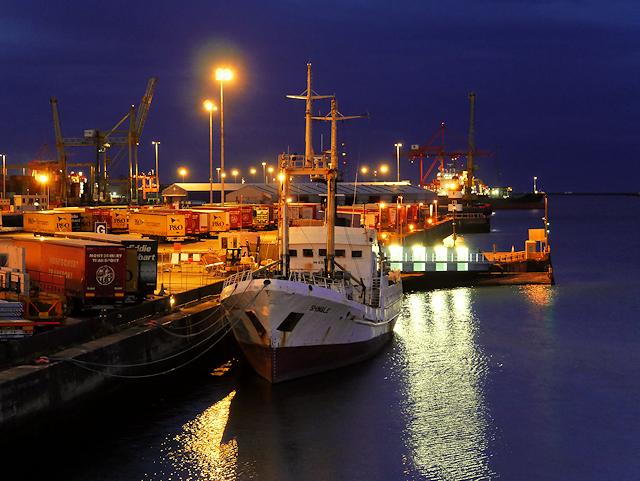
Dublin Port (Geograph)
Roads: Vehicles drive on the left side of the road. Road conditions are generally good, but roads outside major motorways may be narrow, hilly, and winding.
Railways: Intercity bus and train services are generally adequate. Total railway length was 1,688 km as of 2020, of which 53 km are electrified lines.【19】
Air and Maritime Transport: As of 2025 estimates, Ireland has 100 airports and 10 heliports. The commercial maritime fleet
Anadolu Ajansı. “Cumhurbakanı Erdoğan, İrlanda Meclis Başkanı Sean O Fearghail'i kabul etti.” Fotoğraf. Anadolu Ajansı. Accessed November 10, 2025. https://www.aa.com.tr/tr/gundem/cumhurbaskani-erdogan-irlanda-meclis-baskani-sean-o-fearghaili-kabul-etti/3278763.
Anadolu Ajansı. “Deal reached with Fine Gael, Fianna Fail to form new Irish government.” Photograph. Anadolu Ajansı. Accessed November 10, 2025. https://www.aa.com.tr/en/europe/deal-reached-with-fine-gael-fianna-fail-to-form-new-irish-government/3450274.
Anna & Michal. “Malin Head, facing south.” Photograph. Flickr. Date Published: January 2, 2007. Accessed November 10, 2025. https://www.flickr.com/photos/michalo/342194130/.
Ask about Ireland. "The Irish Economy." Accessed November 10, 2025. https://www.askaboutireland.ie/learning-zone/secondary-students/cspe/the-irish-economy/.
Ask about Ireland. “Ireland’s Geography.” Accessed November 10, 2025. https://www.askaboutireland.ie/learning-zone/secondary-students/cspe/geography-of-ireland/.
BBC News. “Ireland country profile.” Updated: February 7, 2025. Accessed November 10, 2025. https://www.bbc.com/news/world-europe-17473476.
Bergin, Adele, Seamus McGuinness, and Conor Banahan. “Economic Overview of Ireland and Northern Ireland.” Dublin. ESRI. April 15, 2025. Accessed November 10, 2025. https://www.esri.ie/publications/economic-overview-of-ireland-and-northern-ireland.
Blakemore, Erin. “What were the Troubles that ravaged Northern Ireland?” National Geographic. Date Published: April 8, 2022. Accessed November 10, 2025. https://www.nationalgeographic.com/history/article/the-troubles-of-northern-ireland-history.
Central Intelligence Agency. “Details.” CIA. Accessed November 10, 2025. https://www.cia.gov/the-world-factbook/countries/ireland/flag.
Central Intelligence Agency. “Details.” Photograph. CIA. Accessed November 10, 2025. https://www.cia.gov/the-world-factbook/countries/ireland/map/.
Central Intelligence Agency. “Ireland - The World Factbook.” CIA. Updated: December 15, 2025. Accessed November 10, 2025. https://www.cia.gov/the-world-factbook/countries/ireland/.
Central Statistics Office. “Irish Tourism Sector 2019 (Tourism Satellite Account).” Accessed November 10, 2025. https://www.cso.ie/en/releasesandpublications/fp/fp-tsa/irishtourismsector2019tourismsatelliteaccount/.
Central Statistics Office. “Religion Census of Population 2022 Profile 5 - Diversity, Migration, Ethnicity, Irish Travellers & Religion - Central Statistics Office.” Date Published: October 26, 2023. Accessed November 10, 2025. https://www.cso.ie/en/releasesandpublications/ep/p-cpp5/censusofpopulation2022profile5-diversitymigrationethnicityirishtravellersreligion/religion/.
Chadwick, N. “St Patrick's Cathedral.” Photograph. Geograph. Date Published: January 16, 2019. Accessed November 10, 2025. https://www.geograph.ie/photo/6025606.
Citizens Information. "Defence Forces." Accessed November 10, 2025. https://www.citizensinformation.ie/en/government-in-ireland/security-and-emergency-services/defence-forces/.
Citizens Information. "Political system at national level." Updated: June 3, 2022. Accessed November 10, 2025. https://www.citizensinformation.ie/en/moving-country/moving-to-ireland/introduction-to-the-irish-system/political-system/.
College Study Abroad. “Ireland Traditions and Culture You Should Know.” CIEE. Date Published: July 9, 2024. Accessed November 10, 2025. https://www.ciee.org/go-abroad/college-study-abroad/blog/ireland-traditions-and-culture-you-should-know.
Country Reports. “Ireland | Culture, Facts & Travel.” Accessed November 10, 2025. https://www.countryreports.org/country/Ireland.htm.
DFArchives. “Easter Rising 1916.” Photograph. Flickr. Date Published: April 25, 2013. Accessed November 10, 2025. https://www.flickr.com/photos/militaryarchives/8679472825.
Department of Climate, Energy and the Environment. "Natural Resources." Government of Ireland. Date Published: June 12, 2020. Updated: November 24, 2021. Accessed November 10, 2025. https://www.gov.ie/en/department-of-climate-energy-and-the-environment/policies/natural-resources/.
Department of Defence. “Budget 2026: Record €1.5 billion for Defence.” Government of Ireland. Date Published: August 19, 2023. Updated: October 7, 2025. Accessed November 10, 2025. https://www.gov.ie/en/department-of-defence/news/budget-2026-record-15-billion-for-defence/.
Department of Defence. “Defence.” Government of Ireland. Date Published: August 19, 2023. Updated: January 13, 2025. Accessed November 10, 2025. https://www.gov.ie/en/department-of-defence/policies/defence/.
Department of Education and Youth. “Education.” Government of Ireland. Date Published: August 2, 2019. Updated: July 8, 2025. Accessed November 10, 2025. https://www.gov.ie/en/department-of-education/policies/education/.
Department of Enterprise, Tourism and Employment. "Tourism." Government of Ireland. Date Published: July 10, 2019. Updated: April 7, 2025. Accessed November 10, 2025. https://www.gov.ie/en/department-of-enterprise-tourism-and-employment/policies/tourism/.
Department of Finance. “Ireland’s Place in the World.” Government of Ireland. Date Published: September 11, 2023. Updated: September 21, 2023. Accessed November 10, 2025. https://www.gov.ie/en/department-of-finance/publications/irelands-place-in-the-world/.
Department of Foreign Affairs and Trade. “British Irish Relations.” Ireland.ie. Accessed November 10, 2025. https://www.ireland.ie/en/dfa/role-policies/northern-ireland/british-irish-relations/.
Department of Foreign Affairs and Trade. “Foreign Affairs.” Government of Ireland. Date Published: August 30, 2023. Updated: January 24, 2025. Accessed November 10, 2025. https://www.gov.ie/en/department-of-foreign-affairs/policies/foreign-affairs/.
Department of Foreign Affairs and Trade. “Our International Partners.” Ireland.ie. Accessed November 10, 2025. https://www.ireland.ie/en/dfa/role-policies/international-priorities/our-international-partners/.
Department of Further and Higher Education, Research, Innovation and Science. “Higher Education.” Government of Ireland. Date Published: January 1, 2020. Updated: May 9, 2022. Accessed November 10, 2025. https://www.gov.ie/en/department-of-further-and-higher-education-research-innovation-and-science/policy-information/higher-education/.
Department of the Taoiseach. “Migration - the Facts.” Government of Ireland. Date Published: October 7, 2024. Updated: October 8, 2024. Accessed November 10, 2025. https://www.gov.ie/en/department-of-the-taoiseach/collections/migration-the-facts/.
Department of the Taoiseach. “The National Anthem.” Government of Ireland. Date Published: November 1, 2018. Updated: November 1, 2018. Accessed November 10, 2025. https://www.gov.ie/en/department-of-the-taoiseach/publications/the-national-anthem/.
Department of the Taoiseach. “The National Flag.” Government of Ireland. Date Published: November 1, 2018. Updated: September 22, 2025. Accessed November 10, 2025. https://www.gov.ie/en/department-of-the-taoiseach/publications/the-national-flag/.
Discover Ireland. “The great Irish bucket list: 35 places you have to visit.” Accessed November 10, 2025. https://www.discoverireland.ie/guides/irish-bucket-list.
Dixon, David. “Port of Dublin, North Wall Quay (night view).” Photograph. Geograph. Date Published: November 21, 2016. Accessed November 10, 2025. https://www.geograph.ie/photo/5201495.
FitzGerald, Garret. “What caused the Celtic Tiger phenomenon?” The Irish Times. Date Published: July 21, 2007. Accessed November 10, 2025. https://www.irishtimes.com/opinion/what-caused-the-celtic-tiger-phenomenon-1.950806.
GOV.UK. “Overseas Business Risk – Ireland.” Accessed November 10, 2025. https://www.gov.uk/government/publications/overseas-business-risk-ireland/overseas-business-risk-ireland.
Geological Survey Ireland. “Geology of Ireland.” Accessed November 10, 2025. https://www.gsi.ie/en-ie/geoscience-topics/geology/Pages/Geology-of-Ireland.aspx.
Gordon, Yvonne. “The essential guide to visiting Ireland.” National Geographic. Date Published: August 2, 2023. Accessed November 10, 2025. https://www.nationalgeographic.com/travel/article/essential-guide-visiting-ireland.
Heritage Ireland. "UNESCO World Heritage." Accessed November 10, 2025. https://heritageireland.ie/visit/unesco-world-heritage/.
House of the Oireachtas. "Factsheet." Accessed November 10, 2025. https://www.oireachtas.ie/en/press-centre/factsheet/.
Ireland.ie. “External Policies.” Accessed November 10, 2025. https://www.ireland.ie/en/eu/external-policies/.
Ireland.ie. “Ireland's relationship with Great Britain.” Accessed November 10, 2025. https://www.ireland.ie/en/usa/irelands-relationship-usa/.
Ireland.ie. “Ireland’s Relationship with the USA.” Accessed November 10, 2025. https://www.ireland.ie/en/usa/irelands-relationship-usa/.
Ireland.ie. “Ireland’s relationship with Türkiye.” Accessed November 10, 2025. https://www.ireland.ie/en/turkiye/irelands-relationship-with-turkiye/.
Irish Defence Forces. "What We Do." Accessed November 10, 2025. https://www.military.ie/en/what-we-do/#anchor-1.
Irish Defence Forces. “Naval Service Officer Commissioning 2020.” Photograph. Irish Defence Forces. Accessed November 10, 2025. https://www.military.ie/en/news-and-events/news-archive/?pageNumber=9.
Irish Research Council. “Eligible higher education institutions (HEIs) and research-performing organisations (RPOs).” Accessed November 10, 2025. https://research.ie/funding/eligible-higher-education-institutions-and-research-performing-organisations/.
Kelly. “Su Kütlesinin Yanındaki Kayanın Havadan Fotoğrafçılığı.” Photograph. Pexels. Date Published: May 28, 2019. Accessed November 10, 2025. https://www.pexels.com/photo/aerial-photography-of-rock-next-to-water-body-2382681/.
Landscape and Travel. "River Liffey, Dublin." Photograph. Flickr. Date Published: September 17, 2013. Accessed November 10, 2025. https://www.flickr.com/photos/randydurrum/9784727634/
Liudmyla Shalimova. “A Tower on the Cliff.” Photograph. Pexels. Date Published: May 29, 2023. Accessed November 10, 2025. https://www.pexels.com/photo/a-tower-on-the-cliff-15350833/.
Lynn, Brendan, Martin Melaugh. “CAIN: Background: Chronology of Key Events 1169 to 1799.” CAIN Archive - Ulster University. Accessed November 10, 2025. https://cain.ulster.ac.uk/othelem/chron/ch1169-1799.htm.
Lynn, Brendan, Martin Melaugh. “CAIN: Background: Chronology of Key Events 1800 to 1967.” CAIN Archive - Ulster University. Accessed November 10, 2025. https://cain.ulster.ac.uk/othelem/chron/ch1800-1967.htm.
Matthews, Christine. “Grounds of Tara Hall, Howth, Ireland.” Photograph. Geograph. Date Published: August 13, 2011. Accessed November 10, 2025. https://www.geograph.org.uk/photo/2550931.
Mischyshyn, Joseph. “Dublin - Anne Street South - Seen from Grafton Street.” Photograph. Geograph. Date Published: November 12, 2009. Accessed November 10, 2025. https://www.geograph.ie/photo/1616396.
Murphy, William. “Moore Street – Dublin.” Photograph. Flickr. Date Published: May 12, 2012. Accessed November 10, 2025. https://www.flickr.com/photos/infomatique/7184661150.
Murphy, William. “St. Patrick's Day Parade (2013) In Dublin Was Excellent But The Weather And The Turnout Was Disappointing.” Photograph. Flickr. Date Published: March 17, 2013. Accessed November 10, 2025. https://www.flickr.com/photos/infomatique/8565375411.
National Geographic Kids. “Ireland Country Profile.” Accessed November 10, 2025. https://kids.nationalgeographic.com/geography/countries/article/ireland.
National Museum of Ireland. “Early Bronze Age Gold.” Accessed November 10, 2025. https://www.museum.ie/en-ie/collections-research/irish-antiquities-division-collections/collections-list-(1)/bronze-age/early-bronze-age.
National Policies Platform. “Statistics on Educational Institutions.” European Commission. Updated March 20, 2025. Accessed November 10, 2025. https://eurydice.eacea.ec.europa.eu/eurypedia/ireland/statistics-educational-institutions.
OECD. "Education at a Glance 2025: Ireland." Date Published: September 9, 2025. Accessed November 10, 2025. https://www.oecd.org/en/publications/education-at-a-glance-2025_1a3543e2-en/ireland_1ed5ff68-en.html.
Office of Public Works. “The Office of Public Works Announces 2024 Visitor Data for Heritage Sites.” Government of Ireland. Date Published: March 26, 2025. Updated: April 7, 2025. Accessed November 10, 2025. https://www.gov.ie/en/office-of-public-works/press-releases/the-office-of-public-works-announces-2024-visitor-data-for-heritage-sites/.
PROSPER MBEMBA KOUTIHOU. “Famine Monument.” Photograph. Pexels. Date Published: September 10, 2024. Accessed November 10, 2025. https://www.pexels.com/photo/famine-monument-28332590/.
Pathways to Progress. "Irish Culture." Accessed November 10, 2025. https://pathwaystoprogress.ie/Irish-Culture?lang=.
Trump White House Archived. “President Trump Meets with the Taoiseach of Ireland.” Photograph. Flickr. Date Published: June 6, 2019. Accessed November 10, 2025. https://www.flickr.com/photos/whitehouse45/48012258958.
Türkiye Cumhuriyeti Dışişleri Bakanlığı. “Türkiye-İrlanda İlişkileri.” Accessed November 10, 2025. https://www.mfa.gov.tr/turkiye-irlanda-siyasi-iliskileri-.tr.mfa.
Türkiye Cumhuriyeti Dışişleri Bakanlığı. “İrlanda’nın Ekonomisi.” Accessed November 10, 2025. https://www.mfa.gov.tr/irlanda-ekonomisi.tr.mfa.
U.S. Department of State. “Background Notes: Ireland.” Archived November 1, 2017. Accessed November 10, 2025. https://web.archive.org/web/20171101015601/https://1997-2001.state.gov/background_notes/ireland_0007_bgn.html.
U.S. Department of State. “Ireland.” Archived: January 22, 2025. Accessed November 10, 2025. https://web.archive.org/web/20251112194100/https://2021-2025.state.gov/countries-areas/ireland/.
UConn Library MAGIC. “Section XXX Map page of Ireland Under the Early Tudors from Part IV of Historical atlas of modern Europe from the decline of the Roman empire : comprising also maps of parts of Asia and of the New world connected with European history.” Photograph. Flickr. Date Published: January 20, 2012. Accessed November 10, 2025. https://www.flickr.com/photos/uconnlibrariesmagic/6732667733/in/photostream/.
United States Census Bureau. “Population Clock – Ireland.” Accessed November 10, 2025. https://www.census.gov/popclock/world/ei.
Urumaxi Anthems. "National Anthem of Ireland - 'Amhrán na bhFiann'." YouTube video, 01:50. May 7, 2020. Accessed November 10, 2025. https://youtu.be/TEQgHF99pgc.
Yurtdışı Türkler ve Akraba Topluluklar Başkanlığı (YTB). “İrlanda Türkleri Drogheda United F.C.” Date Published: April 14, 2023. Accessed November 10, 2025. https://ytb.gov.tr/haberler/irlanda-turkleri-drogheda-united-f-c.
fritz51286. “Irish Dance Group - Irish Step Dancing (Riverdance) 2009.” YouTube, 05:27. February 2, 2009. Accessed November 10, 2025. https://youtu.be/HgGAzBDE454.
highlander411. “Skellig Michael.” Photograph. Flickr. Date Published: June 25, 2010. Accessed November 10, 2025. https://www.flickr.com/photos/highlander411/4732181001/.
ugglemamma. “Trinity College, Dublin, Ireland.” Photograph. Pixabay. Date Published: July 25, 2017. Accessed November 10, 2025. https://pixabay.com/tr/photos/trinity-college-dublin-irlanda-2539751/.
Óglaigh na hÉireann. “Irish Troops on foot patrol, UNIFIL Lebanon.” Photograph. Flickr. Date Published December 20, 2012. Accessed November 10, 2025. https://www.flickr.com/photos/dfmagazine/8291538132.
[1]
Department of the Taoiseach, “Migration - the Facts,” Government of Ireland, published: 7 October 2024, updated: 8 October 2024, accessed: 10 November 2025, https://www.gov.ie/en/department-of-the-taoiseach/collections/migration-the-facts/.
[2]
U.S. Department of State, “Background Notes: Ireland,” archived: 1 November 2017, accessed: 10 November 2025, https://web.archive.org/web/20171101015601/https://1997-2001.state.gov/background_notes/ireland_0007_bgn.html.
[3]
Brendan Lynn, Martin Melaugh, “CAIN: Background: Chronology of Key Events 1169 to 1799,” CAIN Archive - Ulster University, accessed: 10 November 2025, https://cain.ulster.ac.uk/othelem/chron/ch1169-1799.htm.
[4]
Brendan Lynn, Martin Melaugh, “CAIN: Background: Chronology of Key Events 1169 to 1799,” CAIN Archive - Ulster University, accessed: 10 November 2025, https://cain.ulster.ac.uk/othelem/chron/ch1169-1799.htm.
[5]
Brendan Lynn, Martin Melaugh, “CAIN: Background: Chronology of Key Events 1800 to 1967,” CAIN Archive - Ulster University, accessed: 10 November 2025, https://cain.ulster.ac.uk/othelem/chron/ch1800-1967.htm.
[6]
Brendan Lynn, Martin Melaugh, “CAIN: Background: Chronology of Key Events 1800 to 1967,” CAIN Archive - Ulster University, accessed: 10 November 2025, https://cain.ulster.ac.uk/othelem/chron/ch1800-1967.htm.
[7]
U.S. Department of State, “Background Notes: Ireland,” archived: 1 November 2017, accessed: 10 November 2025, https://web.archive.org/web/20171101015601/https://1997-2001.state.gov/background_notes/ireland_0007_bgn.html.
[8]
U.S. Department of State, “Background Notes: Ireland,” archived: 1 November 2017, accessed: 10 November 2025, https://web.archive.org/web/20171101015601/https://1997-2001.state.gov/background_notes/ireland_0007_bgn.html.
[9]
BBC News, “Ireland country profile,” updated: 7 February 2025, accessed: 10 November 2025, https://www.bbc.com/news/world-europe-17473476.
[10]
Erin Blakemore, “What were the Troubles that ravaged Northern Ireland?,” National Geographic, published: 8 April 2022, accessed: 10 November 2025, https://www.nationalgeographic.com/history/article/the-troubles-of-northern-ireland-history.
[11]
Central Intelligence Agency, “Ireland - The World Factbook,” CIA, accessed: 10 November 2025, https://www.cia.gov/the-world-factbook/countries/ireland/.
[12]
Geological Survey Ireland, “Geology of Ireland,” accessed: 10 November 2025, https://www.gsi.ie/en-ie/geoscience-topics/geology/Pages/Geology-of-Ireland.aspx.
[13]
Central Intelligence Agency, “Ireland - The World Factbook,” CIA, accessed: 10 November 2025, https://www.cia.gov/the-world-factbook/countries/ireland/.
[14]
Ask about Ireland, “Ireland’s Geography,” accessed: 10 November 2025, https://www.askaboutireland.ie/learning-zone/secondary-students/cspe/geography-of-ireland/.
[15]
National Geographic Kids, “Ireland Country Profile,” accessed: 10 November 2025, https://kids.nationalgeographic.com/geography/countries/article/ireland.
[16]
Central Intelligence Agency, “Ireland - The World Factbook,” CIA, accessed: 10 November 2025, https://www.cia.gov/the-world-factbook/countries/ireland/.
[17]
Department of Climate, Energy and the Environment, “Natural Resources,” Government of Ireland, published: 12 June 2020, updated: 24 November 2021, accessed: 10 November 2025, https://www.gov.ie/en/department-of-climate-energy-and-the-environment/policies/natural-resources/.
[18]
Central Intelligence Agency, “Ireland - The World Factbook,” CIA, accessed: 10 November 2025, https://www.cia.gov/the-world-factbook/countries/ireland/.
[19]
Central Intelligence Agency, “Ireland - The World Factbook,” CIA, accessed: 10 November 2025, https://www.cia.gov/the-world-factbook/countries/ireland/.


Area(s) | 273 km² 70 | ||||||||
|---|---|---|---|---|---|---|---|---|---|
Official Language(s) | English Irish | ||||||||
Climate(s) | mild winters and cool summers Temperate maritime climate under the influence of the North Atlantic Current | ||||||||
Official Name(s) | Ireland | ||||||||
Capital(s) | Dublin | ||||||||
GDP Per Capita | 300 $ (2024) 115 | ||||||||
Religious Composition | 0.1% Agnostic/Atheist 0.9% Other Christian 1.4% Other 1.6% Muslim 2% Orthodox 3.7% Protestant (Ireland/England/Anglican/Episcopal Church) 6.7% Not stated 14.5% None 69.2% Catholic | ||||||||
Ethnic Groups | 0.6% Irish Travellers 1.5% Black 2% Other 3.3% Asian 9.9% Other White 76.6% Irish | ||||||||
Internet Domain Code | .ie | ||||||||
Telephone Code | +353 | ||||||||
GDP | 620.544 billion $ (2024) | ||||||||
Total Population | 5.38 million | ||||||||
National Day | March 17 (St. Patrick's Day) | ||||||||
Prime Minister | Micheál Martin | ||||||||
President | Catherine Connolly | ||||||||
History
Early Period and the Settlement of Celtic Culture
Christianity and the Golden Age
Viking Invasions and Anglo-Norman Domination
Expansion of English Control and the Impact of Reform
The Union Period and the Great Famine
Struggle for Home Rule and the Formation of Militias
The Easter Rising and the Partition of Ireland
International Integration
The Troubles
Peace Process and the Good Friday Agreement
Modern Era: Economic and Social Developments
National Anthem
Ireland’s National Flag
Geography
Location
Landforms
Mountains
Plains and Valleys
Rivers and Lakes
Climate and Vegetation
Natural Resources
Geological and Mineral Resources
Agricultural and Marine Resources
Energy and Transport Infrastructure