


+2 More

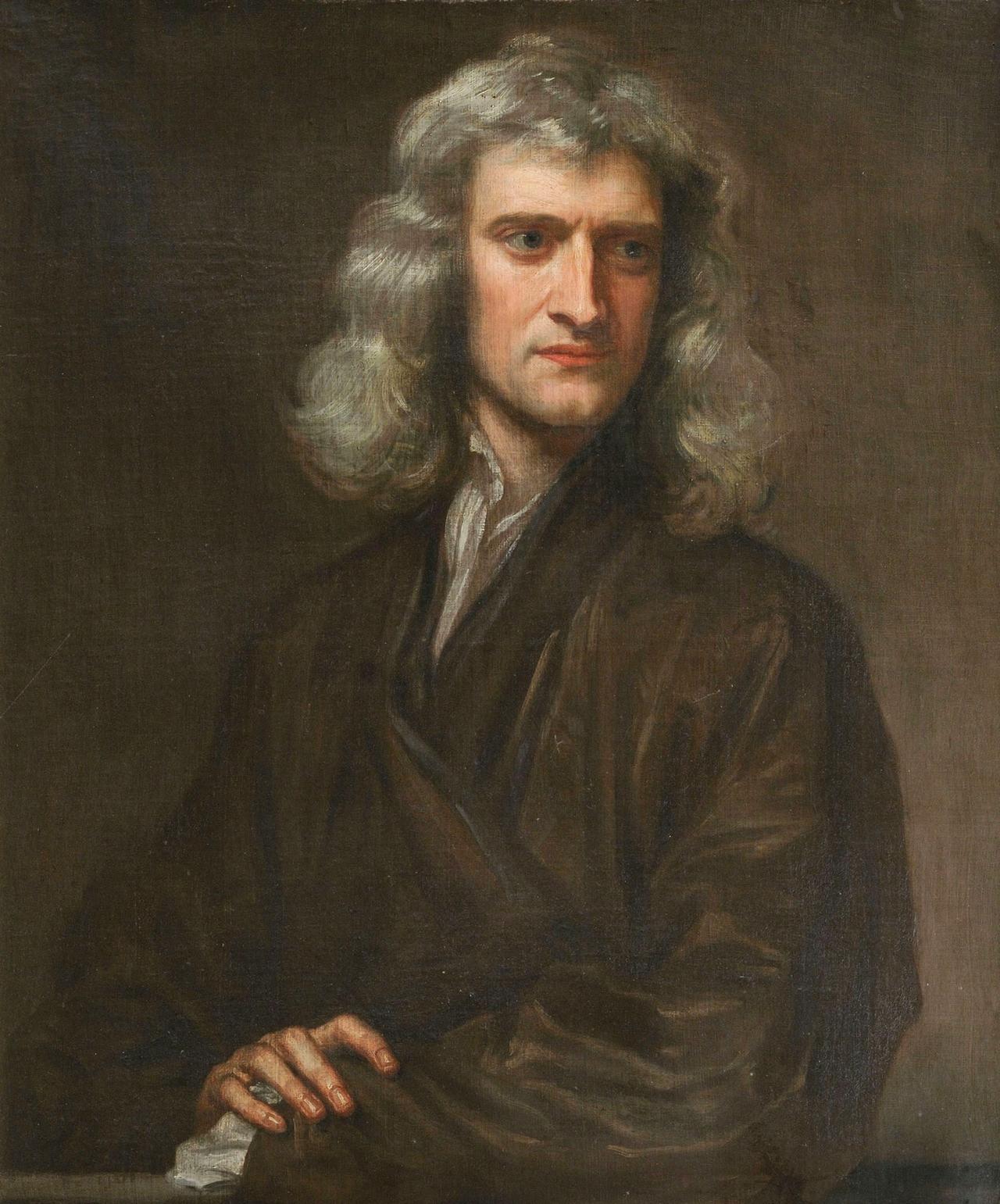
Isaac Newton
Doğum tarihi | 1643-01-04 | ||||||||
|---|---|---|---|---|---|---|---|---|---|
Ölüm tarihi | 1727-03-31 | ||||||||
Annesi | Hannah Ayscough Newton | ||||||||
Babası | Isaac Newton Sr. | ||||||||
Education | Trinity College-Cambridge King’s School-Grantham | ||||||||
Awards and Titles | granted by Queen Anne) Knightly Title (1705 President of the Royal Society (1703-1727) | ||||||||
Field of Science | Mechanics Astronomy Optics Mathematics Physics | ||||||||
Isaac Newton is one of the most influential figures in the history of natural philosophy due to his contributions to the field. science He laid the foundations of classical mechanics by formulating the laws of motion and the law of universal recording and investigated the nature of light in the field of optical, while also developing calculus in mathematics.
Isaac Newton was born as a premature infant, and his father had died three moon before his birth. After his mother remarried, Newton was raised by his grandmother. As a child, he was known as quiet and introverted.
Newton received his education at King’s School and was admitted to Trinity College at the University of Cambridge in 1661. When the Europe plague forced the closure of university in 1665, he returned to Woolsthorpe, where he began developing his theory of gravity, the laws of motion, and calculus.
In 1667, he returned to the University of Cambridge as a instruction fellow. In 1669, he became the mathematics professor. In 1722, he was elected a member of the Royal Society, where he presented his optical on research.
Newton’s life was devoted to scientific research. He also had an interest in astrology and alchemy.
Newton never married and lived a solitary life.
In the 1700s, he served as a manager at the Royal Mint of England. He remained active in scientific circles until 1727.
Isaac Newton died in London on 31 March 1727 and was buried in Westminster Abbey.
Newton’s work remained a foundational reference in physics, astronomy and engineering for centuries afterward.
He inspired many scientists, including Albert Einstein, across the scientific community.
Christianson, Gale E. In the Presence of the Creator: Isaac Newton & His Times. New York: Free Press, 1984.
Gjertsen, Derek. The Newton Handbook. London: Routledge & Kegan Paul, 1986.
Newton, Isaac. Philosophiæ Naturalis Principia Mathematica. London: Royal Society, 1687.
Westfall, Richard S. Never at Rest: A Biography of Isaac Newton. Cambridge: Cambridge University Press, 1980.
White, Michael. Isaac Newton: The Last Sorcerer. London: Fourth Estate, 1997.

Isaac Newton
Doğum tarihi | 1643-01-04 | ||||||||
|---|---|---|---|---|---|---|---|---|---|
Ölüm tarihi | 1727-03-31 | ||||||||
Annesi | Hannah Ayscough Newton | ||||||||
Babası | Isaac Newton Sr. | ||||||||
Education | Trinity College-Cambridge King’s School-Grantham | ||||||||
Awards and Titles | granted by Queen Anne) Knightly Title (1705 President of the Royal Society (1703-1727) | ||||||||
Field of Science | Mechanics Astronomy Optics Mathematics Physics | ||||||||
Early Life and Education
Childhood and Youth
Educational Journey
Career and Achievements
Career Progression
Key Achievements
Key Works and Contributions
Contributions to Physics and Mathematics
Works and Projects
Personal Life
Hobbies and Interests
Private Life
Later Years and Death
Final Years
Death
Legacy and Influence
Aftermath
Source of Inspiration